

Paris has a way of concealing its most precious treasures from view. To find the Passage de l’Ancre, you have to leave the bustle of the Rue de Turbigo and look for a discreet, narrow opening. To the casual passerby, it’s invisible. But for those who know how to stroll, it’s a gateway to another century.
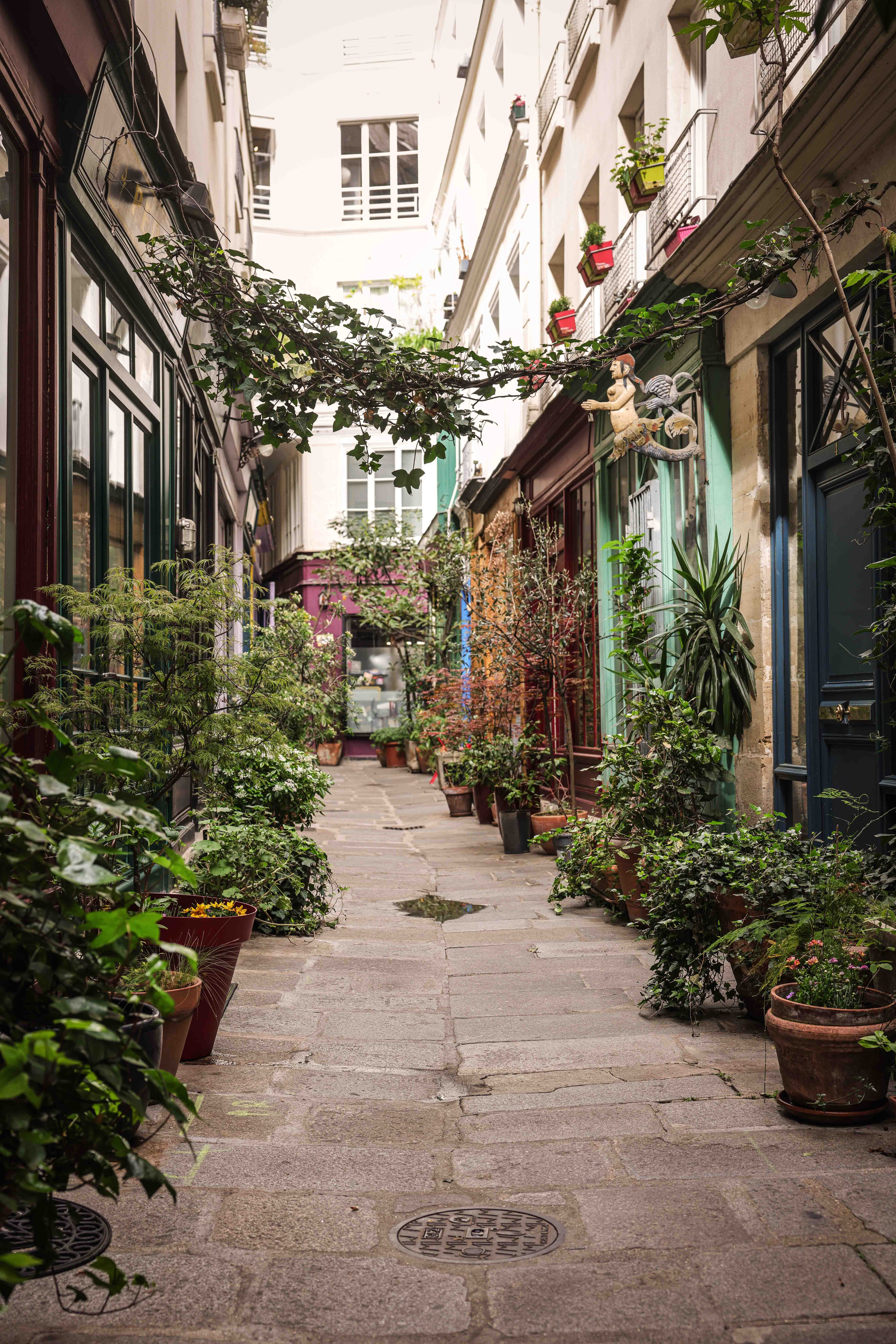
When I push open the gate, the clamor of the 3rd arrondissement vanishes, replaced by a sudden and striking silence. The Passage de l’Ancre is often cited as one of the oldest passages in the city, but to me, it feels more like a private alley in a forgotten village. My photographer’s eye is immediately drawn to the light—even on a gray morning, the shopfronts that line this passage with their shimmering colors seem to hold a soft, inner glow.
I first walked through it years ago. I remember a feeling of being transported to another world right in the heart of the capital. Unlike the grand glass-enclosed arcades of the Right Bank, the Ancre is open to the sky. Ivy vines and bay laurel pots line the cobblestones, creating a verdant, lush sanctuary, vibrant and full of life, even as the surrounding city bustles.
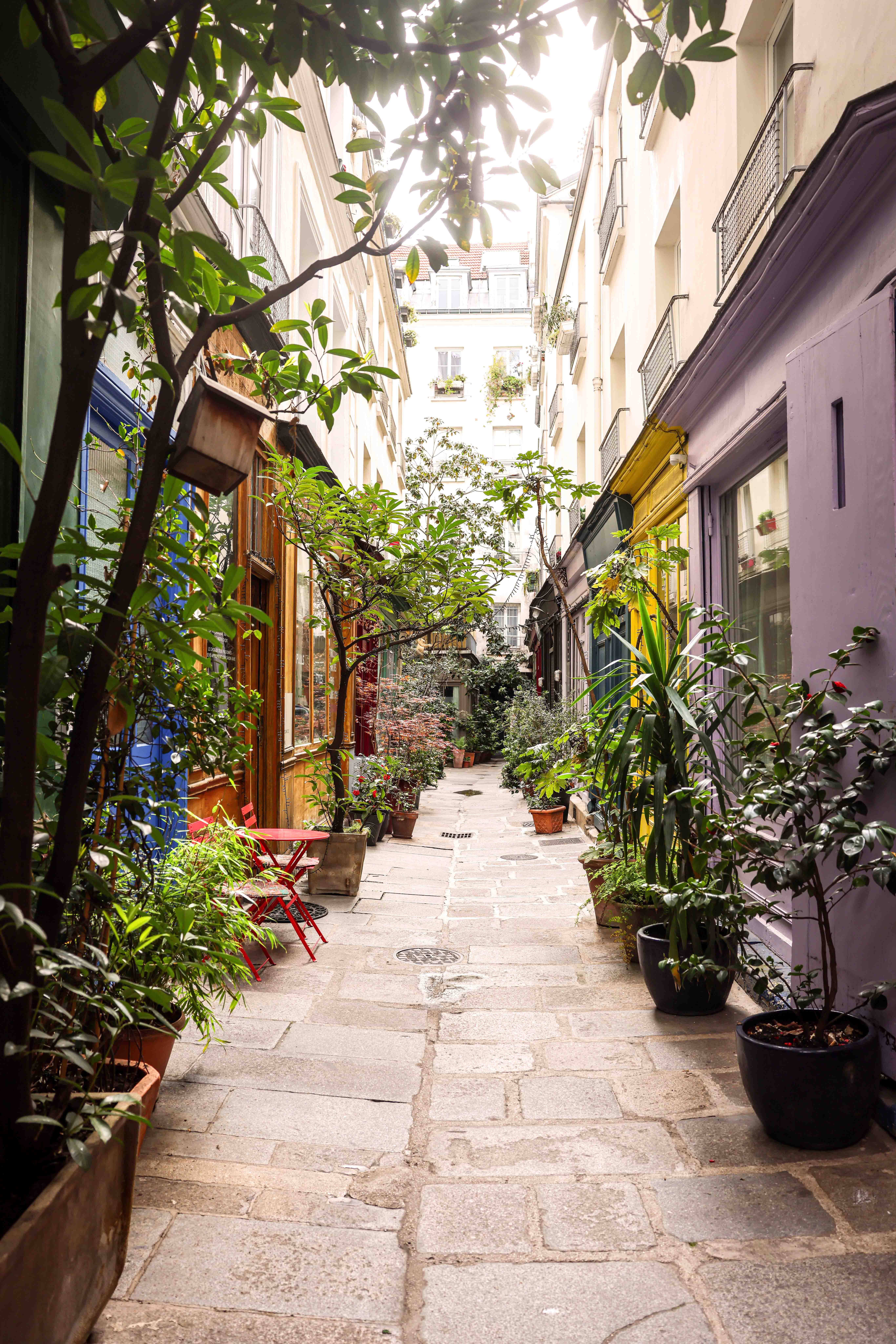
But the soul of this passage lies at number 8: at Pep’s.
It’s the workshop of one of the last umbrella repairers in France. In a world accustomed to disposability, where a broken rib usually means the trash, Pep is an emblem of sustainability and meaning.
One day, I stood in front of the window, watching the craftsman at work. A scent of old silk and machine oil hung in the air. There’s a calm, meditative rhythm to the way he stretched the fabric over the metal frame, a skill that demands both strength and extreme delicacy. It reminded me of my own experience working with a camera—the need to slow down and adjust the focus to capture the value of details.


For a Parisian, a precious umbrella is more than just an object; it’s a companion during the city’s sudden downpours. Entrusting it to the hands of a craftsman in the Passage de l’Ancre is an act of loyalty—not only to the object itself, but also to a way of life that rejects haste.
This quest for rediscovered meaning resonates with another 'mechanics' close to my heart. At number 4, La Mécanique Du Pull — The Mechanics of the Sweater — a third-generation knitwear maker reclaimed her craft from fast fashion in 2019, building limited editions from exceptional yarns. The same philosophy as Pep's: knowing where an object comes from, knowing the hands that made it.
Whether it’s repairing an antique silk in the Parisian rain or knitting a recycled fiber that will last a lifetime, it’s the same gesture: restoring dignity to the object. It is in this respect for time and materials that Paris, and France with it, retains its true elegance.
Leaving the passage and returning to the Church of Saint-Nicolas-des-Champs, I carry this silence with me. It reminds me that in Paris, the most profound experiences are not found in the monuments that everyone photographs, but in these small, unchanging spaces where time seems suspended.
Elisabeth
Have you stumbled upon a hidden passage or forgotten corner in Paris that stopped you in your tracks? Tell me in the comments.
Address:
Accès via 223 rue Saint-Martin or 30 rue de Turbigo, 75003 Paris.
Pep’s Umbrella House: 8 Passage de l’Ancre
La Mécanique du Pull: 4 Passage de l’Ancre
Photographer’s Tip:
The passage is particularly poetic just after a rain shower, when the cobblestones reflect the colors of the facades and the vegetation seems revitalized.
Introducing Contributor, Elisabeth Perotin
Immerse yourself in her work on her Contributor Page here→
I can't explain it but for some reason reading this made me tear up.
What a treat! Two great artisanal shops. And beautiful pictures!! Merci ! Who doesn't love a lesser known Parisian passage!!🥰🥰💖💖