

Moulins, Allier, in the Auvergne-Rhône-Alpes region, is a slightly sleepy préfecture that doesn’t see a lot of tourists.
However, it reveals fascinating vestiges of a showy Belle Epoque past.
A truly grand Grand Café
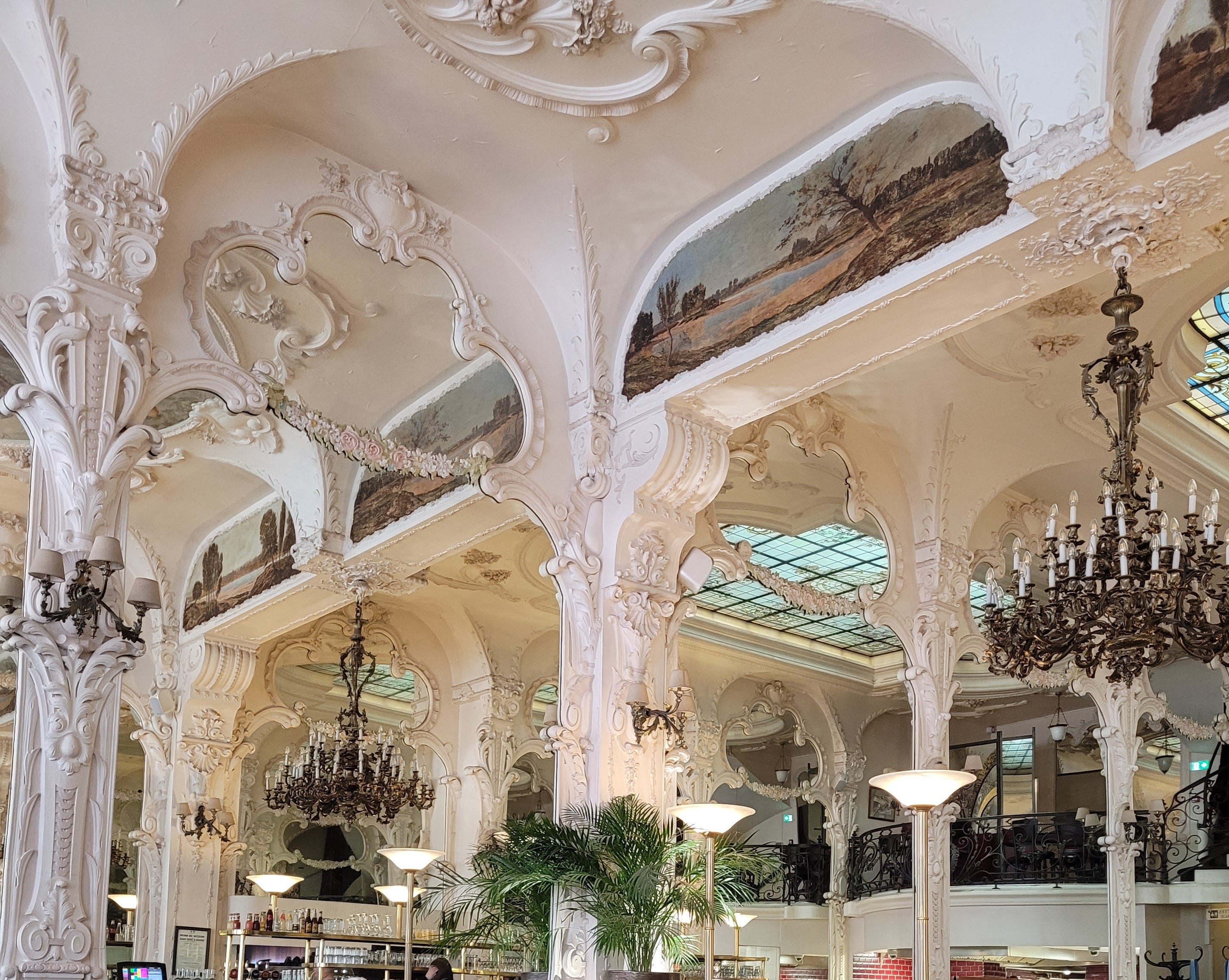
Considered one of the most beautiful cafés in France, Le Grand Café was built in 1899. Coco Chanel, who lived and worked in Moulins from 1900 to 1906, was a confirmed regular customer.
Local legend has it that while she was still plain old Gabrielle Chasnel, she once sang “Qui qu’a vu Coco dans l’Trocadero” here — thus her nickname. (Not to rain on anyone’s parade, but the town’s Service du Patrimoine affirms that this performance took place elsewhere.)
In Coco’s Moulins days, the balcony, now reserved for dining with a view, hosted orchestras:
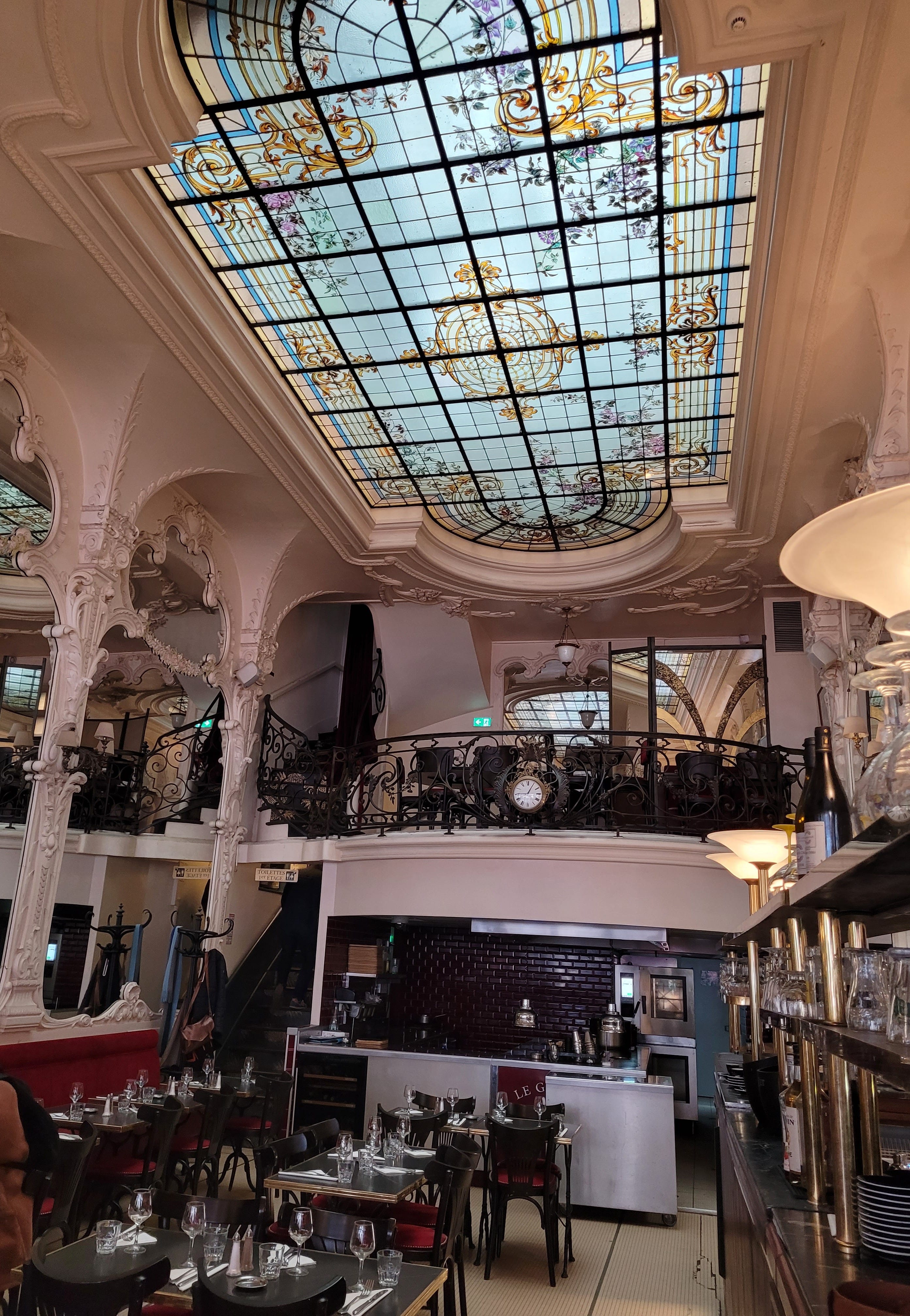
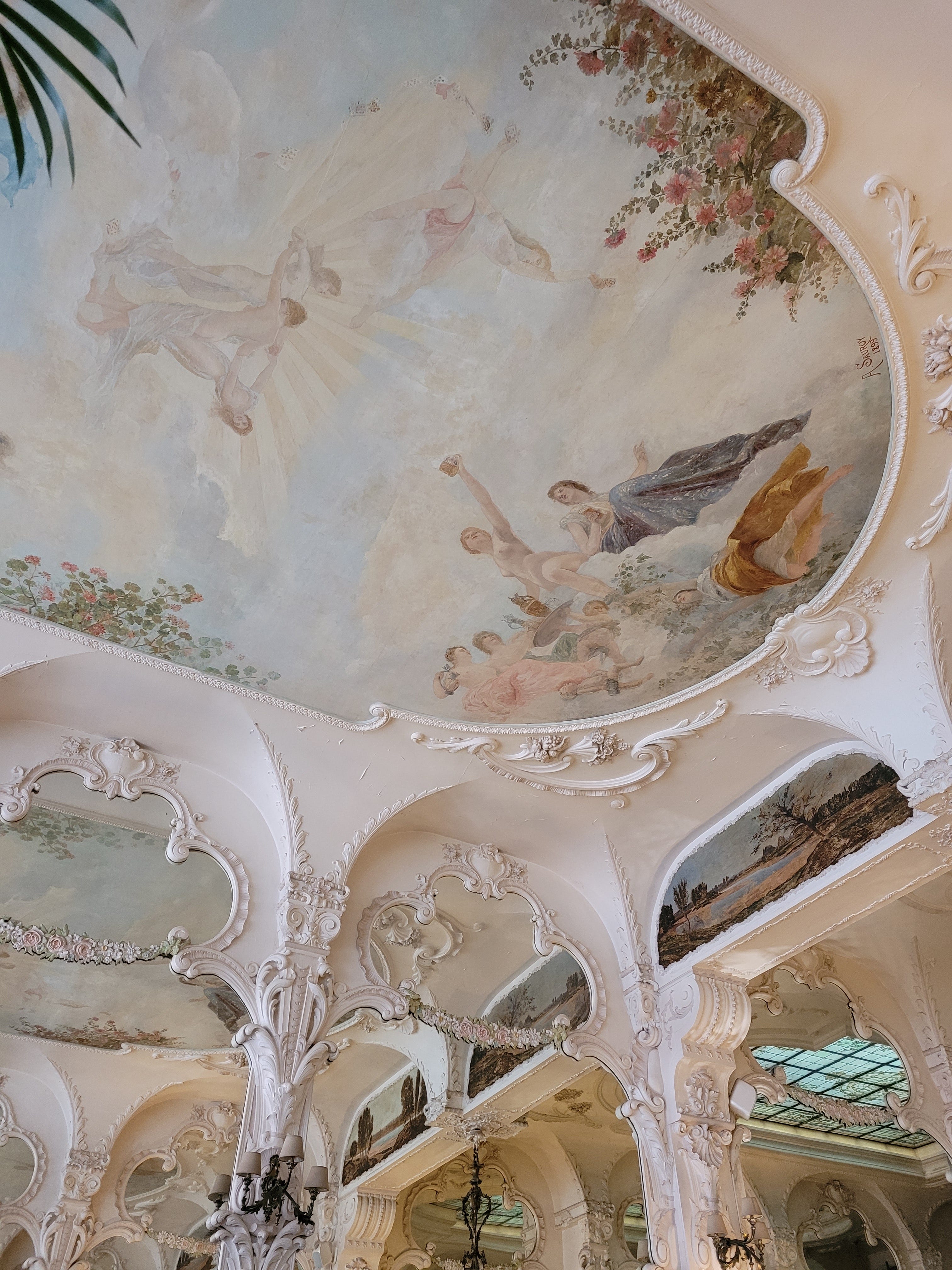
The ceiling, decorated by the little-known and long-forgotten painter Auguste Sauroy, who spent his life livening up large expanses while this was in vogue, adds allegory to your espresso.
Extremely modern for its time, one can only imagine the excitement that the opening of such a fine establishment brought at the turn of the 20th century.
At the time, Moulins was a bustling hub of activity. As the wealthy administrative capital of a major agricultural department, the city hosted 17 major agricultural fairs per year, fueling a lively hotel and restaurant business that Le Grand Café certainly benefited from.
More Moulins traces of La Belle Epoque
Le Café Américain
Like Le Grand Café, Le Café Américain is an official historical monument.
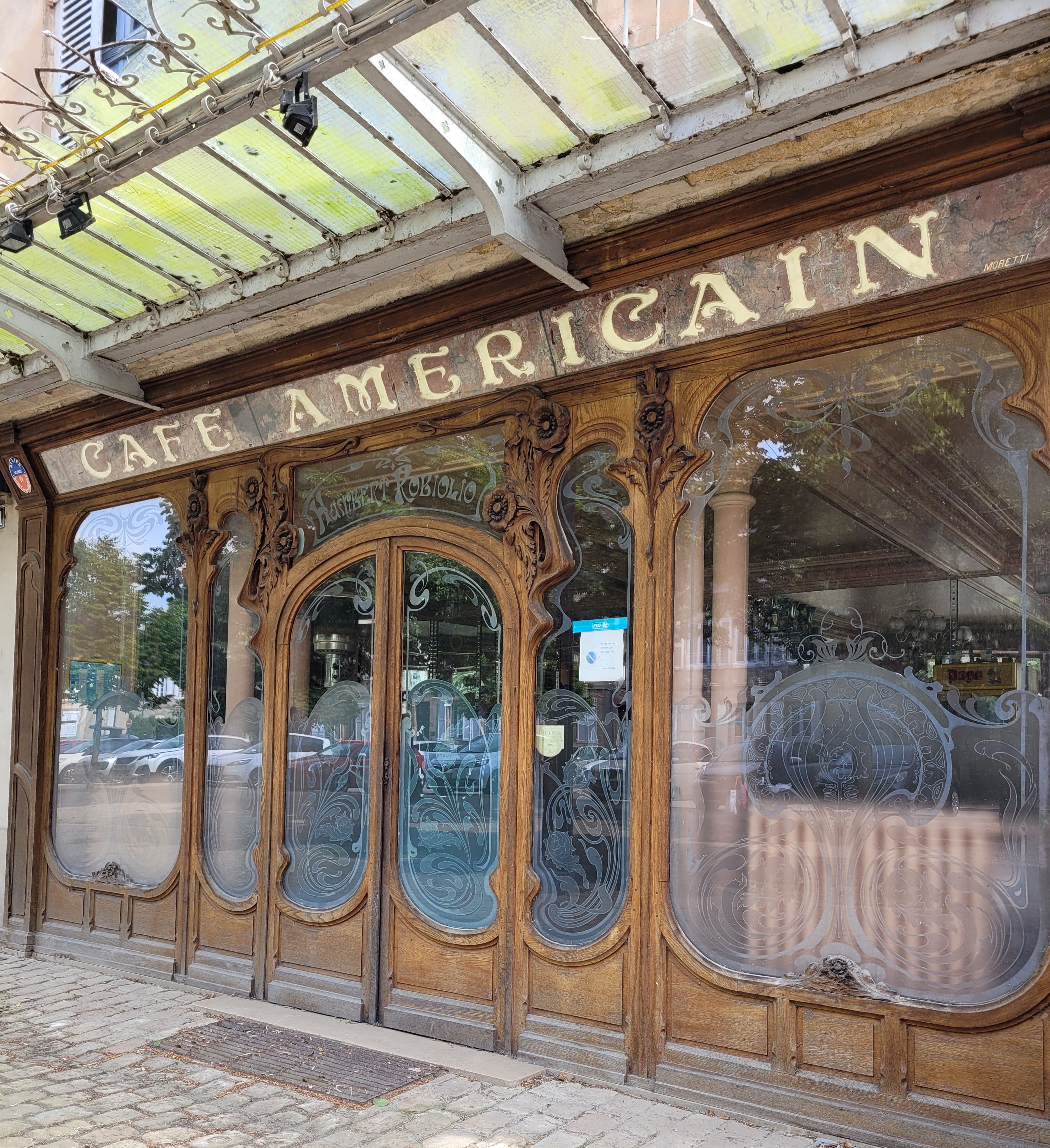
Unlike Le Grand Café, Le Café Américain, opened in 1903 and likely so named to evoke modernity, is “permanently closed”.
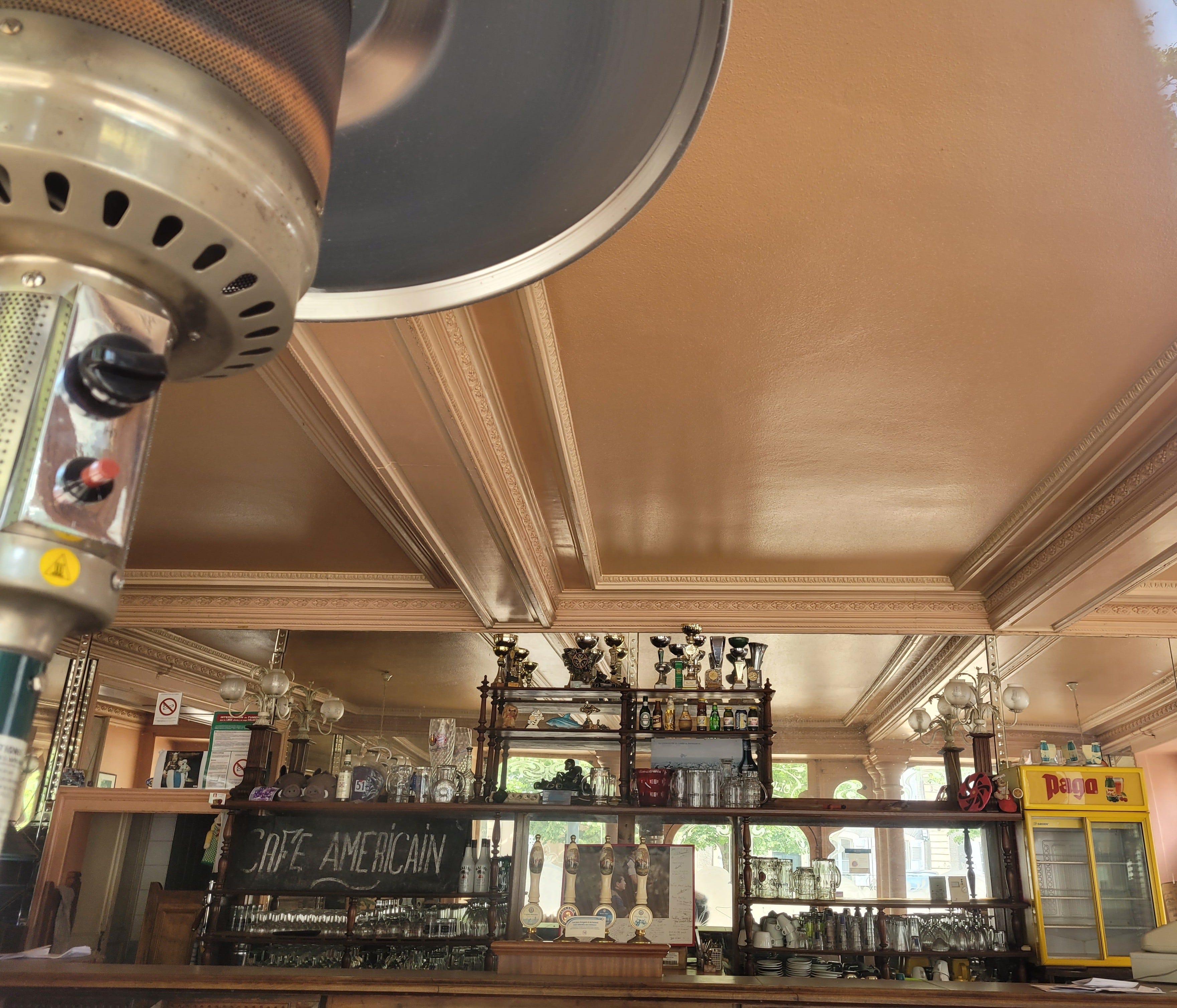
Its sad inactivity piqued my interest.
An August 2013 article from La Montagne briefly profiled its manager, Pascal Florentin.
An obituary just one month later refers to the passing of a Pascal Florentin from Moulins…as in the same? I can’t be sure.
What I can be sure of, partly thanks to my paralegal sleuthing abilities, is that the Café Américain business in Moulins was officially removed from French registers in December 2015, and that an undated article from the Société d’Emulation Bourbonnaise expresses a wish for a rapid reopening.
I wish for a rapid reopening too.
Les Nouvelles Galeries
Moulins was also home to one of small-town France’s first Nouvelles Galeries, the department stores that later morphed into Les Galeries Lafayette or, in some cities, Monoprix. The nicely-preserved art nouveau façade is all that remains.
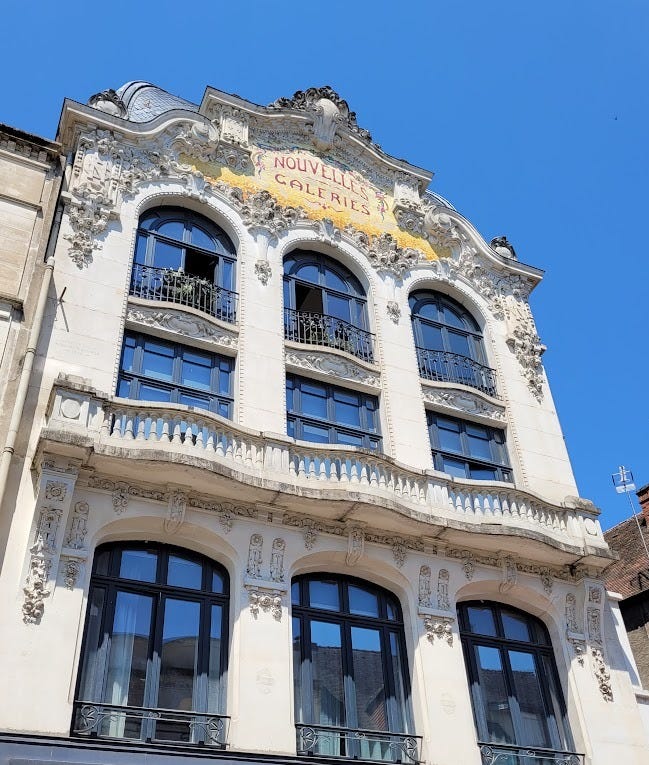
Designed in 1894, expanded in 1898, and remodeled in 1914, this former four-floor store reduced in size and became a Monoprix in the late 1990s. But Monop’ eventually left the site, leaving the town’s main street without its largest commercial draw.
La Chocolaterie Les Palets d’Or
Another example of Moulins’ Belle Epoque snazz is La Chocolaterie Les Palets d’Or.
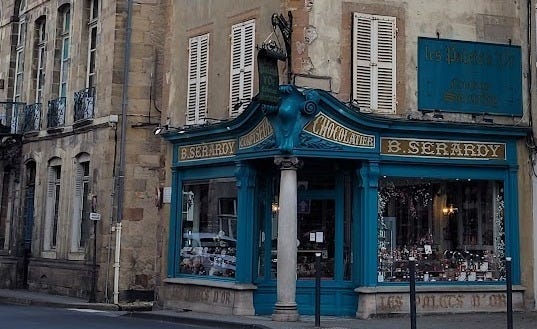
Located in an otherwise drab quarter, you can’t miss it — and definitely shouldn’t.
Bernard Serardy took over his family’s modest sweet shop in 1898, but he had grand plans, and engaged the city’s Ecole des Beaux-Arts to give his boutique a fancier look, inside and out.
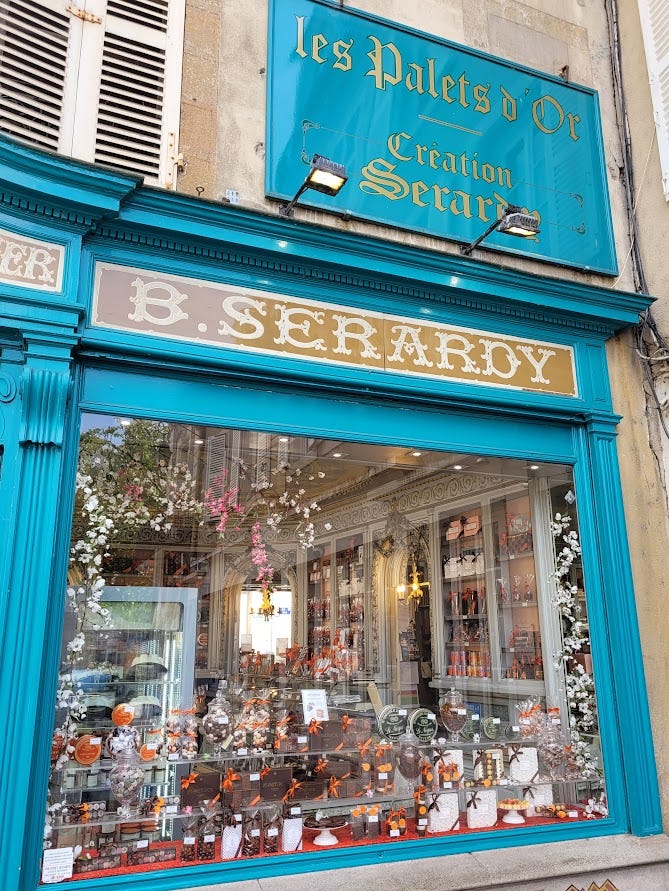
Sadly, Bernard did not reap the fruits of his investment for long, swept away by the Great War. His widow sold the shop in 1916, but it has continued its sweet vocation ever since.
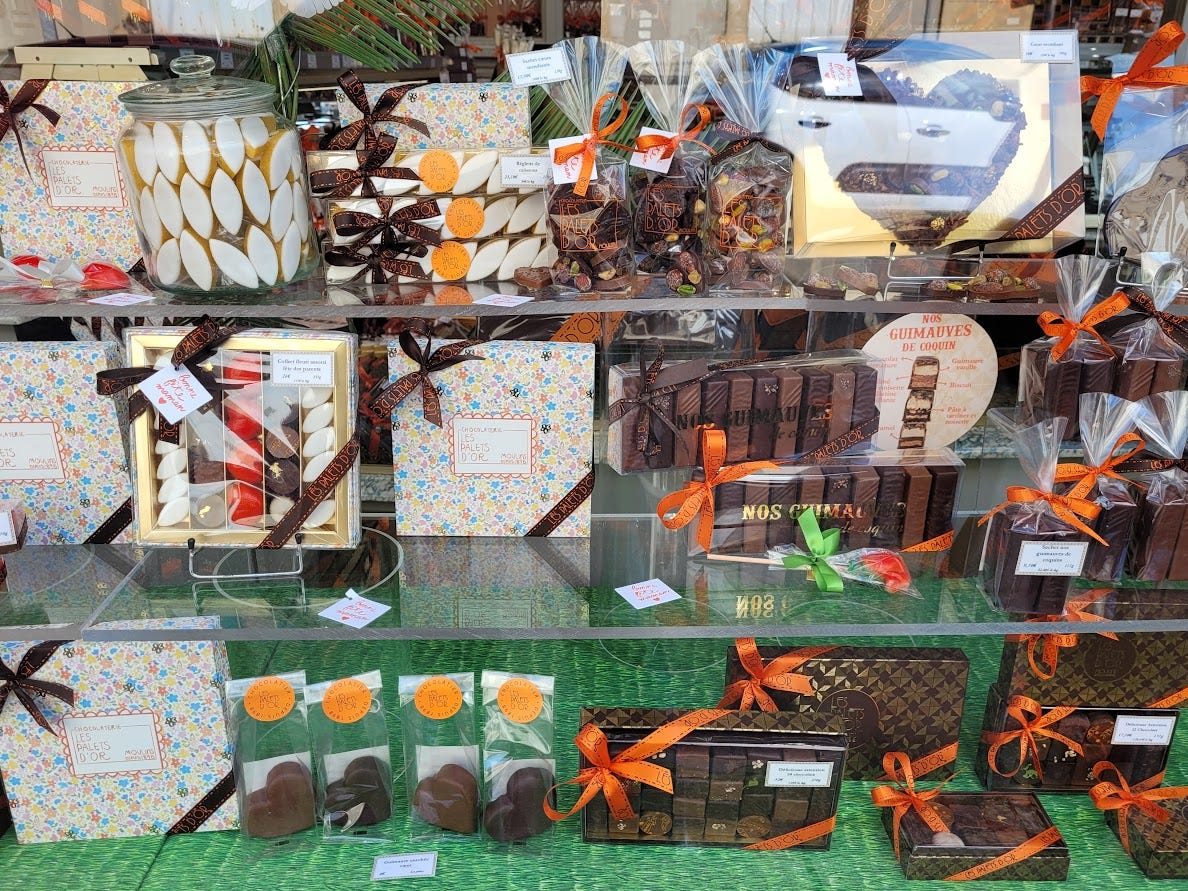
If Bernard is looking down, I’m sure he’s pleased to see the store still bearing his name and doing brisk business.
Sources
Laissez-vous conter Moulins à la Belle Epoque, Service du Patrimoine de la Ville de Moulins (PDF)
La maison – Les Palets d’Or – Moulins
À la redécouverte de l’American Cinéma, Société d’Emulation Bourbonnaise
Introducing Contributor Betty Carlson
Visit her Contributor Page — Explore more of Betty’s work
Such enchanting buildings Betty.
People get mocked online (and sometimes in person too) when they dare say “C’était mieux avant.” Nostalgia? Maybe.
In this case, thanks your investigative and reporting skills Betty, we find out that yes, it was better before.
Spectacular buildings. One only needs to close their eyes to picture them (and their patrons) during their glory days.