

Overshadowed by its drop-dead gorgeous, UNESCO-crowned, prefectural neighbor Albi, Castres often gets short shrift in these Occitanian parts, reduced to its talented and suitably burly rugby squad.
I don’t care for rugby, and I really don’t care for Francisco de Goya (de Goya, you may ask? Read on).
My Castres (il)logic went like this:
Castres is home to the Musée Goya
Goya is gloomy and terrifying
So, let’s just not be rushing off to Castres anytime soon
I was, of course, mistaken.
Here are five reasons why:
1. Le Musée Goya ET d’Art Hispanique
Le Musée Goya is a misnomer: the museum displays only three paintings by the Spanish master, but houses the second-largest collection of Spanish art in France after the Louvre.
Impeccably renovated and reopened to the public in 2023, the 22-gallery museum takes the visitor on an atmospheric visual journey through Spanish art from the Middle Ages to the 21st century.
Goya’s largest painting, The Junta of the Philippines, and a collection of his engravings form the centerpiece – but take away Goya, and you still have one highly impressive museum.
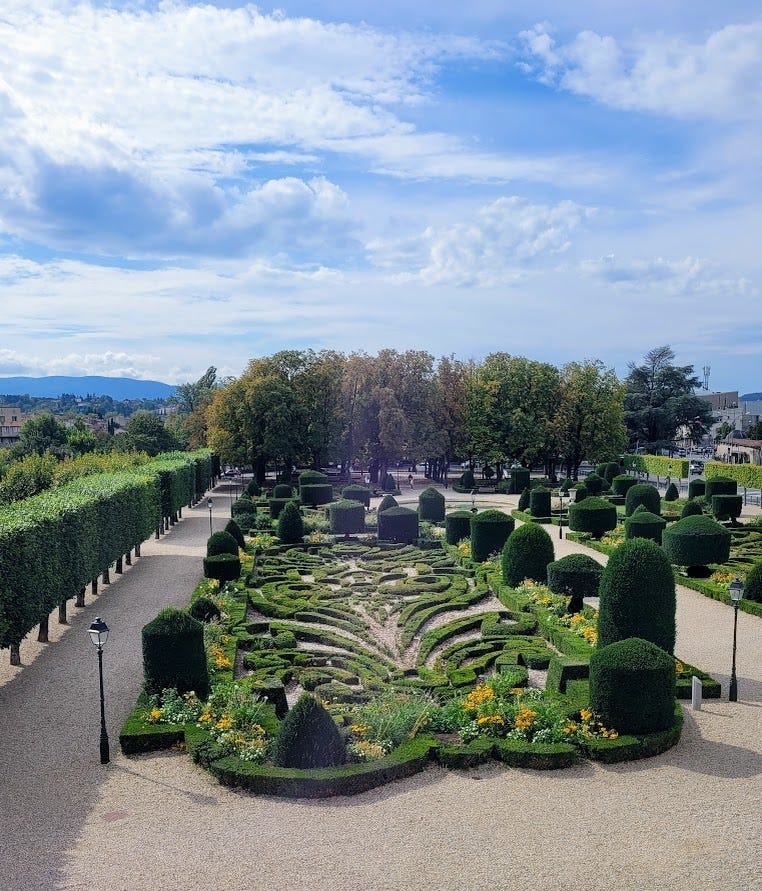
2. Le Jardin de l’Evêché designed by André Le Nôtre
The museum is housed in the former bishop’s palace. The diocese must have enjoyed some clout, as it was able to score a garden designed by André Le Nôtre, of Versailles fame.
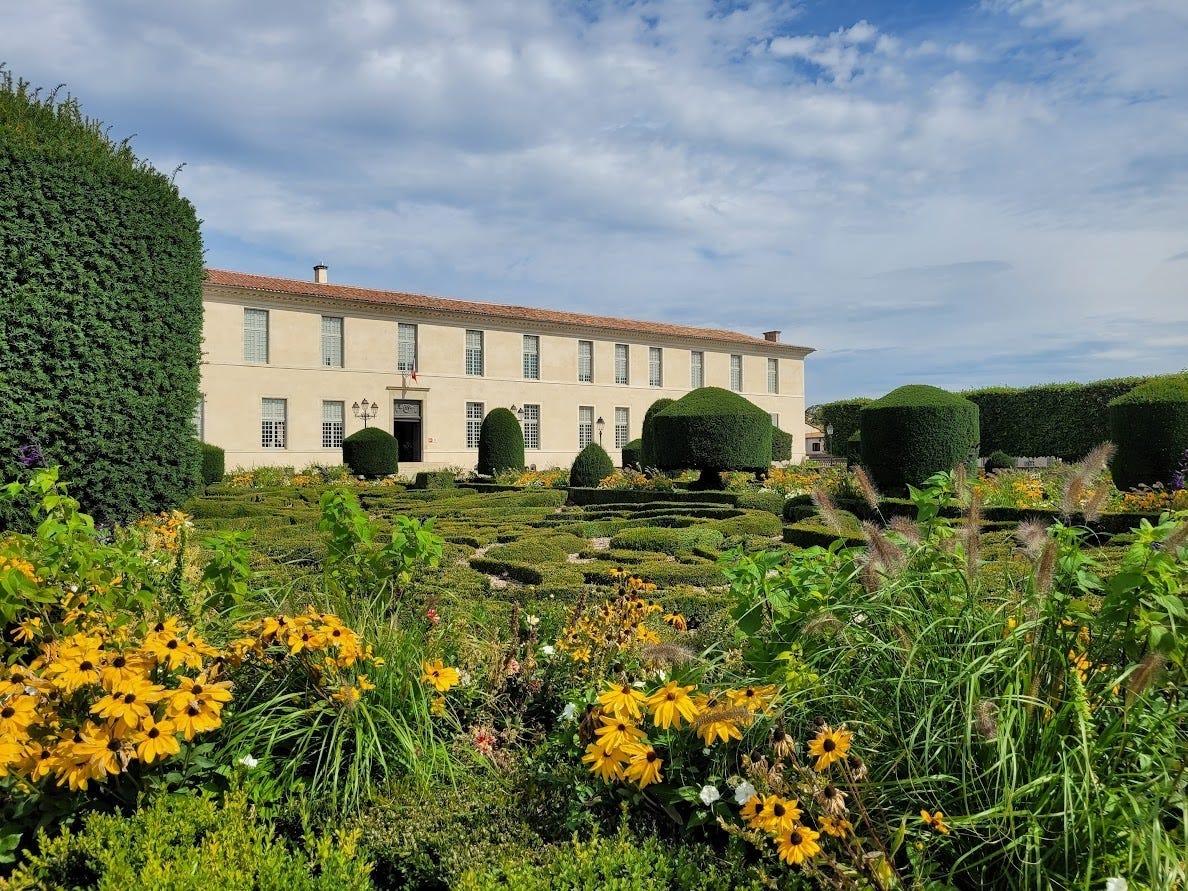
It’s fairly unusual to find such a manicured garden here in the south, although I later learned that ten Le Nôtre gardens are scattered about Le Grand Sud.
The garden is proportional to the palace — don’t start thinking this is a “Petit Versailles” — but strolling around it offers a chance to experience Le Nôtre’s work on an intimate scale.
3.Les Maisons sur l’Agout (pronounced « la goutte »)
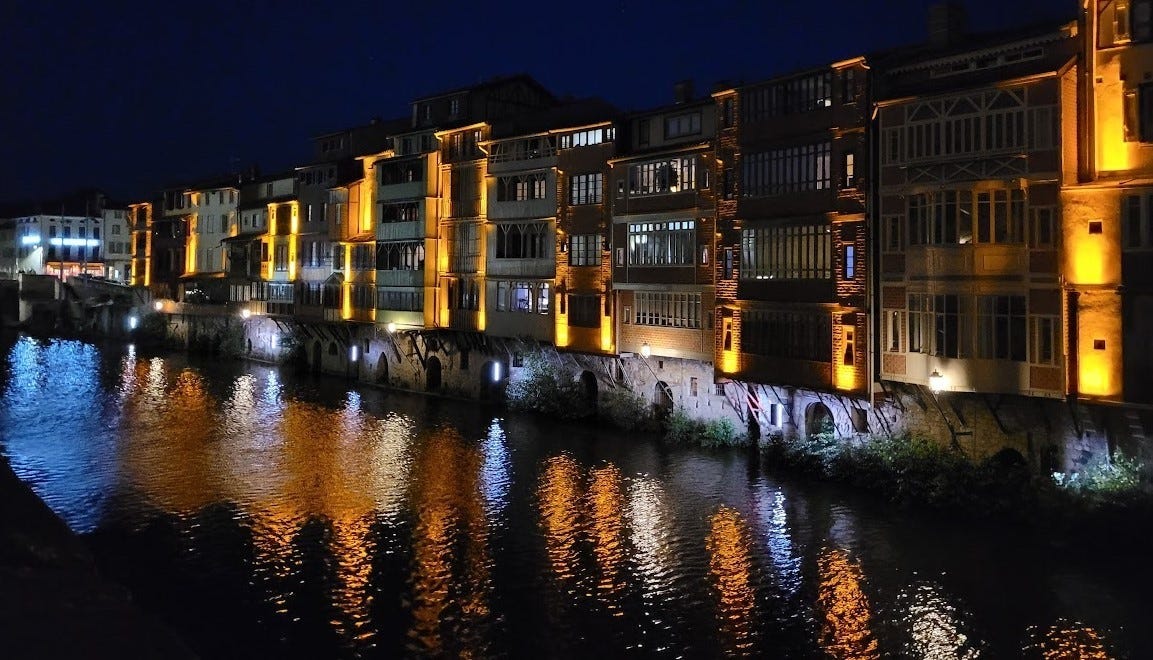
The city is nicknamed La Petite Venise du Languedoc, apparently because a river – not even a canal – runs through it and is lined with pretty buildings. I doubt Castres looks even vaguely like Venice, but the area has become THE postcard-perfect emblem of Castres, and for good reason.
Yet it almost didn’t turn out that way. By the 1970s, this neighborhood had become unsavory; its buildings, some dating back to the Middle Ages, were falling into decay. Some Castrais powers-that-be argued for tearing them all down and starting over from scratch.
Fortunately, city officials came to their senses and decided to purchase and renovate them. The elaborate undertaking, complete with deep-sea divers, started in 1974 and wasn’t completed until 1992.
The edifices bear witness, more than any monument or museum, to the city’s history.
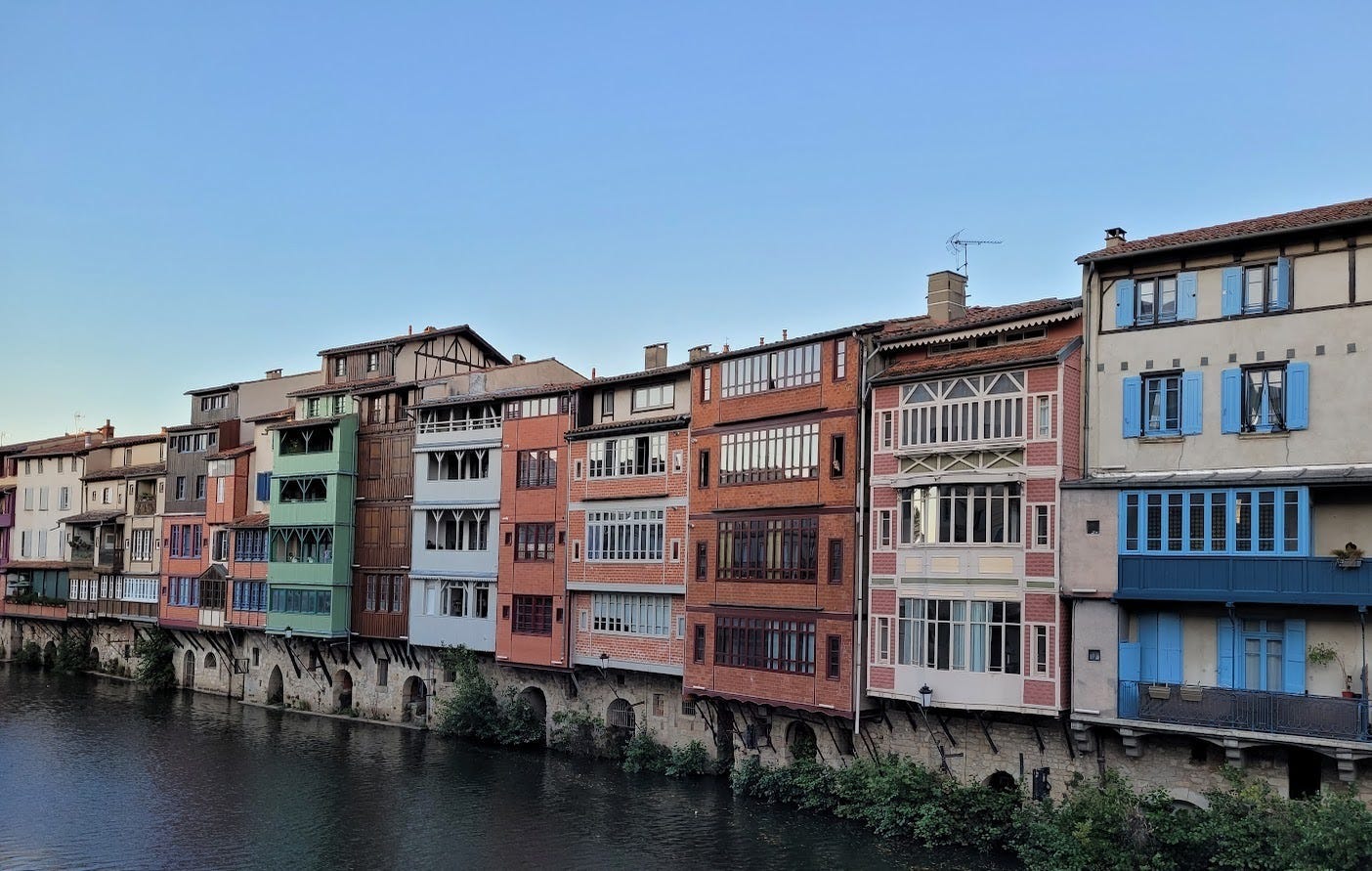
Formerly tanneries, weaving workshops, or fabric makers, their water-level cellars were used for washing wares; the street-level floors were storefronts; above one found the living quarters; and at the top, covered porches to dry the products. The city benefited from this industry well into the 19th century.
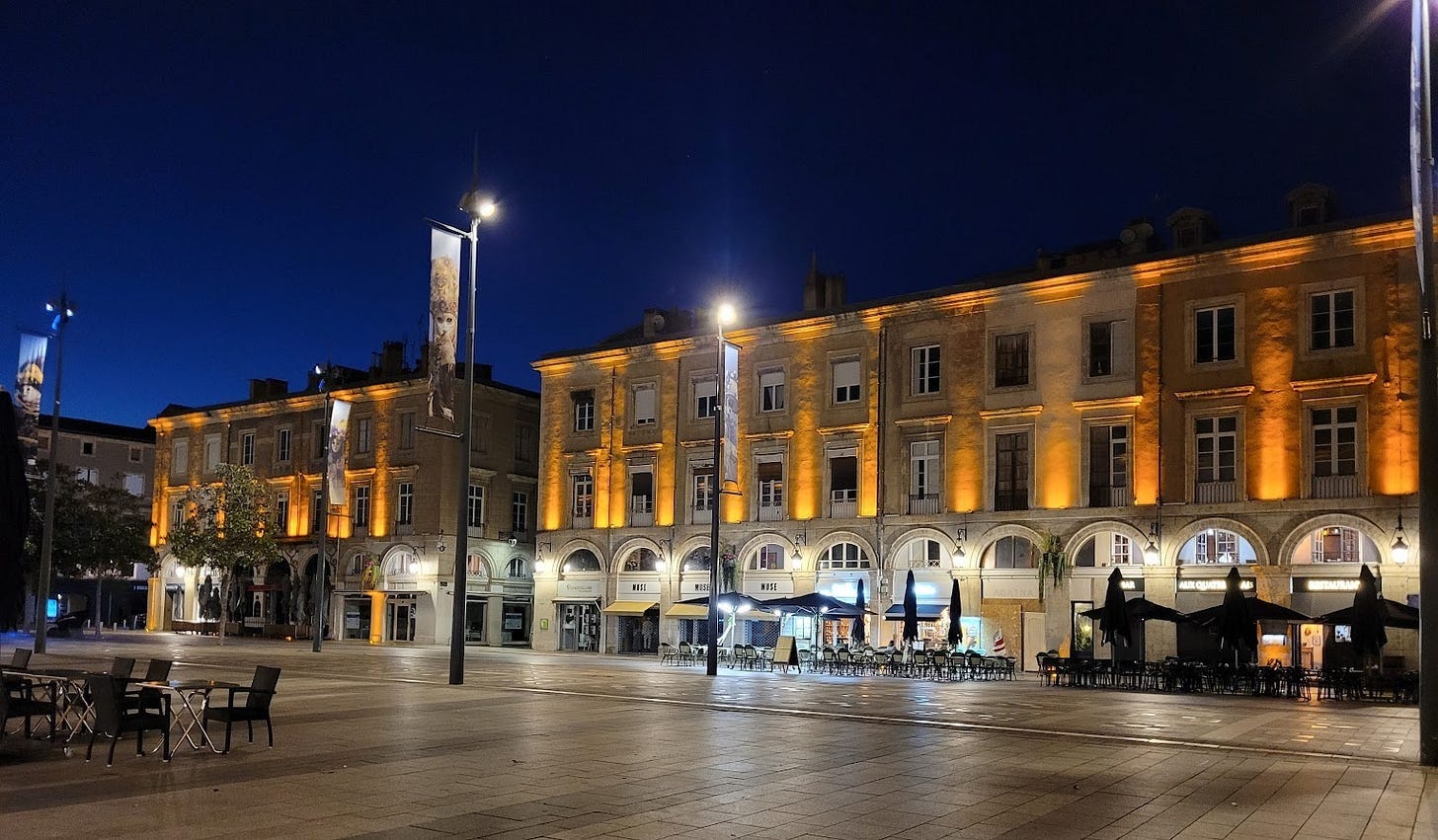
4. La Place Jean Jaurès – my favorite « place » in town
Nearly half the size of the Place du Capitole in Toulouse, this imposing square features a beautifully balanced ensemble of sandstone buildings.
As for its namesake, the well-known French statesman Jean Jaurès was born in Castres in 1859 and assassinated on July 31st, 1914, in front of the Café du Croissant (seriously) in Paris.
Instrumental in founding the French Socialist Party, he’s especially remembered in Occitanie for his defense of workers’ rights during the arduous miners’ strike in Carmaux. The “enfant du pays” graces the Arcades side of the square.
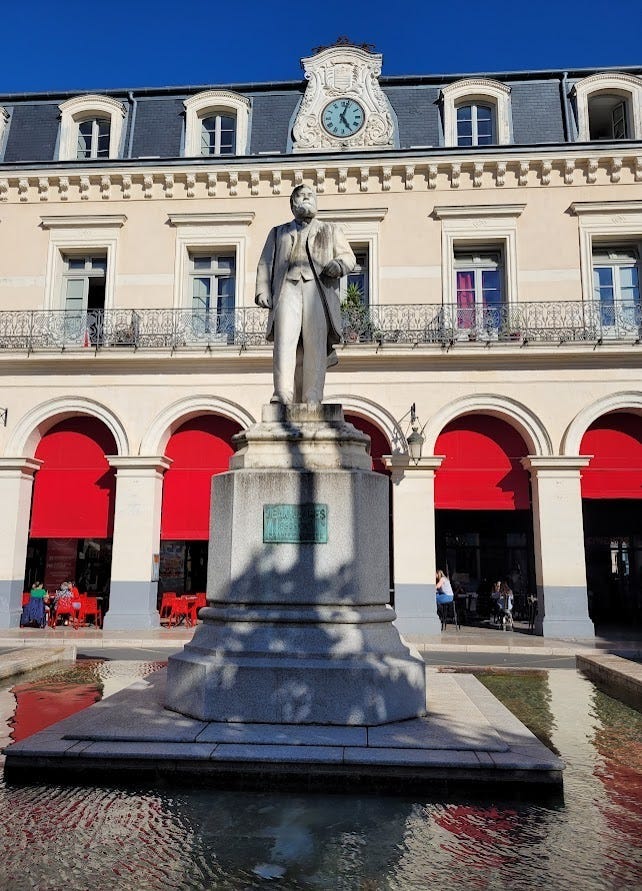
FUN FACT: Jean Jaurès is 4th on the list of French personalities with the most streets named after them, trailing only Charles de Gaulle, Louis Pasteur, and Victor Hugo.
Castres is home to Le Centre National et Musée Jean Jaurès, which I highly recommend if you are interested in political history and can read French.
5. A cloistered bookshop
For some reason, a street now separates Castres’s modest cathedral from its cloisters, which now shelter the city’s main bookstore, La Librairie Coulier.
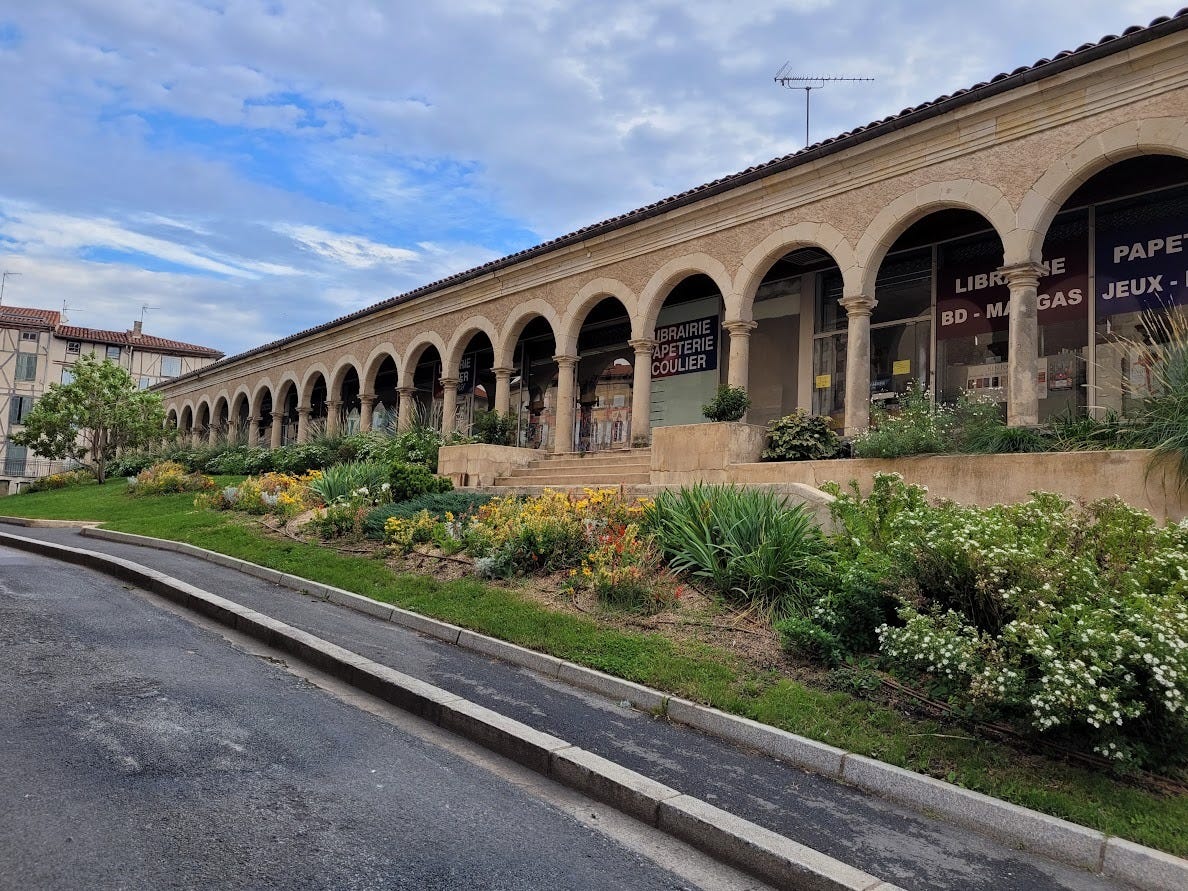
The mélange may lack historical authenticity, but it still makes for a sweet combination.
For a deeper dive into Castres, Tarn, Occitanie, home to 42,700 Castrais and Castraises, you can find the following posts on France in Between, my Substack publication:
Castres, in all its surprising splendor
The best of Castres
Intercity nougatine wars, and a ducky story
Image credits: all images copyright Betty Carlson / author
Introducing Contributor Betty Carlson
Visit her Contributor Page — Explore more of Betty’s work
You have written a very appealing account of Castres Betty - I would definitely visit the impressive sounding art museum, the river side and that square looks utterly graceful - I could see myself there, seeking shade and a cooling drink, with a book to read, h der that hot summer sun.
bonjour Betty, well, well, well. I've not been to Castres, but from your lovely, detailed, and enthusiastic description I feel that I'd really enjoy it! You really brought it to life and to the attention of others like me who haven't been there.
merci mille fois
Judy