

If you’d asked me a couple of weeks ago, I’d have told you I didn’t want zombie attacks in my entertainment. The cultural obsession with vampires, wizards, and monsters that dominated the last two decades just didn’t do it for me.
Until it did.
The zombies got me not via a megabestselling franchise, but through a small production in a black box theater in Paris. It was unfamiliar territory for me; perhaps I was vulnerable.
Paris has 130 playhouses (1), and until last week, I’d only been to one.
In the decade I’ve lived here, I’ve been drawn to classic performances in grand venues: Rudolf Nureyev’s Sleeping Beauty with star dancers at the Opera Bastille, Jean-Philippe Rameau’s Castor and Pollux at the Palais Garnier, Yo-Yo Ma at Notre Dame, and at the Paris Philharmonic. I am in awe of my access to culture on this scale, and grateful to share it with family, especially my daughters, who dance ballet. Yet while I love these shows, I’ve begun to realize that I’ve been missing a large slice of Parisian culture: the humble venue.
Théâtre Lepic
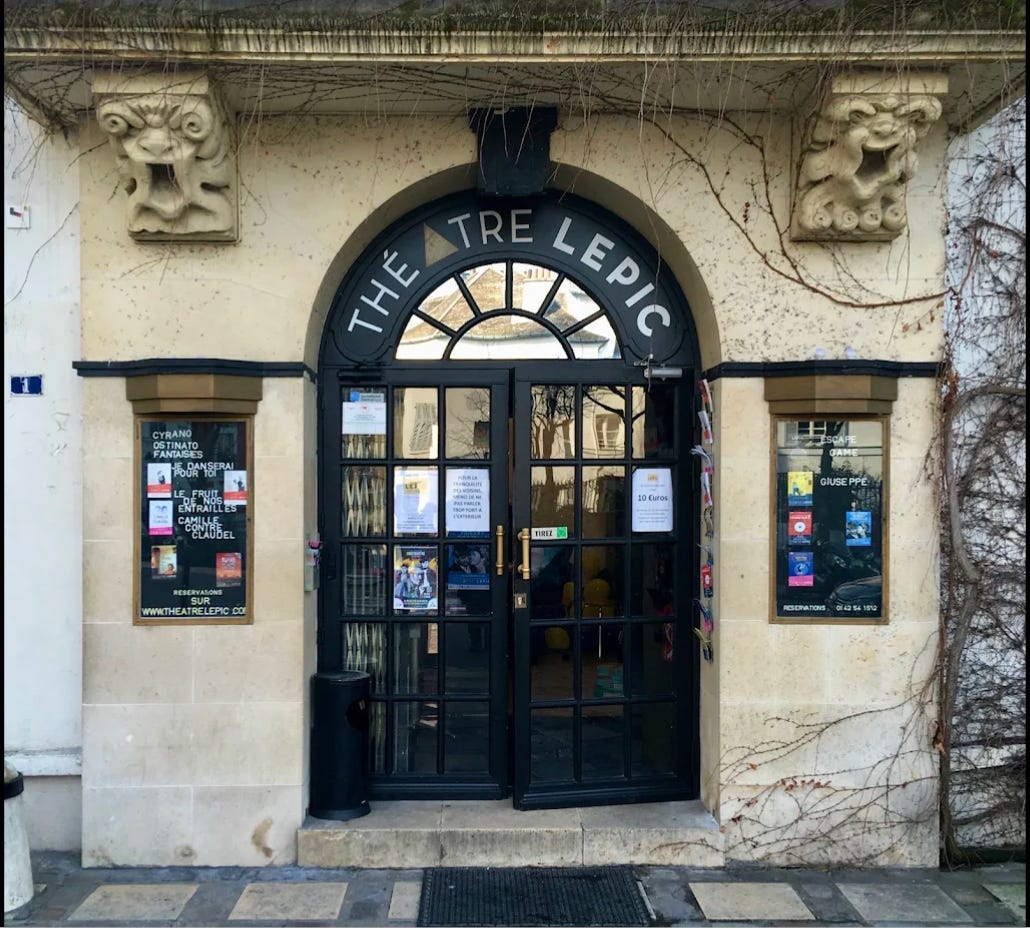
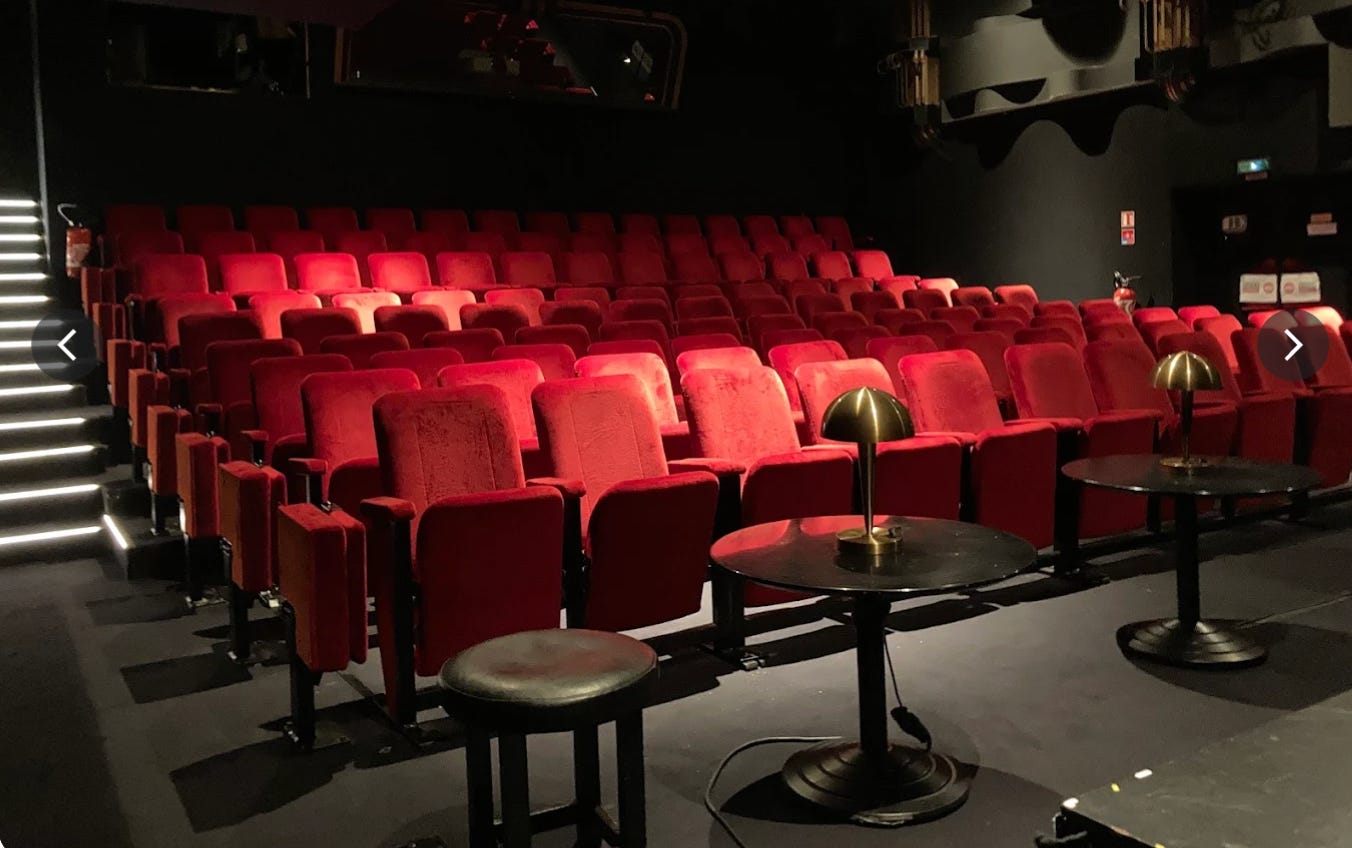
When my husband and I decided to go out for my birthday, we thought it was time to try a small play, which is how we ended up at Théâtre Lepic, in two of its one hundred and fifty seats.[1] We had to walk down three flights of stairs to reach the theater (“Look for the emergency exits,” I told my husband. “I’m not getting stuck down here.”), which, like many historic places in France, is not wheelchair accessible.
For the show Fin, Fin et Fin, three actors filled all the roles of an absurdist comedy about three friends who, on the last day of humanity, drive to the beach to watch the final sunset. Besides natural and political disasters, there are zombie attacks. Many, many zombie attacks.
One stoic victim, with red paper streamers indicating blood spurting out his severed arm, delivered lines reminiscent of Monty Python’s knight who claims “‘tis but a scratch” when his arm is cut off and “just a flesh wound” when the second is taken. The friends who travel to the beach could be from any stoner comedy—they finish playing a video game before they leave home for the last time, they forget the mayonnaise for their hard-boiled eggs—except one of them is a skilled monster killer. Meanwhile, police and metro ticket controllers keep doing their jobs, even in their final hours.
I laughed, giggled, and guffawed my way through an hour and fifteen minutes, and I needed that jolt of silliness.
A few days before the show, I’d received the news of a family member’s death. I was, therefore, not in the mood to go out, especially to see a show that was about the end of the world. But we already had tickets, and the show had been a recommendation from my tennis coach, whose nephew wrote, produced, and performed in the play. Plus, the whole birthday thing—what’s more disrespectful in the wake of loss than refusing to celebrate life?
Théâtre Lepic is in Montmartre, and my husband and I arrived early enough to wander the picturesque streets. After having pushed through a crush of tourists to see Sacré-Cœur over Christmas, it was a relief to see quieter times — though signs hung from apartment windows reading: “Montmartre menacé! Les habitants oubliés?” A souvenir shop recently replaced the last bakery in one section. A Parisian neighborhood without a bakery is no neighborhood at all.
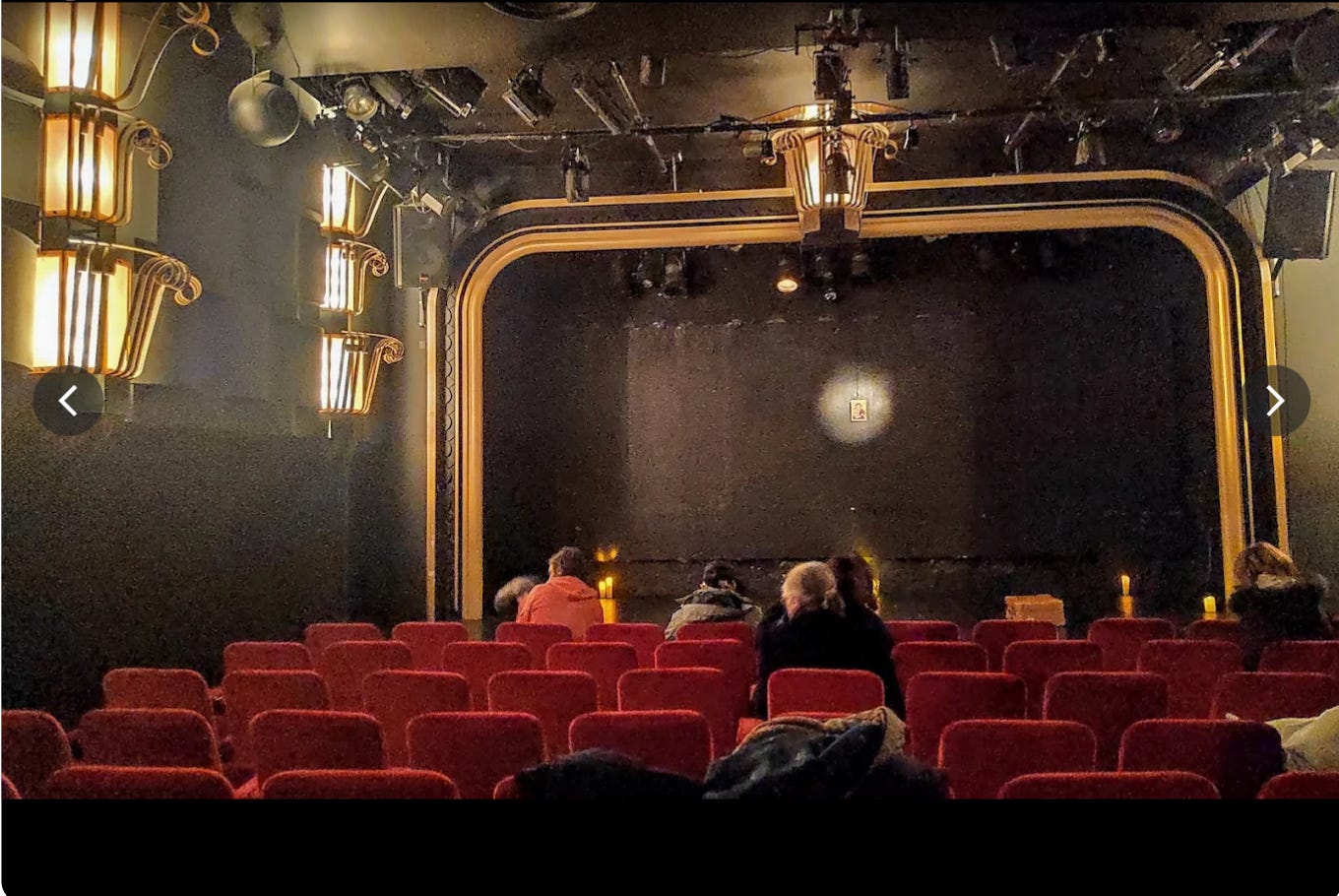
Against the “Disneylandification” of Montmartre stands the bastion of theater. Small-scale, independent theater. Three people on stage, playing six or more roles, including a coked-out President of the Republic who admits to marital infidelity before accidentally revealing that it’s the end of the world and then eventually becoming, yes, obviously, a zombie.
It’s a great play, truly, you should see it. Fin, Fin et Fin, nominated for two Molière awards, has earned its reputation.
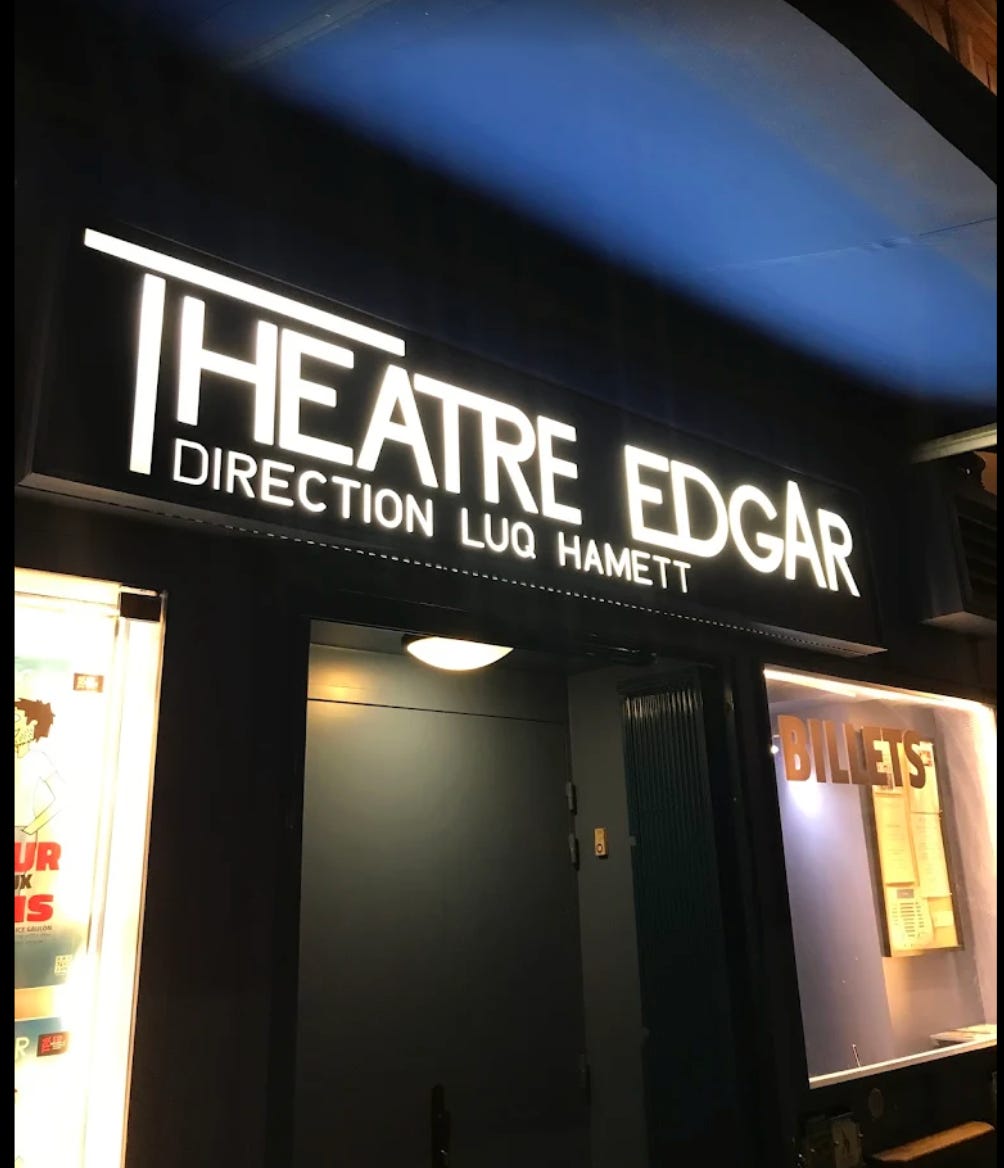
Théâtre Edgar
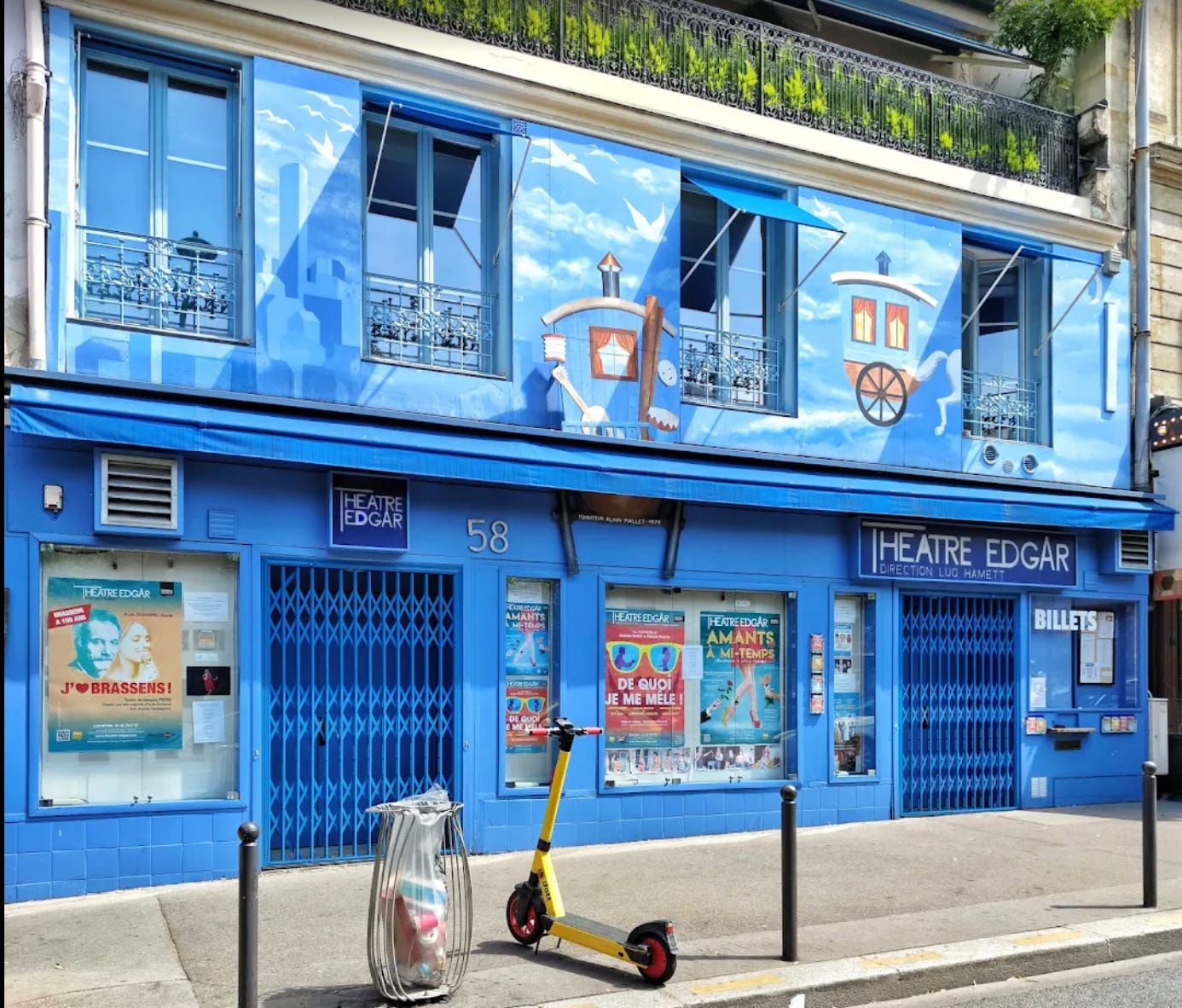
A few days after attending Fin, Fin et Fin, we were back in a theater, this one smaller than the last. Instead of seats, there were padded benches, supposedly containing 132 places, but I think that number assumes you will be touching, if not cuddling with, your neighbor.
My husband’s parents had invited our kids and us to a medley of Molière at the Théâtre Edgar. If you’re not familiar with Molière, he is an actor and playwright who, for the latter part of his career, was supported by Louis XIV. French students study and perform his plays beginning in elementary school, and most French adults can still quote some of his lines. I think of him as France’s Shakespeare. Molière is best known for his farces, and the production we saw was decidedly farcical. Again, three actors played all the roles, sometimes switching costumes and characters onstage.
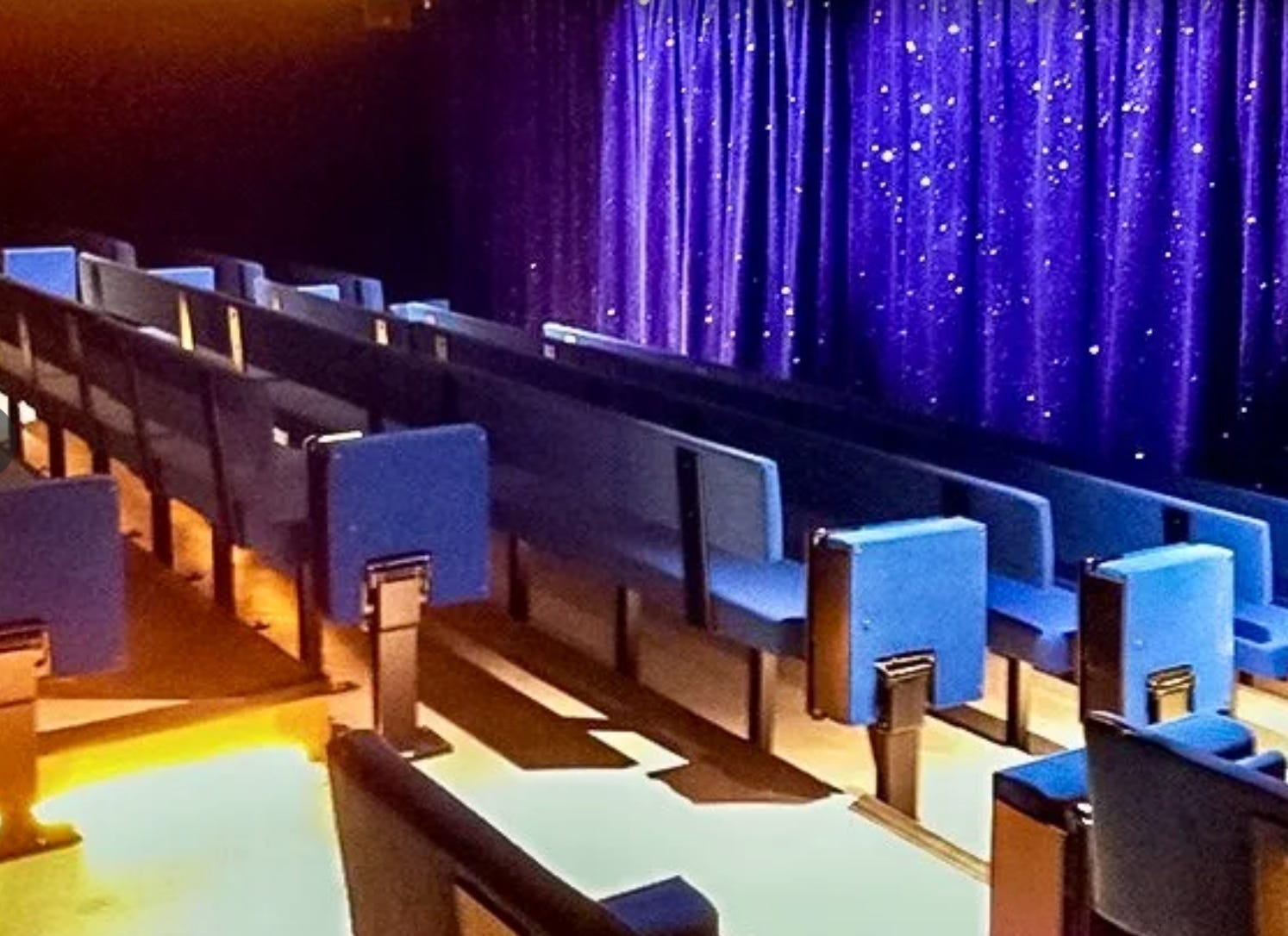
Thanks to my daughters’ school performances, I was familiar with some of the characters and storylines in the mashup: the suspicious miser who keeps moving his treasure to different hiding spots, the foolish bourgeois man who hires a professor to teach him philosophy but who is instructed instead in the pronunciation of vowels (they never get to the consonants).
Molière is pretty funny on his own, but for good measure, the actors provoked the audience into participating and periodically whacked each other with pool noodles.
I enjoyed the show, but the best part was being surrounded by my giggling family and by kids who were shouting hints and misdirections to the characters: “The treasure is hidden behind the curtain, no, the other side!” Or, “The secret code is the second half of ‘Claire de la Lune!”
The small scale of the theater made it easy to participate and easy to fall under the spell of the performance. The actors walked through the aisles and called out to a squirming child to incorporate them into the scene. They took our tickets at the door and, not having a backstage exit, walked us out when they were finished.
Luckily, they left their pool noodles behind.
That’s Paris for you. It’s grand and spectacular, with wide boulevards, gilded bridges, and ornate buildings, but it’s also deeply weird. There are secret passages, hidden histories, and artists still making a living creating new ways to delight and surprise audiences. I’m grateful to the city’s many layers and its wide and deep support and affection for art and culture.
To understand why the city is so committed to its national venues, it’s helpful to see the smaller ones in action. Now I’ve been to three playhouses. Only one hundred twenty-seven to go!
Have you discovered a small Paris theatre that surprised you — a hidden venue, an unexpected performance, a night that reminded you why the city never stops giving? Tell me in the comments.
Citations:
[1] By contrast, Opera Bastille has 2,745 seats and the smaller Palais Garnier contains 1,979.
Introducing Contributor Elizabeth Joubert
Visit her Contributor Page — Explore more of Elizabeth’s work→
Thanks for reading MyFrenchLife™ – MaVieFrançaise®! This fabulous article by Elizabeth Joubert is public, and we encourage you to share it.
MyFrenchLife™ – MaVieFrançaise® is a reader-supported publication. To receive new posts and support my work, consider becoming a free or paid subscriber.
I've been to the Essaïon many times, and to several others but I don't remember their names. There are some really good plays in these small venues.