
Domaine Évremond
Autumnal Harvest; Climate Change; French Wildfires & Champagne Taittinger launches its first edition Sparkling Wine from maritime Kent in England - & it’s rather good.

Introduction:
Video, YouTube, California Dreamin’, The Mamas and Papas
I began writing this article on the 1st September 2025. Summer has come to an end and the seasons are changing the season began changing weeks ago. Autumn has definitely arrived and Harvest is early this year.
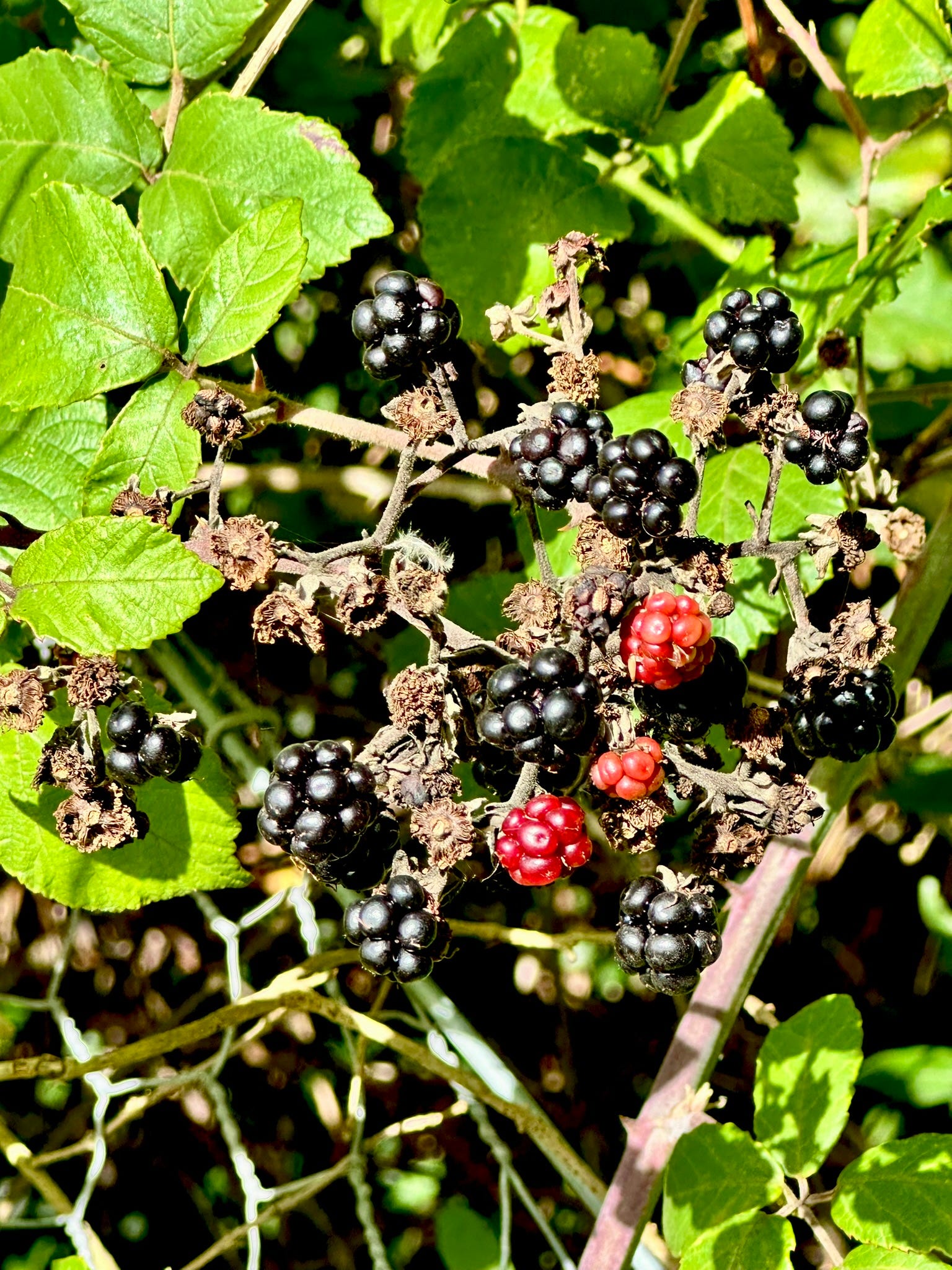
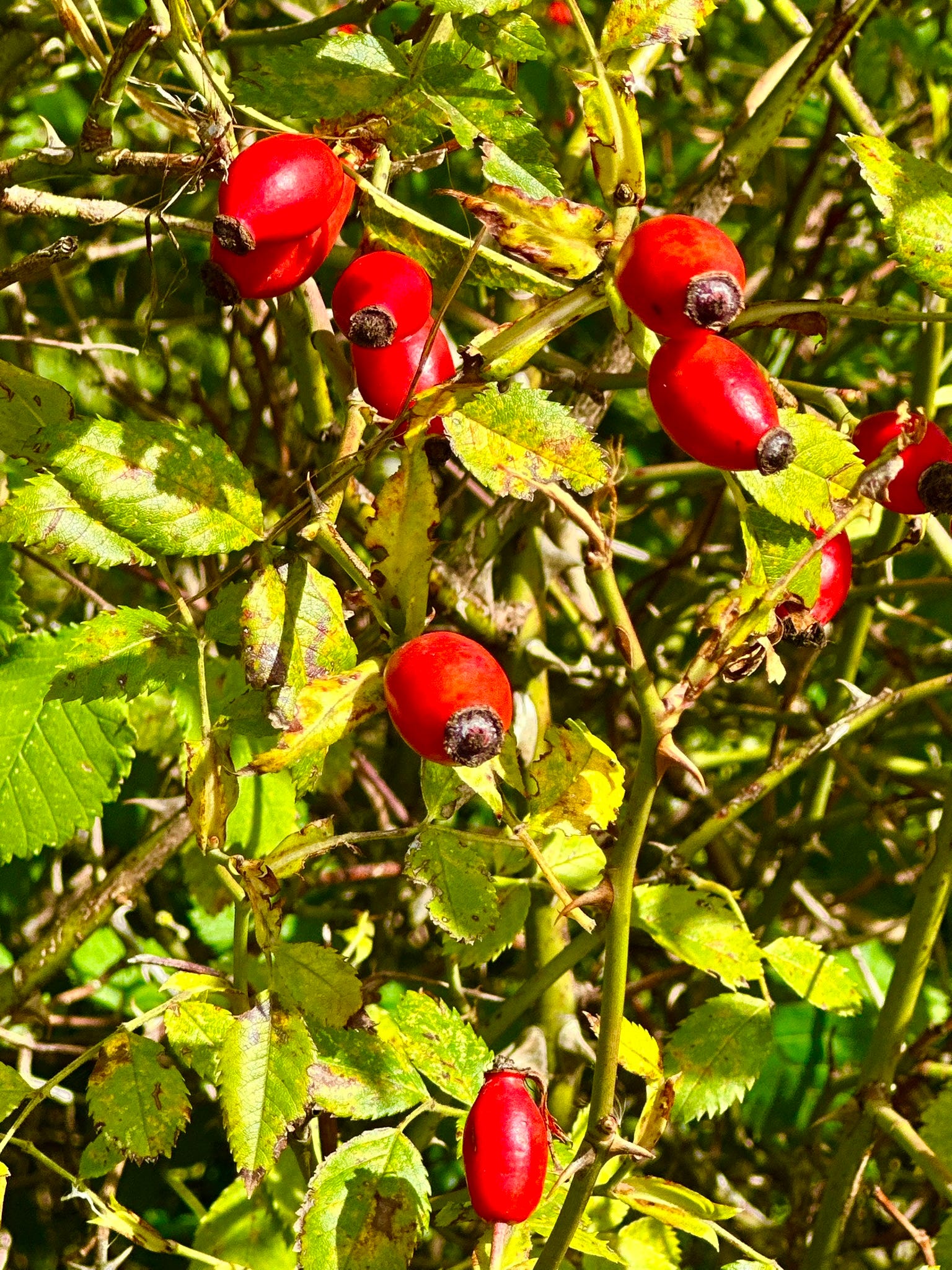
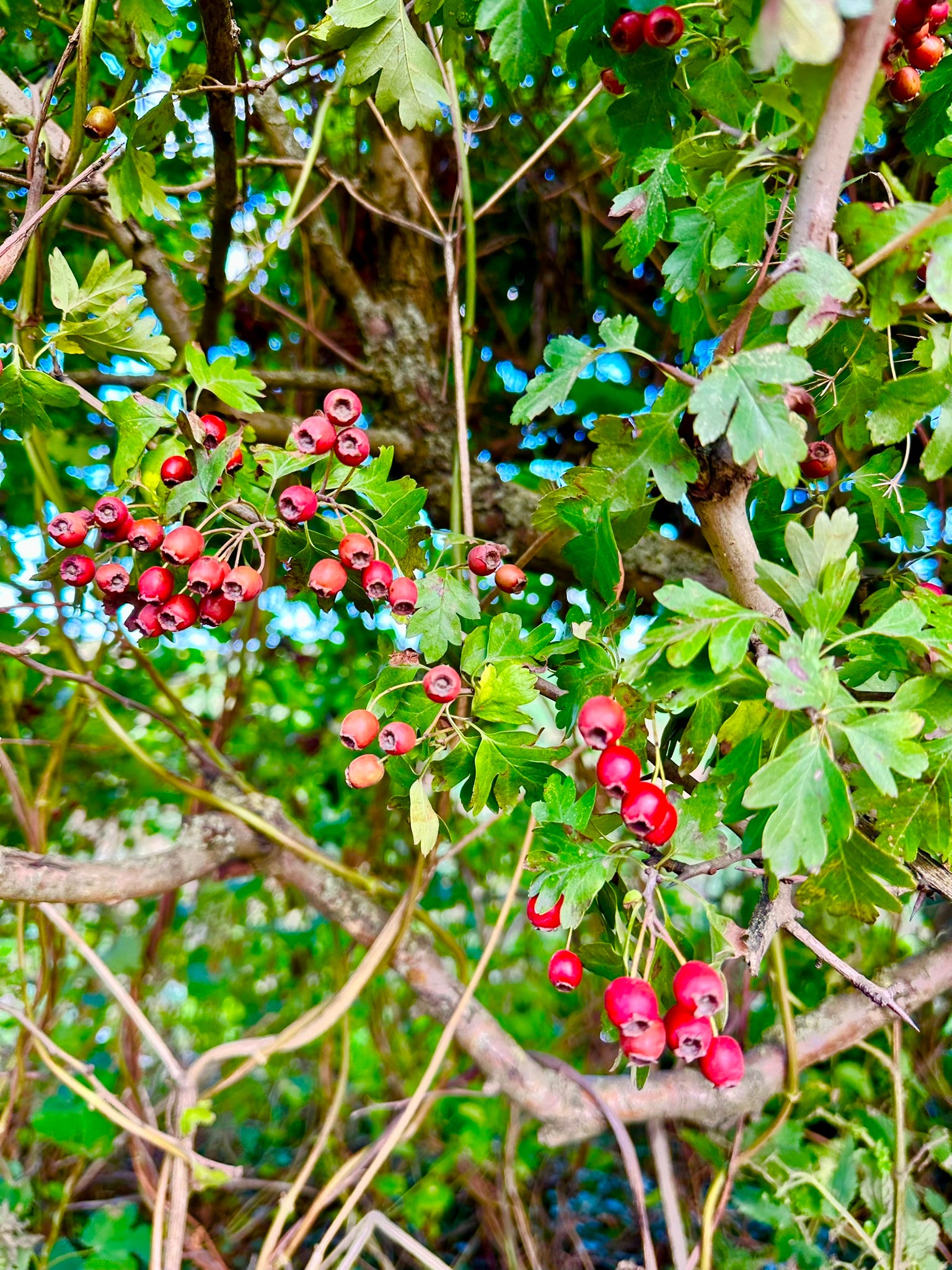
Photos: author, Wild Autumn Berries
The blackberries, rose hips, hawthorn and sloe berries on the hedgerows ripened weeks earlier this year; the swallows and swifts began their return journey to Africa much earlier this summer and
Video: author, swifts above Basilica San Petronio, Bologna, Italy
in suburbia the leaves were falling on the lawns and pavements far too early.
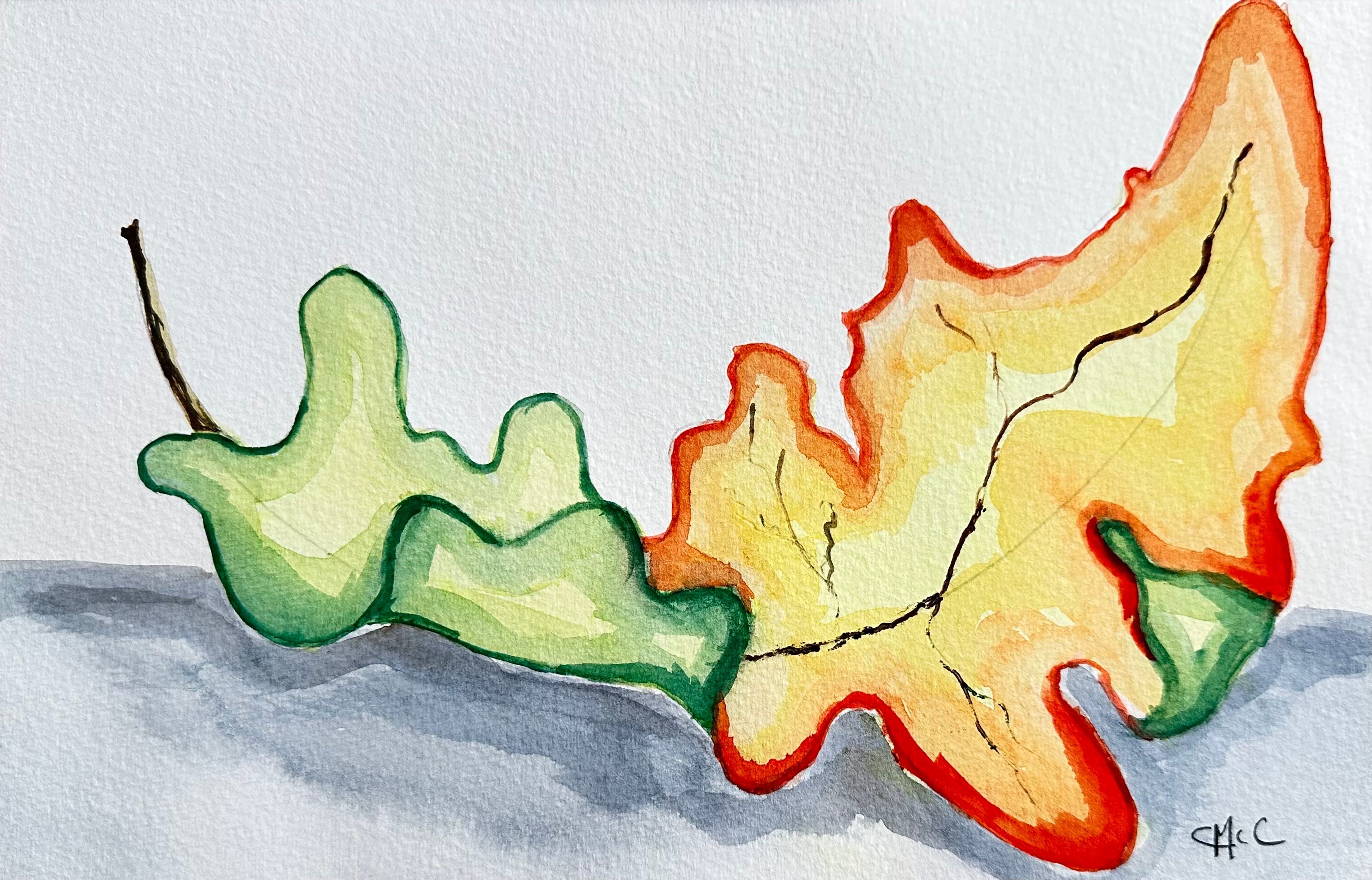
Painting: author, Autumn Leaves, watercolours
In France, some wine growers began harvesting their grapes as early as 19th August this year (Laurent Miquel, wine maker in the Languedoc on Instagram).
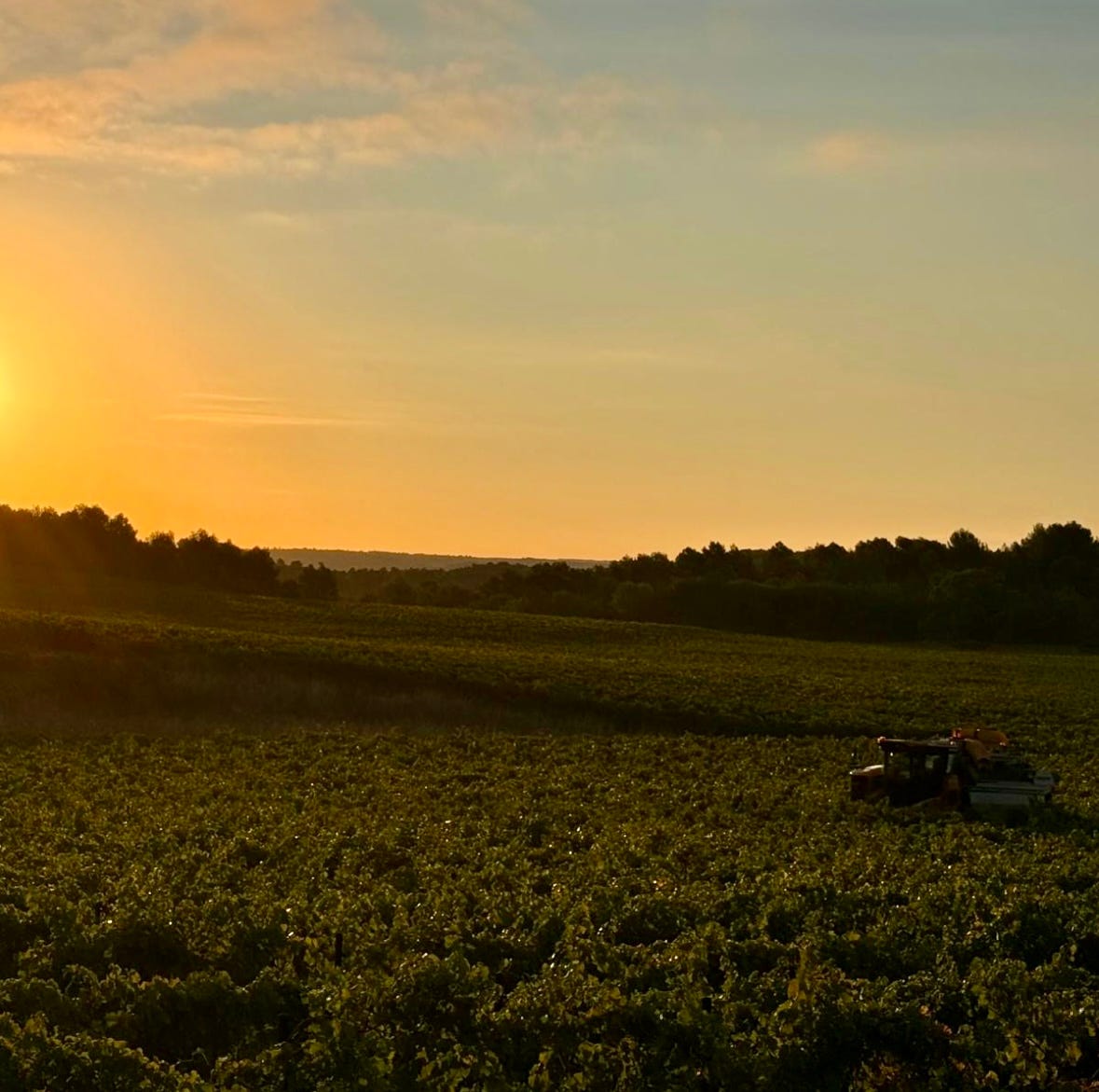
Photo: Laurent Miquel
Convection Currents:
I was previously a Physics teacher for 28 years. That’s normally a conversation killer. Period. But bear with me…
Convection, a method of heat transfer, was obligatory on the syllabus:
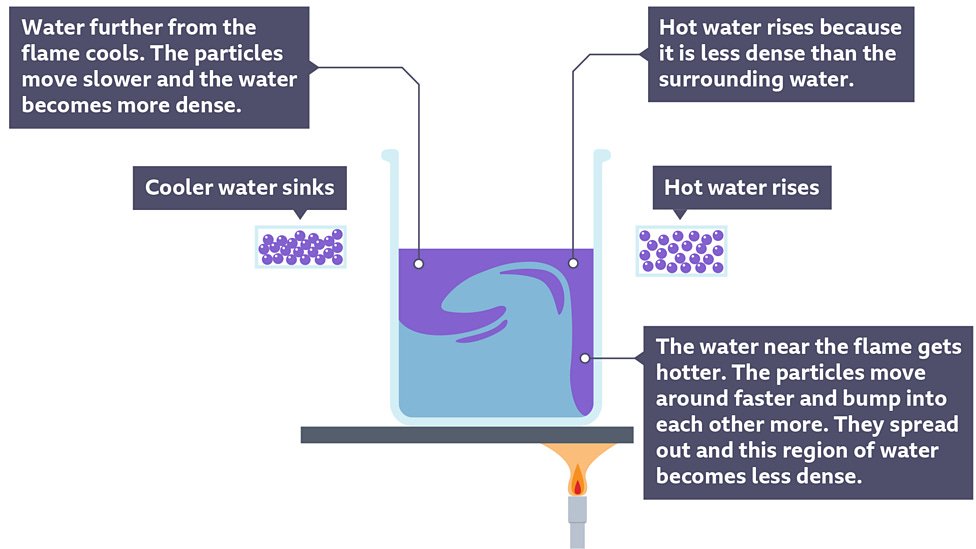
Diagram: BBC Bitesize
In essence, a hot less dense fluid rises and a cold more dense fluid sinks.
Climate Change:
Climate change is caused by increasing amounts of carbon dioxide gas in the atmosphere.
Incoming Heat radiation from the sun penetrates through the atmosphere. Some of this radiation is absorbed by the planet and some is reflected off the Earth’s surface.
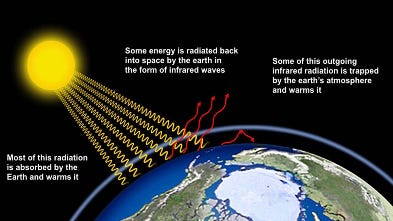
Slideshow image: An Inconvenient Truth, Al Gore, 2006, Duarte.com
Prior to the 19th/20th century Industrial Revolution, a significant proportion of the outgoing reflected radiation then escaped back out through the atmosphere, ensuring that our planet Earth did not overheat.
Photosynthesis in the leaves of trees absorbs carbon dioxide helping to maintain low levels of carbon dioxide in the atmosphere.
However, the United Nations states:
…since the 1800s, human activities have been the main driver of climate change, primarily due to the burning of fossil fuels like coal, oil and gas.
The long-term widespread burning of fossil fuels and global deforestation causes high levels of atmospheric carbon dioxide. This prevents reflected heat radiation from escaping, causing the temperature of the Earth to increase.
Former U.S. Vice-President Al Gore produced his documentary film An Inconvenient Truth in 2006. It won two Academy Awards for best documentary feature and best original song.
In 2007, the Nobel Peace Prize was awarded jointly to Al Gore and the UN Intergovernmental Panel on Climate Change (IPCC) “for their efforts to build up and disseminate greater knowledge about man-made climate change and to lay the foundations for the measures that are needed to counteract such change.”
The documentary film is even more relevant today.
In this first video clip, Al Gore explains how the burning of fossil fuels has led to “off the chart” increases in levels of atmospheric carbon dioxide which is causing global temperatures to rise. He uses a graph that goes back 650,000 years to compare today’s alarming increase in carbon dioxide levels.
Video Clip: YouTube, excerpt 1 CO2
The United Nations commented:
The average temperature of the Earth’s surface is now about 1.2°C warmer than it was in the late 1800s (before the industrial revolution) and warmer than at any time in the last 100,000 years. The last decade (2011-2020) was the warmest on record, and each of the last four decades has been warmer than any previous decade since 1850.
In May 2025, the United Nations shared the World Meteorological Organisation’s 2024 report which stated:
2024 was the warmest year on record.
In 2024 the average estimated global temperature was between 1.34°C and 1.41°C higher than pre-industrial levels (1850-1900).
There is an 86 per cent chance that global average temperatures will exceed 1.5°C above pre-industrial levels in at least one of the next five years.
Increasing global temperatures has caused the melting of glaciers and the polar ice caps. In the next two clips, Gore presents unequivocal evidence of this.
Video Clip: YouTube, excerpt 2 Glacier melting
Video Clip: YouTube, excerpt 3 Arctic Ice Cap melting
Why is the melting of glaciers and polar ice caps so significant?
Firstly, the melting of the ice caps is causing sea level rises, leading to flooding.
Secondly, the melted freshwater from the ice caps and glaciers dilutes the salinity (saltiness) and reduces the density of sea water, which therefore sinks more slowly.
So the Gulf Stream in the Atlantic, which is effectively a gigantic convection current system is slowing down.
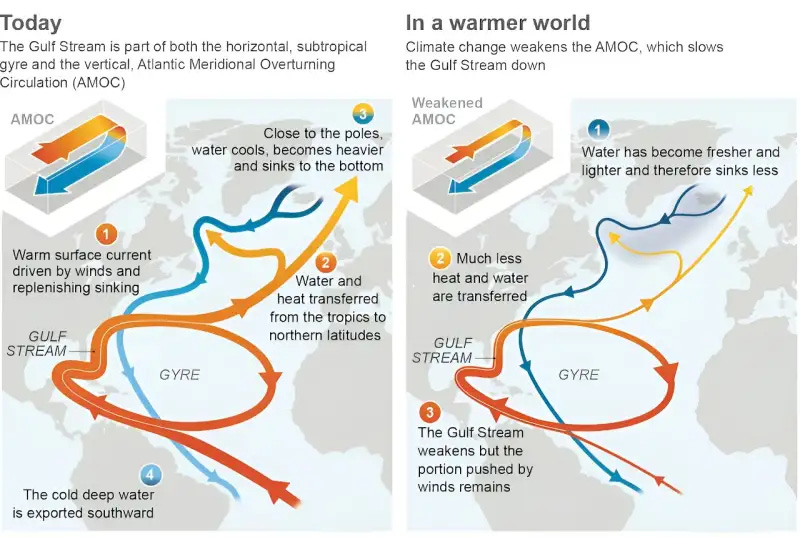
Diagram: How the Atlantic Ocean circulation changes as it slows. IPCC 6th Assessment Report, 17/02/24 https://phys.org/news/2024-02-glaciers-gulf-stream-extreme-climate.amp
This causes extremes weather events, such as flooding as seen in Pakistan this summer and Germany and Belgium in July 2021; droughts, water scarcity and wildfires as experienced in France, Spain, Portugal, Greece, Turkey, the Balkans and San Luis Obispo and Santa Barbara in California in summer 2025; catastrophic storms and hurricanes like Katrina in New Orleans in 2005 AND decreasing biodiversity.
It would be all too easy to become despondent and think what’s the point? However, we need to remain positive and proactive.
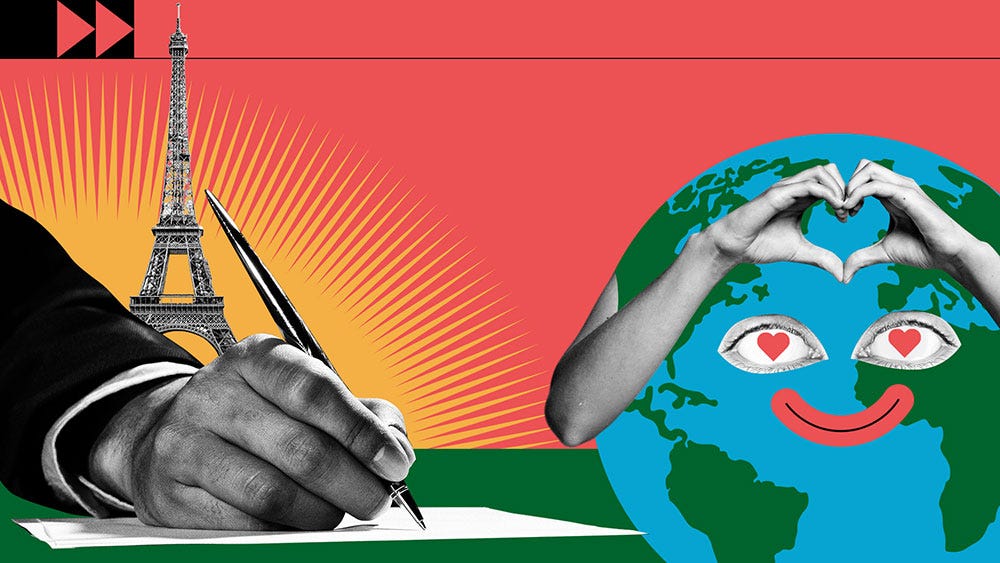
The UN Climate Change Conference (COP21) in Paris in December 2021 resulted in 195 parties (194 States plus the European Union) joining the Paris Agreement. This agreement is a legally binding international treaty, which sets a goal to guide nations to reduce global greenhouse gas emissions to contain global temperature increase to below 1.5°C above pre-industrial levels.
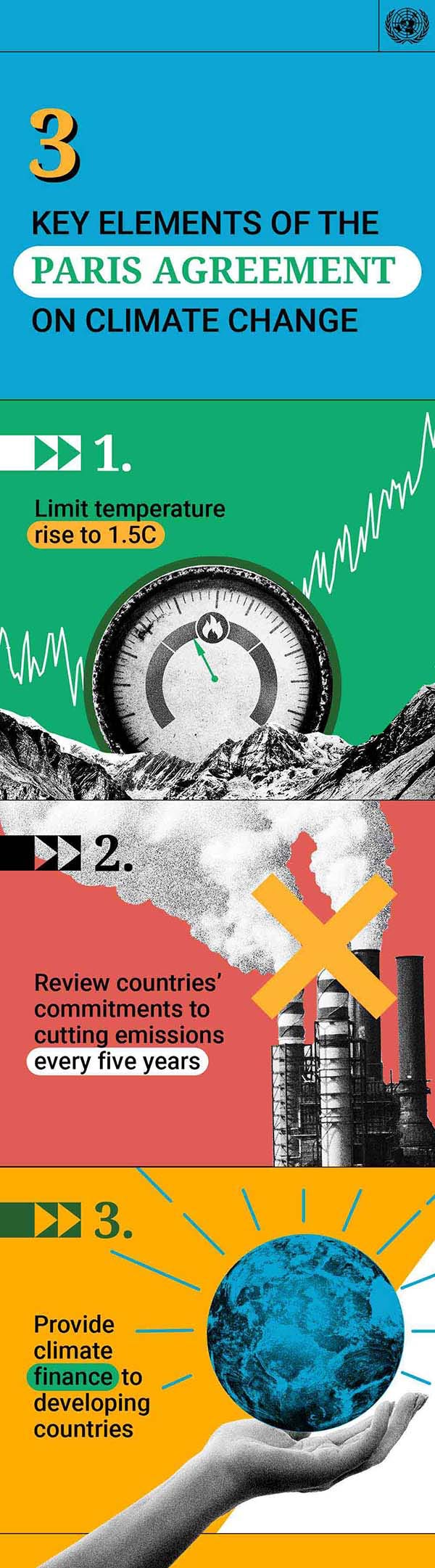
The key action needed to reduce the fossil fuel emissions involves switching energy systems to renewable energy sources such as solar and wind power.
French Drought and Wildfires Summer 2025:
Lucie Patch-Britton recently published an article about the heartbreaking struggles of farming in the Creuse region during the drought in France in 2025.

France experienced its worst wildfires in 70 years this summer. In the Aude department in Languedoc one person died, approximately 20 people were injured and the wildfires burned 17,000 hectares of land, including vineyards in the Corbières AOC area. That’s the size of Paris and Bordeaux combined.
Video: YouTube, France 24
2,000 firefighters, 500 firefighting vehicles, the gendarmerie, army personnel and water-bombing planes were involved in fighting the wildfires.
On Instagram, the Corbières AOC appellation body shared:
Chers amis, cela semble être un cauchemar dont on ne se réveille pas. Personne pour nous pincer pour que tout cela s’arrête. Encore un incendie... et pas des moindres. L’été 2025 restera définitivement gravé dans nos mémoires comme l’été de l’enter.
Alain Deloire, professor of viticulture and a specialist on the effects of water stress in the vineyard caused by drought, on inspecting the wildfire damage shared that there were four levels of damage to the vines, divided into indirect damage from temperatures near the fire and direct damage from the flames.
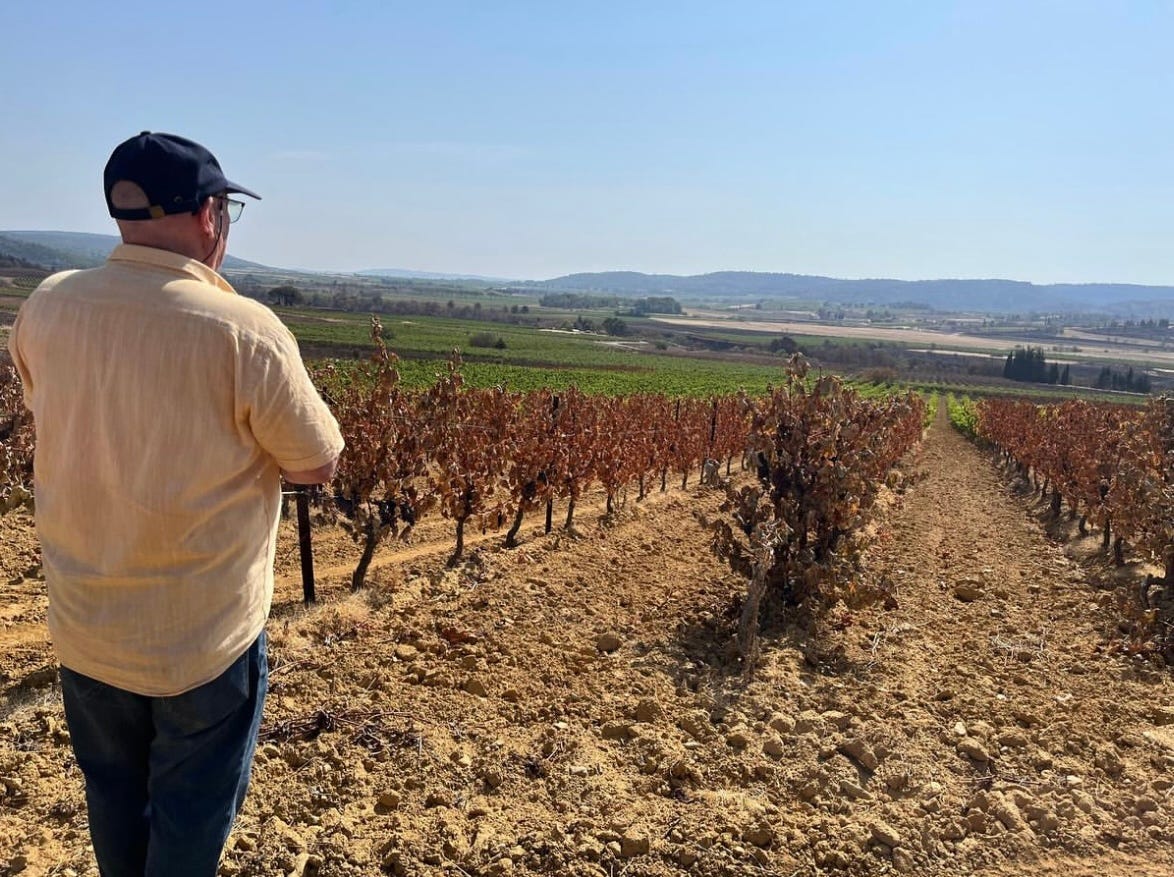
Photo: Corbières AOC appellation Instagram account.
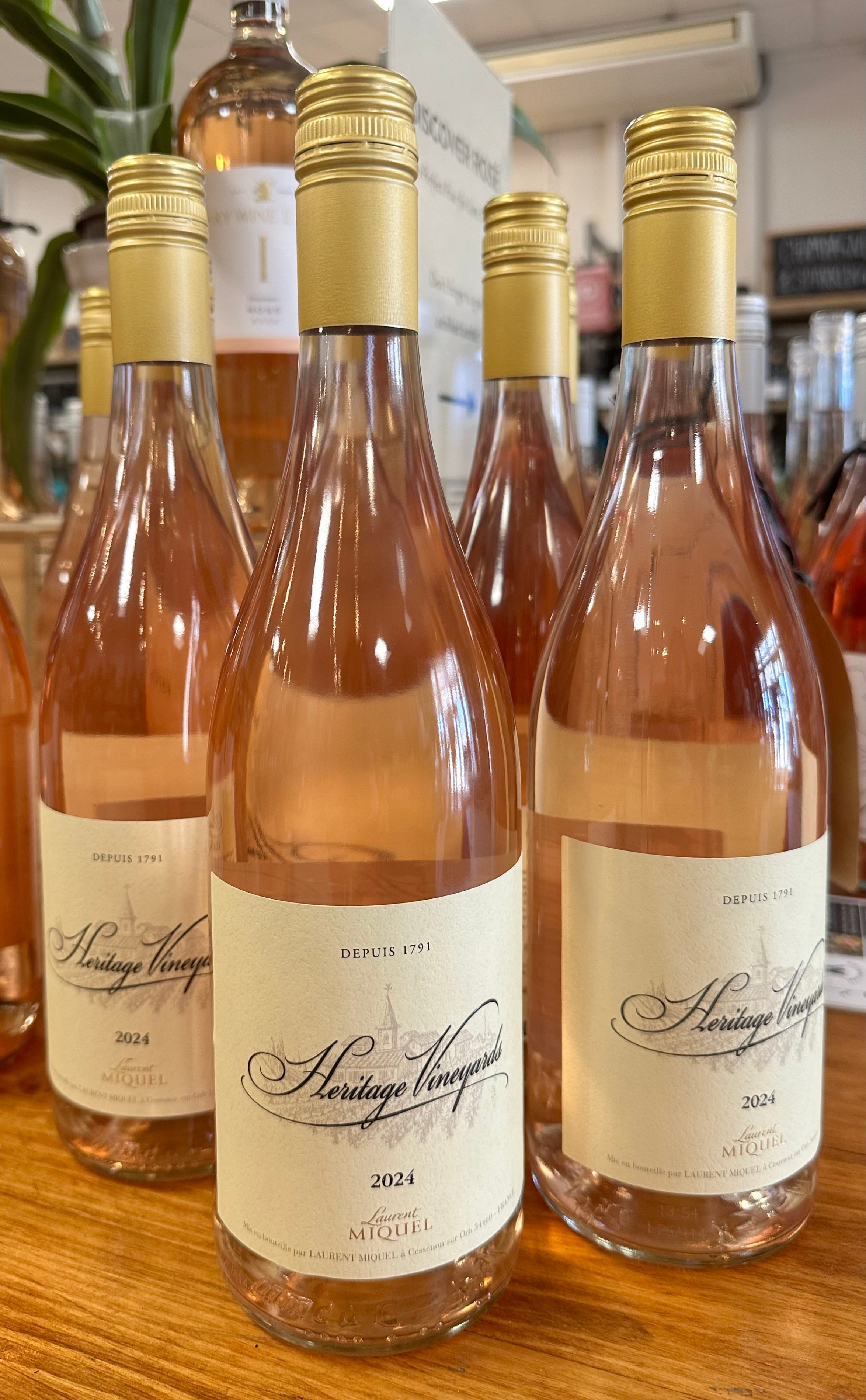
Photo: author
Laurent Miquel an eighth generation Languedoc winemaker; married to Neasa Corish, an Irish Science graduate of Trinity College Dublin; runs a 300 year old family wine estate, Château Cazal Viel, established in 1791.
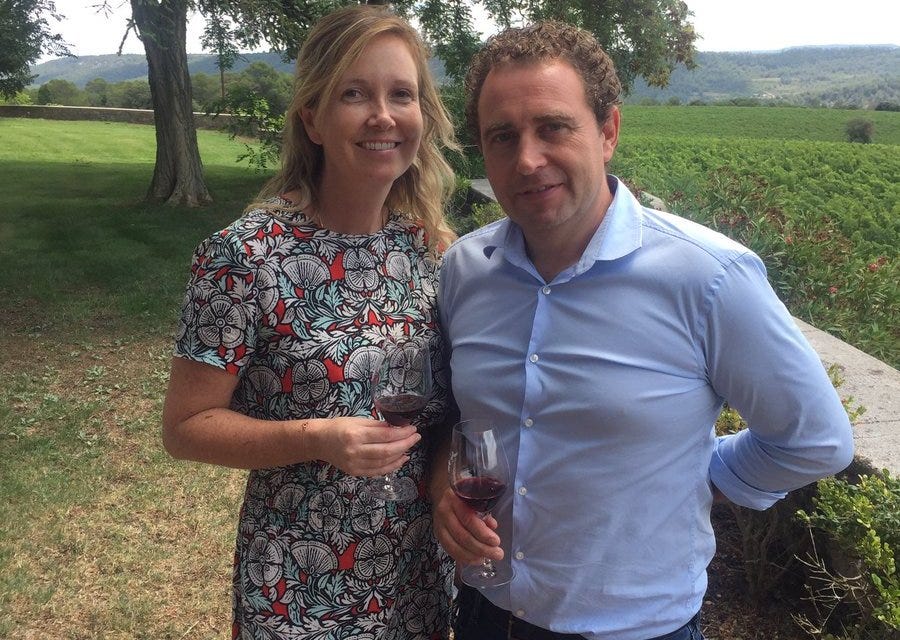
Photo: https://winespiritwomen.com
Following the August wildfires, Laurent Miquel commented:
We’ve always known that making wine is about listening. To the land, the climate, the people around us. This summer is asking us to listen harder - to adjust, to protect and to think long-term. The vines will endure. But so must our care for the land that gives them life.
In June 2025, the European Environment Agency shared:
Europe is the fastest warming continent in the world and climate risks are threatening its energy and food security, ecosystems, infrastructure, water resources, financial stability, and people’s health.
Wine Making in England:
Historically, three decades ago, the taste of English wine could be a bit too abrasive and you would probably have one glass and move on to something else.
Wine textbooks agree that between 30 and 50 degrees latitude either side of the equator is the best location for growing wine. Champagne is one of the most northerly growing regions at 50 degrees.
There’s a fascinating book by Henry Jeffreys MW called Vines in a Cold Climate (2023).
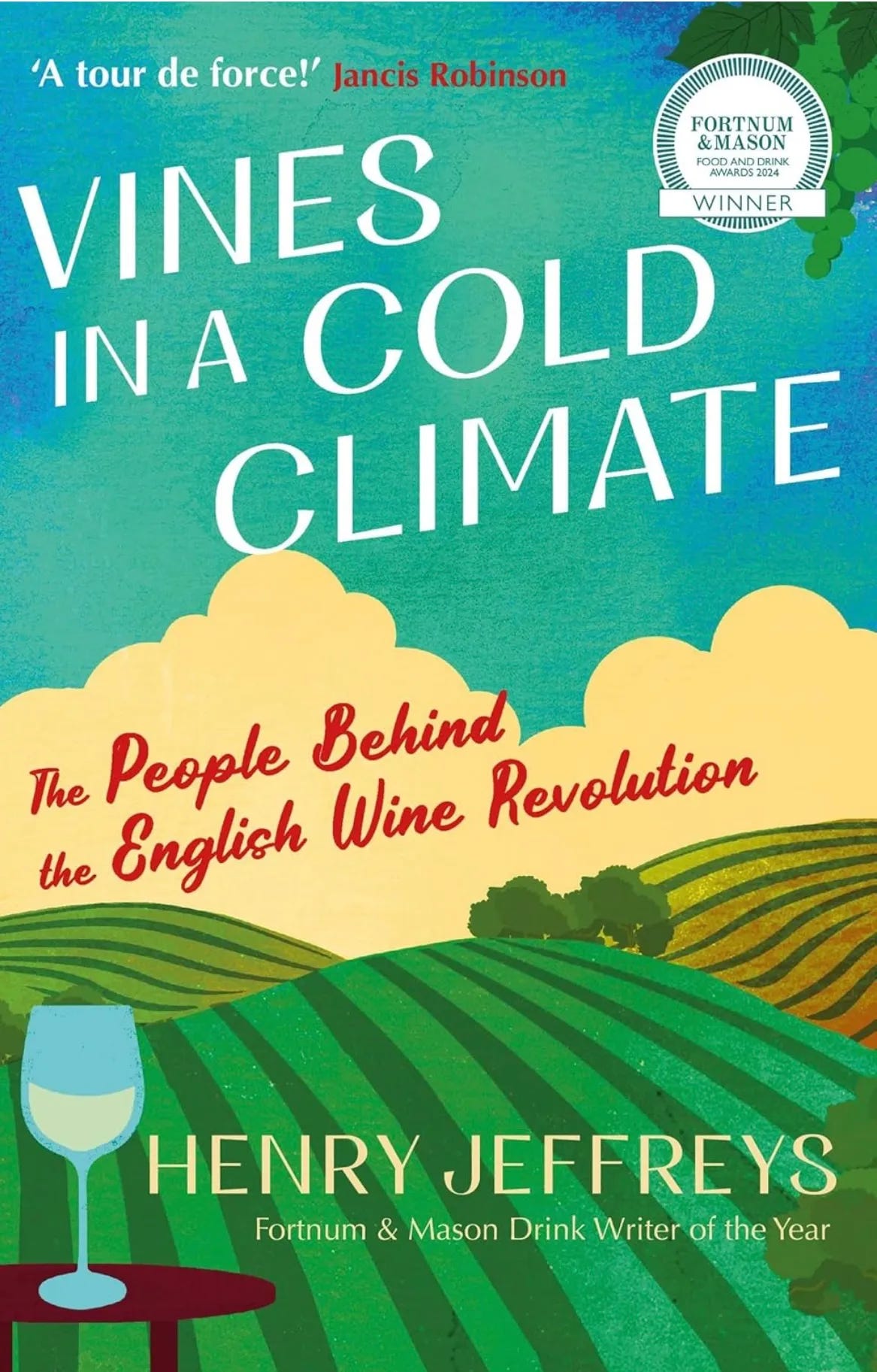
Photo: Amazon
The title is a nod to Nancy Mitford’s novel Love in a Cold Climate (1949).
Of Climate Change, Jeffreys says:
My aim is to show how English wine went from a joke to world class in 30 years. There’s no doubt that the changing climate has played a huge part in this story. Global warming has so far been good for English wine, though it hasn’t all been positive. Warm winters followed by cold springs bring the risk of frosts like those which wreaked such havoc in 2017.
There is a wide range of very different winemakers creating wine in England including:
Ex journalist Chris Wilson of Cambridge winery Gutter & Stars is making wine in his cellar, employing his children to assist with the pigéage (crushing the grapes by foot).
Irishman Dermot Sugrue of Sugrue South Downs is the creator of the gorgeous The Trouble with Dreams that I toasted my “retirement” with.
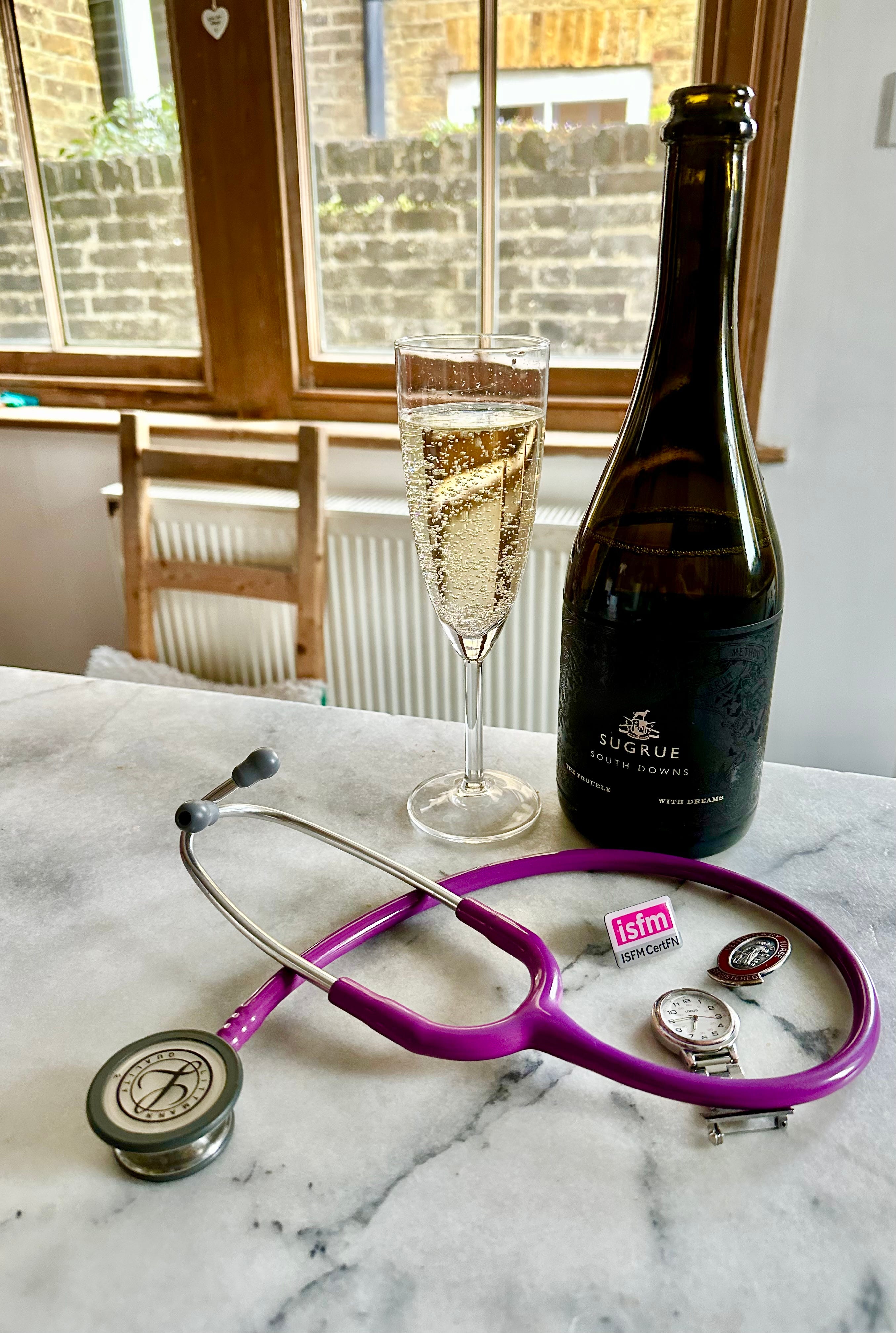
Photo: author
Simpsons Wine Estate in Elham Valley just south of Canterbury.
Elvis & Kresse Wesling purchased 17 acres of Grade 3 agricultural land in Painters Forstal near Faversham in 2020, where they have planted 12000 vines of PIWI grapes in a regenerative vineyard. PIWI is an abbreviation of the German phrase “Pilzwiderstandsfähige Reben”, referring to fungal resistant hybrid grape varieties. They use sheep to graze between the rows of vines. They are hoping that this Autumn will be their first year when they can harvest a few grapes - enough for their first experimental batch of wine.
Climate change is resulting in a longer growing season and more sunlight, that’s good for English wine because there is more time for the fruit to ripen and develop. Yet it’s still quite cool and not as unbearably hot as it’s becoming in more southern European wine regions in France, Italy, Spain, Portugal and Greece.
So the acidity of English wine is starting to decrease and the sugar level is now increasing. This is creating a perfect meeting point, particularly in a sparkling wine.
Domaine Évremond, Chilham, Kent:
On a blustery, unseasonably cold May day in 2017, the cream of Britain’s drinks press descended on a field just outside Faversham in Kent for a milestone event in the history of English wine. Taittinger was planting vines in southern England - and we had been invited to take part.
The week before, late spring frosts had damaged vines across the country. Some growers had lost 80 per cent of their crop. Combine that with all the uncertainty about the previous year’s referendum result, in which Britain had voted by a narrow margin to leave the European Union, and you might say that Taittinger’s timing could have been better.
Thus Henry Jeffreys begins his book Vines in a Cold Climate.
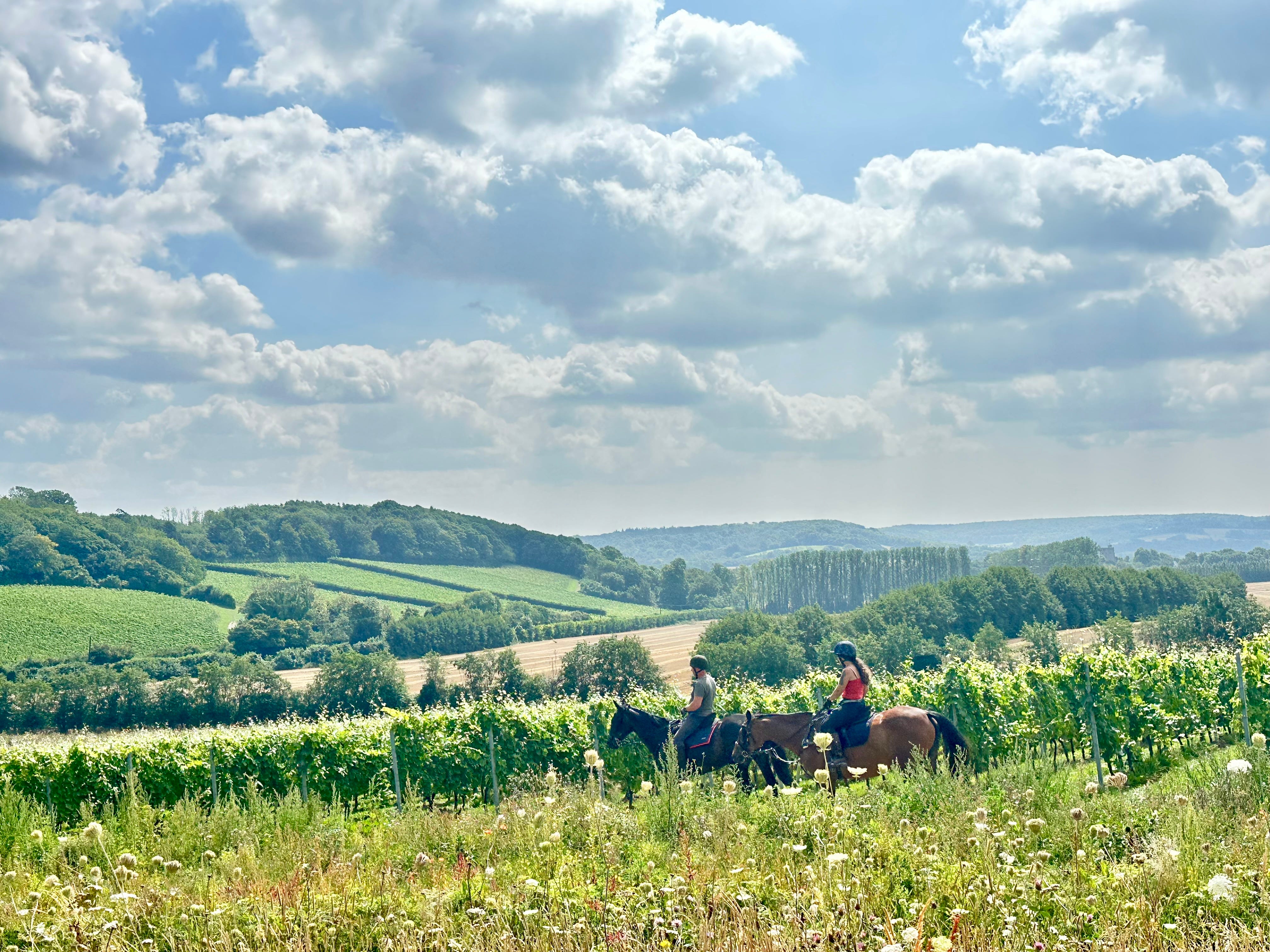
Photo: author
The Beginning of the Story:
Back in 2013 - 2014, two long time friends, Pierre-Emmanuel Taittinger, of Taittinger Champagne and his good friend, Patrick McGrath, Master of Wine and CEO of Hatch Mansfield were talking.
Patrick McGrath is the sole UK importer, marketing agent and distributor for Taittinger Champagne.
Pierre-Emmanuel wanted to add an English wine to the Taittinger portfolio, so the two of them were travelling around visiting some English wineries.
Pierre-Emmanuel had a light-bulb moment and said “My friend, I don’t want to work with another winery. Why don’t we make a wine together?” And Patrick agreed.
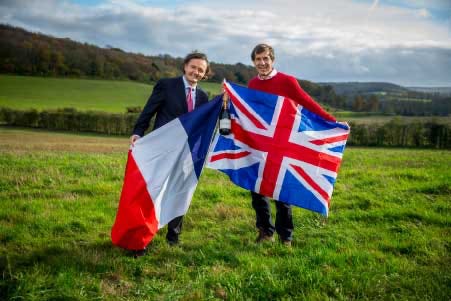
Photo: Taittinger
The Business Model:
Pierre-Emmanuel was quietly confident about this proposal because Taittinger had already used the identical business plan in a winery project in California in 1987.
Domaine Carneros is located in the Los Carneros region between Napa Valley and Sonoma County. The vineyard contains 140 hectares, 90 of which are planted with Pinot Noir and 50 with Chardonnay. The vineyard experiences a long, moderately cool growing season, tempered by the breezes and lingering fog of the San Pablo Bay. Temperatures in this American viticultural area (AVA) are cooler than Burgundy, yet warmer than Champagne. The USA agent for Domaine Carneros is Kobrand, who own a minority share in the winery.
Taittinger were keen to use the same business plan with the vineyard being part owned by Taittinger and by their UK distributor.
Finding the location for the Vineyard:
Stephen Skelton MW is mentioned in Vines in a Cold Climate. He is highly knowledgeable about planting and growing vines in England. Stephen founded what would become Chapel Down vineyard in Kent in 1977. This is who you go to when you want to make a wine in England.
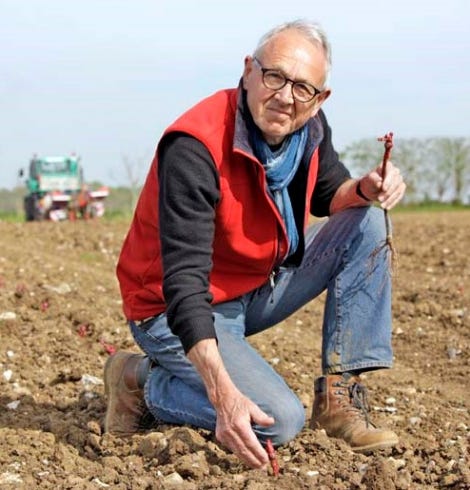
Photo: https://www.mastersofwine.org/stephen-skelton-mw
Stephen Skelton and Patrick McGrath are fellow Masters of Wine and good friends. He advised Patrick to focus on Kent, because it is this sunniest county in the whole country. Latitude 51 degrees.
Geologically, some parts of Kent have identical soil to Champagne. There is a large geological syncline called the Paris Basin. This chalky, alluvial soil can contain flint nodules in places.
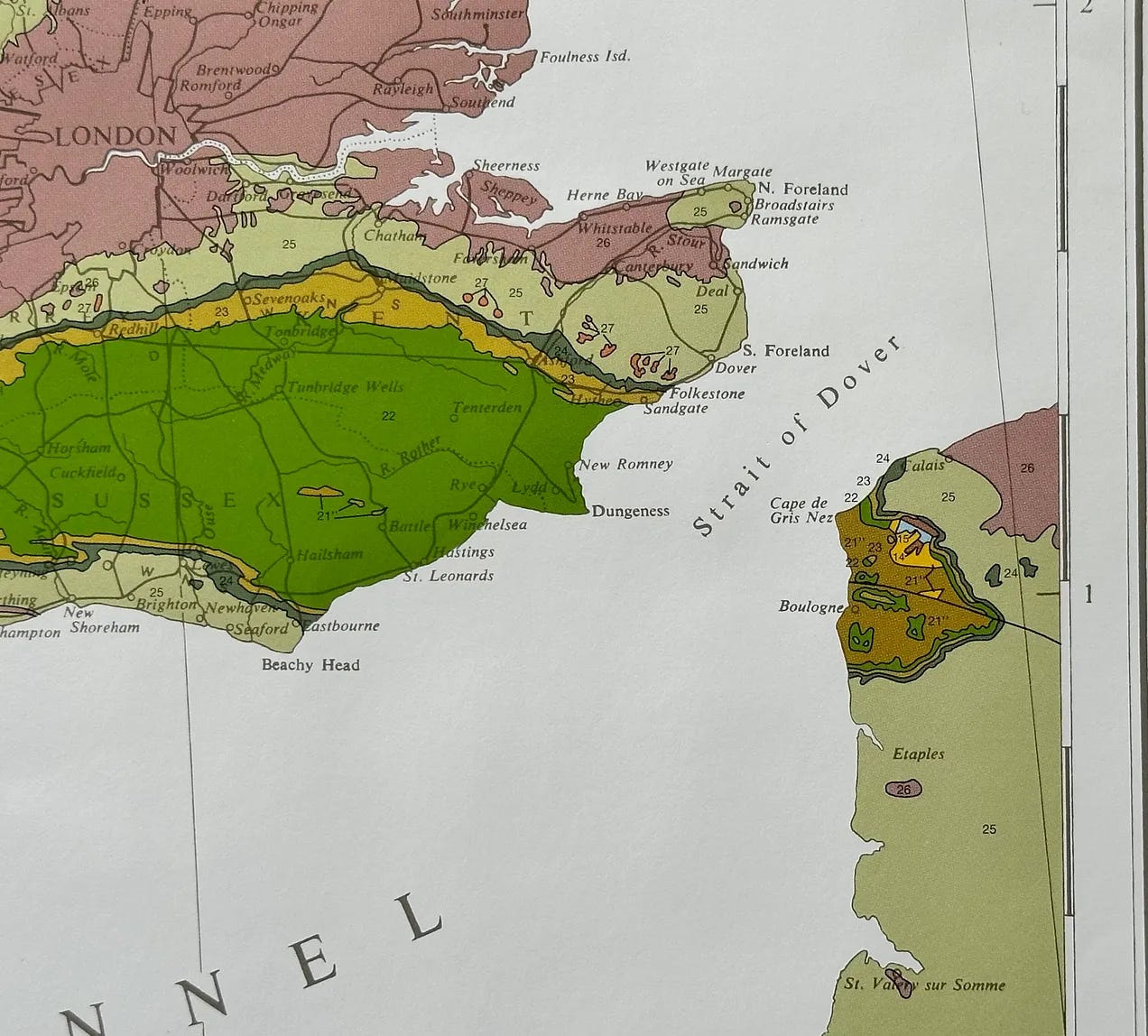
Photo: author, contains British Geological Survey materials © UKRI [1969]
This is the same soil in Champagne, going through under Normandy, the Loire Valley, under the English Channel, into Sussex and Kent.
Patrick McGrath and Pierre-Emmanuel spent 18 months searching for the right location in Kent.
The Fruit Farmer:
In 2015, Pierre-Emmanuel Taittinger and Patrick McGrath came across Stone Stile Farm outside the village of Chilham.
The land was put up for sale in 2014 by fourth generation fruit grower Mark Gaskain, one of the biggest apple growers in the UK. He grows about 60 million apples, in addition to smaller amounts of pears and plums.

Photo: LinkedIn
Gaskain made the decision to sell some of his land because his family had experienced trouble when selling soft fruits to supermarkets, resulting in financial loss.
Gaskain thought the soil was poor; it’s insufficiently fertile for growing fruit trees. But in a viticulture sense, it’s perfect for vines.
When Pierre-Emmanuel and Patrick McGrath came across this land for sale, they recognised that the site provided the right amount of deep free-draining top soil on top of chalk, with south and southwest facing slopes, at an ideal altitude 50 to 90m above sea level and a maritime microclimate (15 km from the sea). Flint nodules are interspersed through the chalk.
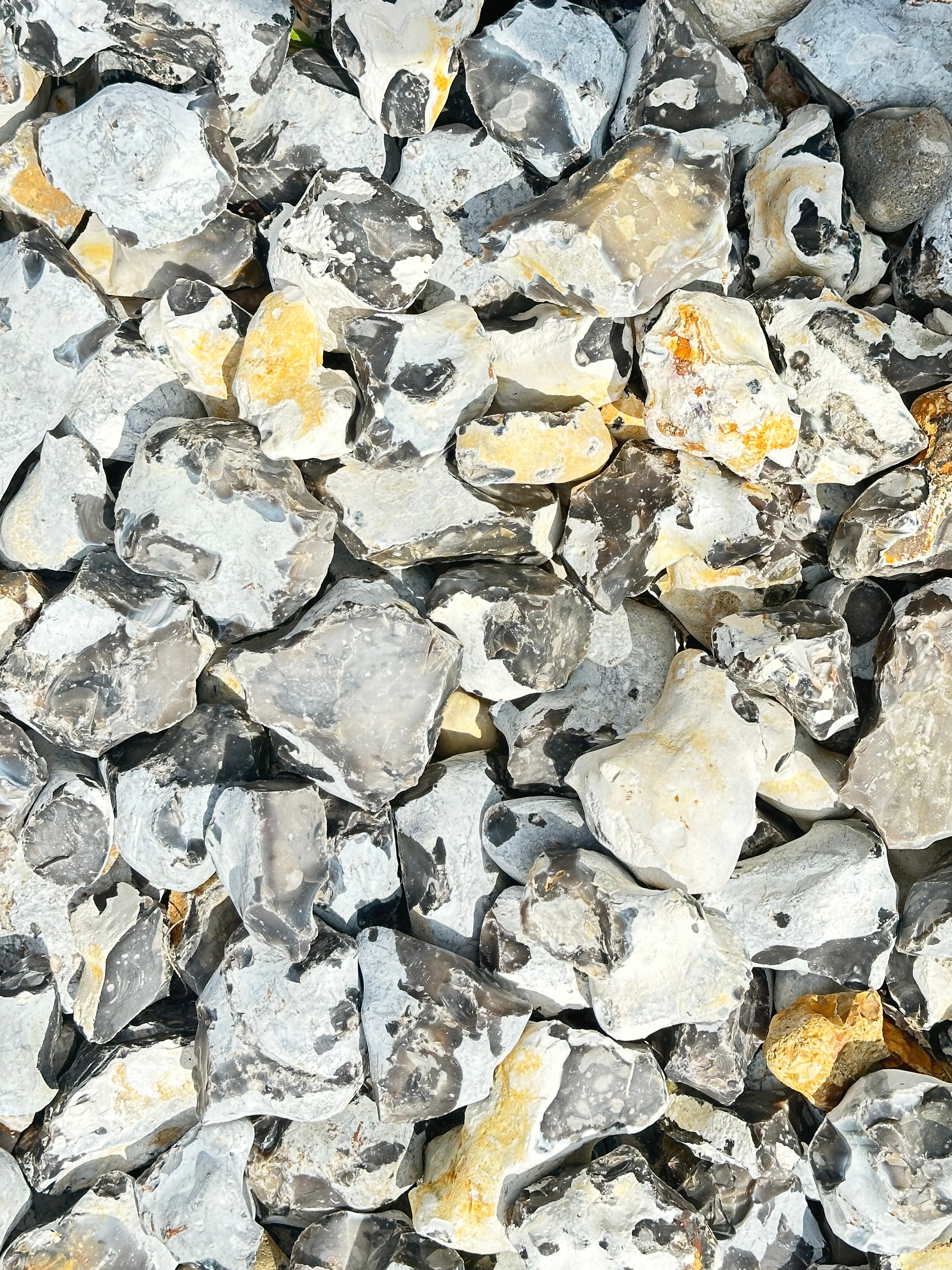
Photo: author
The soil isn’t too nutrient rich and it doesn’t retain water like other soils. This is important as vines need to be stressed somewhat to flower further and therefore produce more grapes.
Champagne Taittinger and Patrick McGrath purchased 69 hectares of land from Stone Stile Farm in Chilham, Kent and Domaine Évremond was launched at Westminster Abbey in December 2015.
The Grapes:
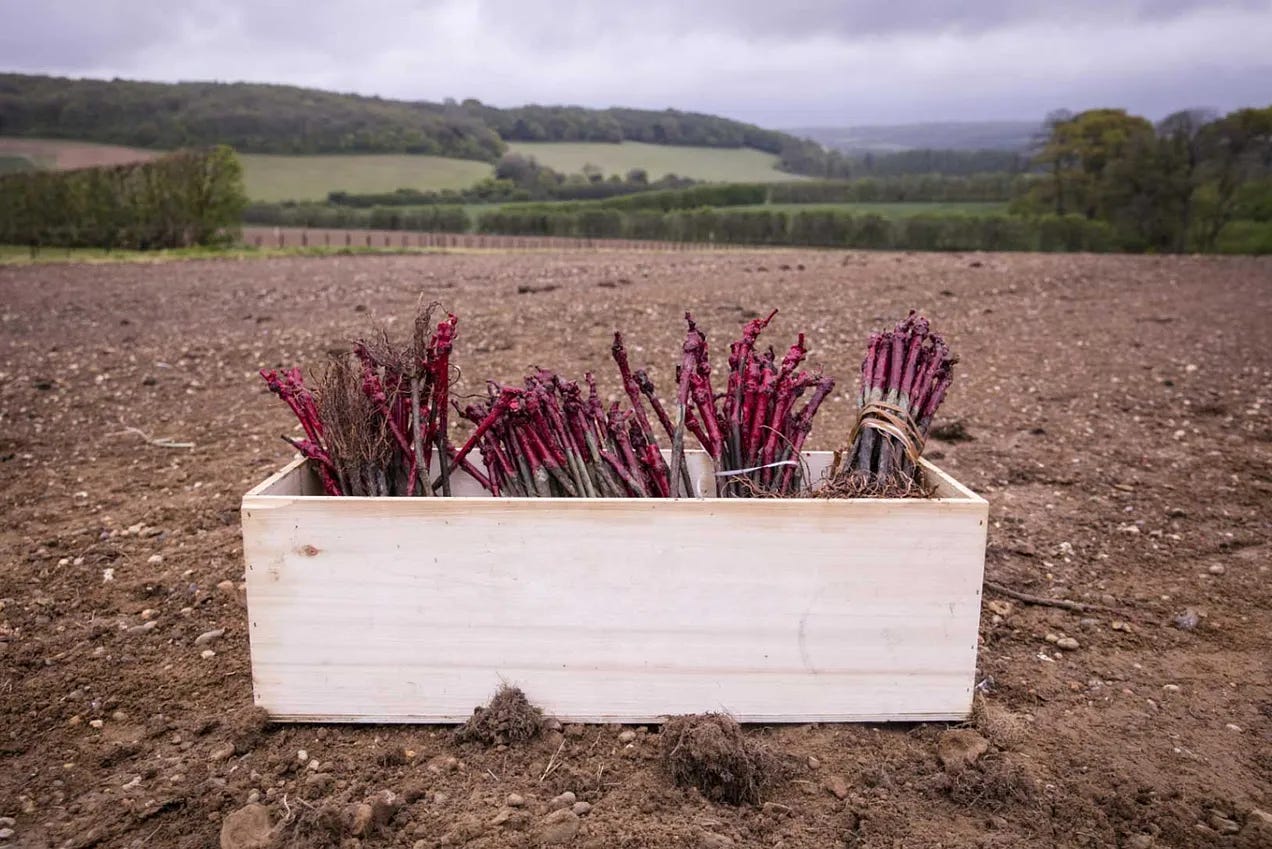
Photo: Taittinger
After the land was purchased in 2015, Stephen Skelton MW started to prepare the land for planting and on 3rd May 2017 the first vines were planted. 20 hectares were planted over one week and another 15 hectares in the next two years.
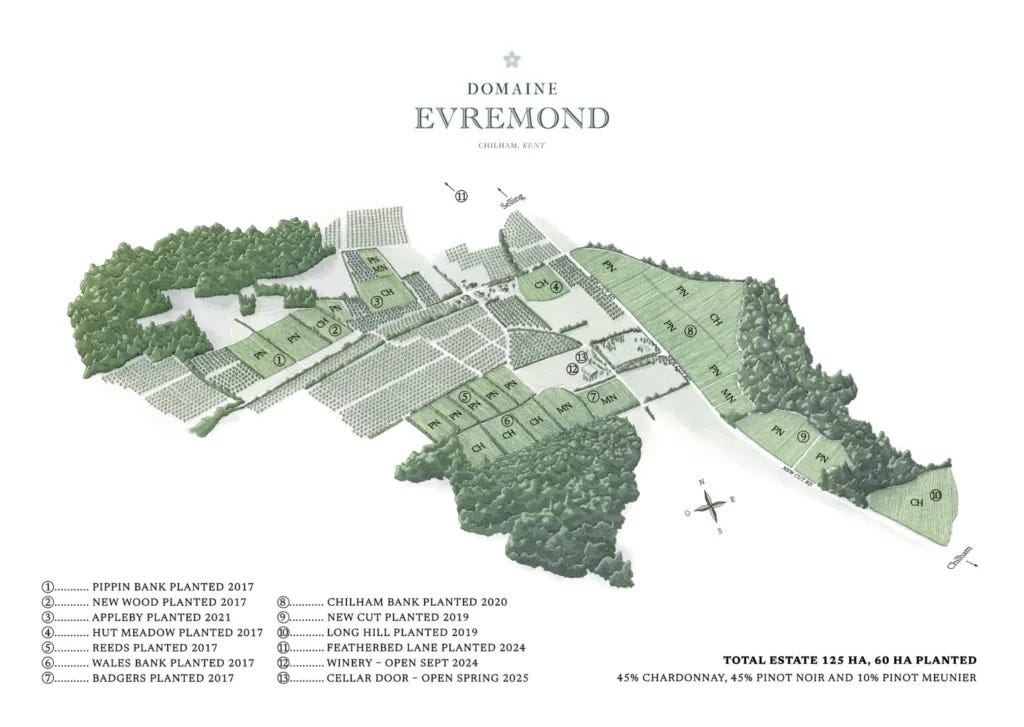
Image: Domaine Évremond
In terms of the land, the sunlight and the slopes, the Domaine Évremond team haven’t planted everywhere on the estate. Referring to the map above, there’s still apple and pear trees, tended by the Gaskain family.
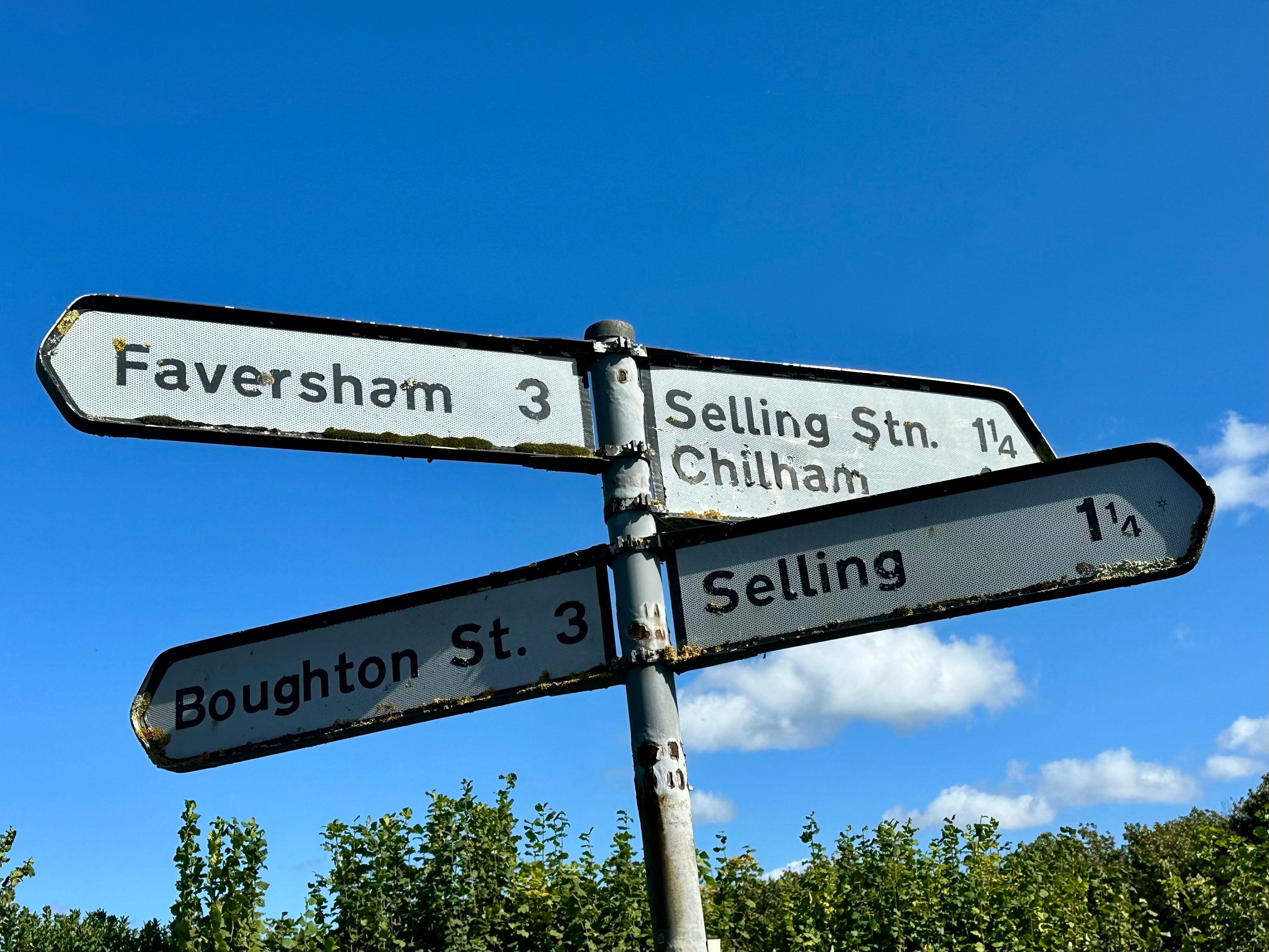
Photo: author
Subsequently in 2023, 10 hectares of land were purchased between Selling and Faversham on Featherbed Lane. Taittinger feels the terroir here is perfect for Chardonnay grapes. The vines were planted in 2024. First harvesting from this parcel of land is planned for 2027.
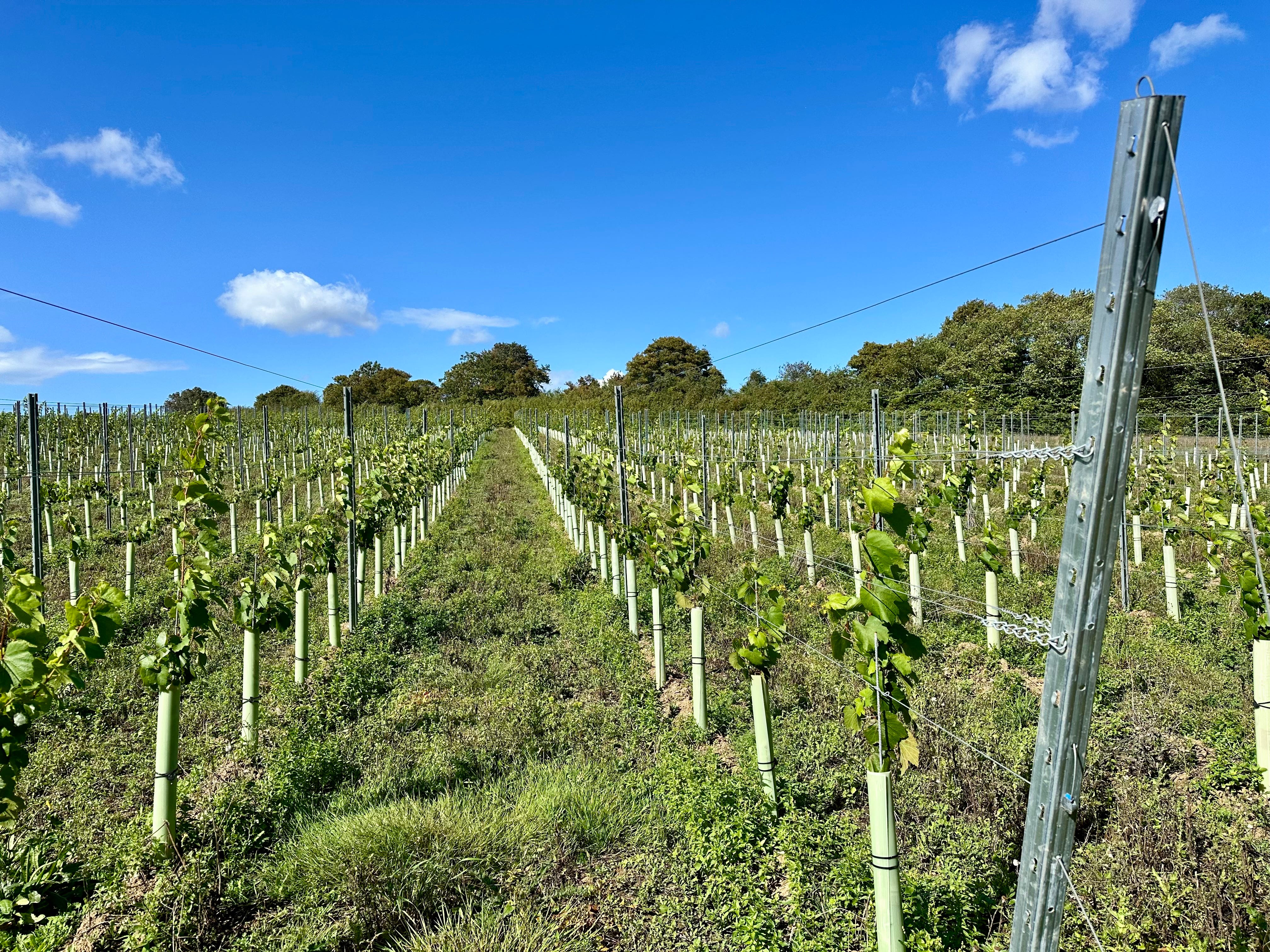
Photo: author, Young Chardonnay vines at Featherbed Lane. It was difficult to find initially - but I persevered - up an almost hidden public right of way path and turn left.
Domaine Évremond is predominantly owned by Taittinger (51%). The Domaine makes a classic cuvée, planting and harvesting the three champagne grapes: Pinot Noir, Chardonnay and Pinot Meunier.
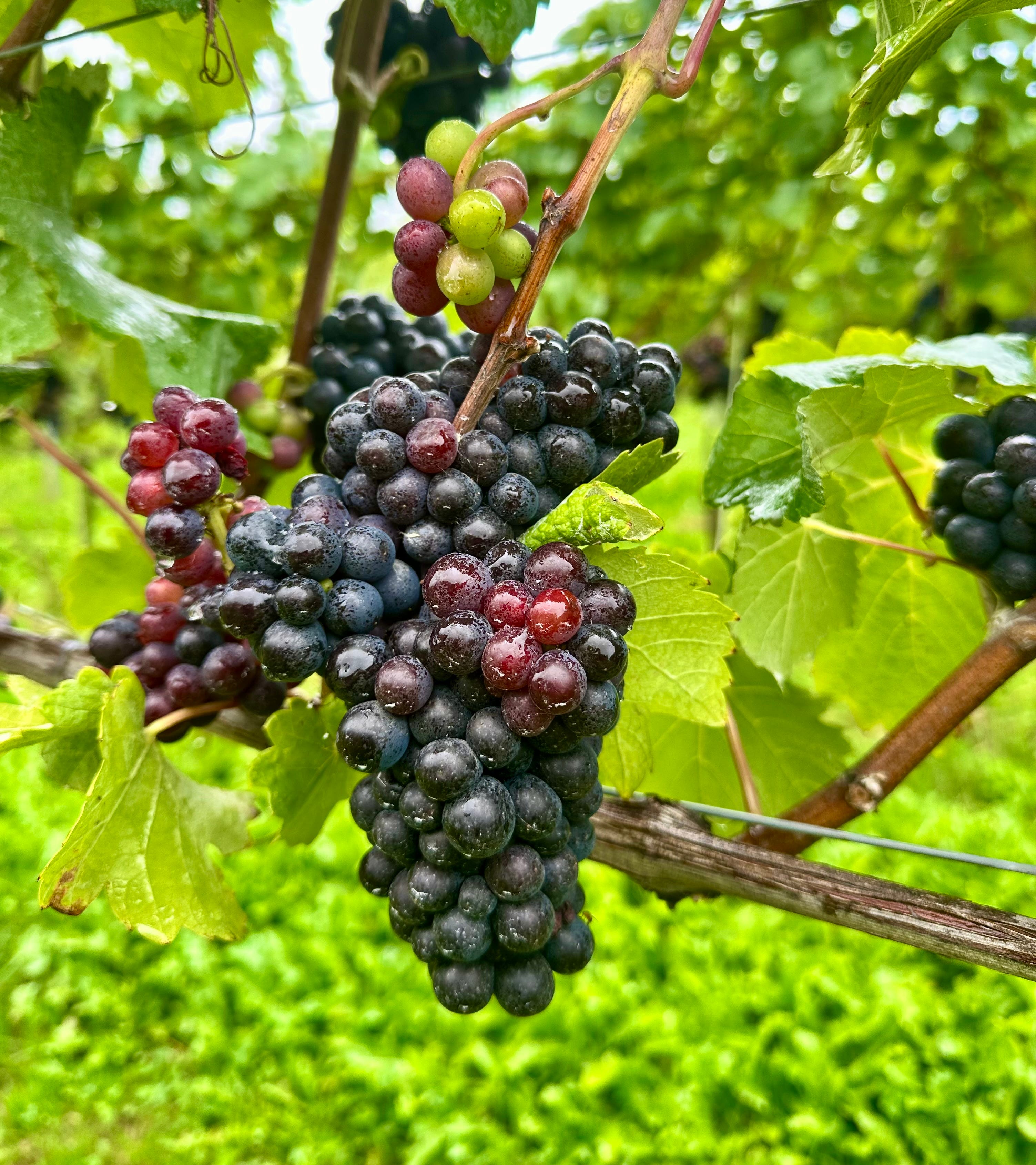
Photo: author, Pinot Meunier grapes 10/09/25
Taittinger is the first French Champagne house to buy land, grow grapes and create an English sparkling wine.
Yet they’re not trying to create a champagne, rather something unique to Chilham and Kent.
It is an opportunity to start completely afresh.
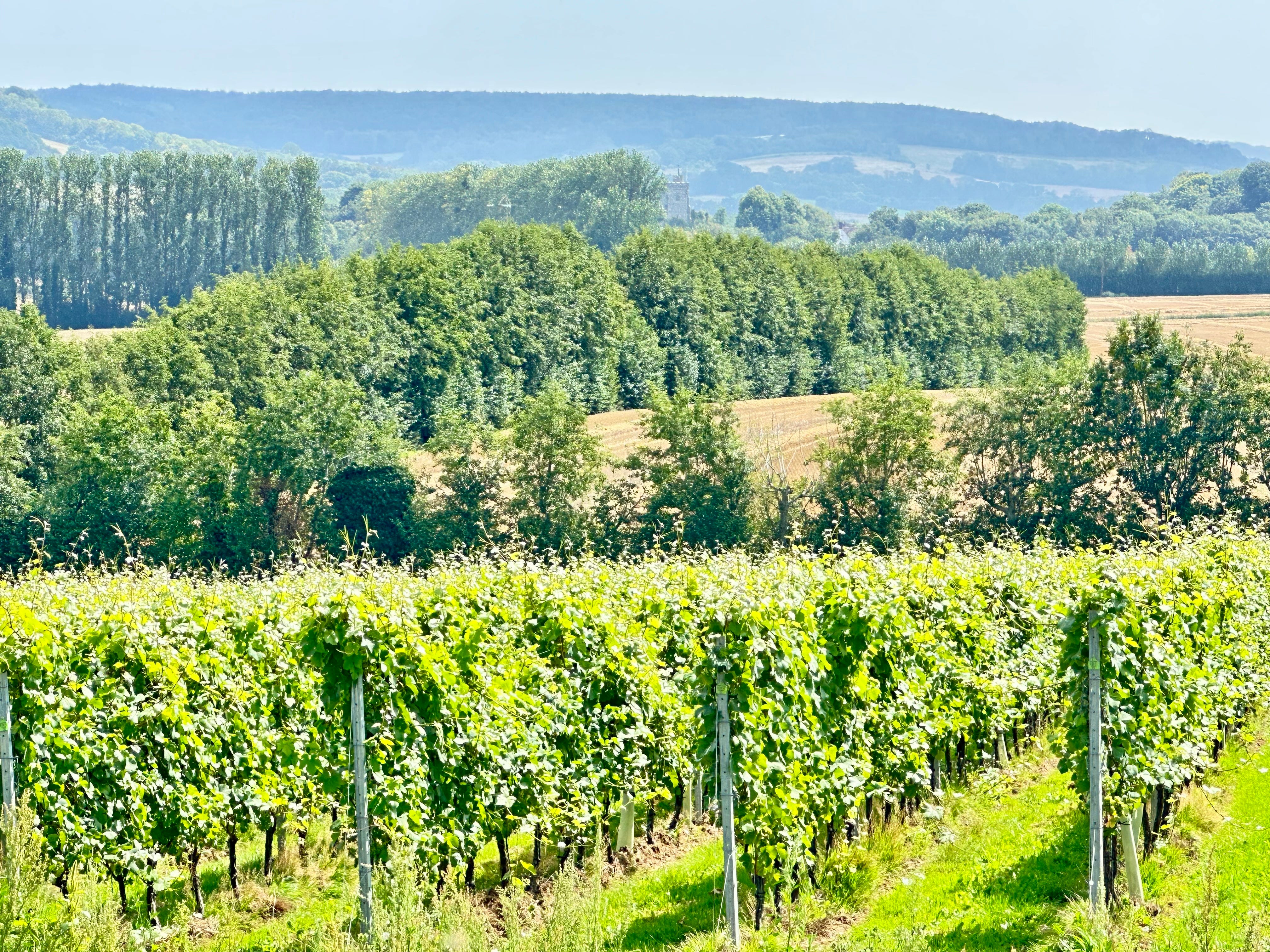
Photo: author, Pinot Meunier vines in front of the terrace at Domaine Évremond
Currently, Domaine Évremond are focussing on a non vintage multi-harvest cuvée style sparkling wine.
The Collaboration - French wine-making expertise and English knowledge of the terroir:
Patrick McGrath has been essential in establishing Domaine Évremond and overseeing its journey from identifying suitable land, planting the vines and building the winery and visitor centre.
Domaine Évremond’s Head of Viticulture is Taittinger’s Vineyard Director of ten years Christelle Rinville. She brings her wealth of knowledge to Domaine Évremond, working closely with the UK team to grow first class grapes and overseeing each harvest.
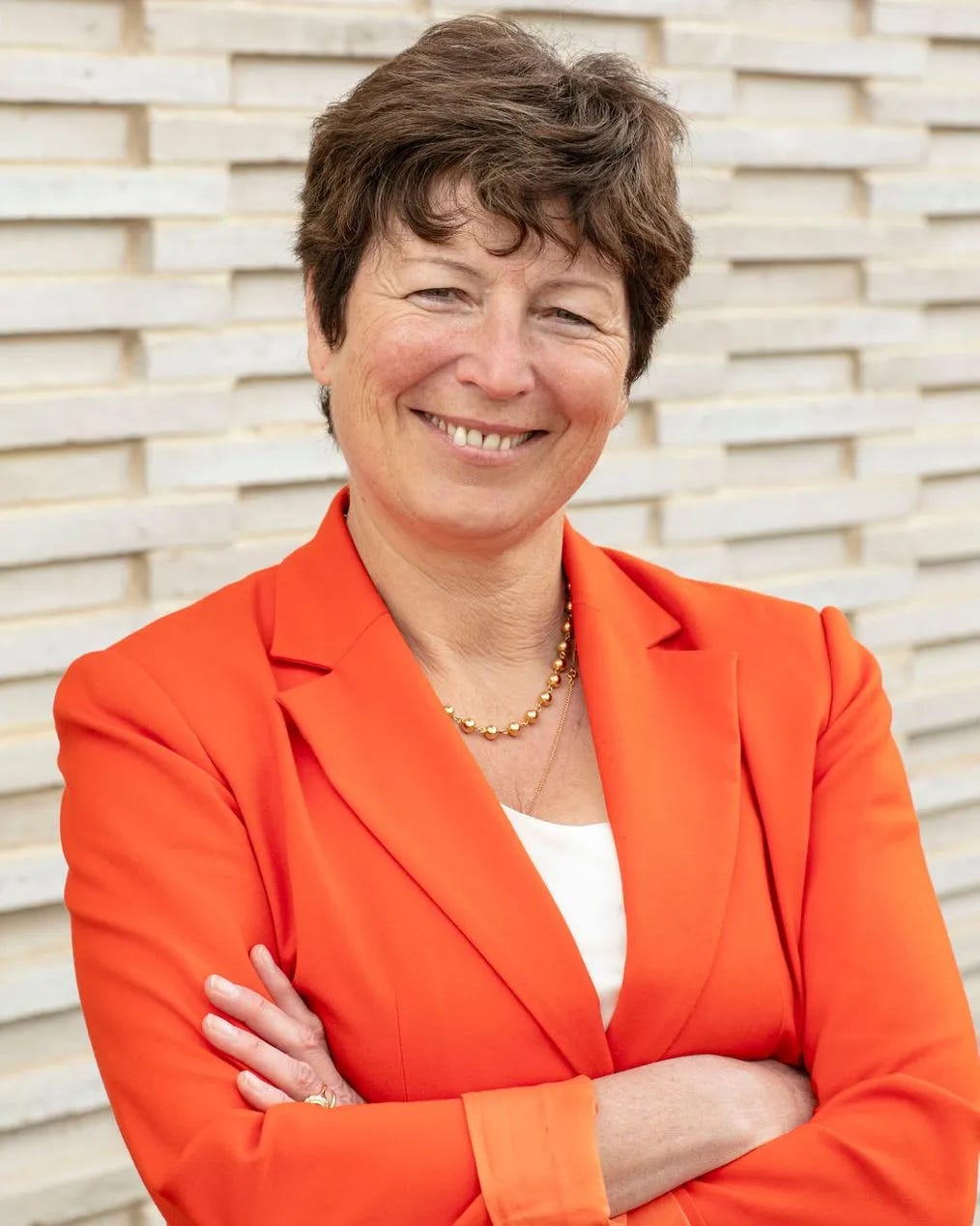
Photo: Christelle Rinville, Vineyard Director
Christelle is in charge of viticulture for all of Taittinger, including Domaine Évremond.
Without the AOC Champagne rules, there is a freedom to innovate. Christelle was able to choose the different grape varieties, different clones and where to position the plants.
She travels from Champagne to Kent every month to check the vines. Christelle is Mark Gaskain’s line manager, when it comes to decisions such as when to de-leaf, cut the top growth and harvest.
Gaskain and his team have been responsible for the manual and mechanical day to day operations in the vineyard since 2017. Working with the Taittinger team, they deliver high quality grapes to the winery.
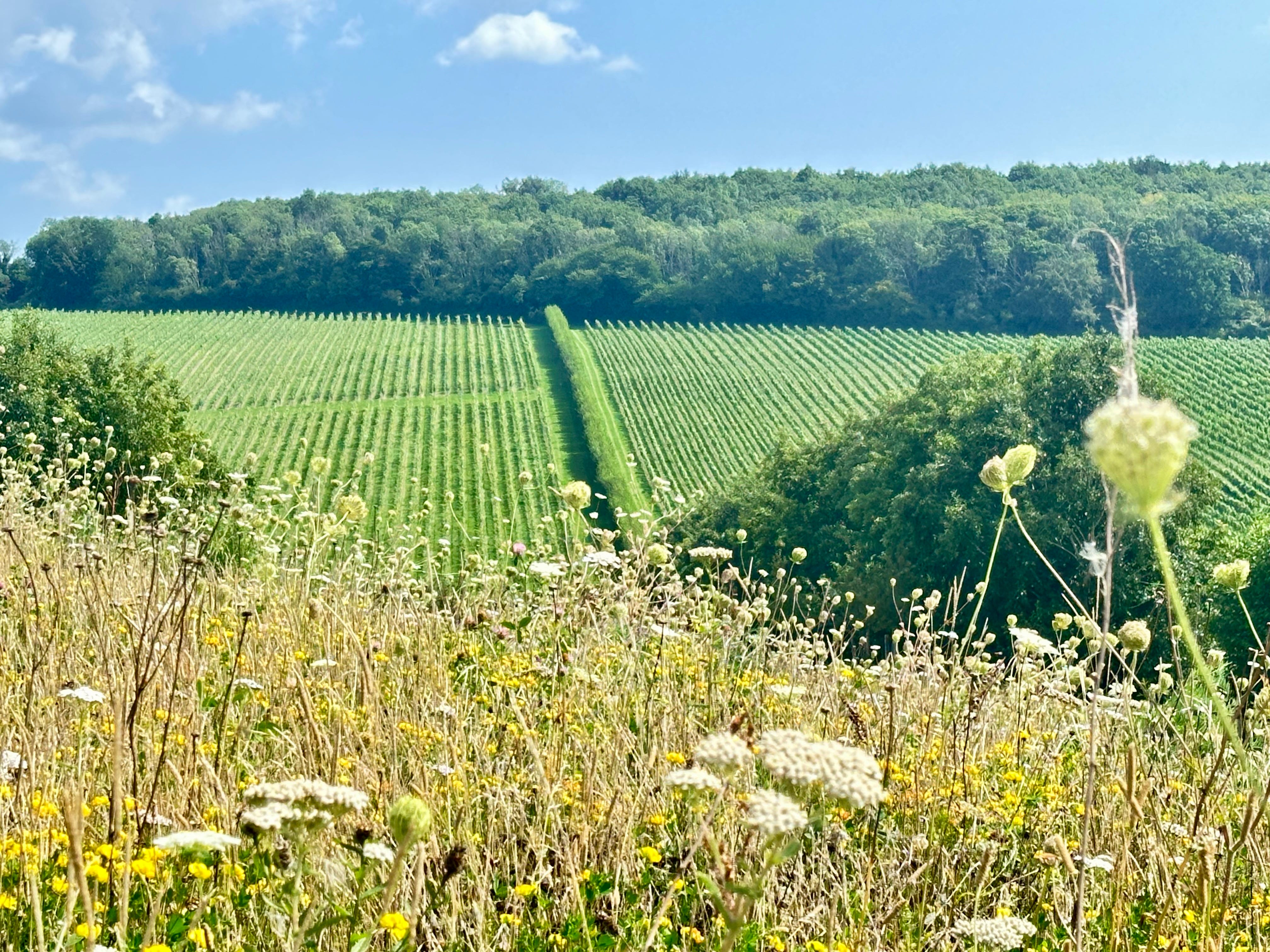
Photo: author
Gaskain has an invaluable knowledge of horticulture and the terroir - its soil, its subsoil, the microclimate, its exposure and slope. His family have farmed here since the 1930s.
Whilst Champagne experiences a continental climate, at Domaine Évremond there is a maritime climate. The weather can be wetter, windy and damp.
The sometimes humid weather in Kent in August and September can cause mildew, a disease which dries out and harms the vines, potentially leading to rot. Gaskain recommended deleafing to increase air flow through the vines, to counteract the humidity. Taittinger originally disagreed but Gaskain persisted, with his knowledge of the local microclimate.
In the Champagne appellation, there are strict rules that need to be followed - in terms of vine height and spacing between the rows of vines.
Whilst the spacing between the vine rows in Champagne must be 0.5 metres, at Domaine Évremond the spacing is one metre wide. This enables a tractor to be driven between the rows of vines to cut the grass, eliminating the need for herbicides. The wider spacing between the rows of vines increases the wind flow, thereby reducing the risk of mildew. The vines are grown much higher at Domaine Évremond, increasing the exposure to sunlight. This isn’t permissible in Champagne.
Gaskain’s understanding of the terroir was helpful when Taittinger wanted to plant rows of vines, running parallel to the road.
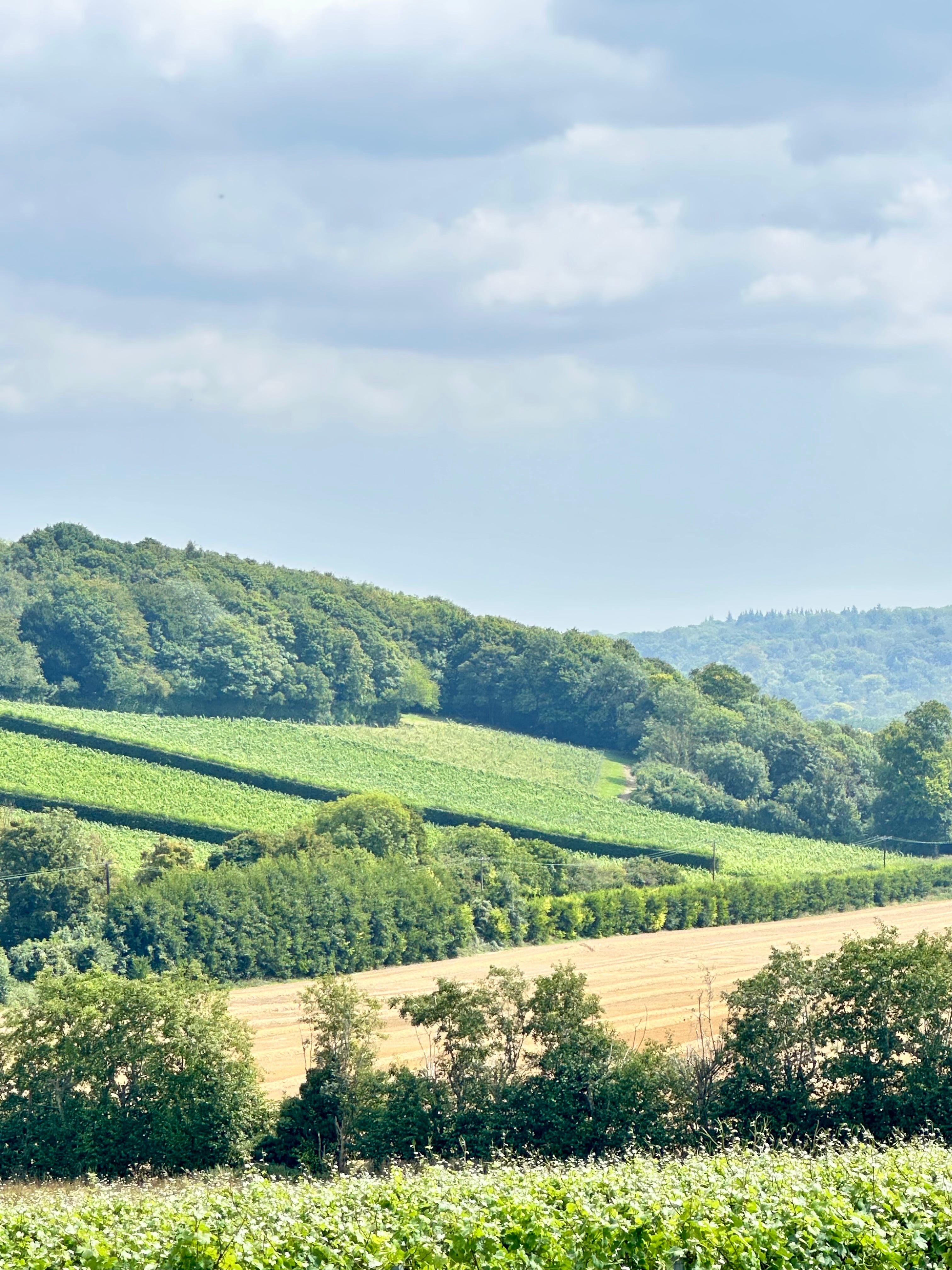
Photo: author
He was concerned and advised “plant where you want, but I promise you every four years a frost is going to come and destroy your vines”. And Gaskain was absolutely right.
The working relationship between Mark and Christelle is a great meeting of minds, each learning from the other.
Harvests:
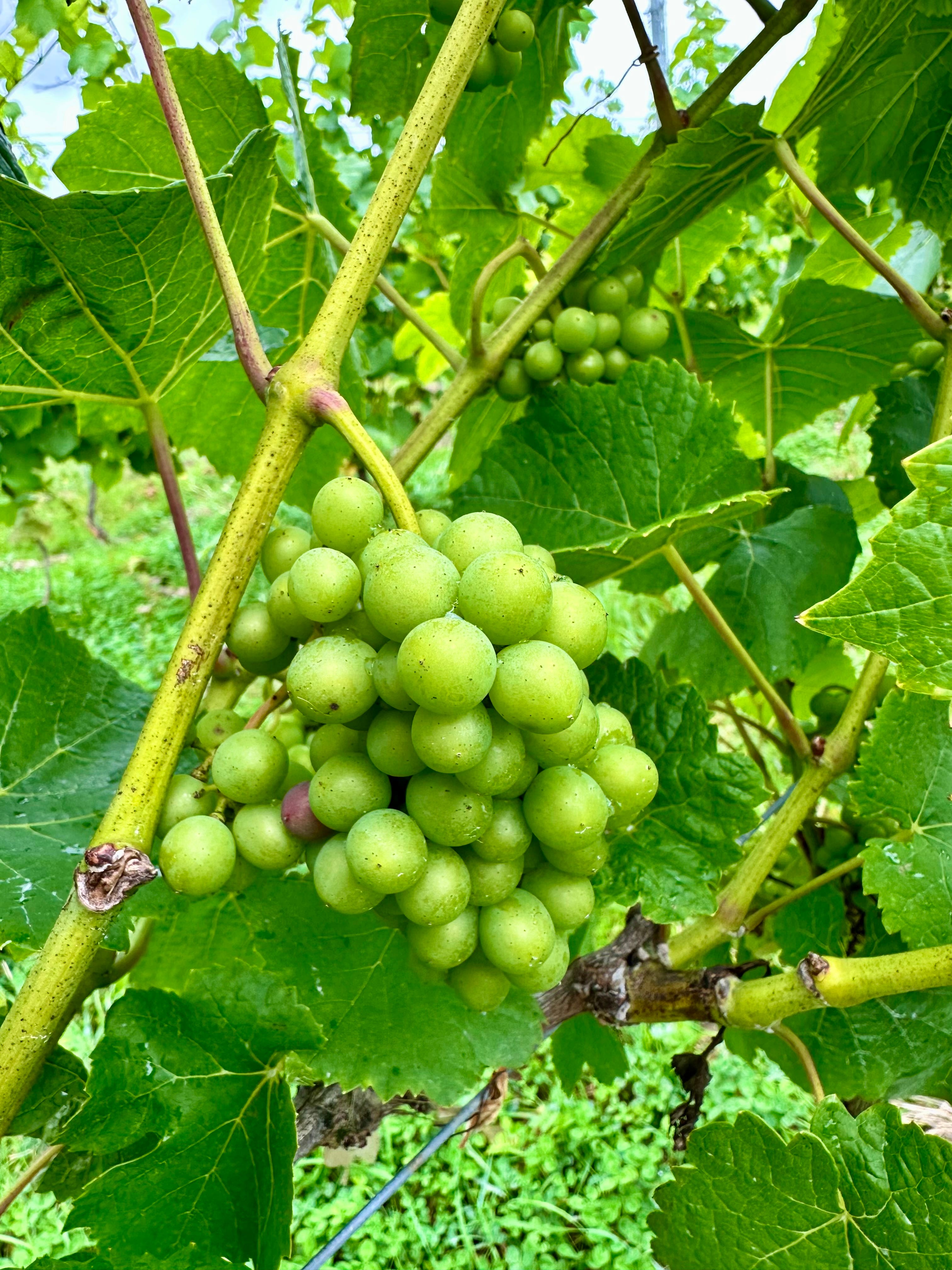
Photo: author, Chardonnay grapes 10/09/25
The first harvest was in autumn 2019. At this early stage, the winery had not been built. Domaine Évremond used Simpson’s winery for this first vinification.
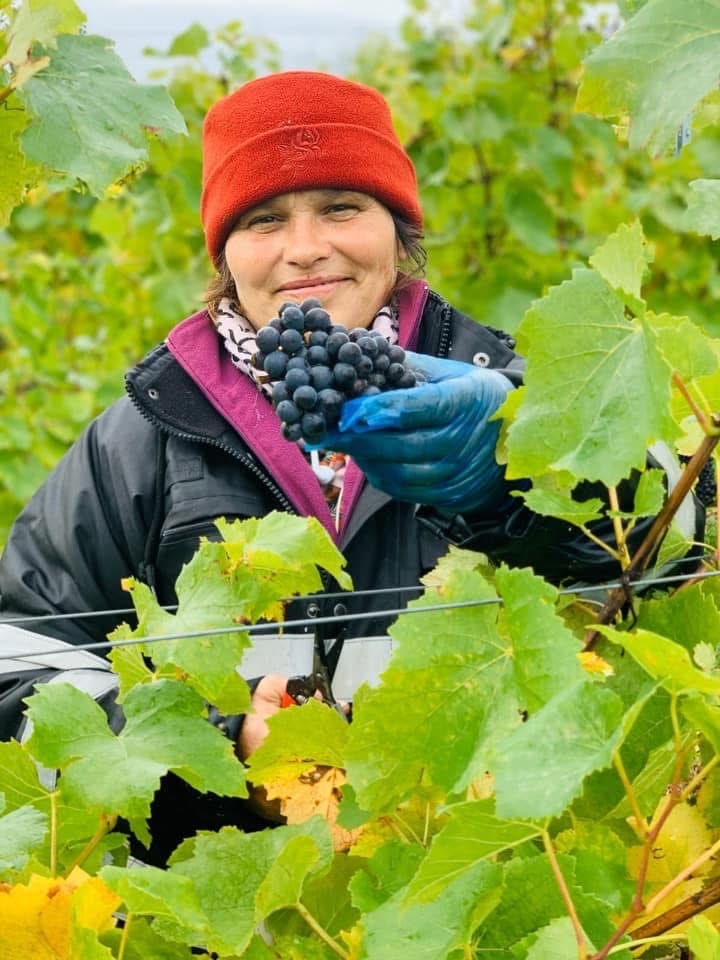
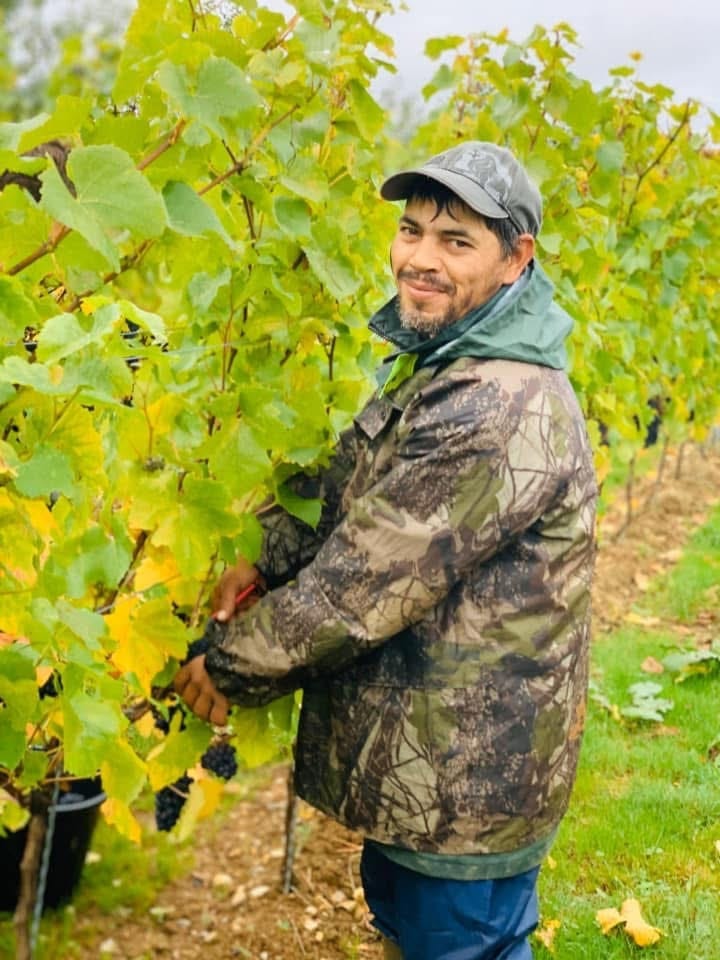
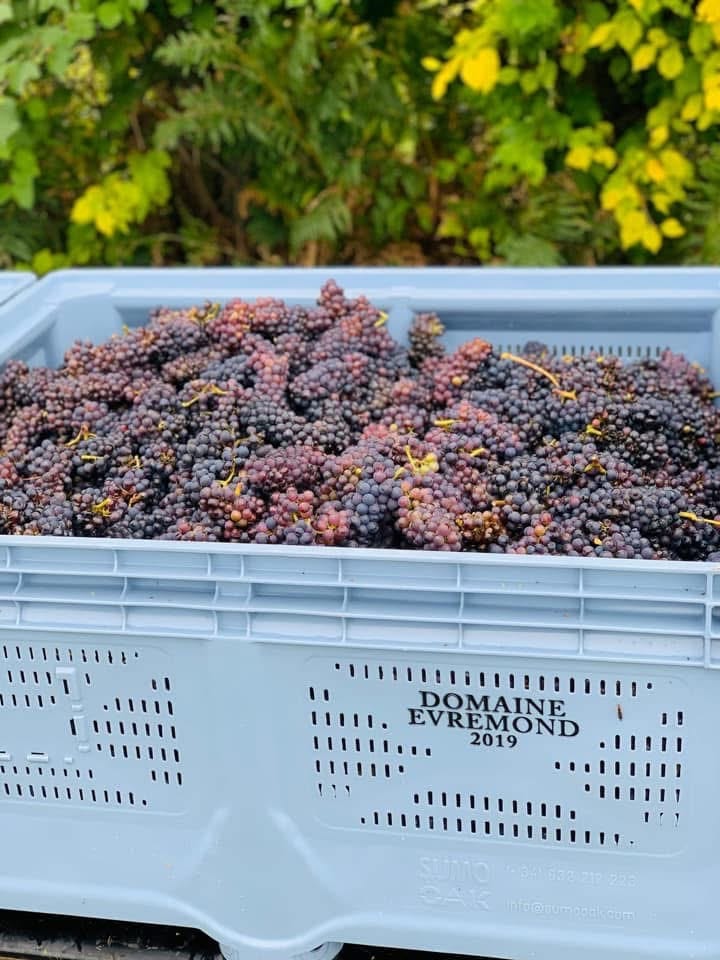
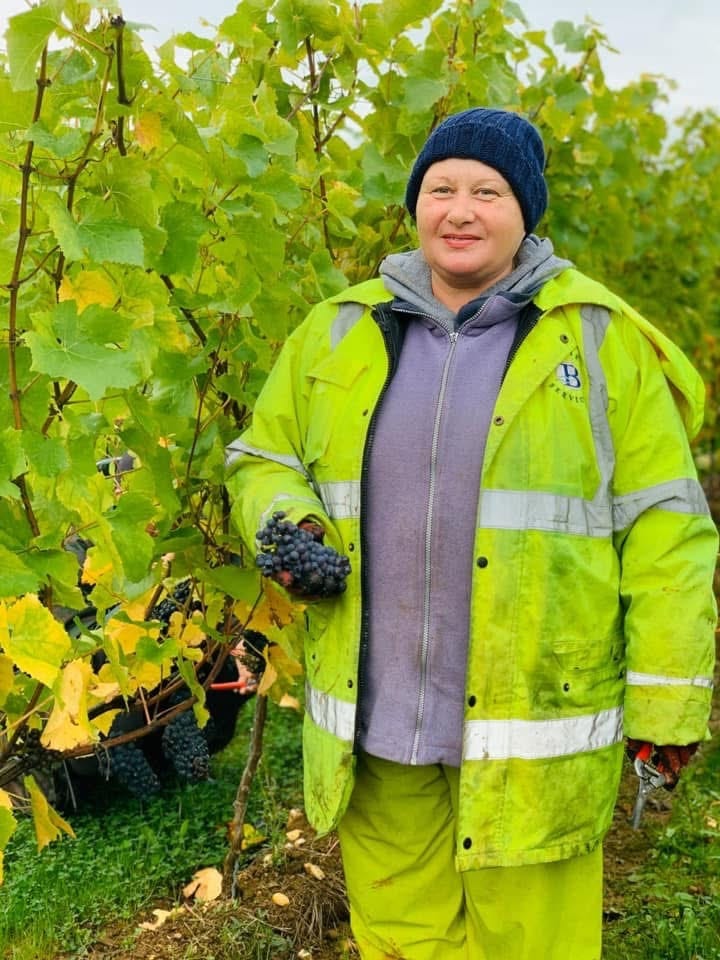
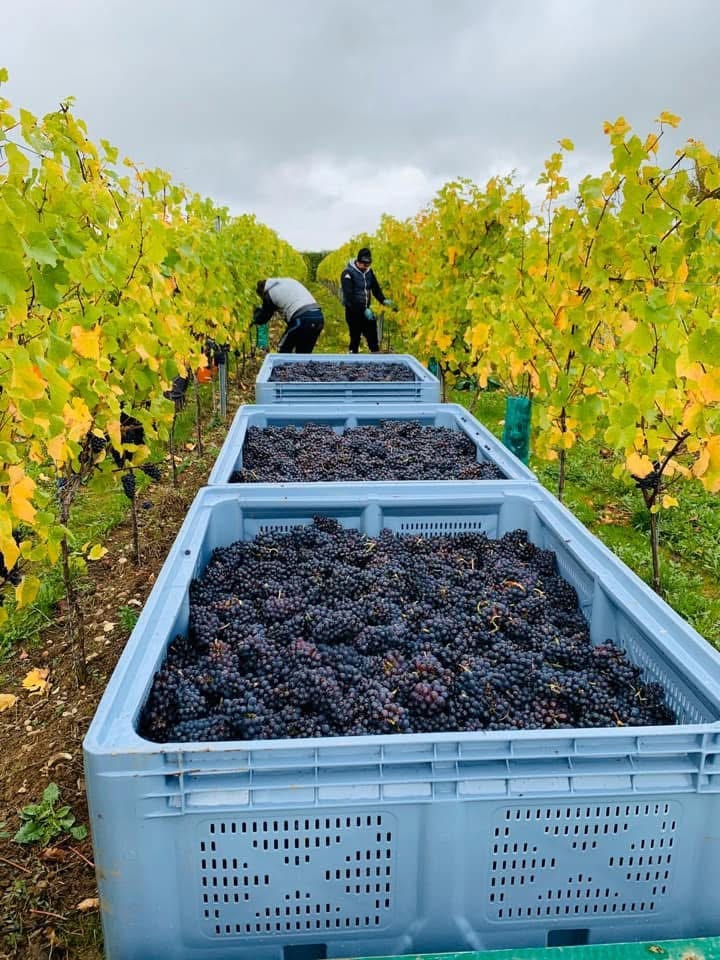
Photos: Gaskain Ltd (Facebook) Harvest 2019
By autumn 2020, a barn at Stone Stile Farm was leased from Gaskain, with no plumbing or heating. A generator was needed. The wine was made in this barn from 2020 to 2023.
The 2024 harvest was the first to be produced in the new winery.
In Keith Christiansen’s article Popping the Bubble: The Dark Side of Champagne

he shared how some seasonal grape picking workers in the Champagne region are being exploited and poorly treated.
When I visited Domaine Évremond on 10/08/25, I was keen to find out how the seasonal grape picking workers are treated here. When I asked, I was told that they are employed by Gaskain Ltd. Caravan housing is provided by Gaskain Ltd at Norham Farm, Selling.
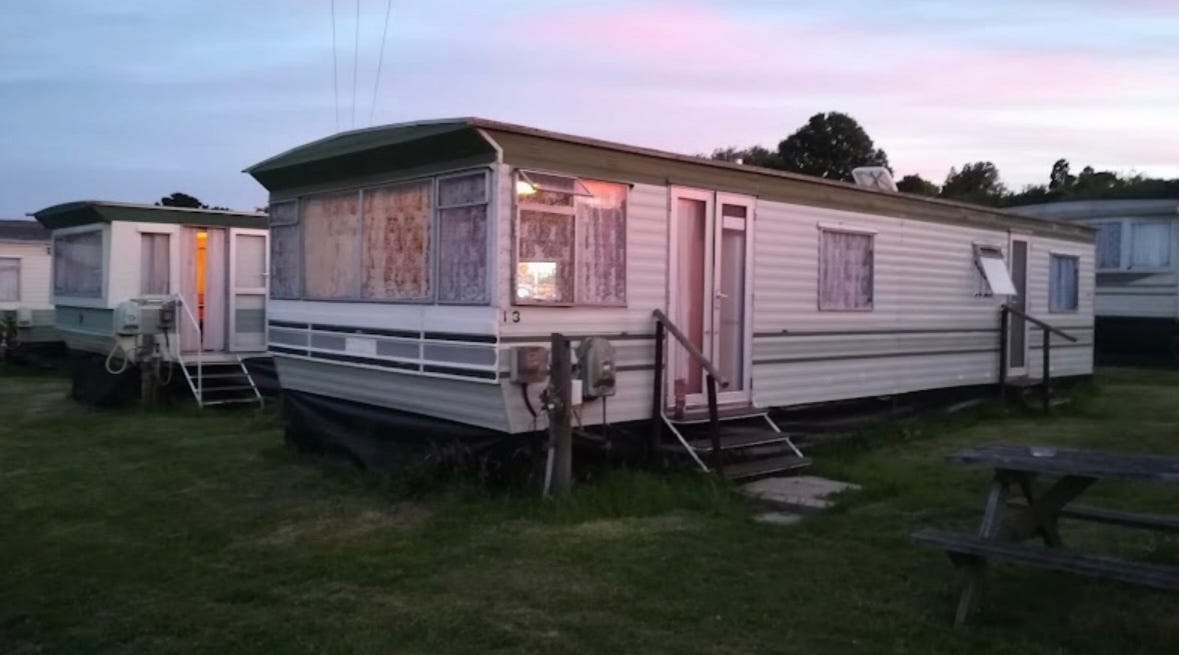
Photo: Ivaylo Ivanov, Google, 2017
Google reviews from previews workers indicate that typically five persons live in each caravan.
Many caravans, mostly 5 people live there, the caravans are different but all have showers and a kitchen. In a separate building there are free washing machines and internet. Once a week a bus takes the workers shopping to the supermarket, there is also a train station nearby. The attitude towards the workers is normal, the size of the salary depends on whether the harvest on the farm is good.
Волянюк Анатолій, Ukrainian worker, 2022
I telephoned Gaskain Ltd. on 11/09/25. When asked, the Gaskain colleague who answered my telephone call shared that this year the seasonal grape picking workers will be arriving from Kazakhstan and Kyrgyzstan. The harvest workers will be paid £12.21 per hour, which is the current UK national minimum wage for workers aged 21 years and above.
The Winery Gravity System:
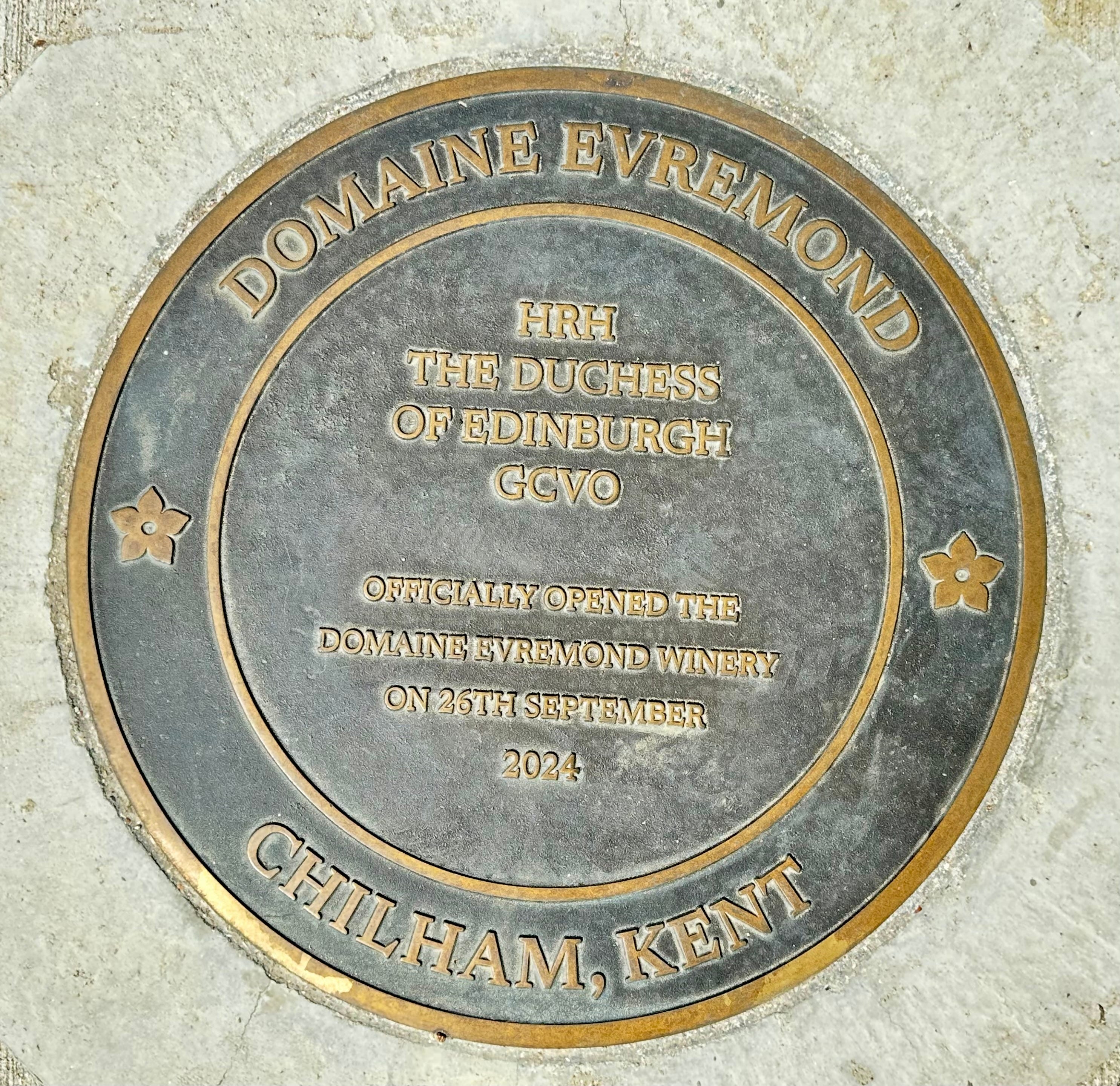
Photo: author
The winery was designed by French architect Giovanni Pace from Reims and was built by British company Arkay.
First a 25 metre deep, 40000 metre cubed hole was dug in 2022, using the same company that excavated the Channel Tunnel.
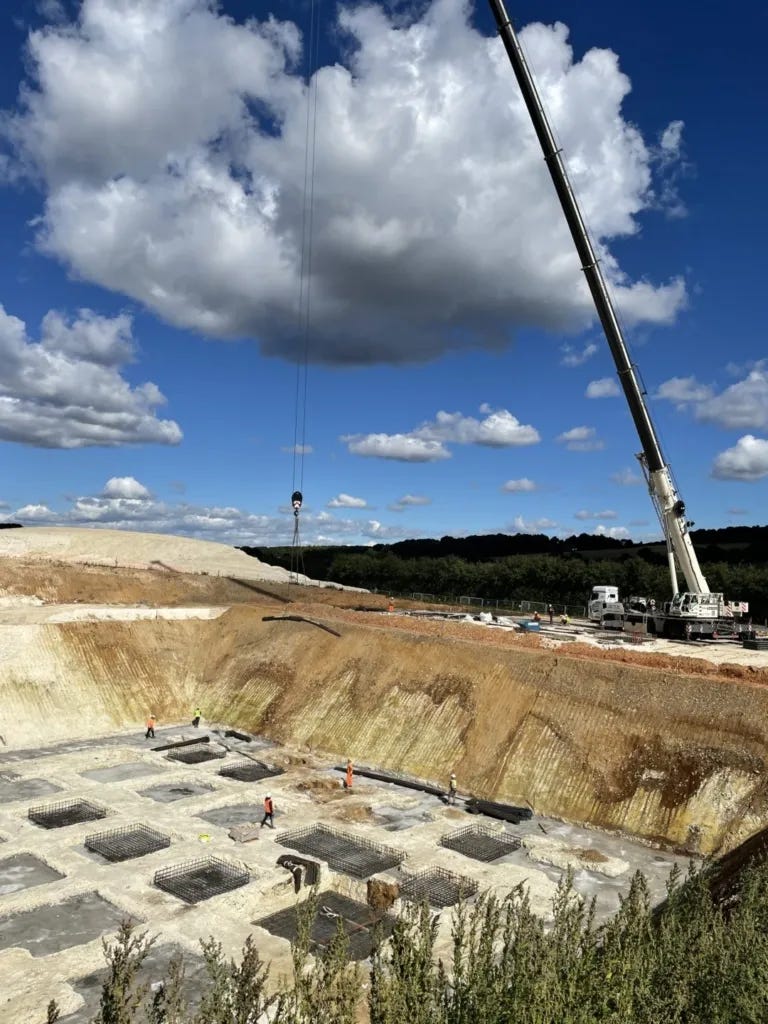
Photo: https://thefinestbubble.com/news-and-reviews/domaine-evremond-english-sparkling/
This hole was necessary to create the chalk cellars and the first subterranean winery in the UK, made of specialised waterproof concrete. The subterranean winery enables a natural gravity led winemaking process with short, optimised flows of the grape juice. This minimises the risk of over extraction, oxidation and excess tannins associated with the use of pumps.
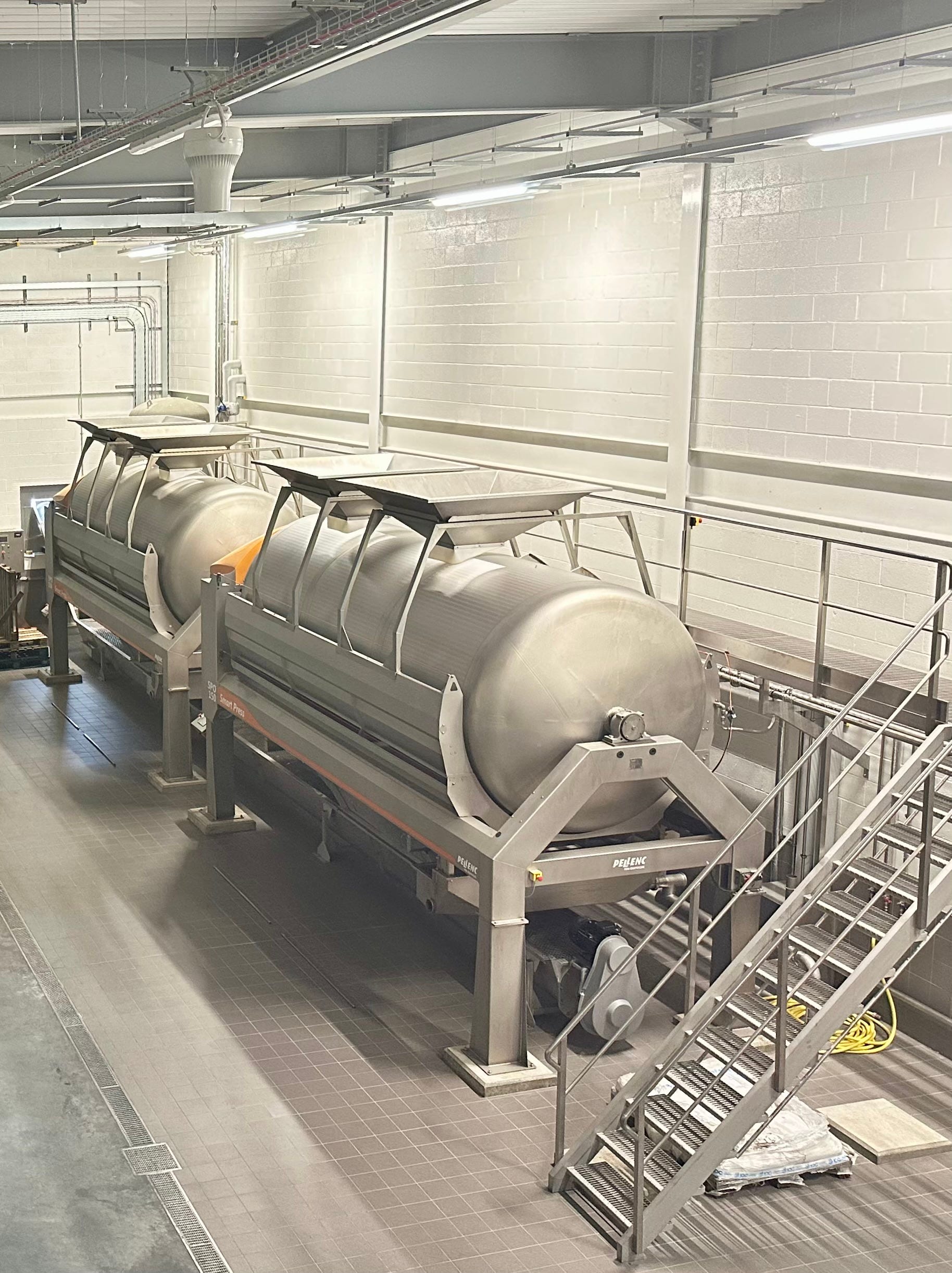
Photo: author
The grape juice undergoes malolactic fermentation (MLF), where naturally occurring bacteria on the grapes converts malic acid, a very sharp sour acid into a softer lactic acid, which is creamy and buttery, creating a more round mouthfeel in the final wine.
The process reduces acidity and releases carbon dioxide into the wine.
MLF isn’t technically a fermentation because yeast isn’t involved. A lactic bacteria Oenococcus oeni digests the malic acid and excretes lactic acid, giving the wine an almost velvety texture.
Once the grapes have been pressed and the juice extracted, the first slow fermentation takes place at 17 degree over 10 days in stainless steel vats. This results in an alcohol level of 11%.
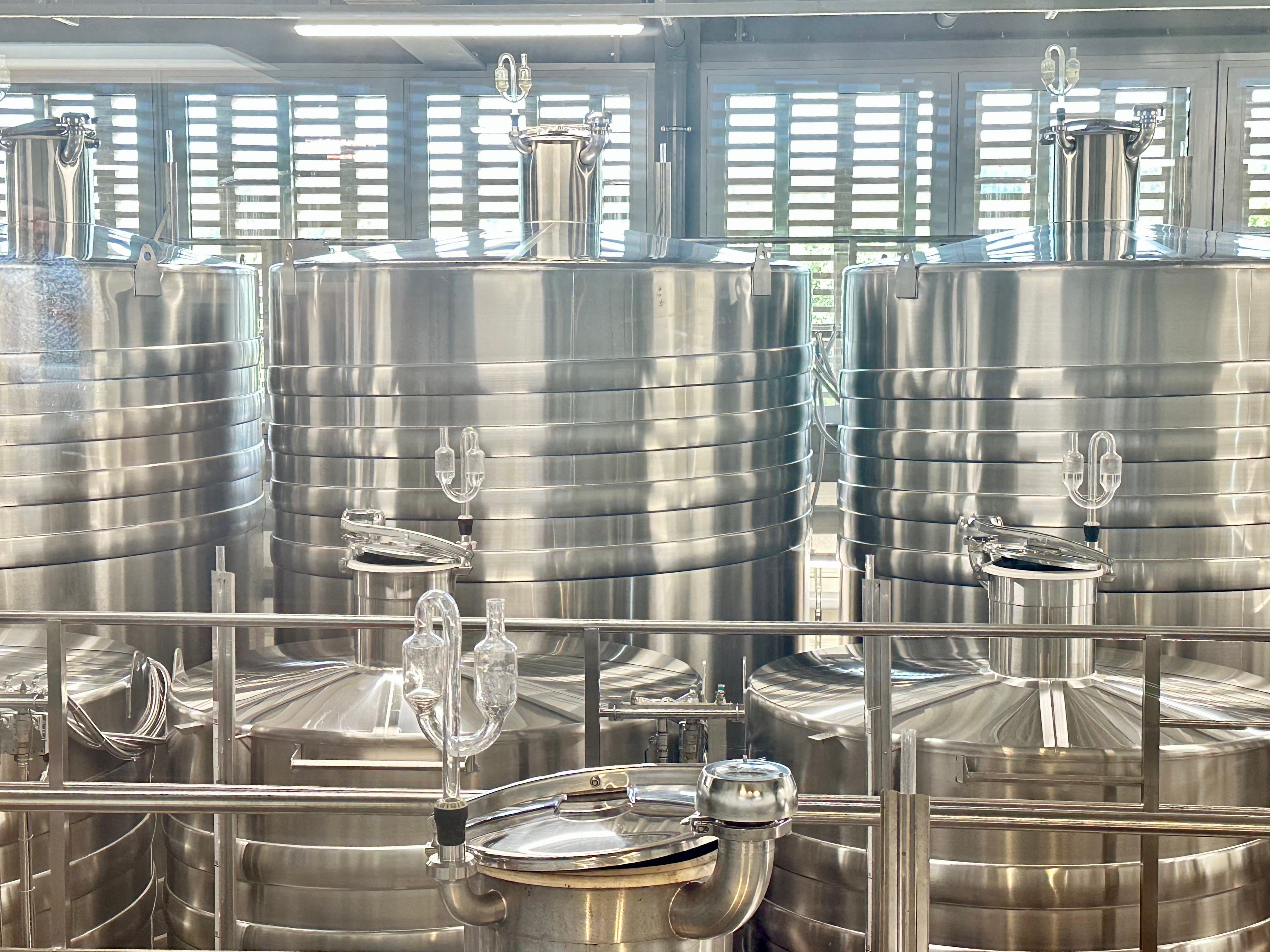
Photo: author
Next, blending of the grape types and different harvests occurs and small amounts of yeast and sugar are added. This is called Tirage. Now the wine is bottled before sealing with crown caps for a second fermentation in the bottle, whilst stored in the chalk cellar.
Initially the yeast digests the sugar, producing carbon dioxide. This increases the alcohol to 12%. The carbon dioxide gas has nowhere to escape because it is contained in a thick glass bottle. This causes high pressure. The carbon dioxide dissolves into the wine, creating bubbles. This is the traditional method of making a sparkling wine - Méthode Champenoise or Méthode Traditionnelle.
After several weeks, the yeast dies, sinks to the bottom and settles as sediment. This is called the lees or “on the leans” or “sur lie”. The bottles of sparkling wine are laid on their sides and aged for three years “sur lie” at a cool 12 degrees in the natural chalk cellar, with a capacity for 1.5M bottles.
Autolysis is a chemical reaction that takes place between the wine in the bottle and the dead yeast cells (the lees). The contact with the lees creates complex secondary characters to the primary fruit characters. This is where a nutty, brioche toastiness can develop.
After three years, the wine undergoes riddling (remuage), where the bottles are gradually turned from the horizontal to the vertical position. This ensures the yeast sediments slide gently into the bottle neck. This is followed by disgorging, which entails freezing the bottle neck. This causes an ice plug to encase the yeast. When the cap is removed, the pressure expels the yeast plug from the bottle, leaving the sparkling wine sediment-free.
Dosage involves topping up the gap left in the bottle with some wine and possibly some sugar. The bottle is re-sealed with a cork and a wire cage for security. The bottled wine is then allowed to settle and mellow for a final 6 months after the riddling and disgorging, which can shock the wine.
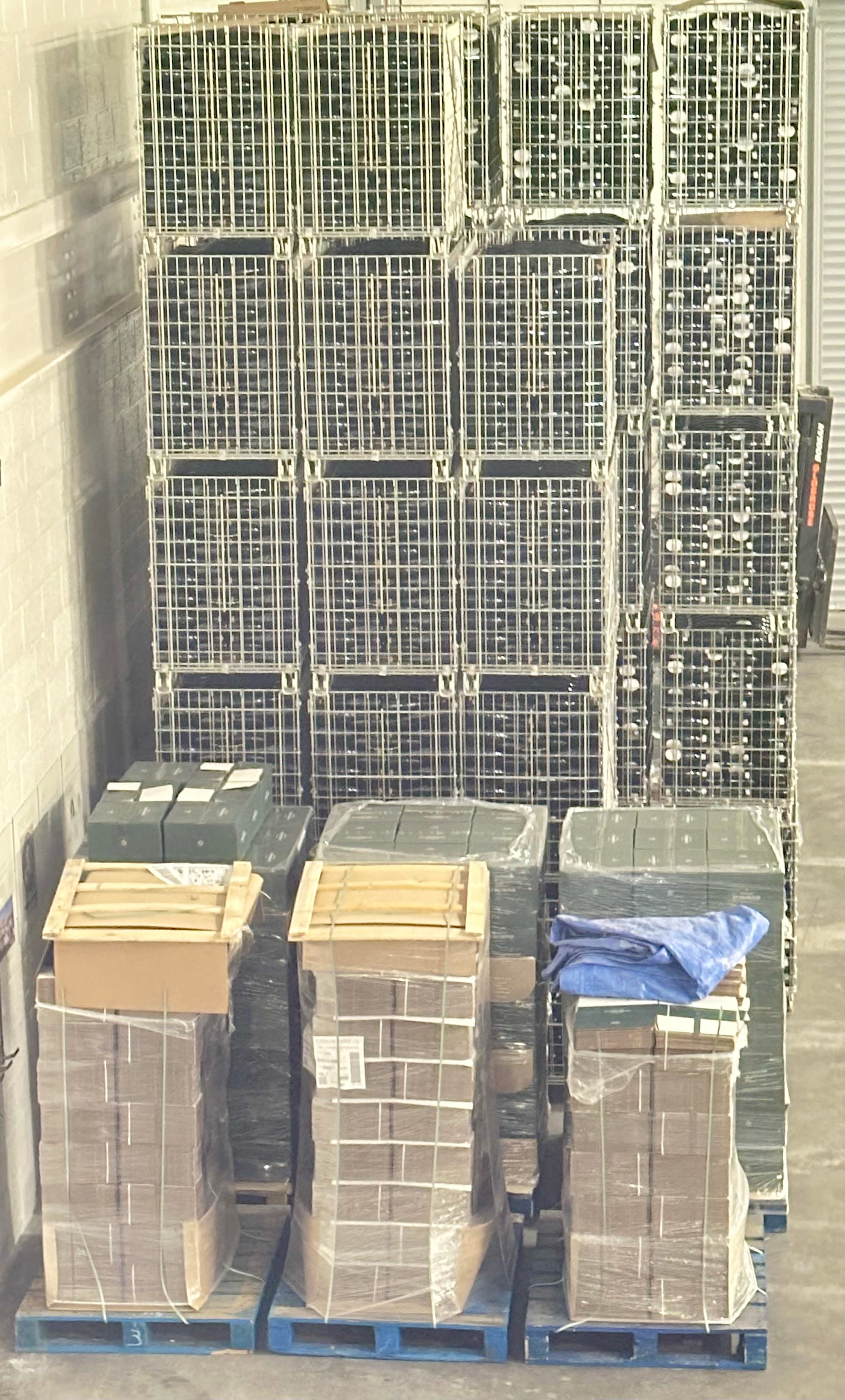
Photo: author
The first edition was disgorged in August 2024 and has a dosage of 7 g/L. Above, you can see the second edition of Domaine Évremond which has been riddled, disgorged and is now mellowing, ready for Christmas 2025 sale.
Who was Évremond ?:
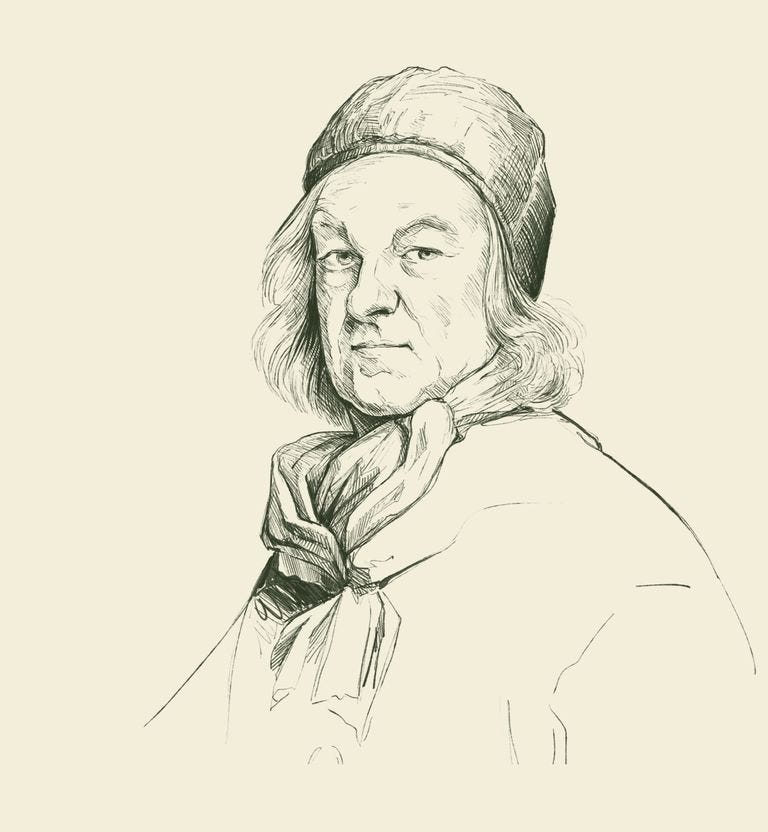
Photo: Domaine Évremond
Pierre-Emmanuel Taittinger views Évremond as a symbol of the collaborative spirit between France and England.
A French renaissance man born in Normandy, Charles de Saint-Évremond (1613-1703) was the first ambassador for Champagne wine, fuelling its popularity in England at the court of Charles II.
A poet, a writer, an epicurean, a wit who enjoyed a glass of wine and a soldier with military experience. Évremond was part of the court of King Louis XIV of France, the Sun King, until he wrote an article criticising French military policy.
In 1661 Évremond fled to Holland and onwards to England, where he lived in exile. He was welcomed at the court of King Charles II, whom he introduced to Champagne wine. The King appointed Évremond governor of the duck islands in St James’ Park, London, which gave him a small pension income of £300/year. Évremond is the only French person buried in Westminster Abbey’s Poet’s Corner. His portrait can be viewed in the National Portrait Gallery, London.
The First edition Domaine Évremond - appearance, aroma, taste and finish:
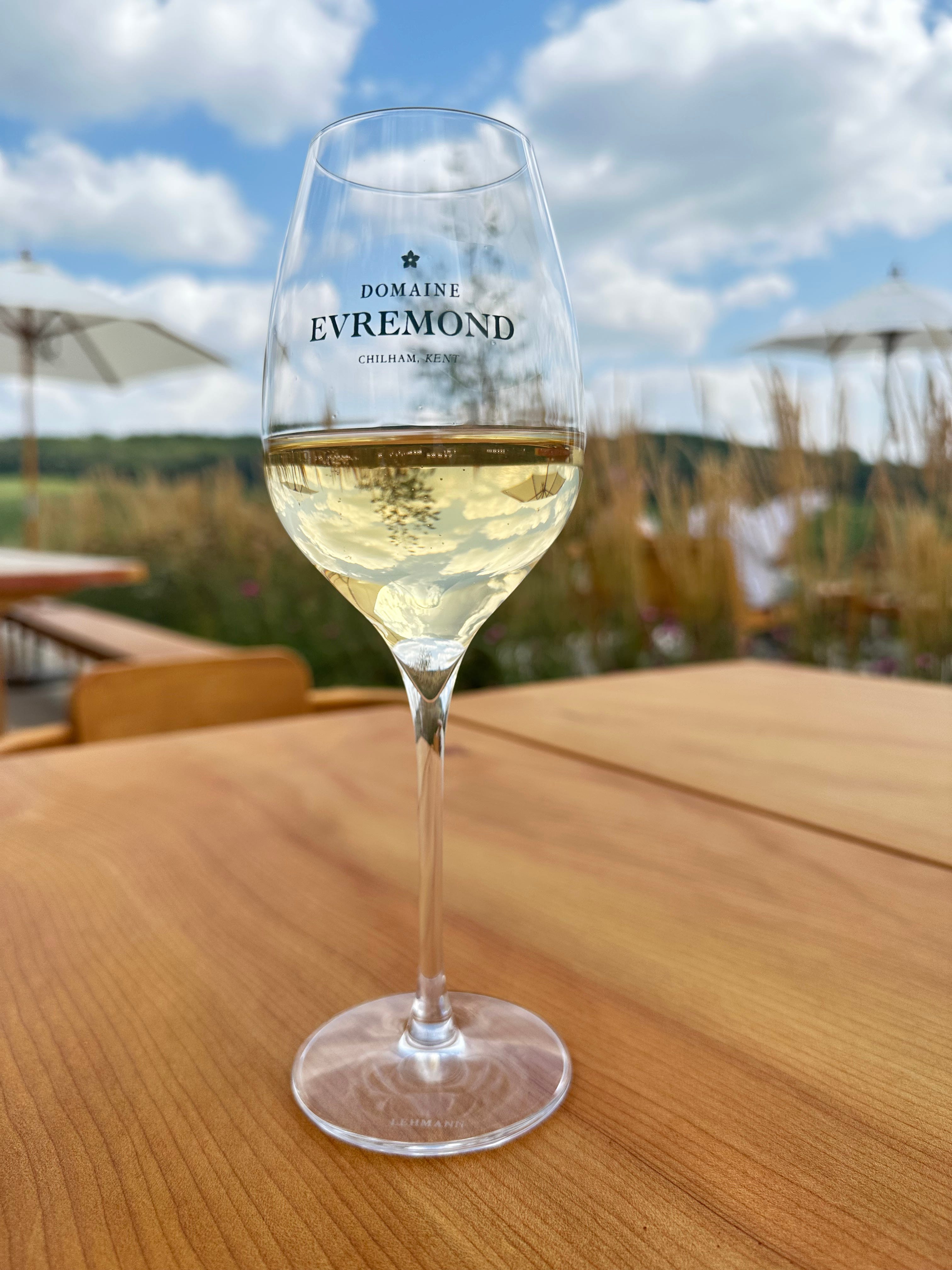
Photo: author
The Domaine Évremond Classic Cuvée Edition I contains 55% Pinot Noir, 35% Chardonnay and 10% Pinot Meunier. It was bottled in 2021, blending the 2020 (80%) and 2019 (20%) harvests. 130,000 bottles were produced.
The wine had a pale yellow colour - with a delicate but persistent trail of ascending bubbles.
Before tasting, the first aroma I detected was similar to wet flint pebbles on a beach, with a hint of gunpowder.
On tasting, there was a freshness and a balanced acidity, with a hint of pink grapefruit. A beautifully fine-textured mousse played on my tongue. The finish was creamy, consistent with malolactic fermentation.
The wine had a steely minerality, with a crushed shell quality. I would imagine that this sparkling wine would go well with oysters; the oysters bringing out the salinity of the wine.
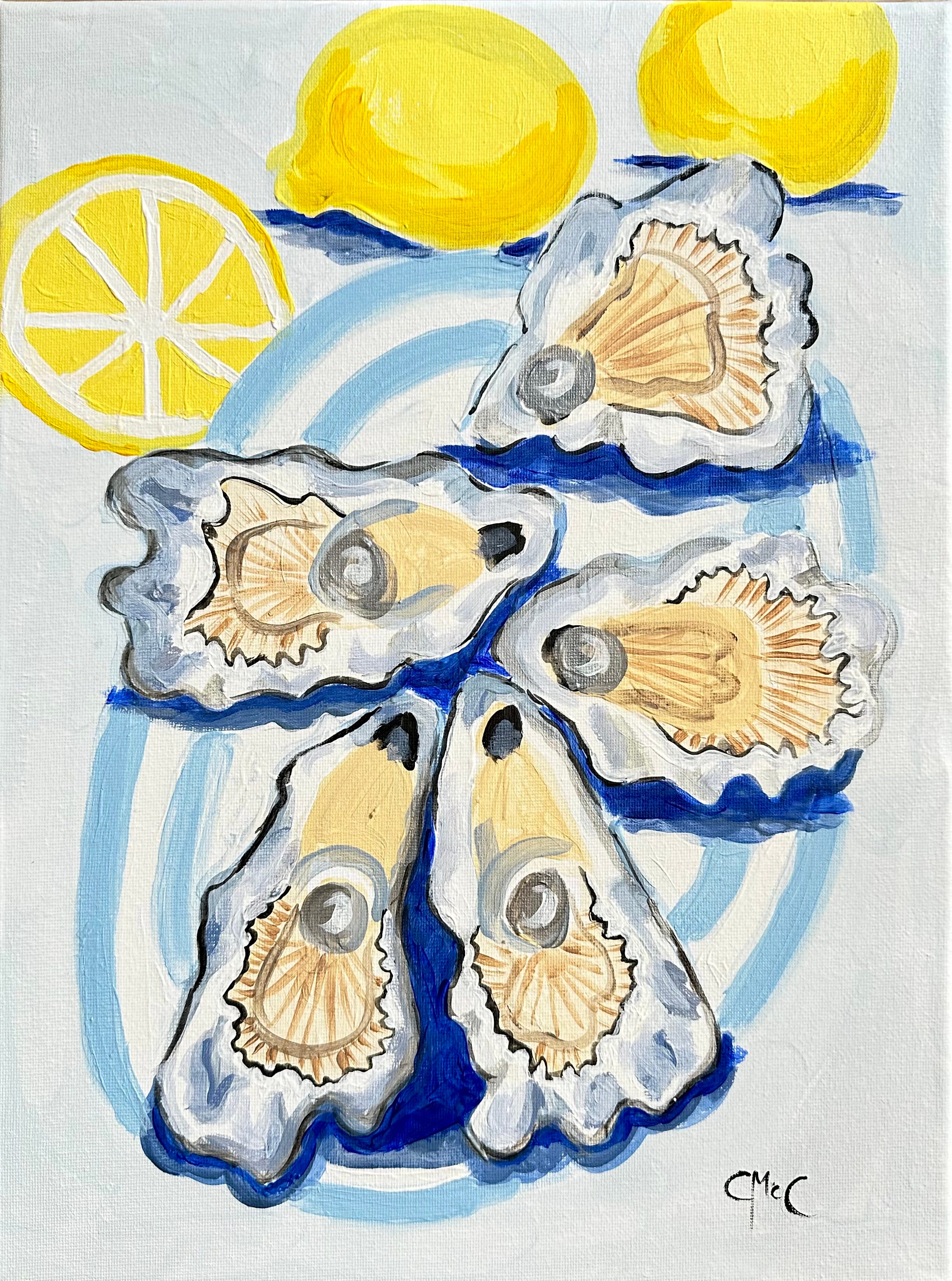
Painting: author, Acrylics
Reflections:
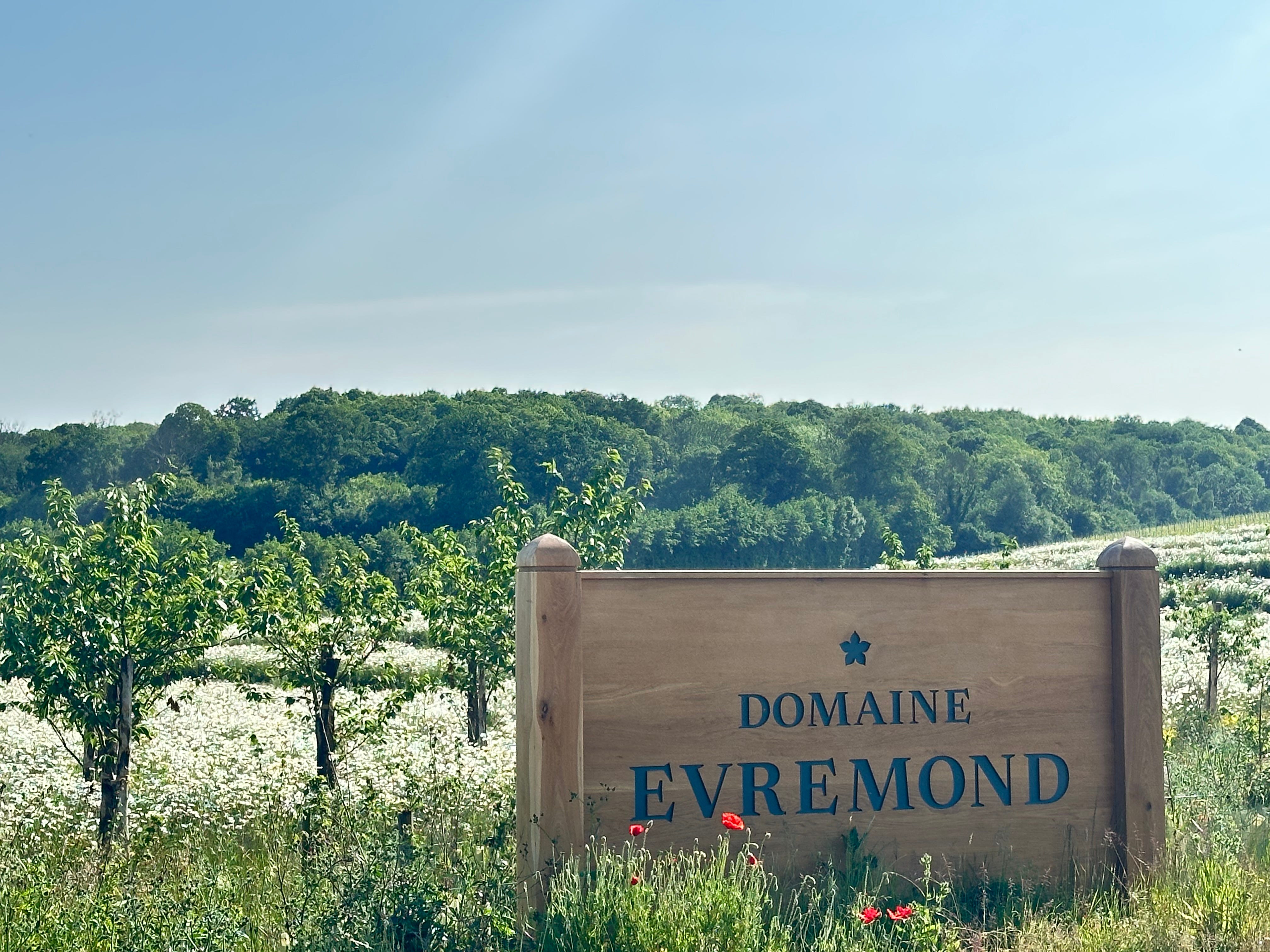
Photo: author, May 2025
It was wonderful to visit Domaine Évremond, a place I have passed every week driving along the rural Kentish back lanes on my way to Art class, only five miles from home. Two bottles were purchased to be opened at a future celebratory date.
Did you know that Domaine Évremond Classic Cuvée Edition 1 was served for pre-dinner drinks and the official banquet toast at Windsor Castle’s state banquet, hosted by King Charles III and Queen Camilla for President Emmanuel Macron and his wife Brigitte on 8th July 2025?
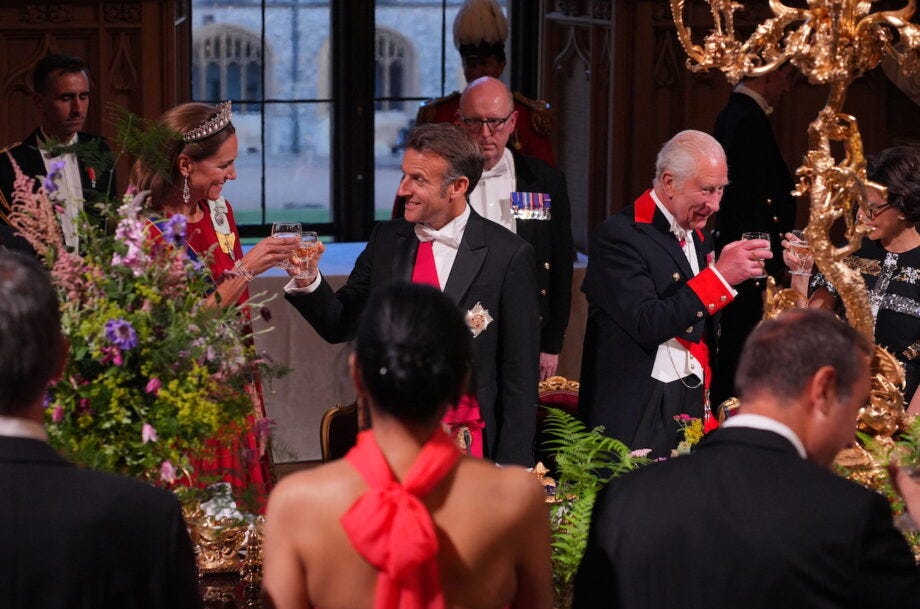
Photo: Yui Mok / Pool via Getty Images
This was the Princess of Wales’ first formal evening event since her cancer diagnosis last year.
During his speech King Charles said:
This evening, we have drunk English sparkling wine made by a French Champagne house. This would have been scarcely believable to at least some of our predecessors.
Around 160 members of the royal family, British and French politicians, ambassadors, trade and industry leaders, Sir Elton John, Sir Mick Jagger, actress Dame Kristin Scott-Thomas, First Dates star Frenchman Fred Sirieux and authors Joanne Harris and Sebastian Faulks attended the dinner in St George’s Hall.
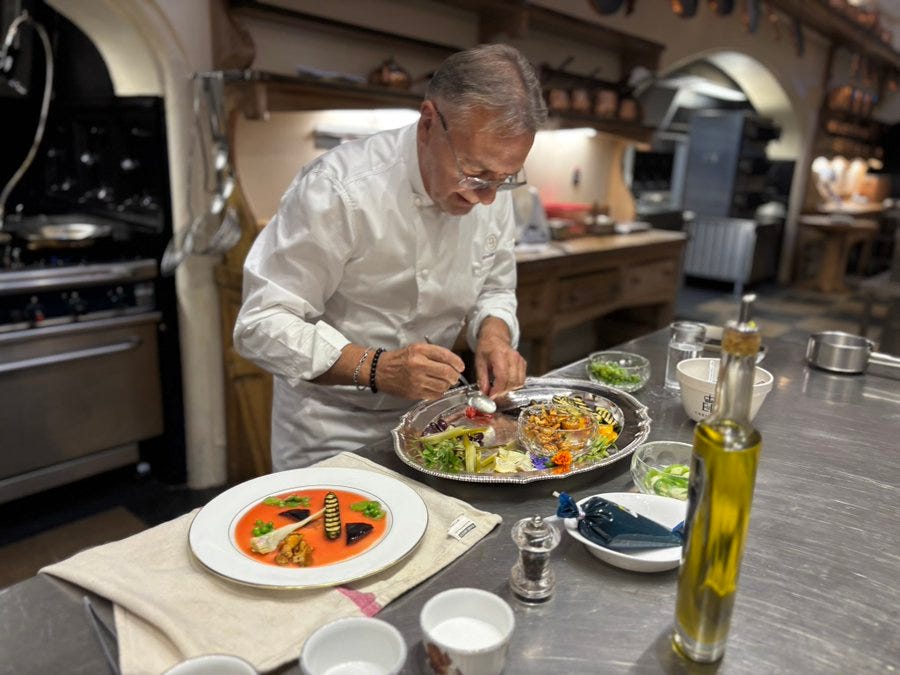
Photo: Raymond Blanc in the Windsor Castle kitchen, The Royal Family X account
French chef Raymond Blanc O.B.E., Legion d’honneur (two starred Michelin restaurant Le Manoir aux Quat’Saisons) collaborated with the royal household kitchen to create the menu for the state banquet. The menu was written in French as is the custom for state banquets.
With respect to Climate Change, I personally believe there is still much we can do to keep average global temperatures below that important 1.5 degree rise. Converting from non-renewable fossil fuels to renewable energy sources is the way forward, despite some spectacular Climate Change deniers.
Meanwhile, there are people across the globe affected by Climate Change induced extreme weather events such as flooding, drought, wildfires and hurricanes. These people deserve our empathy and need help from us as individuals and our governments.
A final quotation from the United Nations:
The six biggest emitters (China, the United States of America, India, the European Union, the Russian Federation and Brazil) together accounted for more than half of all global greenhouse gas emissions in 2023. By contrast, the 45 least developed countries accounted for only 3 per cent of global greenhouse gas emissions.
Everyone must take climate action, but people and countries creating more of the problem have a greater responsibility to act first.
Video: YouTube, I Need to Wake Up, Melissa Etheridge, from An Inconvenient Truth
à bientôt
Caroline
Introducing Contributor, Caroline McCormick-Clarke
Immerse yourself in all of Caroline’s articles on her Contributor page.
Wow, Caroline, you bring us full circle in your exposé from how heat exchanges impact climate change, to French champagne finding, planting and making the sparkling wine in a warmer England, to the méthode champenoise being served at a special banquet for the king with a French menu! It was fun to discover this through your article.