
Finding Nature in the Heart of Paris
What a marine biologist discovered when she swapped rural Limoges for the suburbs of Paris: the city is wilder than you think.

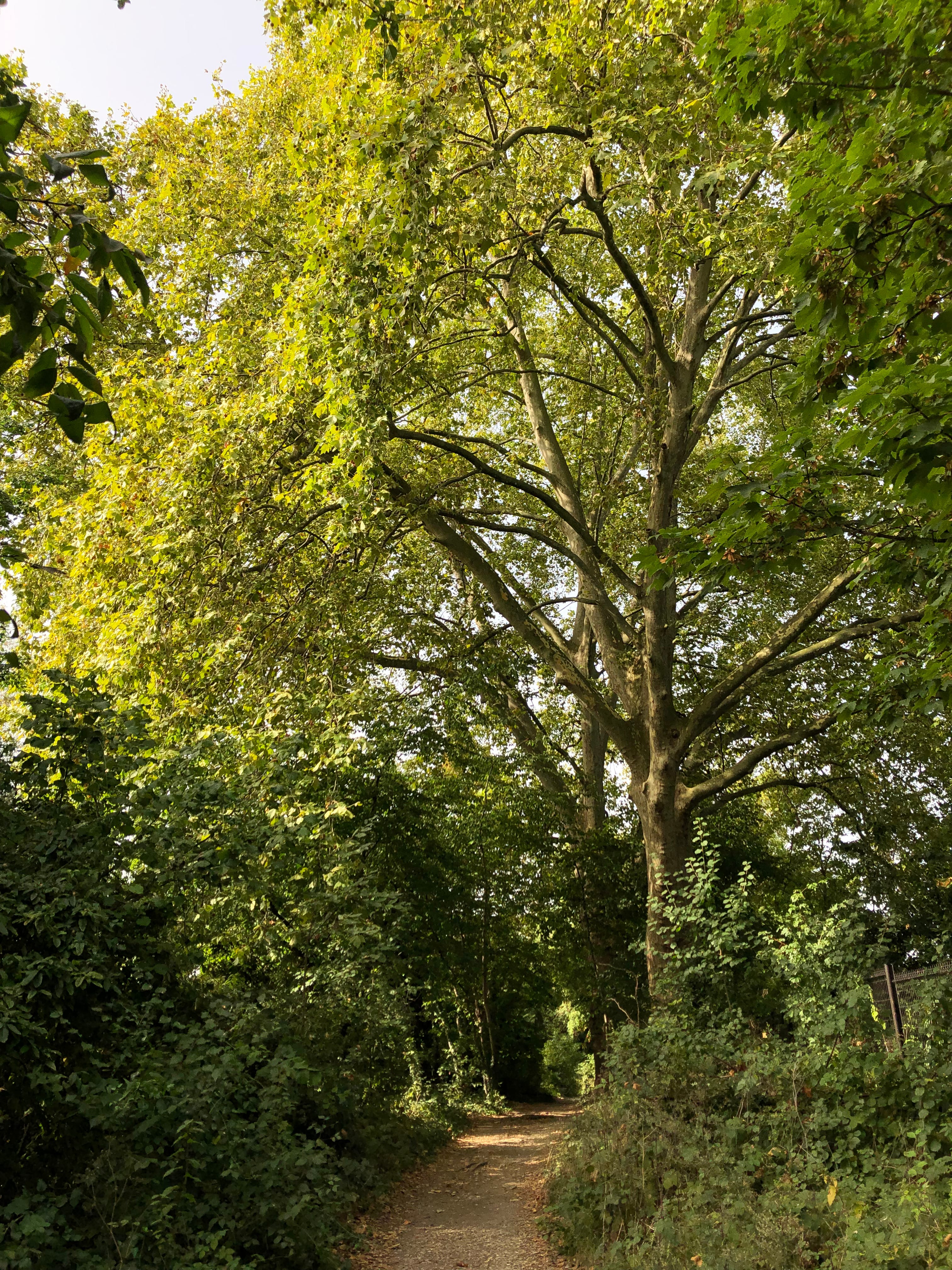
I’m fanatical about our abundant parks and green spaces, which were an unexpected gift of our move to Greater Paris. When we came to the city from the rural outskirts of Limoges, we knew we’d have more access to culture, but were delighted to realize we’d increased our access to nature, too.
My French husband and I started our lives together in California, but I had the bright idea to move to France when we had our first baby, so we could all be bilingual (it worked out in the long run, but boy, was that a transition). We’d hoped to go to Paris, but ended up in an agricultural community that was the definition of bucolic. I worked to appreciate the local character, which included lots of farm animals.
Limousine cattle pastured across our narrow street, and I greeted them each morning when I opened our shutters, then listened to the clucking of our neighbors’ chickens and the hissing of their hateful geese. The moos and squawks were not exactly dreamy, early-morning birdsong, but they were, at least, animal sounds. As a landlocked marine biologist, I leaned on what fauna I could.
At first, we were enamored with the lush greenery as we explored Limoges. A bike loop took us past rolling green cattle and sheep pastures, along mossy forest roads, and finally emerged into a golden colombage village built around a thirteenth-century abbey. 1
On my runs, I admired the sheep, the old stone barns, and the gnarled apple trees. In summer, I fueled my runs with blackberries picked from bushes that covered pasture fences, and in autumn, we hiked alongside chestnut foragers.
Over time, we realized our connection to nature was constrained. There were only two hiking trails, and both included sections through neighborhoods and around farms. Cattle pastured in the woods. Farmland encroached. There were no great tracts of wild space. While I initially ran all directions around our house, I eventually learned how dangerous the sinuous roads were for pedestrians. I was left with one route, which I ran every day. We had a lovely yard, as did everyone; nobody went for an evening walk, and few families used the local playground.
One yard, one running path, two hiking trails, one bike route. Desperate for new territory, I started jogging through undeveloped lots, untended fields, and pastures, always running into fences, fences, fences. That’s the deception of rural places: they look green and open, but the land is privately owned.
Cities play the opposite trick. They are made of concrete and their natural areas can feel forced—a tree here, a pocket park there—but cities can also contain wonderful green spaces, created by officials who know their citizens need to stand under the trees. I’ve visited impressive city parks: Vondelpark in Amsterdam, Golden Gate Park in San Francisco, and the massive Central Park in New York, which I mistakenly thought I could walk around in an afternoon after hoofing it there from lower Manhattan (I made it to the far side of the reservoir before pooping out). My trek in New York exemplifies the freedom of cities: the streets are public, the green spaces are public, the riverbanks and oceanside…you get the idea. In a city, you can start from almost any place and walk as far as you like in any direction. Even if you see only concrete, there is an openness that rural and suburban places tend to lack. And anyway, you won’t see only concrete.
Paris is not the greenest city in the world, but it does contain a reported 500 parks and gardens. 2
Once we’d decided rural living was definitely not for us, we moved to Issy-les-Moulineaux, a city bordered by Paris and the Seine, and, as we’d discover, it is a great place to live outdoors.
"In the country, I had the experience of an ever-contracting world.
In the city, my world is ever expanding — the park is the entrance to a forest, which is part of an expanse of nature so vast, a person could get lost out there for days and days."
Over our first weeks here, when my husband came home from work, I’d leave him with the kids and go for a run. It was the end of summer, and the days were long—I’d jog along the tree-lined bords de Seine during the golden hour. One evening, as I came back over the Pont de Billancourt, I slowed to look over the water. The setting sun glinted off the metal bridge, and houseboats rocked on the shore, and the sky fell raspberry and peach with that signature Parisian pale blue above.
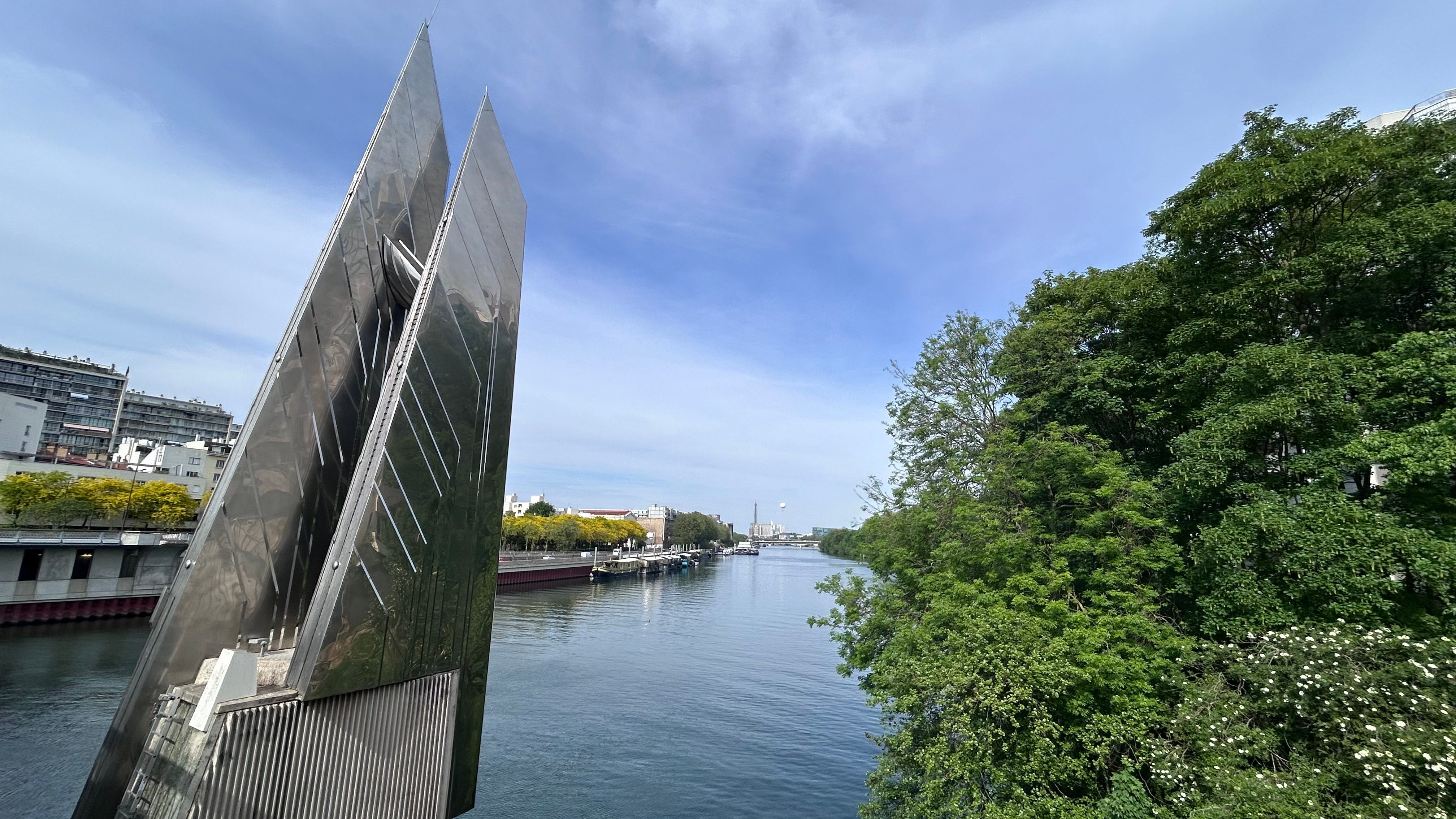
The Eiffel Tower was straight ahead, and beyond it, the Basilica de Sacré-Cœur. I knew I could run all the way to Montmartre if I wanted to, and I was overwhelmed by a sense of freedom, like all those pasture fences came tumbling down. It was in that moment that I felt I’d found my French home.
We have lived here for more than ten years now, and I’ve slowly learned about the history of our area as I’ve set out walking and exploring. Since we’re on the axis between the capital and Versailles, our area was once dominated by châteaux. The palaces of Meudon, Saint-Cloud, and Marley have been lost to history, and those of Versailles and Saint-Germain-en-Laye have been transformed into national museums, but their gardens and woods remain and have been opened to us commoners.


My daughter’s gym class walks to the terrace of the Château de Bellevue, the former residence of the Dauphin of Louis XIV, to play ultimate frisbee. Every weekend, my husband runs twenty kilometers through the woods of Saint-Cloud, a former residence of Henri III, Marie Antoinette, and Napoleon I. What’s more, these parks connect. The year I ran the Paris Versailles half-marathon, I was delighted to discover most of the racecourse was through the forest—we started at the Eiffel Tower, went along the Seine and past our house, then headed into the forest of Meudon, and we stayed under the trees until we reached the Château de Versailles.


In the country, I had the experience of an ever-contracting world—running routes taken by cars, woods being chopped down for pastures. In the city, my world is ever expanding—the park is the entrance to a forest, which is part of an expanse of nature so vast that a person could get lost out there for days and days. In these now urban forests, I am constantly stumbling upon wild creatures.
In the span of two days last week, my kids and I saw tadpoles swimming in the man-made pond at the Parc de l’Île Saint Germain, and we discovered a blanket of frog eggs covering a mud puddle in the Forest of Meudon. Yesterday, I saw a swan from one of our local mating pairs in the water on his own for the first time this spring, so I suspect his partner is sitting on her eggs.
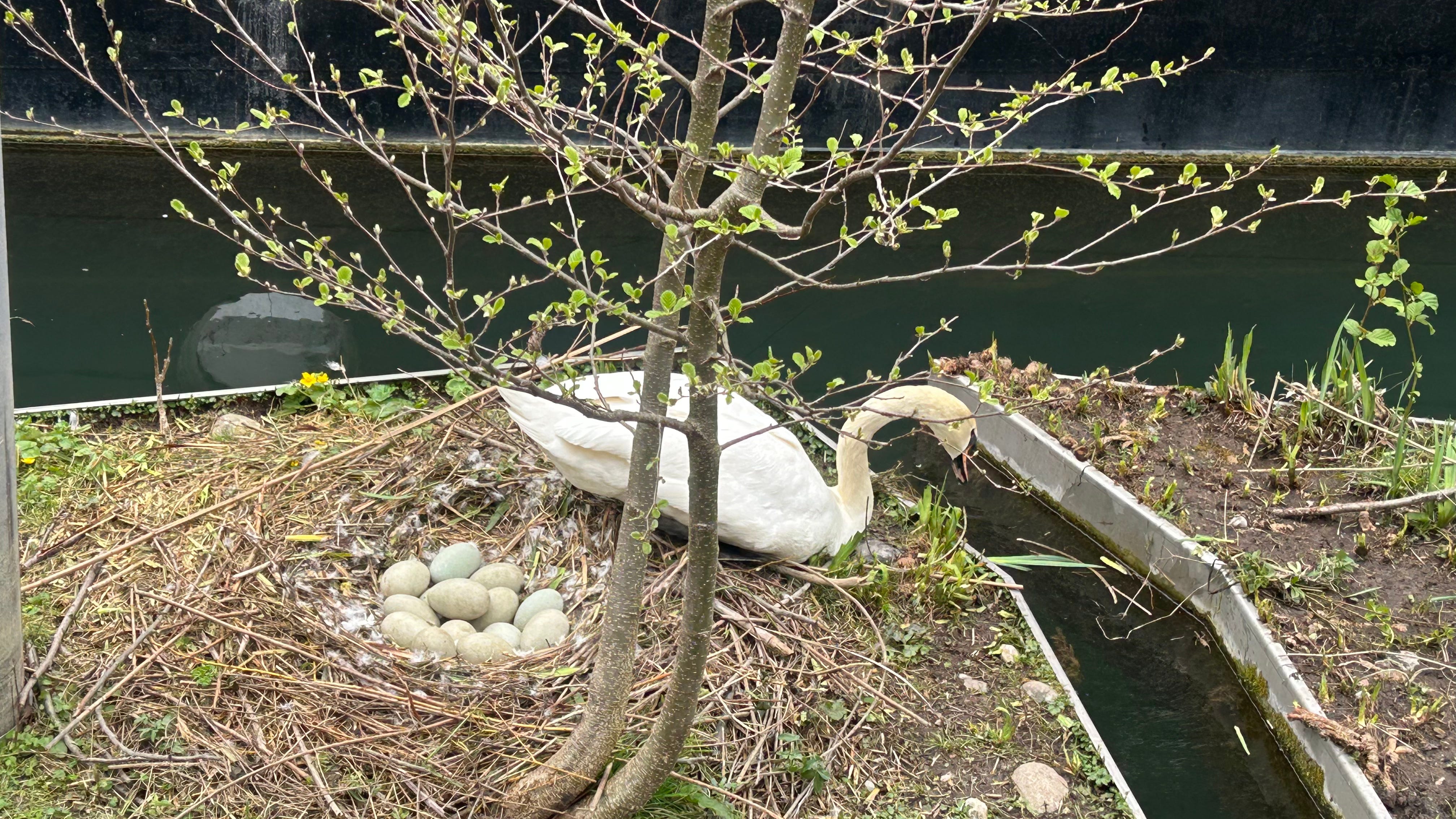
We know the nesting sites of two pairs of swans, two sets of kingfishers, and a great heron.
During Covid times, when we only had access to a small piece of riverfront, we knew a half-dozen clutches of ducklings by sight and tracked their daily dramas, including watching a lost, if not ugly, duckling try to find his mother among the gathered families.
Each spring, we welcome the appearance of fish fry in the shallows of the Seine, the baby water hens with their skinny toes, and the chirping of baby blue tits in the nest box. We eat wild blackberries in the park in August, and collect chestnuts in the forest in October. Once, a baby hedgehog zipped along the river walk as I followed behind, amazed. Another time, a large turtle cruised down the middle of the Seine. On a recent run in the park, two other women and I stopped to watch a baby fox trot across our paths. All of this, we can reach on our own two feet.
Because everything is proximal in the city, I feel like I experience nature every time I step out of my front door. Yes, the parks and forests can get crowded, but I enjoy that, too. Lots of people go into nature for solitude, but I write from home and have solitude aplenty. I love to be surrounded by other people who are enjoying the outdoors, to exclaim alongside strangers at the sudden appearance of a fox, a kingfisher diving for its dinner. Plus, now that we’ve lived here for more than a decade, I’ll usually see someone I know when I’m out.
I’m in better communication with our local flora and fauna—human neighbors included—here in the “grand couronne” of Paris than I was in rustic Limoges, where I mostly saw farm animals.
What a gift to have had heaped upon me, in addition to the ballet and the opera and the Japanese restaurants we came for.
Meanwhile, the region is only getting better as mayors push for the installation of more green space—pulling up concrete and laying down mulch wherever possible. In Paris and its suburbs, the transformation of many paved spaces into parks and urban forests has been gathering pace for years. Biologists are beginning to wonder if a city can become a nature refuge.3
For me, one already is.
Have you discovered that a city surprised you with its wildness — a fox crossing your path, a kingfisher, something you didn’t expect to find outside your front door? Tell me in the comments.
Elizabeth
Citations:
The Abbaye Saint-Pierre-Saint-Paul de Solignac was founded in the early seventh century by Saint Éloi, but the existing structures were built mostly in the twelfth and thirteenth centuries.
Curious stories of coexistence
IMAGE CREDITS: all images are copyright, Elizabeth Joubert
Introducing Contributor Elizabeth Joubert
Visit her Contributor Page — Explore more of Elizabeth’s work→
Thanks for reading MyFrenchLife™ – MaVieFrançaise®! This fabulous article by Elizabeth Joubert is public, and we encourage you to share it.
I enjoyed this immensely! Thank you for unlocking the wildness of the city for us. :)
"Biologists are beginning to wonder if a city can become a nature refuge.3
For me, one already is."
Loved that ending.
And how unexpected that the countryside would be a source of contraction, versus the city—at least in regards to nature. Getting to know a place reveals what the surface does not. :)