
What No One Tells You About Putting Your Kids in Full French Immersion.
They cried. We cried. And then one day, they spoke fluent French, like it had been there all along.

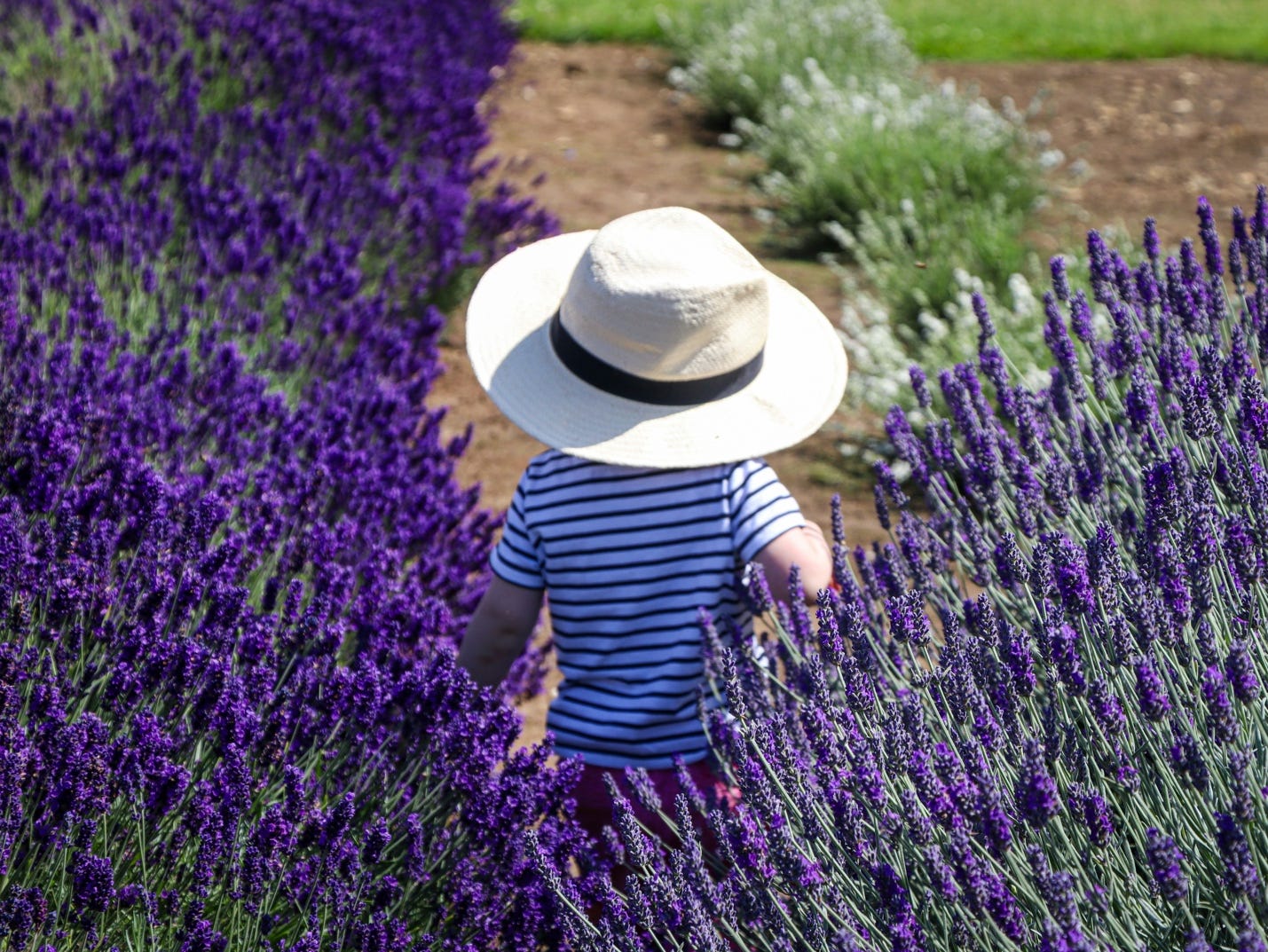
When we moved to France, we made a very brave - some might say questionable - decision. We enrolled our young children in the local village school. Not an international school, not a bilingual program, just a normal French public school where not a single soul spoke English. Total immersion.
The logic was sound. Everyone - books, blogs, actual French people - said it was the best way for kids to learn the language and the culture. Also, the nearest international school was forty minutes away, and we didn’t move to the French countryside just to spend three hours a day in a commuting loop. So we did it. We dropped our kids into a completely foreign environment with nothing but love and hopeful stares.
And it was hard. For them. For us. For our poor, tear-streaked steering wheel.
Our kids were very young when they started - the age when most people say it’s easiest to adapt to a new language. Maybe that’s true on paper. In practice, it was like asking them to build friendships and follow rules and self-advocate and sing songs and go to gym class, all while being dunked underwater and told to just breathe normally. They didn’t understand a word.
I remember my daughter looking up at me one night and saying, very quietly, “No one understands me.” She wasn’t being dramatic or anything. She was telling the truth. Every day for months she and her brother were surrounded by a language they couldn’t speak, couldn’t decode, and had no experience with. There was no foundation - no French preschool, no bilingual babysitter, no parent casually dropping phrases over breakfast. Just a full plunge into the deep end.
There were meltdowns. Refusals to get dressed for school. Cries of “Why do we have to live in France?” And on one very memorable morning, an actual attempt to hide behind the couch so we couldn’t find them when it was time to leave. We understood completely. The effort of surviving eight hours a day in a language you can’t speak is exhausting even for adults, and for children, it wasn’t just hard - it was lonely.
There was also a stretch of time when they rejected anything remotely French. A cartoon in French: rage. A request to translate a phrase they’d already learned: flat refusal. I don’t blame them. Their nervous systems were overwhelmed. It wasn’t France they were angry at - it was the loss of control, the silent hours at recess, the confusion of not knowing whether someone was inviting you to play or telling you to go away.
We lay awake worrying, of course. Had we done the right thing? Were we damaging their sense of security? Would they start to hate school forever? Were we chasing an ideal at their expense? These are not small questions and we did not have good answers to them at the time.
Then, slowly, things began to change. They started recognizing words, then understanding full sentences, then saying full sentences. They began correcting our French, whispering the proper pronunciation like tiny linguistic professors. They started watching shows in French without resistance. And then they did what all bilingual kids eventually do - they started translating for us at restaurants, teasing us for our accents, saying things like “Maman, that’s not how you say it here” with the mild exasperation of people who have clearly moved on.
And best of all: they made real friends. The kind that makes you run toward school in the morning instead of away from it. The kind that makes language a bridge instead of a wall.
Total immersion sounds romantic, and in the end, it can be beautiful. But it’s not easy, it’s not instant, and it’s definitely not painless. There were months of resistance, tears, tantrums, tiny acts of defiance against this big, beautiful country they didn’t ask to move to. Despite all the stories of children picking up French in three weeks flat, the truth is that it can take months, sometimes years. You’ll feel like nothing is being absorbed. You’ll quiz them on a phrase from two weeks ago and they’ll look at you like you’ve asked them to solve a physics equation. You’ll wonder if it’s working at all.
And then - bam - it’s there.
One day, our son had a friend from school over to play. We watched as he spoke fluent, rapid French for over an hour, barely pausing to breathe between sentences. My husband and I just stared at each other. It was like watching him reveal a secret life. And of course it made sense - he hadn’t been practicing French at home. He’d been living it at school, with his teachers, with his friends. We just hadn’t been there to witness the progress.
I’m proud of them in ways I can’t always articulate. And I’m proud of us too - we did the hard thing, we stuck it out, we stood at the school gate with fake confidence and real fear, and we kept showing up. It’s not the kind of story that ends with a cinematic montage of fluency in four weeks. But it is the kind of story that ends with a little girl whispering to her maman, “You said that wrong,” and giggling as she fixes your grammar.
That’s the kind of happy ending I’ll take.
Kamille
Did you put your children through full immersion — or live through it yourself? Tell me what it was really like in the comments.
Introducing Contributor Kamille Longstreet
Visit her Contributor Page — Explore more of Kamille’s work→
Thanks for reading MyFrenchLife™ – MaVieFrançaise®! This fabulous article by Kamille Longstreet is public, and we encourage you to share it.
MyFrenchLife™ – MaVieFrançaise® is a reader-supported publication. To receive new posts and support my work, consider becoming a free or paid subscriber.
This is beautiful. I first moved to France when I was 6. My siblings were 8, 10, and 18. We had heard some French at home because my mother spoke it, but we didn’t speak a word ourselves and barely understood these new people whose French sounded completely different from hers.
It was hard. For me, it took all of CP and half of CE1 before I really made friends.
But we’re all bilingual adults now, and it’s a gift we’ve spent our entire lives being grateful for.
When I lived in the French-speaking part of Switzerland, a couple of fellow Americans arrived with their 5-year-old son. Like you, they put him in the local school and after six months, bam, he spoke French! The parents never learned much, so they leaned heavily on their son to interface with the outside world. One day the mother told me, "the scariest thing in the world is a 5-year-old with power!" :-)