
How to Become Your Best Self in 2026 (And Why the French Don’t Try So Hard)
On intentions, pressure, and the luxury of not reinventing yourself

Hopefully, you rolled your eyes when you read the title.
By now, you’ve already heard how to become your best self in 2026.
In podcasts, on social media, in listicles that promise clarity before the year has even begun.
In the U.S., this moment comes with a particular intensity. Intentions aren’t just something you hold; they’re something you articulate, share, and sometimes perform. They show up everywhere — promising discipline, transformation, reinvention. As if the new year were a blank slate, waiting for you to start over.
In France, it doesn’t quite work that way.
Contrary to the cliché, people do take bonnes résolutions. January brings the usual promises: drink less wine, move more, eat better. Dry January exists here, too. So does the familiar vow to “perdre cinq kilos” or finally get back into a regular sports routine.
But there’s also a collective wink. Almost everyone knows these resolutions probably won’t last. And that shared understanding lowers the stakes. It’s accepted — half jokingly, half realistically — that life won’t be overhauled in a few weeks. That who you are on December 31st doesn’t disappear on January 1st.
There’s no expectation of becoming someone else overnight.
In the U.S., the new year often arrives as a rupture: before and after, old self and new self, discipline versus failure. Change is framed as a reset. A chance to fix what didn’t work. And with that framing comes pressure — to optimize, correct, prove seriousness. I’ve written before about this American instinct to fix ourselves — and how living in France shifted my relationship to it.
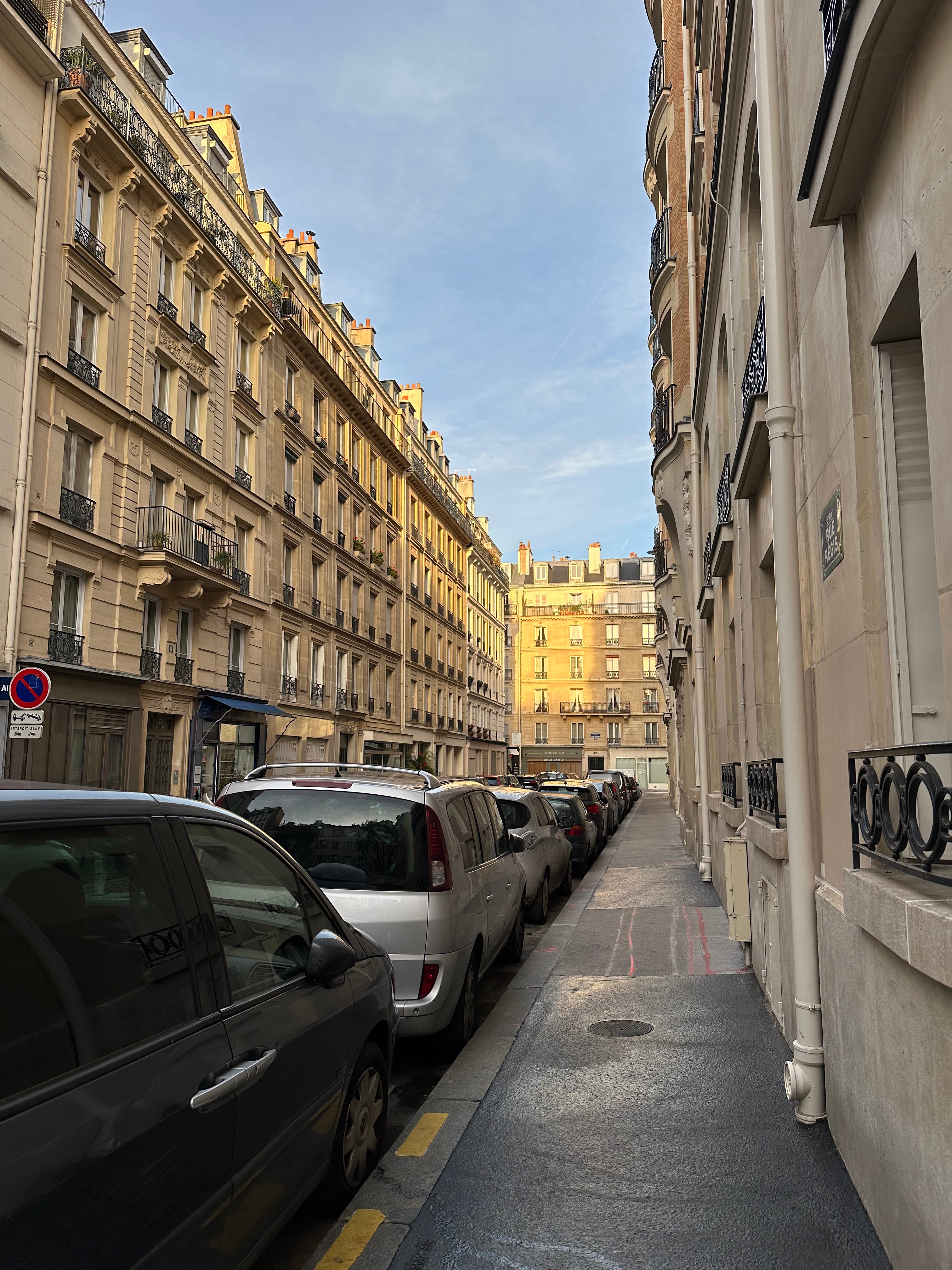
In France, change is treated as something slower and more pragmatic. Less about declaring a new identity, more about adjusting the way you live. You don’t announce it. You try something. You keep it if it works. You drop it if it doesn’t. No one is tracking your follow-through.
I’ve grown to appreciate that.
As an entrepreneur, I do believe in intention. Direction matters. Knowing what you’re orienting toward — even loosely — is essential. But intention, to me, isn’t a lifestyle overhaul. It’s not green juices or strict routines or forcing yourself into a more disciplined version of who you think you should be.
Its orientation.
Deciding what deserves more space and what deserves less. Choosing what you want to protect.
That’s where the French approach resonates most. Instead of asking What will I change this year? The question becomes: What will I continue to make room for? What already matters — and how do I stay faithful to it?
Living here has taught me that intention doesn’t need to be loud to be real. It doesn’t need a deadline or a declaration. It often works better when it stays private — folded into everyday life rather than staged as reinvention.
Maybe that’s why resolutions don’t carry so much weight in France. They’re not a referendum on your worth. They’re not proof of ambition or discipline. They’re just ideas — held lightly, kept if they stick, abandoned if they don’t.
That feels sustainable.
The sense that you’re allowed to remain yourself. That progress doesn’t have to look like transformation. That a good year doesn’t require a new identity — just a bit more alignment, a bit more honesty, a bit more care.
Intentions, yes.
But without the pressure to become someone else.
Thank you for reading.
À très vite,
Pamela
Introducing Contributor, Pamela Clapp
Immerse yourself in all of Pamela’s articles on her Contributor page.
MyFrenchLife™ – MaVieFrançaise® is a reader-supported publication. To receive new posts and support my work, consider becoming a free or paid subscriber.
I DID roll my eyes at the title! 😉 Just add everything you wrote to my list of reasons to move to France.
It’s true.