
Lesser Known French Cultural Experiences
On the eve of my French nationality interview, reflections on little moments that helped integrate me into the culture.

I was sitting on a sofa at my co-working space the other day, half working, half annoyed at someone loudly taking a call in the common area (why do y’all do that?) when I myself got a call from an unknown number. In the past I never answered these because they meant I was due to have a humbling phone conversation in French with a telemarketer or Amazon delivery guy. But now that I have a child and all I can’t ignore the unknown number calls in case that child has a fever or fell off of something or other. So I answered it.
It was worse than a call from the daycare nurse: it was the Prefecture de Police calling about my citizenship request.
The woman on the other end of the phone verified that I was Shelby Chambers, the Shelby Chambers who currently has an open request for naturalization, asked if I was currently working and if I have a CAF account. I replied “uh, oui, uh, comment? uh oui, a ce moment ou en general? Uh oui, I guess.” After getting my answers to all of these, she speedily informed me that I needed to attend an interview for my citizenship the following Wednesday at 9am and I would need to bring a bunch of work and social security-related documents. I tried to ask her if this was AN interview just to do with the documents she had asked for, or if it was THE interview, the big interview for my citizenship, the interview that was also a French language test, a French history test, and a stealthy analysis of whether or not my husband and I are actually in a relationship or if we’re in passport situationship. She sternly replied that it was an interview as part of my open citizenship request. When I tried to clarify in mediocre French, she just repeated herself and said have a good day, byeeeee. Click.
After I panic-texted my husband and all of my friends, I started to get my dossier in order and to make flash cards of French history facts, presidents, kings, rivers/fleuves, and cities I’ve visited. I also practiced conjugating some verbs I’m not used to using to try to dazzle whoever it was that would be evaluating my Frenchness. That’s what this interview is about after all—to see if the documents, the French language exam results, all that I’ve been doing the past five years, together prove that I am integrated into French culture. (To do this, the French government also for some reason needs newly issued, actual versions of my parents’ American birth certificates and their notarized translations.)
But wtf does it mean exactly to be integrated into a culture? As a retired teacher’s pet, I’m curious what kind of answers they are looking for. Do they want me to list out the number of chateaux and historical sites I’ve been to, or how much I know about French cheese, or how many manifestations I’ve attended? The whole thing got me thinking about the experiences I’ve enjoyed (or suffered through) that have made me, petit a petit, a little more French.
If my Prefecture agent does indeed ask me what I have done to integrate into French life, I don’t want to give her an Emily In Paris list of superficial experiences that makes her roll her eyes. I want her to see that I’m the real deal, I’m becoming French AF, I “get” and appreciate what they have going on here. So I’m brainstorming a list of the less romanticized cultural experiences, the B-sides that you don’t get into on your first, second, or even third trip to France. The stuff you experience on your way to integration, whatever that actually is.
Franchement is a reader-supported publication. To receive new posts and support my work, consider becoming a free or paid subscriber.
Attending A Manif
I did this the second day after moving to Paris. I didn’t mean to, but it does frequently happen that way. My husband and I were strolling near our Airbnb, saw a lot of people walking with posters, followed them to Place de la Nation, and ended up in the middle of a climate protest. We lived near Bastille for four years, so there was a march or manifestation scooching by our apartment every other week, which is convenient when you’re aligned with the cause. Less so when you come home from dinner to your street being on fire and tear gas being thrown like water balloons.
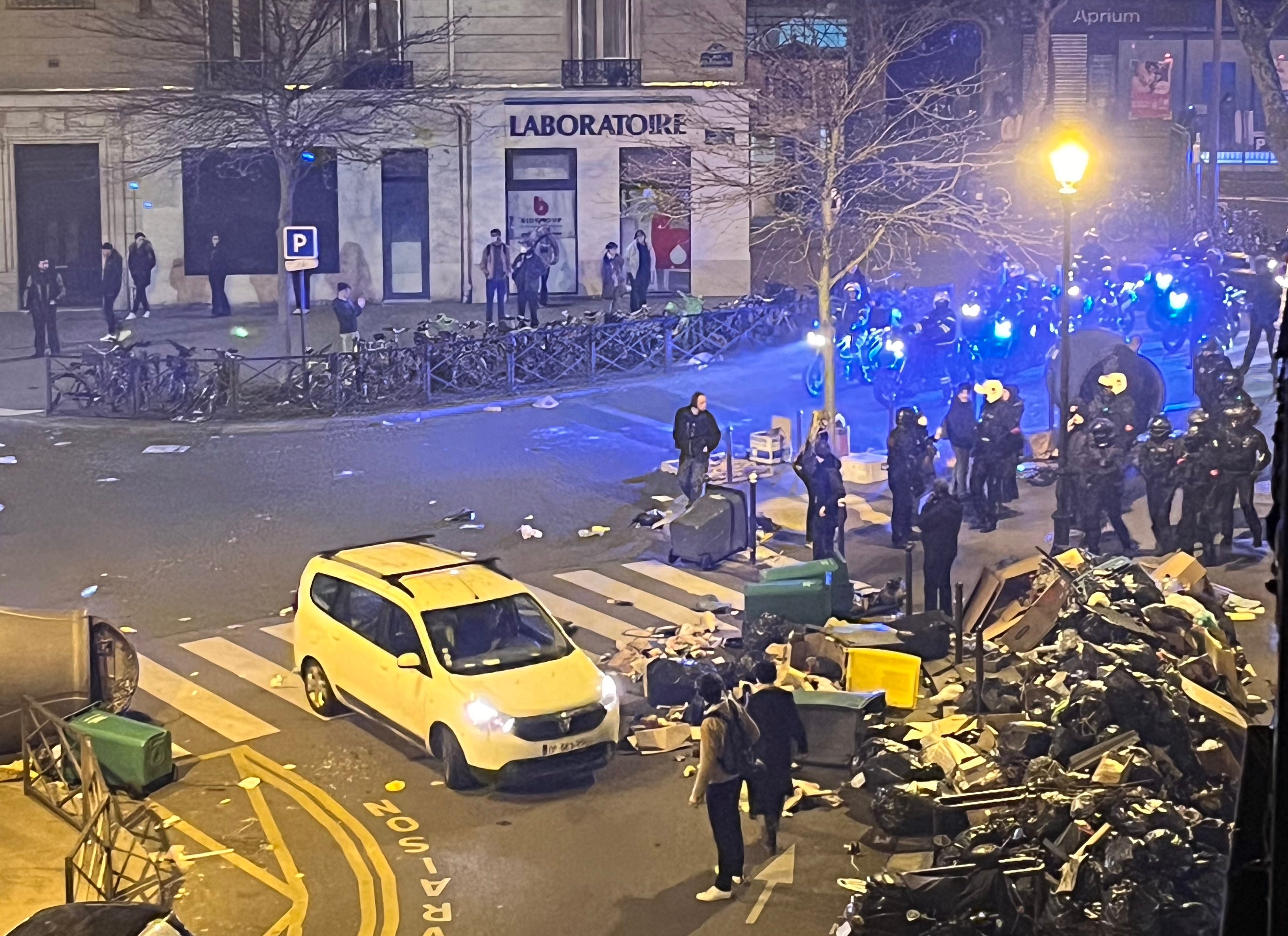
Protesting is a big part of the culture here, which sometimes makes it the butt of jokes. If you do it too much, it does lose some of the edge after a while. But no matter, it’s a form of expression that all people can use, which is nice to be a part of. I like that it doesn’t have the negative connotation it does in the US, that protesting is just something that young idealists do that has no impact, or that it’s simply a front for vandalism. Here, vandalism is just as rampant, but so is ire for the banks and huge global brands who typically take the brunt of the broken windows.
There’s also a lot of creativity in protests here that I love to see. From the guys who make rolling BBQs so they can sell sausages as they march, to the farmers who block highways with their tractors or drop off hay and dung at government buildings, there is an art to French protest that I am always in awe of.
Doing La Rentrée
In the US we have “back to school” which still makes me shudder—the thought of Office Depot school supply ads can still have me reaching for my Ativan. In France, there is la rentrée, still governed by the school calendar, but it applies to literally everyone and is a bigger cultural reset than the new calendar year. When I first arrived in Paris, having no children and no major vacation plans for August, I had no idea why everyone was talking about it so much. Oh la rentrée, we’ll do that after la rentrée, let’s hang out after la rentrée. There was a whole cultural shift, almost like a nationally recognized holiday, that I had never even heard of.
But now I get it. Even if they don’t necessarily go on a long vacation, enough folks take some kind of pause in August for it to be known as the month when nothing will get done, nothing will be open, and you won’t see your friends because they’re all gone. Necessarily then, come September 1 when the rentrée rolls around, it’s kind of a big deal. You have to be like “ohhh, how’s your rentrée going?” “ca va la rentrée?” acknowledging the tough transition from sun and leisure to creche drop off and work meetings now that we’re all re-entering real life. It can also be energizing; you just had a break from your routine, maybe travelled somewhere new, and now you’re going to hit the ground running because la rentrée! I’m assuming, however, that the word has the same effect on little French kids that “back to school” has on me which is the opposite of energizing.
Sampling The Cold Weather Cheese Trifecta
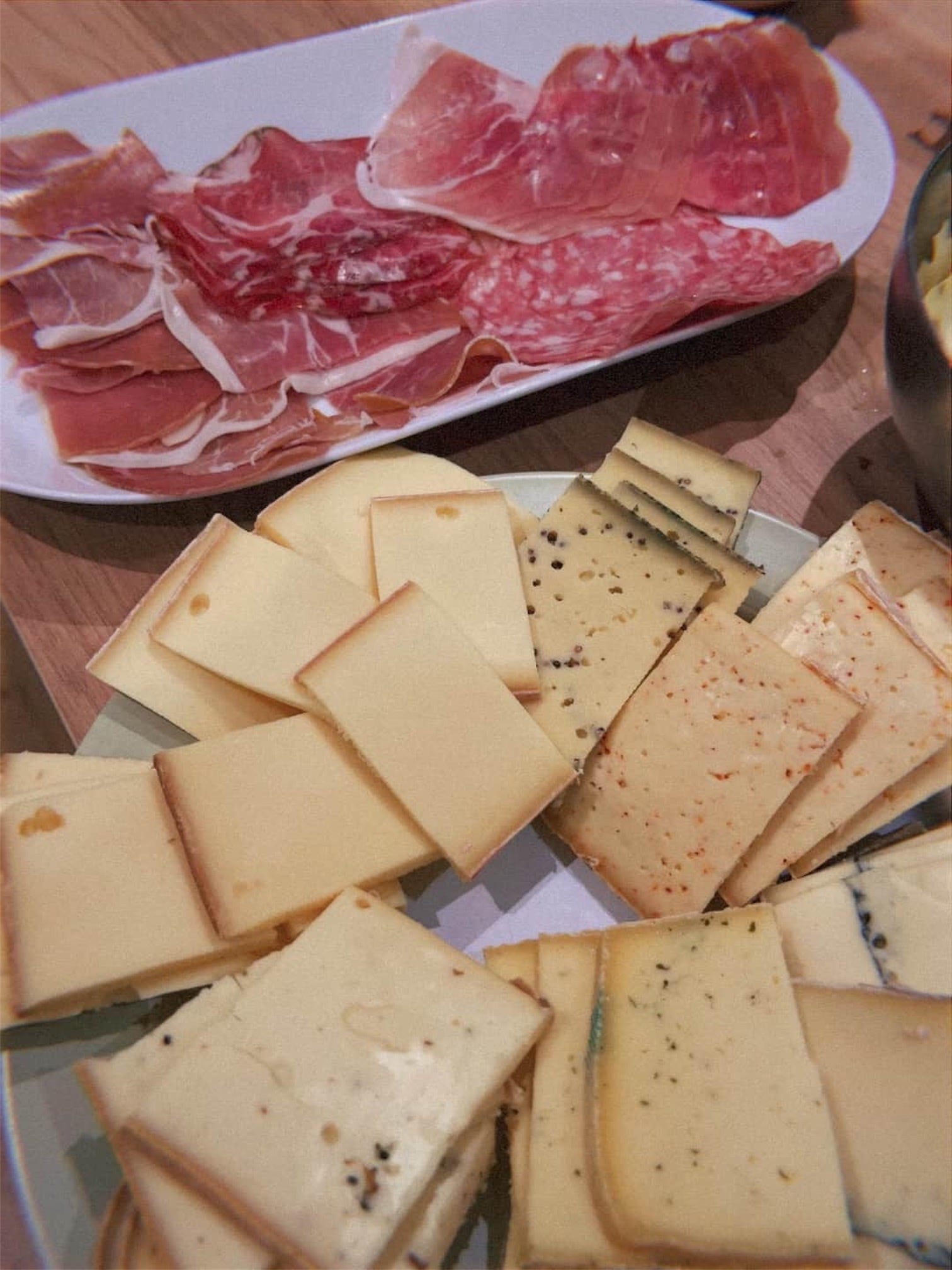
“YOU’VE NEVER HAD RACLETTE BEFORE?” I was asked the first time I had raclette on a ski trip in 2019, before moving to France. I hadn’t even heard of it. I didn’t know it was a critical part of French winter, especially if you’re anywhere near a mountain or snow (every Airbnb you’ll rent will always have one on hand). I didn’t know that 50% of the point of a ski trip was to eat the cheese trifecta of the mountain: fondue, raclette, and croziflette (some people will say tartiflette, but I prefer the little sarrasin pasta squares to the potatoes, the way they crisp at the edges and create doughy cheese clumps).
On my first ski trip to the Alps I made the mistake of offering to cook dinner one night and choosing to serve a large lentil stew with veggies and sausage to a party of three grown guys who had been skiing all day. I thought the warm, rich lentils and vegetables would be just the thing to fill everyone up while remaining relatively healthy. I later realized that I had broken a rule of the ski trip and that this crew only wanted melted cheese-related food even if it meant their intestines turned to solid dairy. Lesson learned, no fiber in the Alps. I hope my Prefecture agent appreciates that I actually just bought a raclette machine for our house, and sees it as a symbol for how serious I am about becoming French.
Enjoying the Network of French Rest Stops
I freaking love French rest stops. They’re just so convenient, enjoyable, and adequately delicious, which is more than can be said of American rest stops. Pulling into one on a holiday weekend, you get to see people from every region and every walk of life together taking the necessary pauses one must do as a human, specifically a French human.
There is necessarily a large space for buying and drinking coffee, usually a designated area with tons of coffee machines and high tables. There is of course the picnic area and loads of food options because even though we’re traveling, we are still going to eat relatively well, at a real table, slowly. You can buy bread and cheese and pâte for a picnic, a ham and cheese sandwich of course, or sometimes salad or a burger if the rest stop has a real restaurant built in. Of course you will eat with real silverware. Of course you will still have dessert. Of course the bathroom stall doors will go all the way down to the ground. You may be on the road, but you’re on the road in France.
Going To Someone’s Ancient Family House
I never knew how many times I’d be invited to someone’s family house in this or that corner of France for a long weekend. How does everyone’s family have an empty bonus house just laying around? It’s only logical that a lot of people whose families have always lived in France should have old houses they can go spend the weekend in. If your family never immigrated and they managed to pay the death duties, they may as well hang on to that cool old property in the countryside for the family (and me) to use.
I come from a country where everyone is relatively new there (lest we forget that), and unless you’re dumb rich, the properties aren’t old or cool enough to hang onto, so there was no popping over to the old family house for the Fourth of July. Sure, this is happening on the East Coast, but not Long Beach, California. In France, I literally can’t even count the number of times my husband has said “oh we’re invited to so-and-so’s family house” and it’s literally a mini castle or a winding stone tower or some other historic edifice. And only sometimes is it because the family is in fact dumb rich. Most often, their great grandpa was able to buy a cool building for like 35 francs and a chicken after a war and the family figured out how to keep the property. The funny catch is that you always have to bring your own sheets and towels but that’s a fair compromise.
Franchement is a reader-supported publication. To receive new posts and support my work, consider becoming a free or paid subscriber.
Internalizing The Small Town Schedule
It’s well known that in France, including Paris to an extent, things are closed. Businesses close at the same time you get out of work. Lunch is from like noon to 1:30pm in small towns, then they close until dinner. Grocery stores even close at 6:00 or 7:00 pm sometimes. So if you’re off enjoying some sights or are slow to get out the door to get groceries for dinner, you can totally miss your window for food.
You only do this once before you learn better. You try a place that says it will be open for ten more minutes, but they turn you away because the kitchen is already closed if the doors are not. Then you wander around the village looking for another restaurant, there must be one, what are hungry people supposed to do? But there isn’t one. So you eat an old sandwich or whatever you can scrounge at the grocery store and try to plan better for dinner. Eventually, you don’t even think about it, you just know you need to eat at noon sharp or get your groceries well before 5:00pm or else you aren’t eating. Sometimes you just assume everything will be closed so you can at least feel happy if you do by chance get to eat.
Joining French Wedding Dance Floor Hijinks
I made the mistake of learning many of these at my own wedding, which wasn’t ideal for a control freak like myself. I had even been to a few French weddings before hosting my own, but those only taught me about the food (very good) and duration (very long) of French weddings, not necessarily about the dance floor situation. I’m accustomed to American wedding hijinks: short ceremony, short cocktail “hour” where you can’t get your hands on a single hors-d’œuvre, short crappy dinner, an hour of dancing then GTFO. I prepared myself and my guests for the French version with detailed explanations on our wedding website (not that anyone read it): dinner would go until midnight. Dancing would go until dawn. Be prepared.
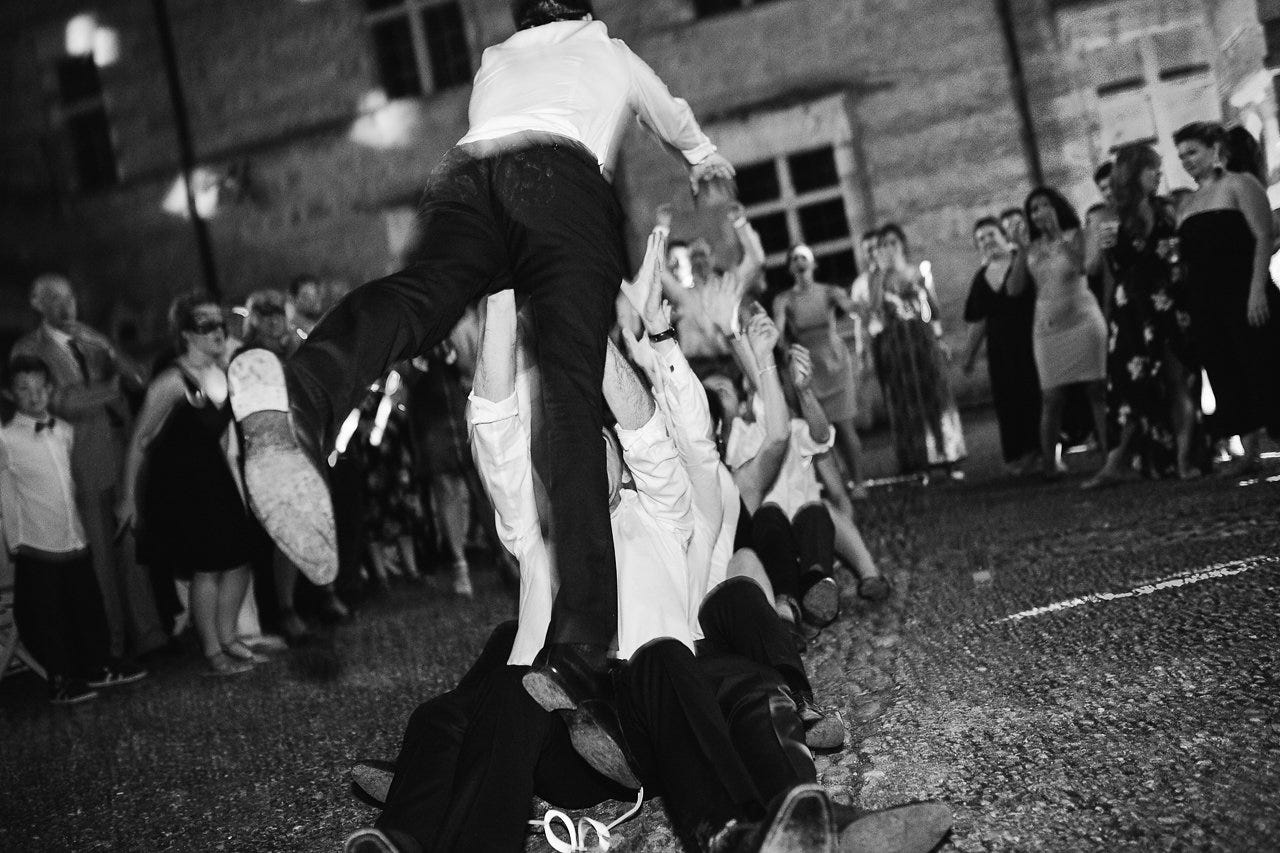
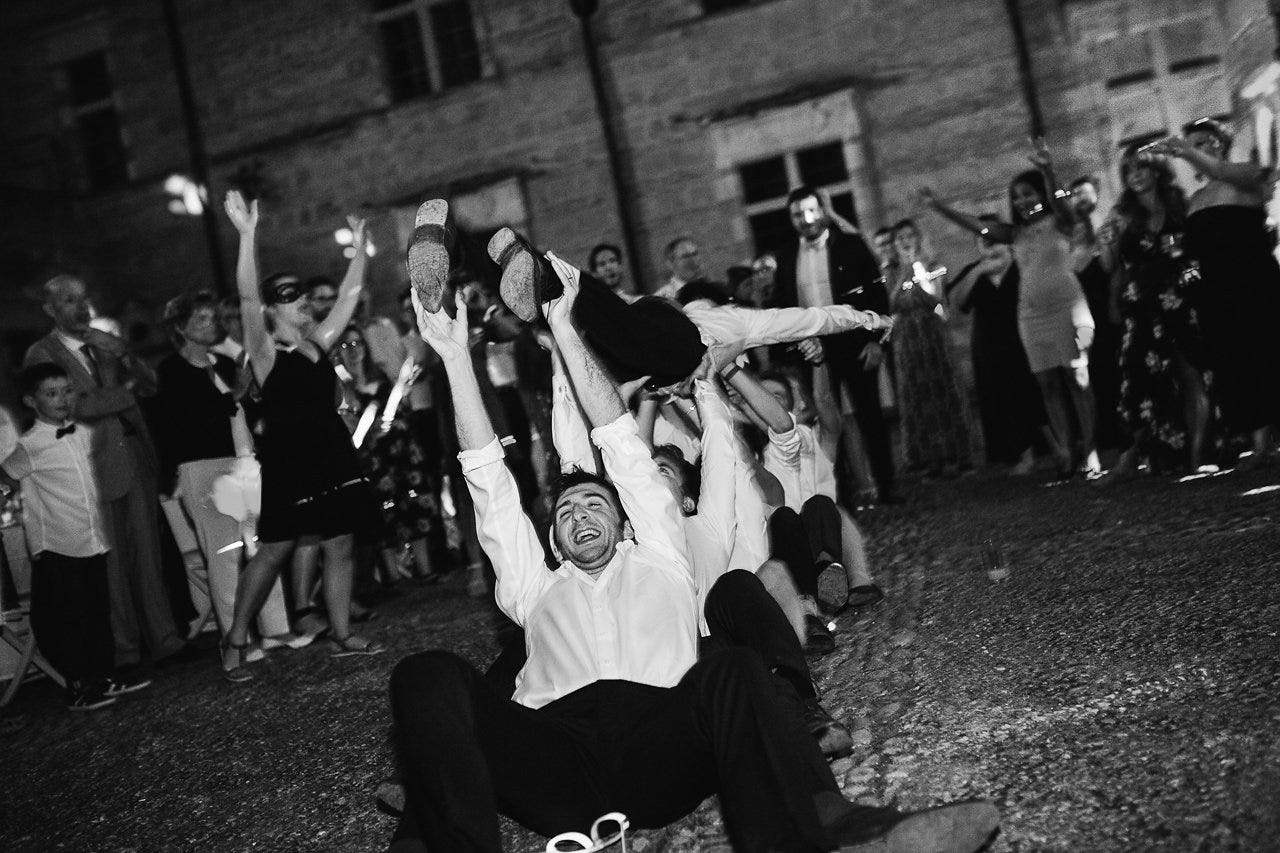
What no one was prepared for, least of all I, was all of the organized dancing that was going to be happening. I forgot to put “Cotton Eyed Joe” on my no-go list because I didn’t even know anyone knew that awful song in France. All of a sudden, I heard the familiar banjo riff and was instantly mortified that such a loathsome and tacky song would be playing at a wedding of mine. I began to run to the DJ booth and that’s when I saw it. The entire dance floor was swimming with our French guests dancing in formation. One second they were square dancing, the next they were doing a human tunnel and all running through it. They actually liked the song. I thought better of killing their fun, as much as that song grated my sensibilities. Later in the night they all began sitting down in a long line on the dance floor. American guests asked me what was going on but I had no clue. Suddenly, someone ran and jumped directly at the line of sitting people and they caught him then passed him backwards over their heads. I went from shocked, to concerned for their safety, to impressed, to jumping in and being passed down the line myself. It made for some really good photos.
Some Additional Quick Hits
Discussing the difference between a rivière and a fleuve
Knowing that “actuellement” doesn’t mean “actually”
Eating several galettes de roi each January
Knowing that “pas mal” means “freaking amazing” and “pas terrible” means “the absolute worst”
Peeling your fruit with a knife before you eat it. Even peaches.
Now, as much as these are the moments that truly integrate you into the French culture, they are not the moments I’ll mention in my interview. Mostly because I want to say what I think she wants to hear so as to get a gold star.
I’ll tell her that I’ve taken hours of French classes,
I’ve seen plays and films in French,
I speak only French with my in-laws (less ever since I gave birth because I’m somehow always tired),
I listen to the news in French, and
I’ve visited as many corners of France as I can.
Oh, and I have a French baby; that’s a real good one. I think that will satisfy her report much more than explaining to her that I know which direction to cut a Roquefort or that I can give the bise without panicking.
And frankly, she may not even ask me about how I’m integrating. She might ask me for a random date, like the start and end of the Third Republic. She might say I’m missing enough proof of my current address and cancel my application. Also I should have been studying the dates of each French Republic instead of writing this, but oh well.
Wish me luck.
Do you share any of Shelby’s experiences? Let her know in the comments below
Introducing Contributor, Selby Chambers
Immerse yourself in all of Selby’s articles on her Contributor page.
Good luck!!!