
Louvre Lens Museum, Hauts de France
How to set a Fire; Emile Zola’s Germinal; a history of Coal Mining in Lens; a view of the RC Lens Football Stadium and the Louvre Lens museum

Introduction
As I write, there is still no sign of a real ceasefire or peace between Iran and the U.S./Israel. The Strait of Hormuz is persistently blockaded with repeated trading of missiles and drones between opposing sides.
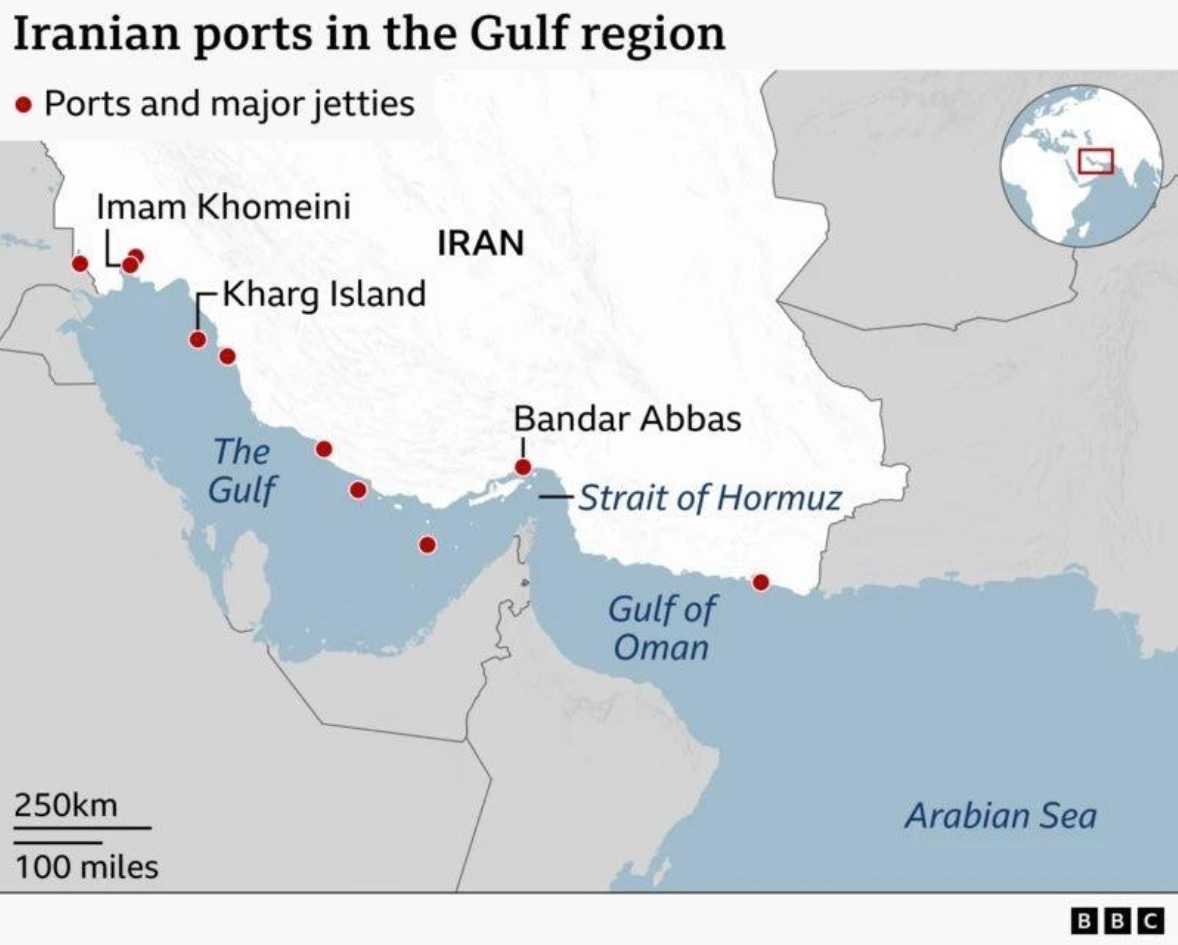
Supplies of Middle Eastern oil exports to the rest of the world have been interrupted. This 2026 Energy Crisis has resulted in a sharp increase in petrol pump prices.
We have been here before. The 1970s global Oil Crisis. Particularly in 1973 during the Yom Kippur War and again in 1979 during the Iranian Revolution.
I can remember the 1970s Energy Crisis as a child. Not that I was avidly watching the news or reading the newspapers.
There were frequent power cuts in Britain, beginning in early 1972. As children living in Harrow, north London, we found them exciting as candles were lit, whilst we played board games or cards. Of course, I now understand that this was due to the Coalminers’ Strikes for better pay; the global Oil Crisis and subsequent soaring inflation.
As a family, we moved back to Ireland in 1973. And I can vividly remember the loud rebuke if God forbid you turned on the hot water immersion heater to wash your hair.
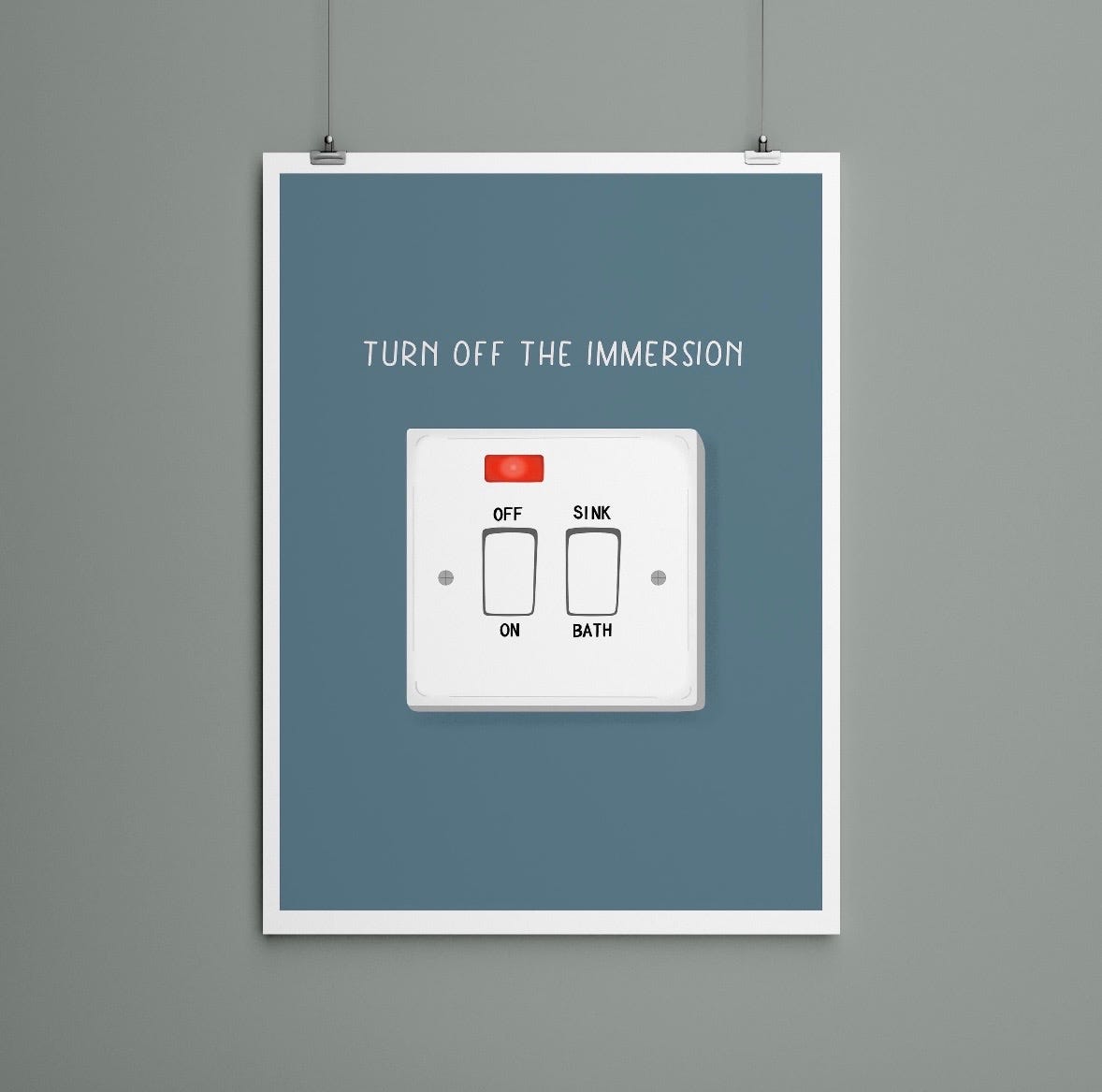
I should stress that this was typical in many Irish homes in the 1970s. Indeed, now you can purchase nostalgic posters on Etsy and elsewhere, celebrating that classic Irish Mammy phrase “Turn off the immersion”.
TV Adverts on how to keep your home warm and save money on energy bills were common. Have a look at this one from the Irish Film Institute archives.
In an attempt to reduce energy bills, our parents had a coal fired back boiler installed behind the fireplace in the sitting room. It was a monstrosity of a thing. When the back burner overheated and the hot water pressure increased, the copper water pipes began to vibrate noisily. One of us had to leg it upstairs and release a valve to reduce the pressure.
In the back garden, there was a coal bunker made from concrete breeze blocks cemented together in a haphazard manner by Dad. Yet it is still standing and survives today, unused and redundant, over 50 years later.
Setting the fire was one of our house chores when we arrived home after school in the winter.
To make the fire, we would first clear out the ash and cinders. Then scrunched up newspaper followed by criss-crossed chopped kindling were placed in the grate. It’s a mercy none of us didn’t lose a finger or two chopping that firewood with the lethal axe. It was bloody hard work outside in the cold.
Once the newspaper and kindling were lit, coals were added. Eventually, when the coals were glowing red, a shovel of damp slack was added.
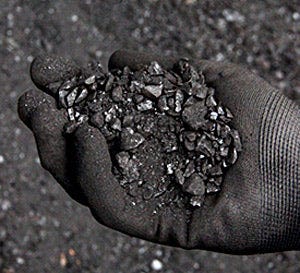
Photo: https://meekincoal.co.uk/
Slack contains fine grains of bituminous coal. It is a cheaper byproduct of processing larger coal lumps. Using slack saved money by “smothering” and slowing down the burning fire to keep it in over night or during the day.
The large white plastic Ballyfree Eggs catering bucket, filled with slack and topped up with water, lived outside the kitchen back door. An image of that bucket is forever branded on my brain.
At the time, in a still predominantly rural Irish farming culture, cats weren’t perceived as pets but rather as mouse/rat catchers. Visits to the vet were unheard of.
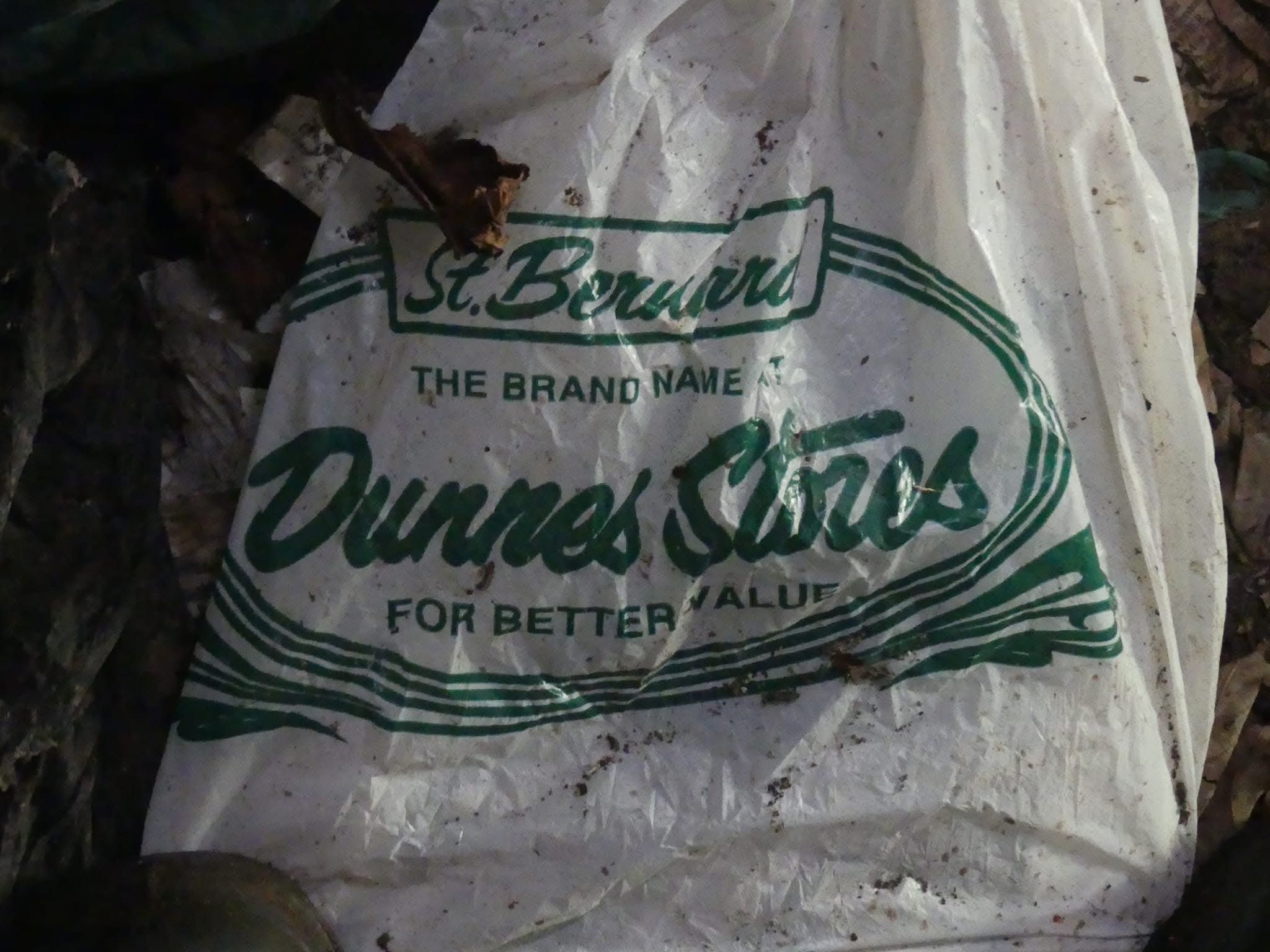
Tiptoes, my beloved long haired fluffy black cat with white paws, was not neutered. Inevitable litters of newly born kittens were invariably placed in a white Dunnes Stores supermarket plastic bag with green text, which was knotted and then placed under the water in the bucket of slack - to drown.
When I was sixteen, our father’s sister Aunty Rose, who was visiting us, gave me money for my bus fare. I took two buses with Tiptoes in a cardboard box into Dublin City and across town to the south side to be neutered at the Dublin Society for the Prevention of Cruelty to Animals. No more kittens.
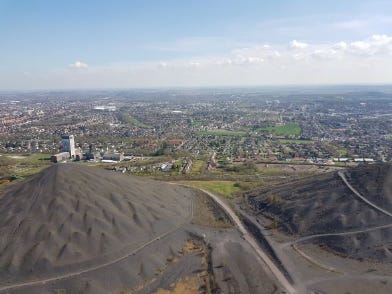
Photo: Twin Slack Heaps Les terrils Jumeaux 74 & 74a, Loos-en-Gohelle, Lens
It’s a grey, wet December day in Hauts de France. As I drive past the two huge twin Slack heaps (les Terrils) at Loos-en-Gohelle on the outskirts of Lens, my mind drifts to memories of the 1970s Oil Crisis, that Ballyfree Eggs bucket of Slack outside the back door and those kittens in the Dunnes Stores plastic bag.
Emile Zola and his novel Germinal:
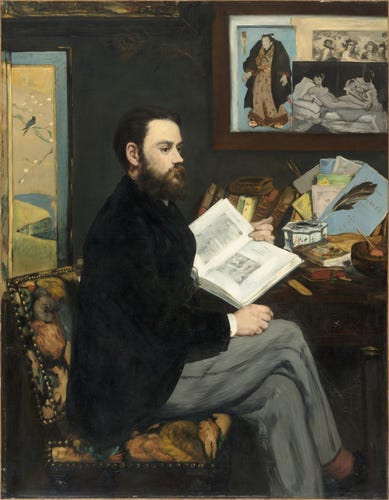
Painting: Emile Zola, Edouard Manet, 1868, Oil on Canvas, © GrandPalaisRmn (musée d’Orsay) / Patrice Schmidt
Emile Zola was born in Paris in 1840 but moved with his family to Aix-en-Provence, where his father worked as a civil engineer, building the Tholonet dam, still in use today.
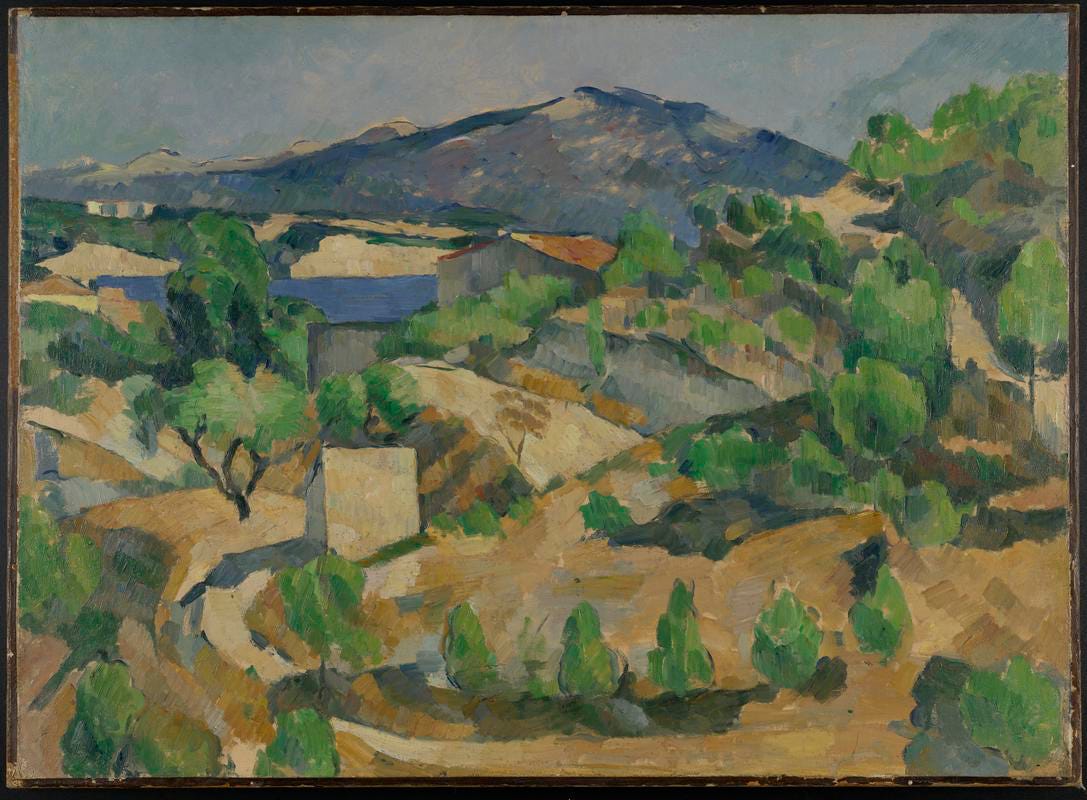
Painting: The François Zola Dam, Paul Cézanne, oil on paper laid down on canvas, Museum Wales
At school, Zola became best friends with the future painter Paul Cézanne, who protected him from bullies. They spent much of their time rambling out and about in Nature, exploring the countryside surrounding Aix-en-Provence, in the shadow of the sugar-loaf outline of Montagne Saint-Victoire.12
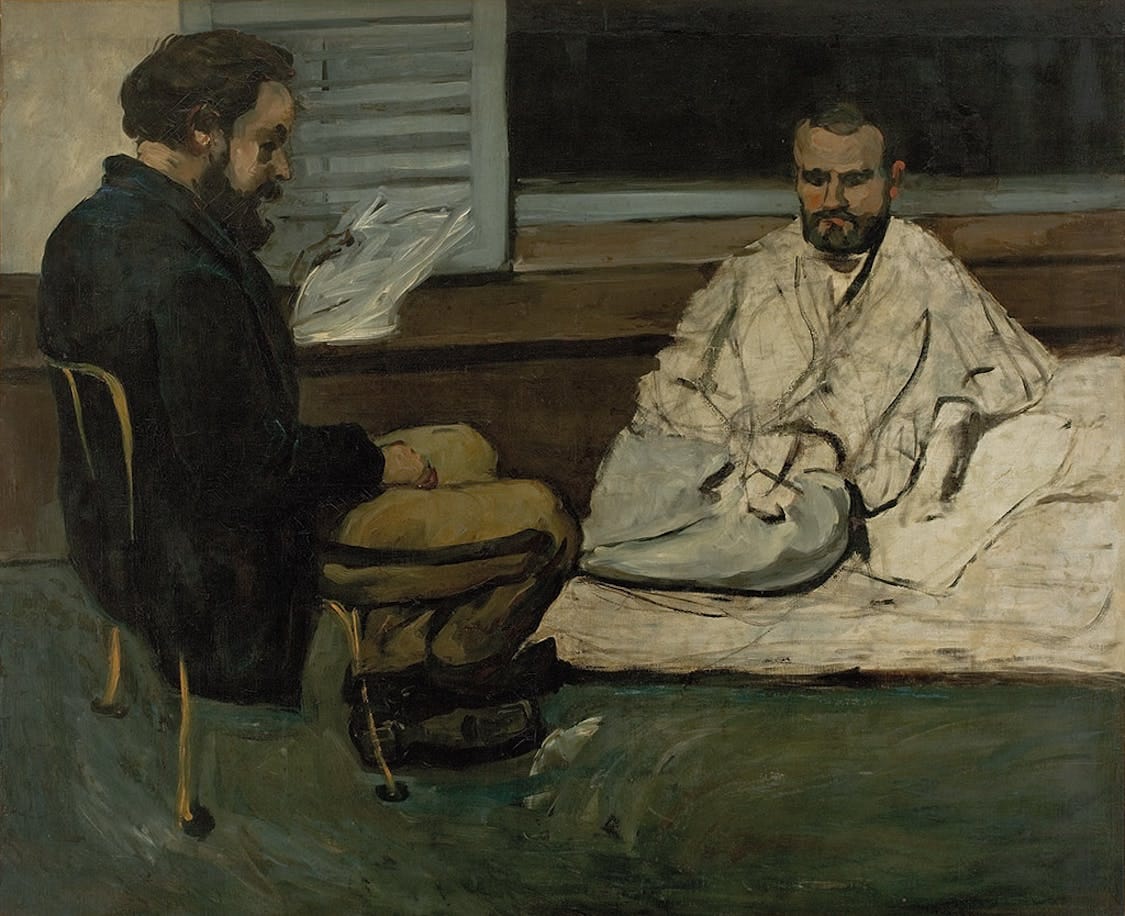
Painting: Paul Alexis Reads a Manuscript to Zola, Paul Cézanne, 1869, oil on canvas, Museu de Arte de São Paulo
His father died of pleurisy when Zola was seven years old, plunging the family into poverty. He returned to Paris in 1858 with his mother, to complete his studies. Zola failed his Baccalaureate twice, whilst contracting encephalitis.
Two years of unemployment, whilst experiencing extreme poverty followed, before Zola found work, initially as a clerk, at the Hachette publishing company.
In his writing, Zola draws on his own life experiences, with a personal understanding of what it is to experience poverty.
In his 20 volume fiction series called Les Rougon-Macquart, Zola has three aims:
To document his time and share with his readers an accurate reflection of the French Second Empire era (1852 - 1870) in which he lived and he viewed as politically, morally and financially corrupt.
To offer us a view of human behaviour - who we are and how we become who we are. Zola believed that we are products of our environment, our era and our heredity.
To write about reality. Zola shares his belief with his readers that you can find beauty in everyday life.
Kate Griffiths Professor in French and Translation at Cardiff University, In Our Time, BBC Radio 4
Germinal, Emile Zola’s 13th novel was published in 1885. Like Charles Dickens, Zola’s novels were initially serialised. He wrote this novel after detailed research and a week spent down the mine at Denain in Valenciennes.
In Germinal, Zola weaves the story of a coal miners’ strike in northern France in the 1860s.
The main character, Étienne Lantier, a migrant worker, arrives in the mining town of Montsou, having been sacked from his previous job as a mechanic on the railways in Lille. He becomes friends with Toussaint Maheu, an older experienced miner, who helps him find accommodation and a job in Le Voreux (The Voracious One) coal mine pit.
Étienne falls in love with Maheu’s daughter Catherine, who is in a relationship with the violent bully Chaval.
Poverty is endemic in Montsou and working conditions in the coal mine are dire. Gradually, Étienne earns the trust of the miners and the local community.
Encouraged by Souvarine, a Russian emigrant with anarchist political leanings, Étienne leads the miners to strike action. Starvation follows, leading the coal miners to revolt. The strike is ultimately unsuccessful; quashed by the local army and police; the miners and their families blaming Étienne for the outcome.
In the final scenes, Souvarine engineers the destruction of the mine-shaft, leaving Étienne, Catherine, and Chaval trapped in an underground coal mine pit. Chaval is killed in a confrontation with Étienne. Catherine and Étienne are finally able to share their feelings of love for each other. However, Catherine tragically dies from exhaustion in Étienne’s arms.
The novel has been adapted for the screen no less than seven times (1904, 1905, 1913, 1963, 1970, 1993, and 2021).
My favourite is Claude Berri’s 1993 film starring Gérard Depardieu and Miou-Miou. It was shot on location around Lens and Valenciennes in Hauts-de-France.
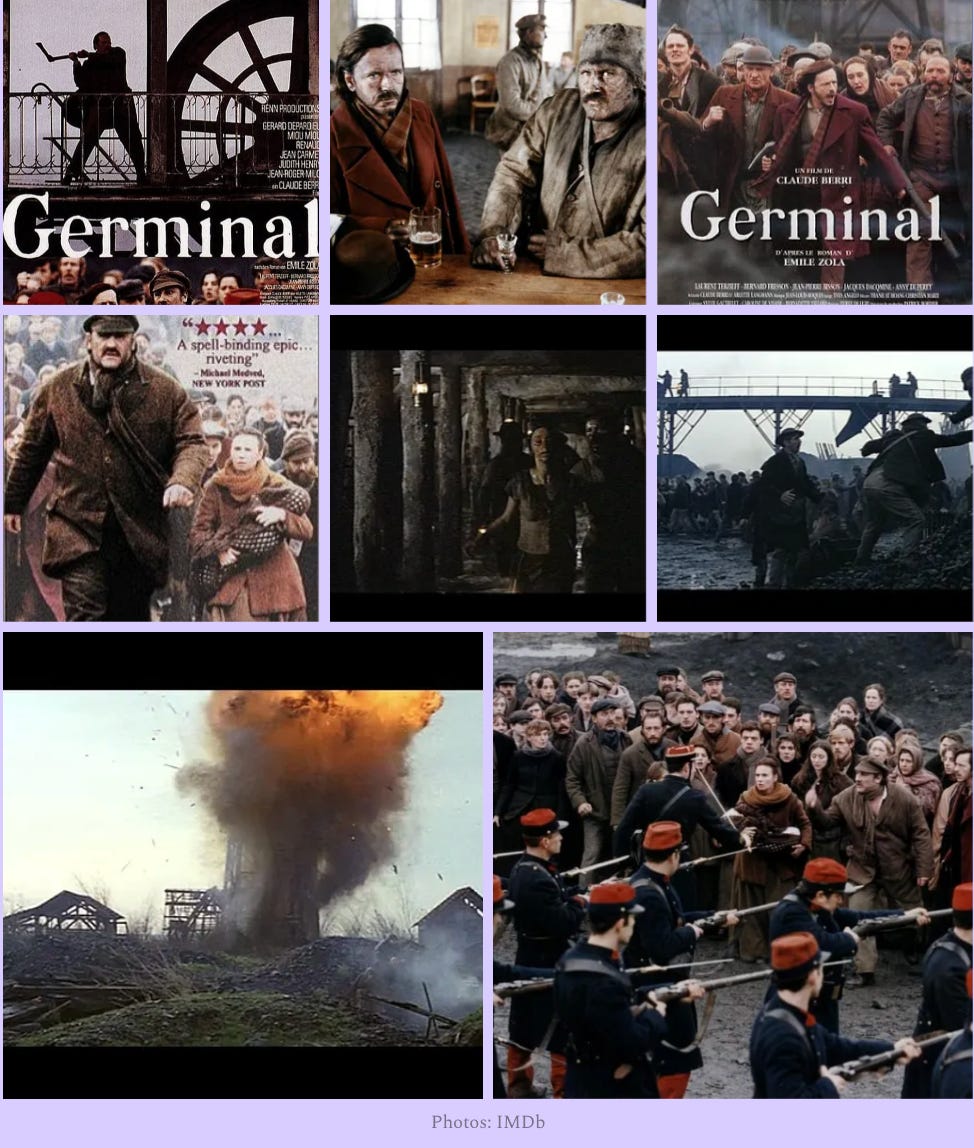
Photos: IMDb
The film crew at the time were shocked by the very real unemployment and poverty witnessed whilst on location in 1990s Lens and Valenciennes.
Plus ça change, plus c’est la même chose?
Video: YouTube, Germinal trailer
A History of Coal Mining in Lens:
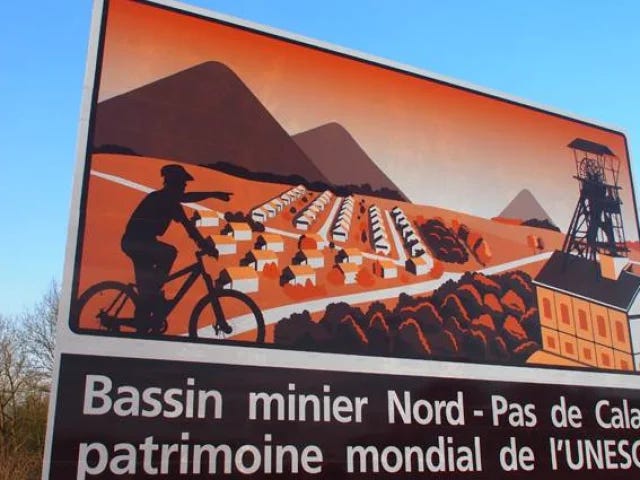
The Nord-Pas de Calais Bassin Minier was initially discovered near Fresnes-sur-Escaut in 1720. It forms part of an enormous Carboniferous coalfield belt running from Colombia, through the Appalachian Mountains in the U.S., continuing through Southern Ireland and then onwards through Britain, northern France, Germany, Poland, Ukraine, Kazakhstan and India to China.
The Bassin Minier is the second largest coalfield in north west Europe, measuring 120 kilometres long, 12 kilometres wide and 1.2 kilometres deep.
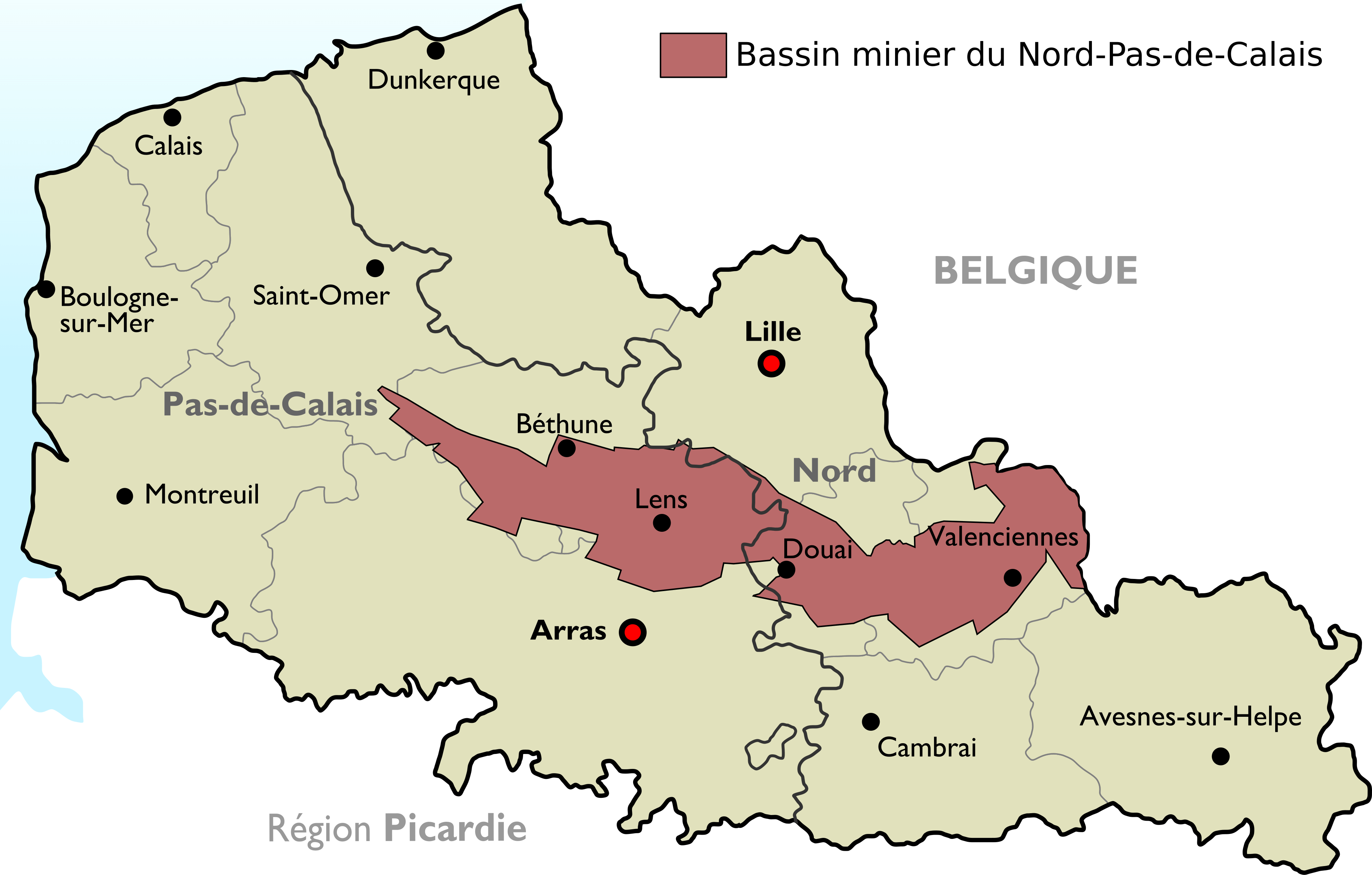
Map: https://upload.wikimedia.org/
The first mining company was established in 1757. From then onwards, the number of mining companies multiplied, stimulated by the Industrial Revolution in the 19th century and extending to the towns of Lens, Béthune, Bruay and Courrières.
Peak production occurred in the 1930s with 18 Mining Companies, 8 National Operating Groups, 600 sunk mining shafts, 100,000 kilometres of tunnels and 2 billion tons of coal extracted.
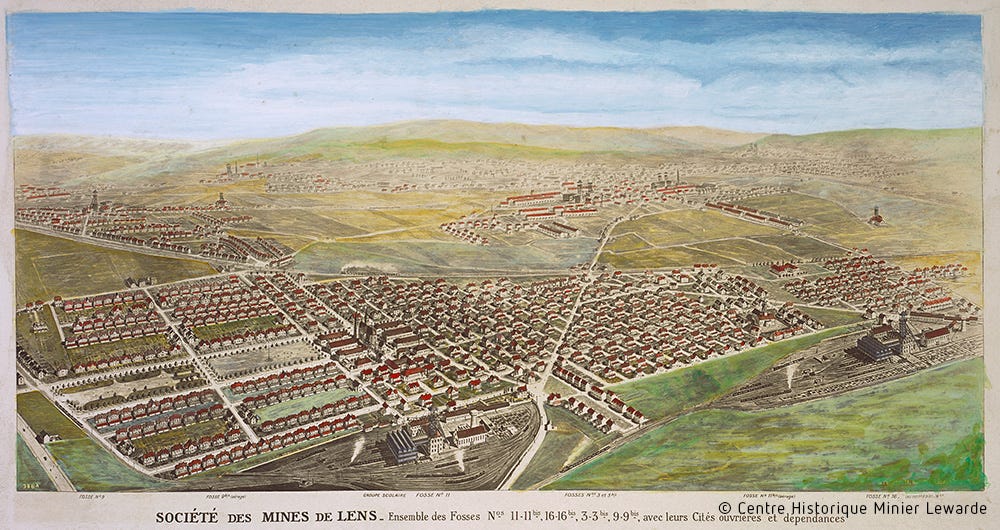
The pits and housing estates of the Lens Mining Company, rebuilt after the First World War
The region’s network of tunnels produced half of the French coal supply from 1940 to 1960, contributing to France’s reconstruction after World War II.
From the 1960s onwards, a long period of decline began until the last “gaillette” 3 was brought up at pit no. 9-9bis in Oignies on December 21, 1990.
Economic depression, unemployment and poverty, as observed by the Germinal (1993) film crew, followed the closing of the coal mines in the late 20th century.
For three centuries, the region was almost entirely dominated by coal mining. It shares a universal history of coal mining traditions, architecture and landscape with the U.S., Europe, Asia and as far as China.
Yet this region is unique in that much of the coal mining architecture and landscape have been preserved. There are 109 individual buildings including red brick miners’ cottages, head frames supporting the elevators, mine shafts, railway lines and stations, mining company headquarters and mining towns and 51 distinctive black conical Slack heaps that shape the landscape.
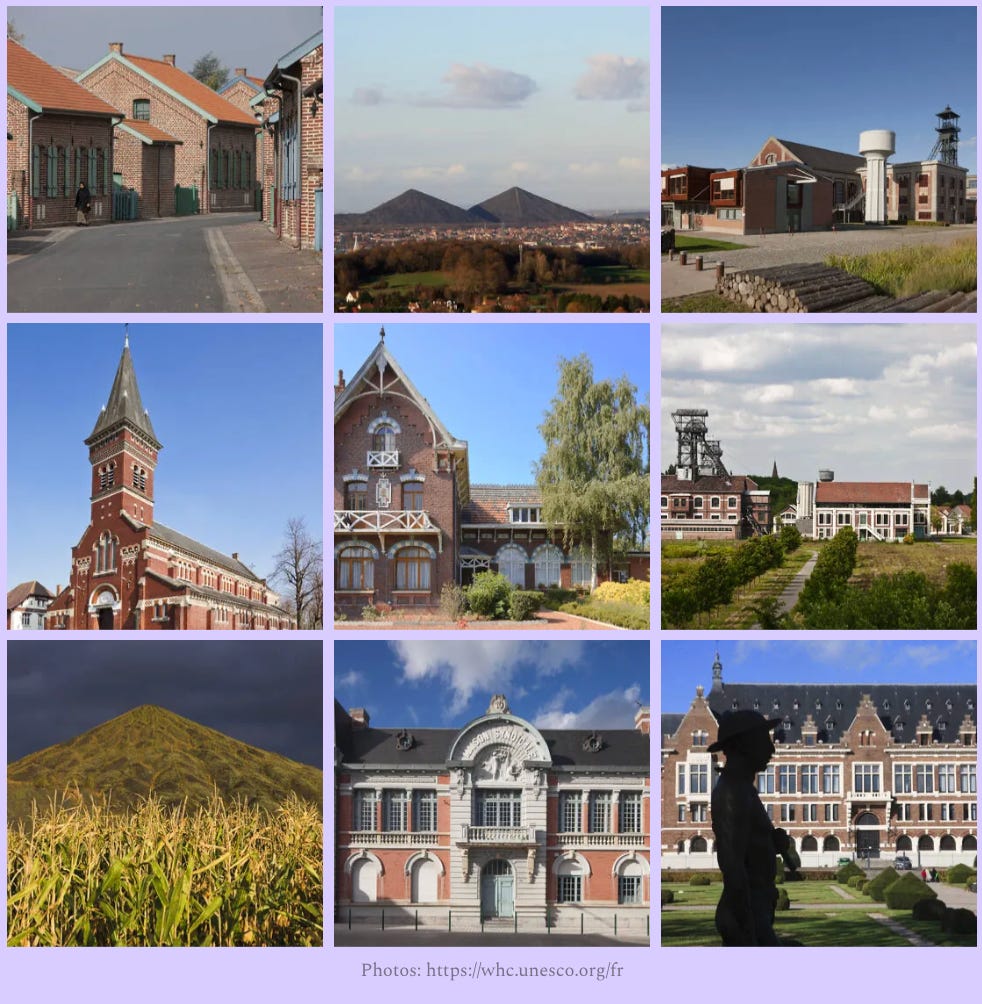
Photos: https://whc.unesco.org/fr
The Bassin Minier exemplifies a significant period in the history of industrial Europe. It offers us insight into the living conditions of miners and the solidarity among workers.
Given the historical coal mining region’s universal and unique characteristics, the 120,000 hectare Bassin Minier site was inscribed on the UNESCO World Heritage List in June 2012.
Racing Club de Lens Football Club:
Coming off the A26 motorway heading into Lens, from afar I could see the pearly white bright modern structure that is Stade Bollaert-Delelis. Home to football club RC Lens.
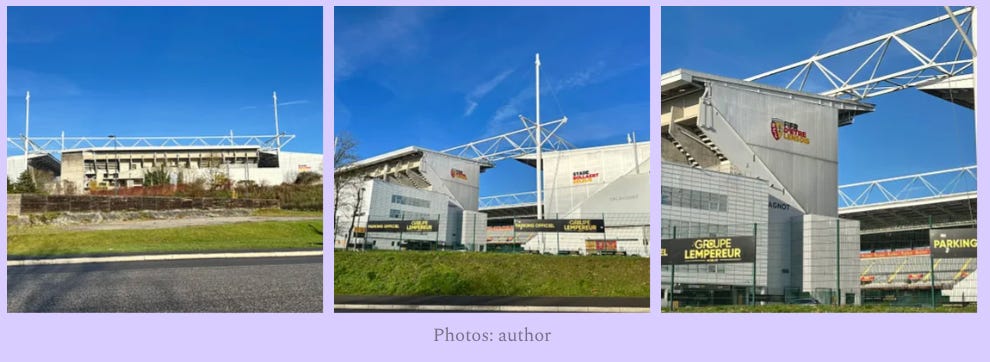
Photos: author
I parked up and took some photos for my footie obsessed husband Mr. C. When I showed Mr. C., he commented that the stadium seemed to have quite an exposed, open structure. I had to agree with him. You would definitely need to be wearing your thermal base layers under your Football stripe if attending a midwinter match, exposed to the notorious “Le Vent du Nord”.
Racing Club de Lens was founded in 1906 and has strong links to the Lens Mining Company. The stadium, originally built in 1932, is named after Félix Bollaert, director of the Lens Mining Company, who commissioned its construction. It can accommodate up to 38,000 seated spectators, which is more than the population of Lens (36,000 residents).
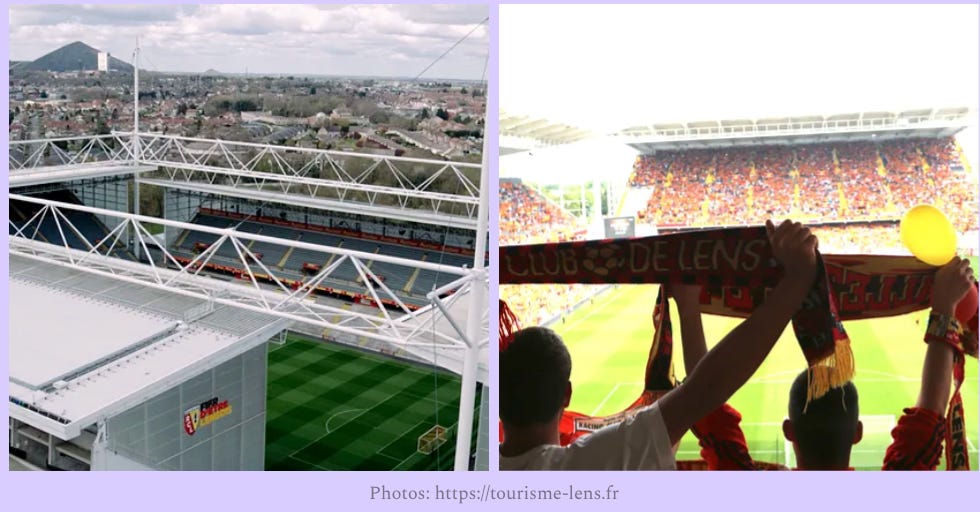
Photos: https://tourisme-lens.fr
With its burgundy blood red and gold stripe, the RC de Lens football club were Division 1 (now Ligue 1) French Champions in 1998 and finished as runner-up on five occasions, most recently in the 2022 - 2023 season. In addition, RC Lens were winners of the Coupe de la Ligue in 1999 and multiple qualifiers for European competitions. As I write, the football club are second in the French Ligue 1, snapping at the heels of Paris-Saint-Germain.
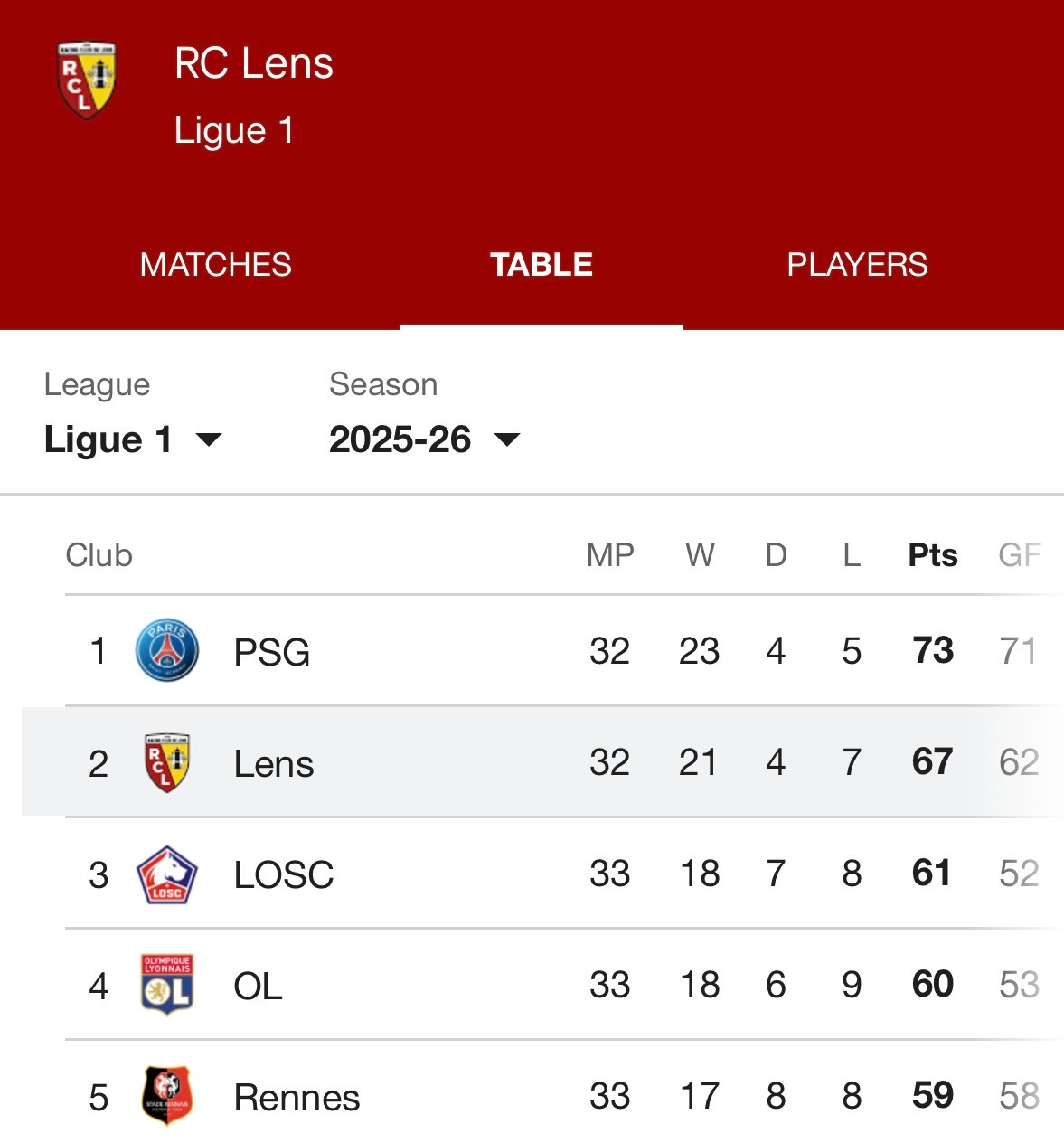
Table: Google, 11/05/26
Former RC Lens coaches include two ex-France coaches: Gérard Houllier and Roger Lemerre.
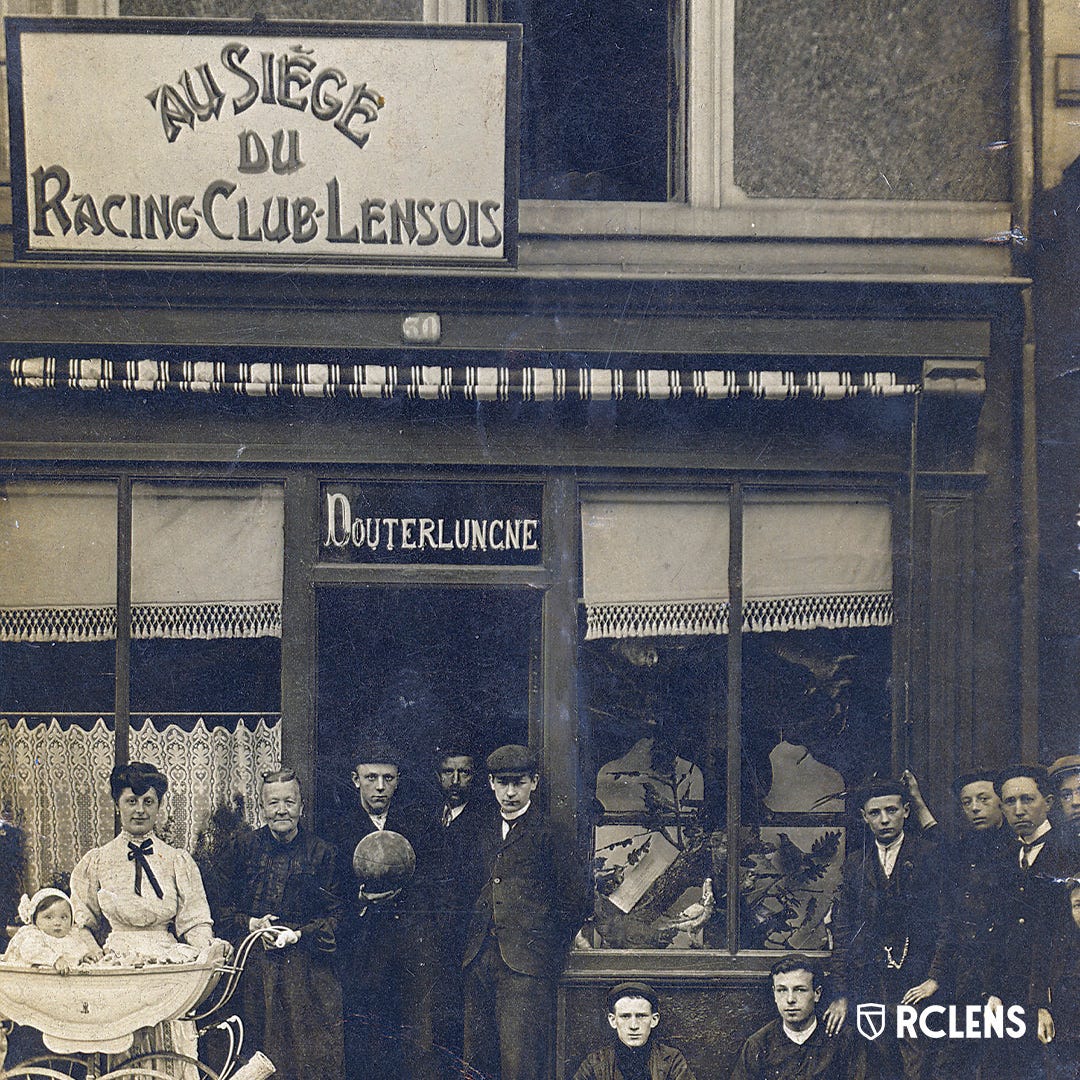
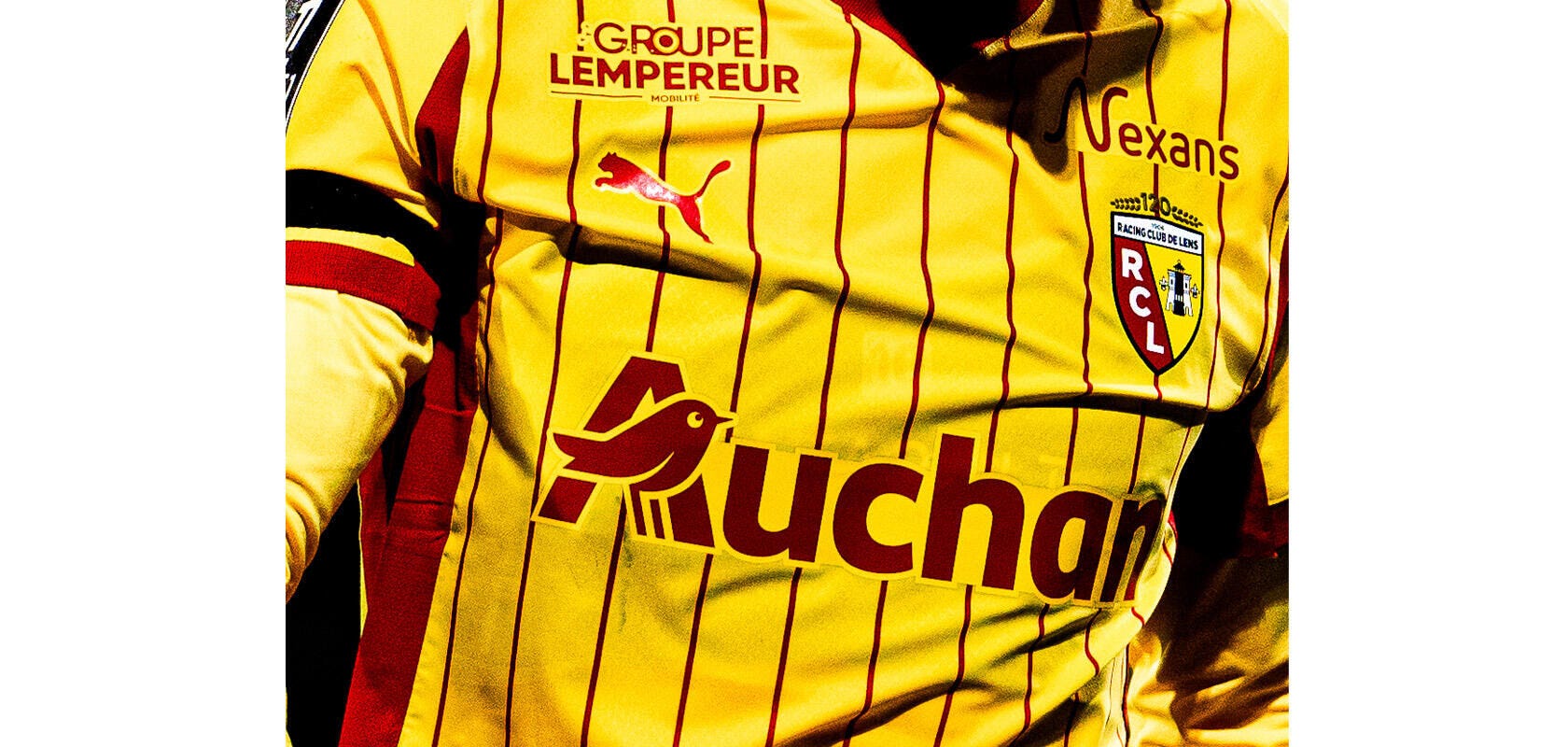
Photos: https://www.rclens.fr
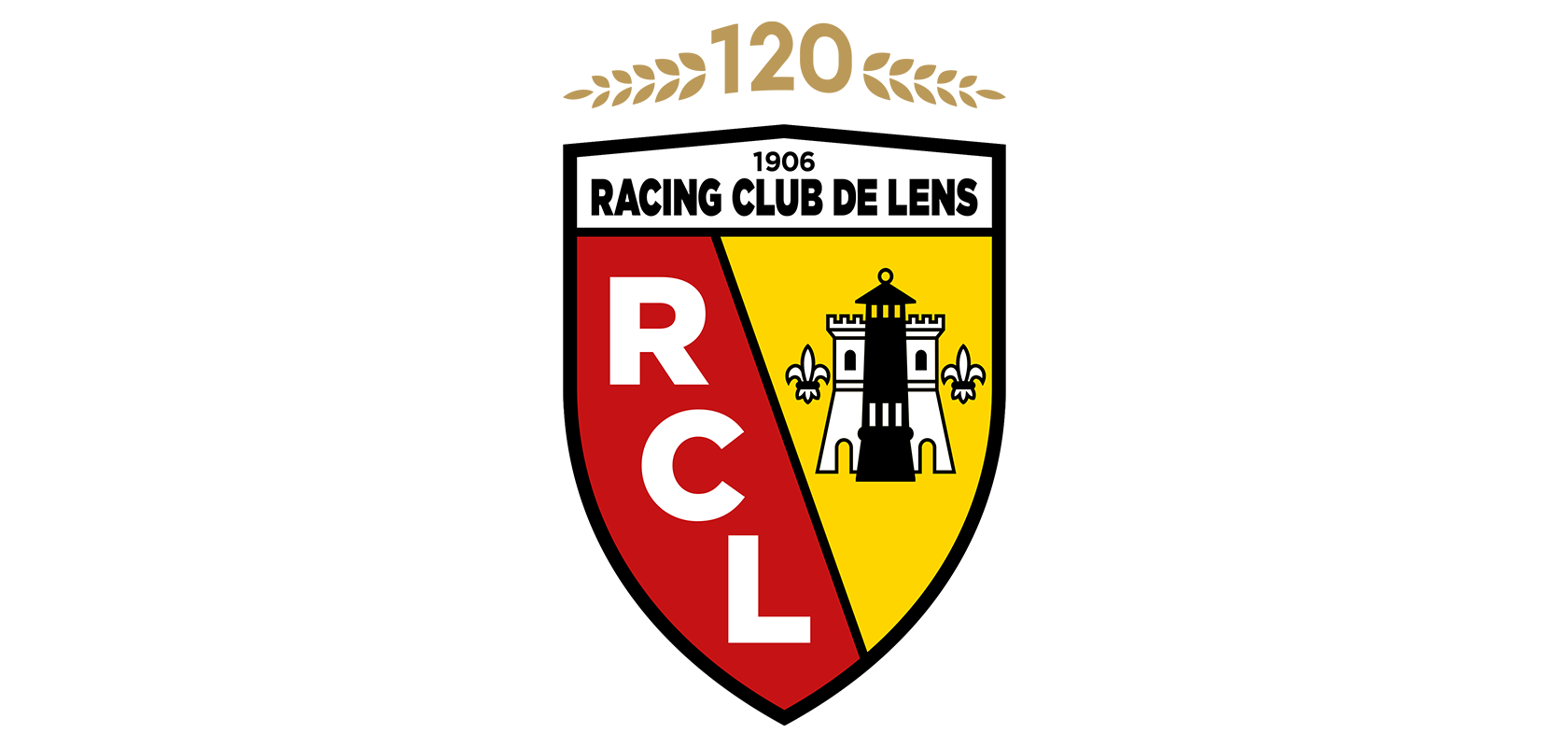
The football crest includes a black miner’s lamp in silhouette, in front of the coat of arms for the city of Lens, which took over the management of the club from the Mining Company in 1969.
My ultimate destination, Musée Louvre Lens, was a mere 5 minute drive from Stade Bollaert-Delelis.
The Louvre-Lens Museum:
The Louvre-Lens museum is built on a former mine shaft of the Lens Mining Company. As I drove along Rue Paul Bert from the Stade Bollaert-Delelis football stadium towards the museum’s free car park, I passed streets of well preserved red bricked miners’ cottages.
The one storey glass and aluminium metal museum building is composed of a series of five volumes - a large square and four rectangles - connected only at their corners. This modern arrangement evokes the Louvre Palace in Paris, structured around a central pavilion onto which are grafted two large wings, each ending in a recess.
The museum was designed by architects Kazuyo Sejima and Ryue Nishizawa of the Japanese firm SANAA. They were keen to respect the linear and horizontal architecture inherited from the mines with a long, single-storey building, whilst following the gentle slope of the landscape. The building height never exceeds 6 metres, allowing it to blend into the post-coal mining environment.
The Louvre-Lens museum was completed in 2012 and inaugurated on December 4th, le jour de la Sainte-Barbe, the patron saint of miners.
It symbolises the revitalisation of the entire region, with an average of 500,000 visitors per year.
In March 2022, National Geographic commented:
As the first outpost for the world’s most popular museum, the venue brought international cachet and great hope for the economic future…
…Unemployment in Lens has been steadily decreasing since hitting a high of 15.5 percent in 2009. In the first third of 2021, despite the pandemic, the region recorded unemployment of 9.4 percent. Tourism businesses in the private sector are now following the large initial public investment.
Entrance is free to the permanent exhibition and there is a generous programme of tours, workshops and other activities for persons of every age, ability and disability, making it a truly accessible venue.
On the day I visited, the museum was alive with several curious primary school groups, a studious, well focussed university group, parents with toddlers, retired couples and friends and travellers like myself. Yet it did not feel overwhelming nor suffocating. The space is open, airy and calm.
I first enjoyed a tasty lunch of a warming Duck Parmentier with a glass of Pinot Noir in the museum cafeteria, whilst browsing through the online guide brochure.
The Louvre-Lens museum contains a permanent Time Gallery with works from the Louvre Museum’s Paris collections and presents two temporary exhibitions per year in the Glass Pavilion.
I made a decision to focus solely on the permanent La Galerie du Temps exhibition, which was completely renewed in 2024. It represents 5000 years of human history, conceived as a “river of time” on which you can navigate freely.
With a generous 250 exhibits, I share with you - my personal top ten favourites:
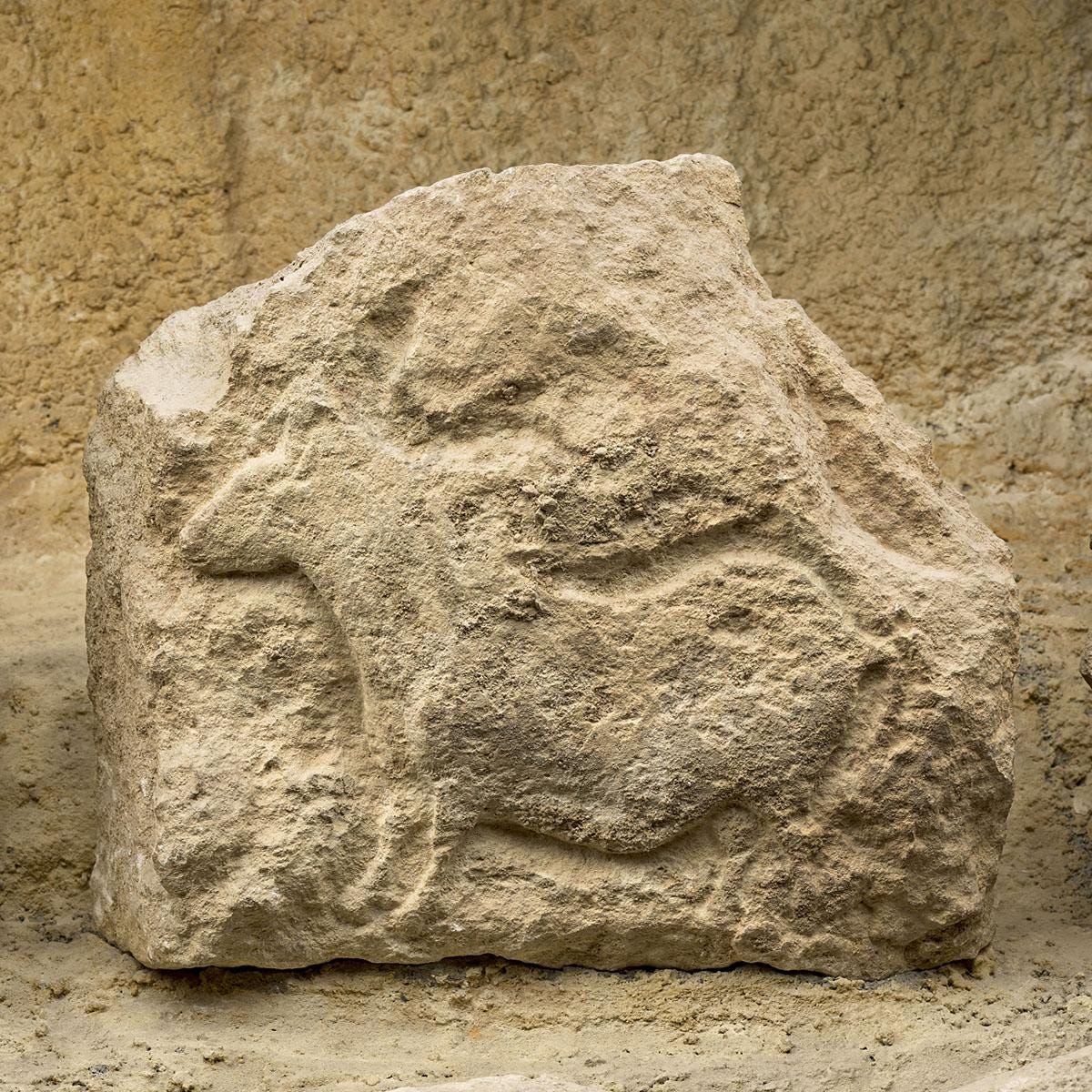
Bloc from Le Roc-de-Sers
Prehistoric, Upper Palaeolithic
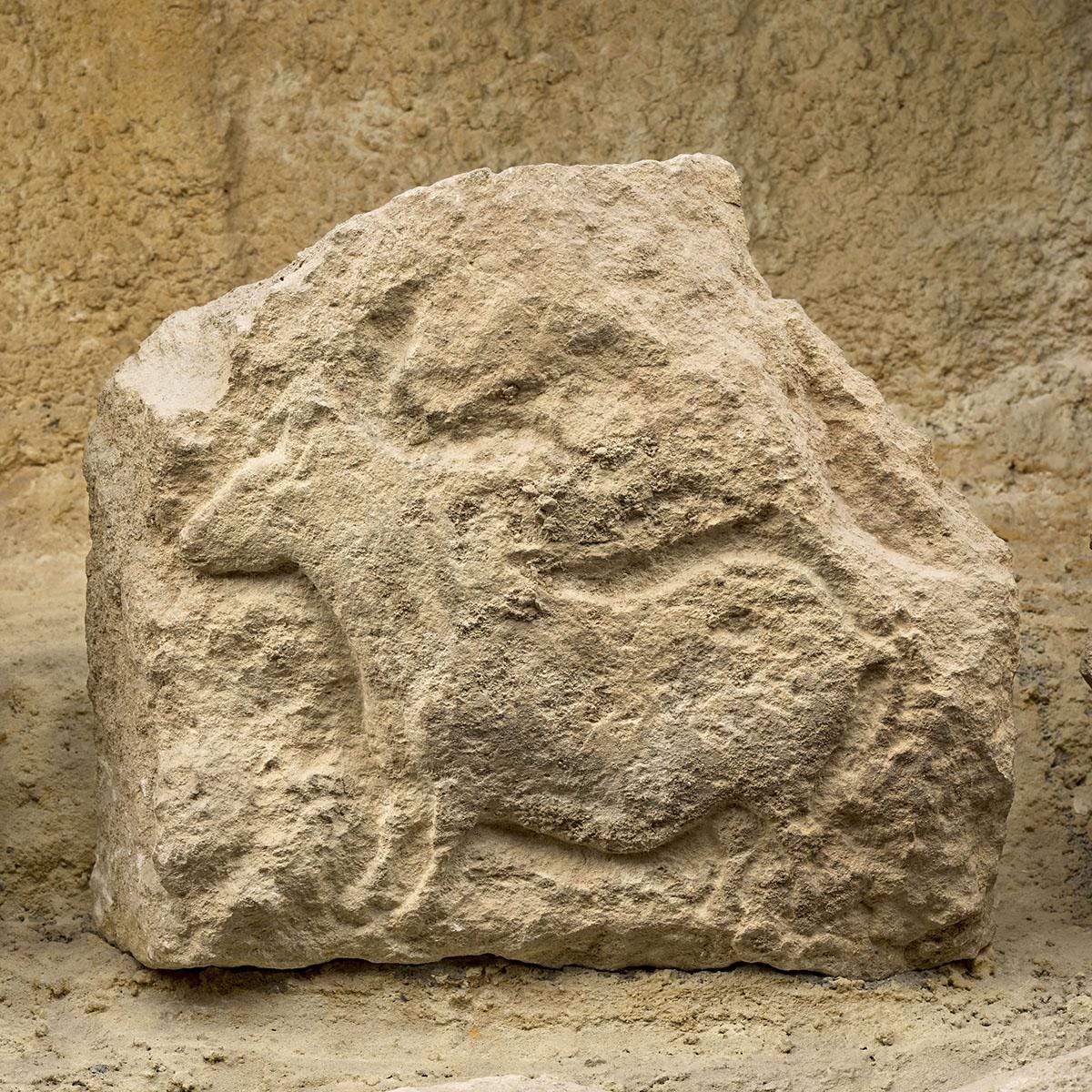
Le Roc-de-Sers (France)
Around 18,000 BC
Limestone
Saint-Germain-en-Laye, Musée d’Archéologie nationale - MAN 74483d
Excavations by Léon-Henri Martin, 1927This boulder with a carved horse comes from a shallow cavity at the foot of a rock face, which was used as a human shelter.
Stamp
Antiquity, Uruk period
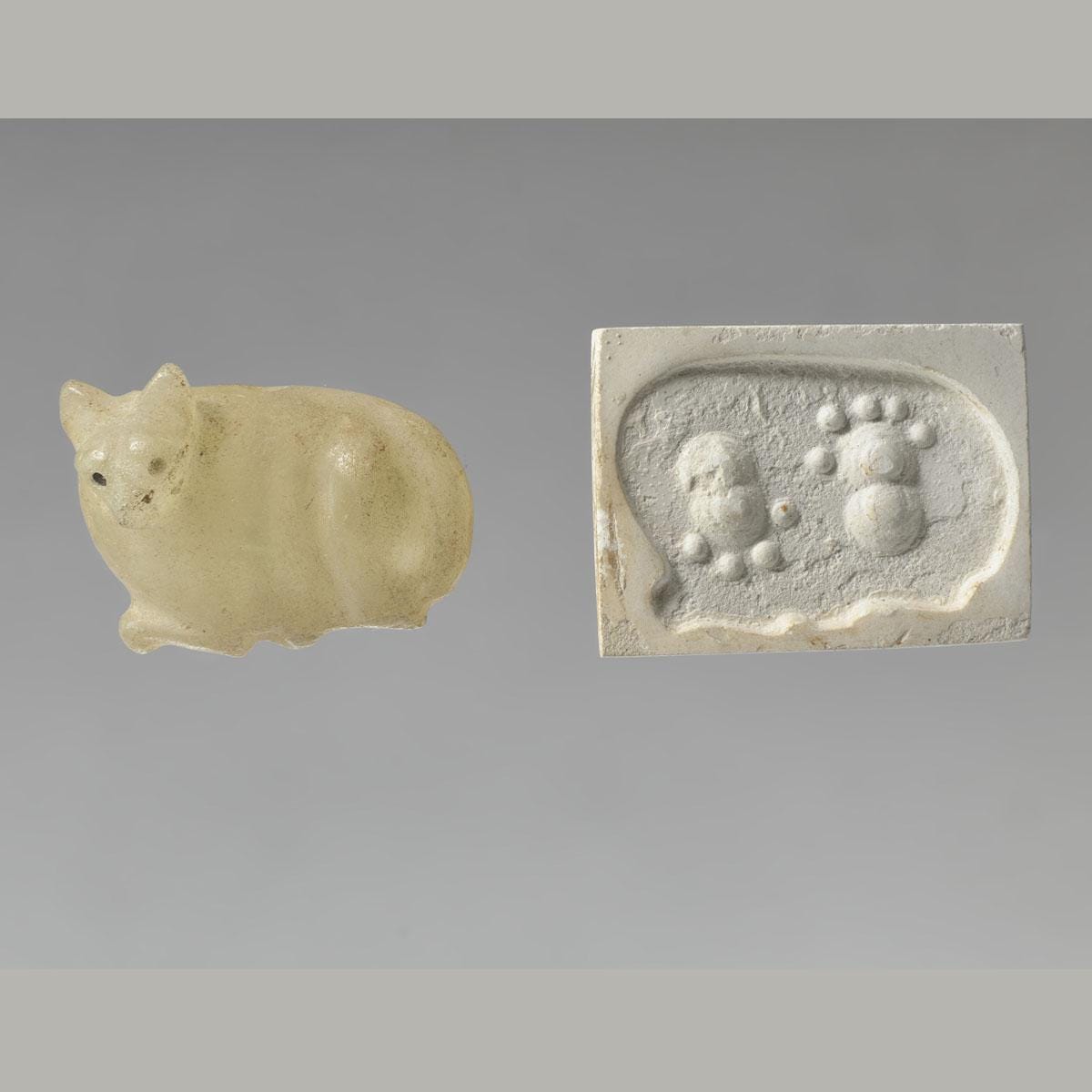
Girsu (present-day Tello, Iraq)
3500-3100 BC
Cut and incised jasper
Paris, Musée du Louvre - AO 14158
Excavations by Henri de Genouillac, 1931
The first image shows a seal in the shape of an animal. I think it’s a cat. On the reverse there is a motif of recessed circles, which look like paw prints to me. The object was intended to be affixed on clay, the imprint identifying goods or a person. In the 4th millennium BC, the first cities appeared in southern Mesopotamia, in the region between the Tigris and Euphrates rivers.
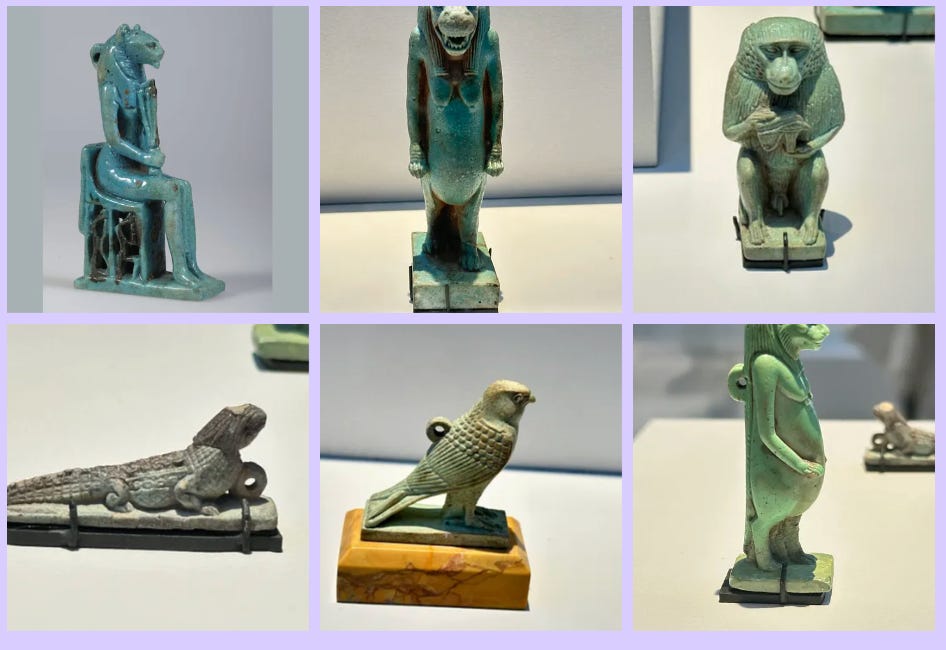
Amulets
Antiquity, late period of ancient Egypt
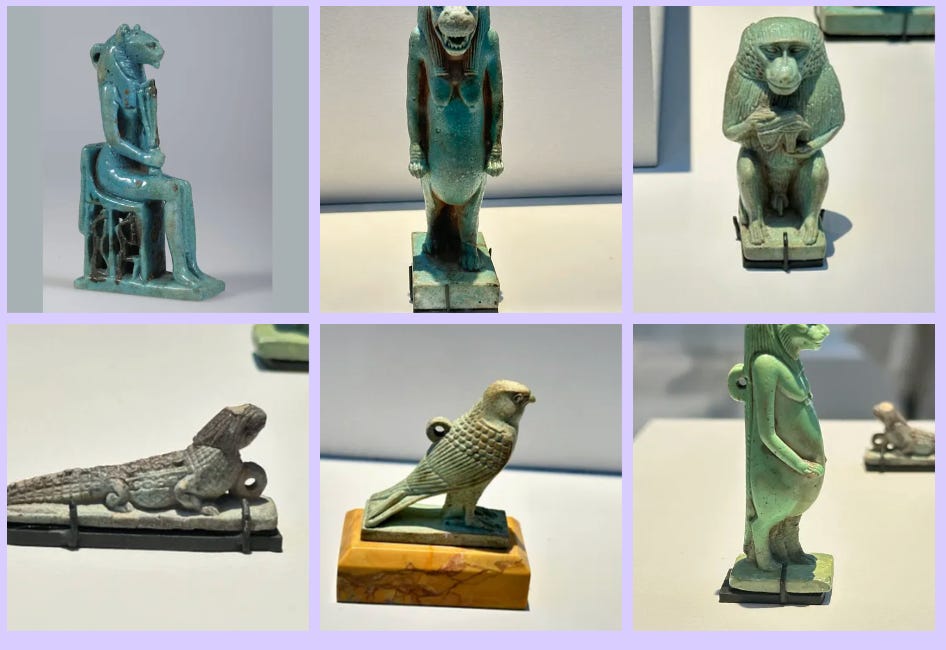
Egypt
Around 1069-332 BC
Siliceous earthenware
Paris, Musée du Louvre
N 3825 E / AF 2343 / E 3713 / AF 2344 / E 13678 / E 22787In ancient Egypt, amulets were used to protect their bearers against disease and danger. Placed between the mummy’s bandages, they accompanied and protected the deceased in the afterlife. We have Sekhmet, with her lioness’s head, a dangerous and powerful goddess; Thoth a wise god, the inventor of writing, represented in the form of a baboon; Taweret with the body of a hippopotamus, the paws of a lioness and the back and tail of a crocodile, uses her frightening appearance to protect pregnant women and young children. The falcon is the bird of prey in which the many forms of the god Horus are embodied. As for the crocodile with the falcon’s head, it seems to embody the qualities of vigilance and watchfulness associated with two omnipresent predators of the Egyptian landscape and imagination: the crocodile in the river Nile and the falcon in the skies above.
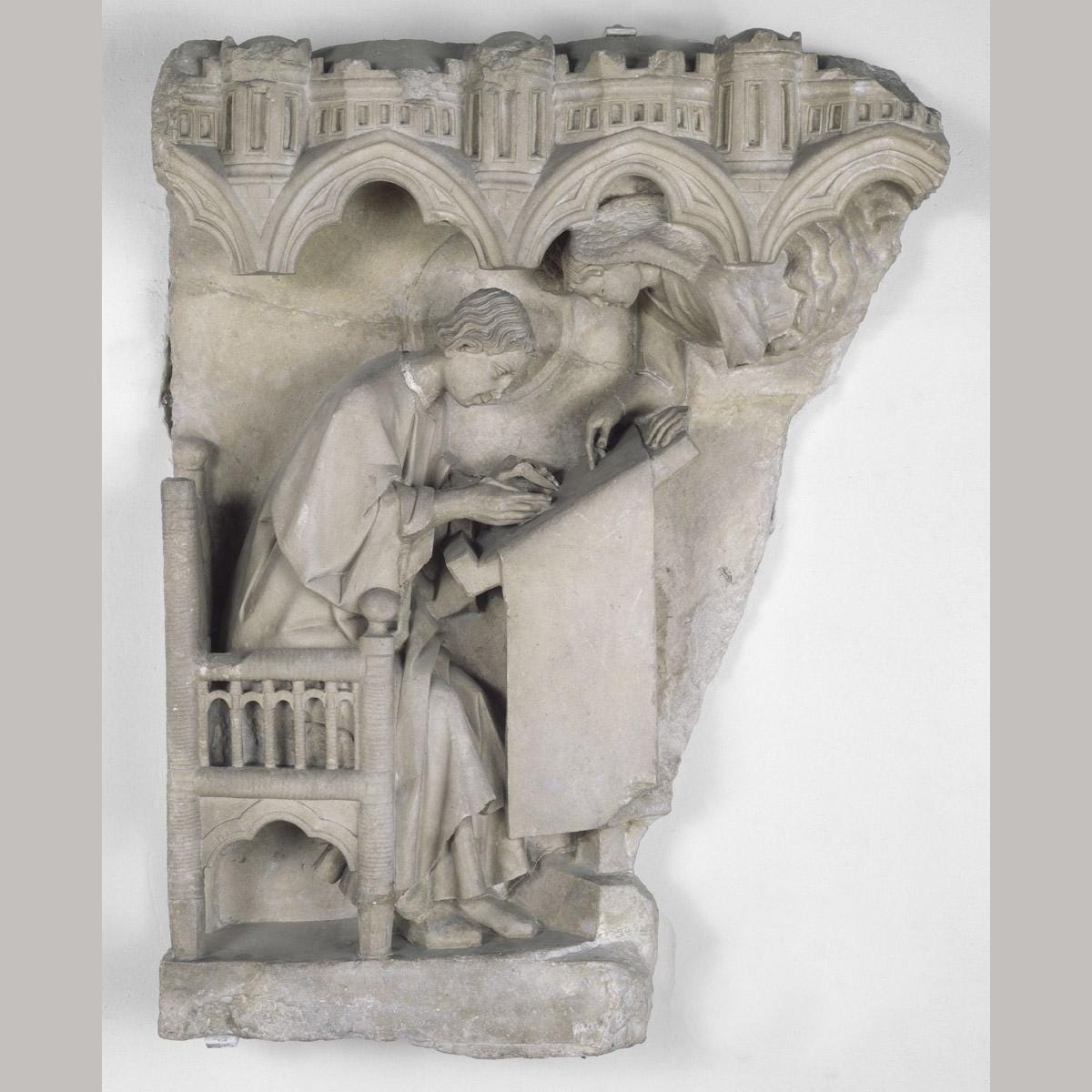
Saint Matthew the Evangelist taking dictation from the Angel
Middle Ages, Gothic Art
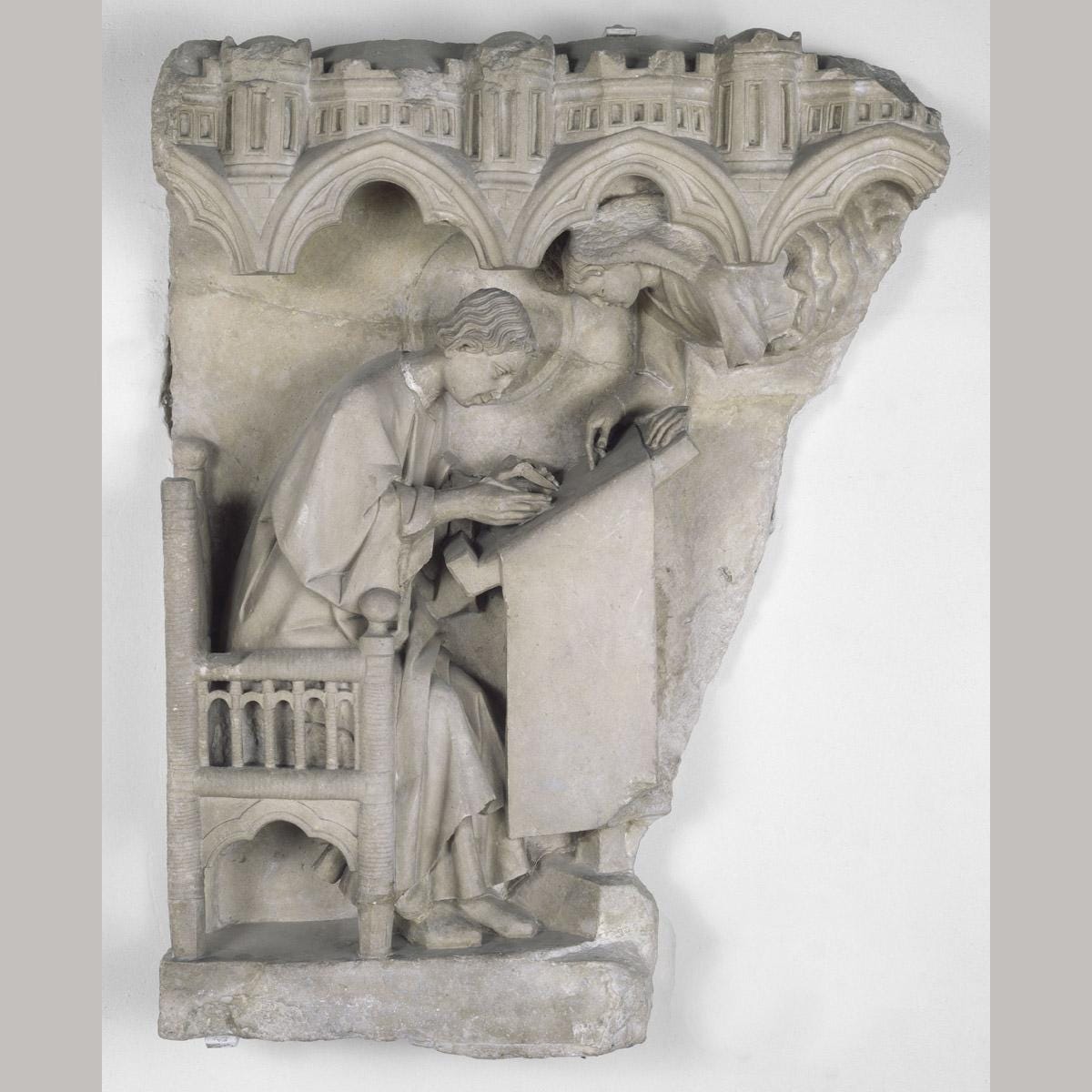
Île-de-France (France)
Around 1230
Limestone
Paris, Musée du Louvre - R.F. 1388
Purchase, 1905This sculpture, part of a partition screen between the choir and the congregation, thought to be from Notre-Dame de Chartres cathedral, made me chuckle. No dictaphone here.
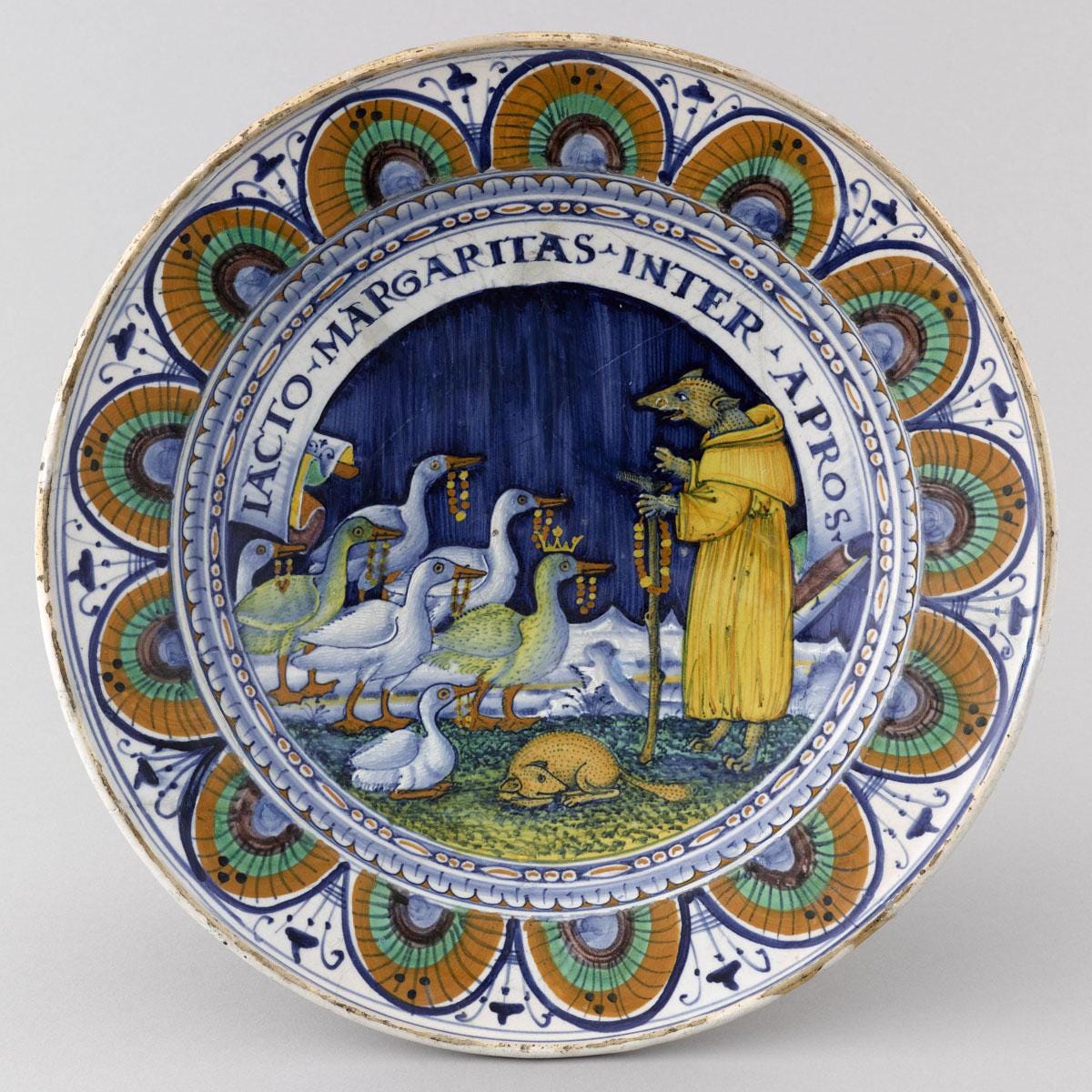
Circular Dish depicting a Fox (or Wolf) preaching to Geese
Modern Times, Renaissance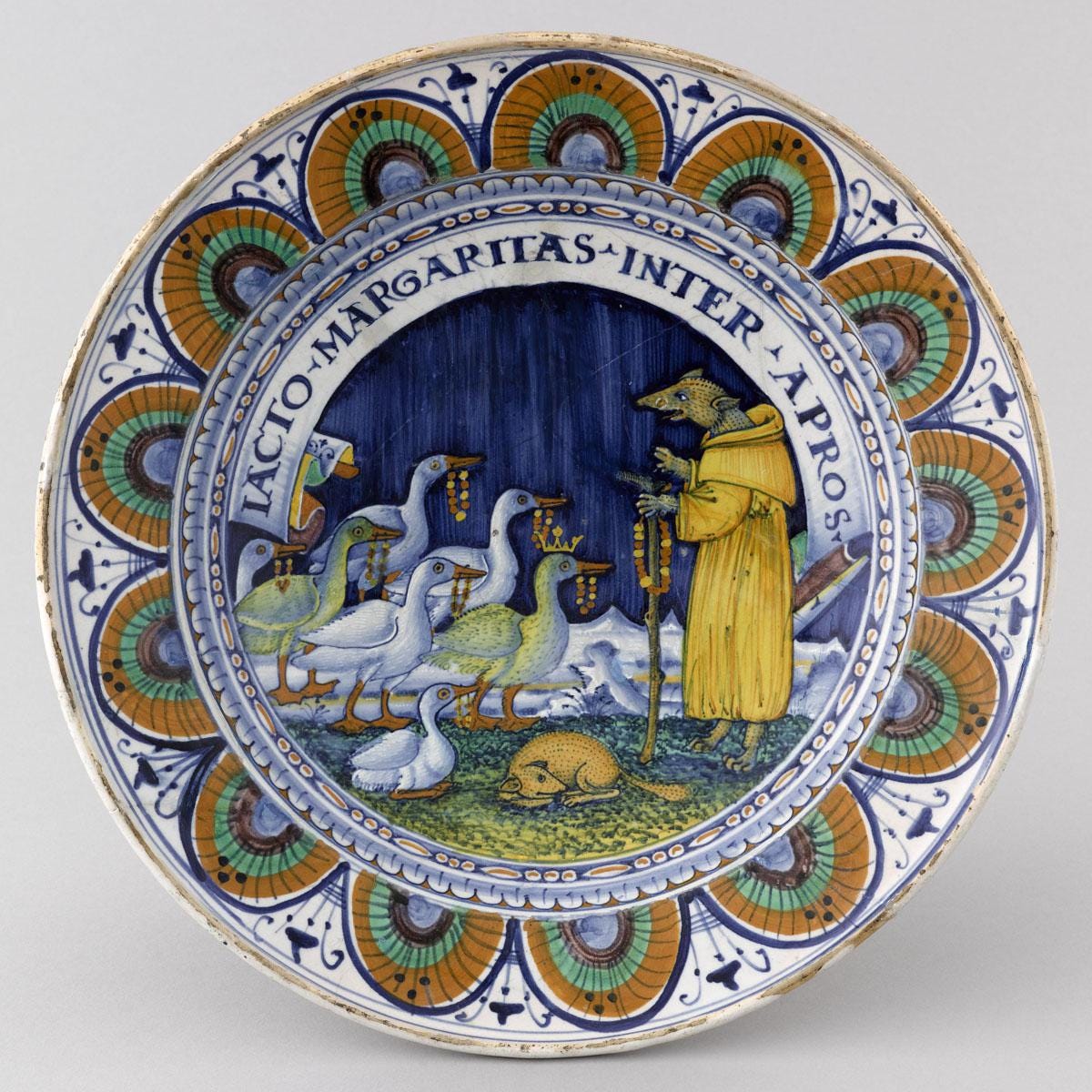
Deruta or Pesaro (Italy) [?]
Around 1490-1500
Earthenware
Paris, Musée du Louvre - OA 9325
Purchase, 1939 (Formerly of the Pringsheim Collection, research in progress)I’m not sure what the strings of pearls represent. Some sort of animal fable? But I love the image and colours.
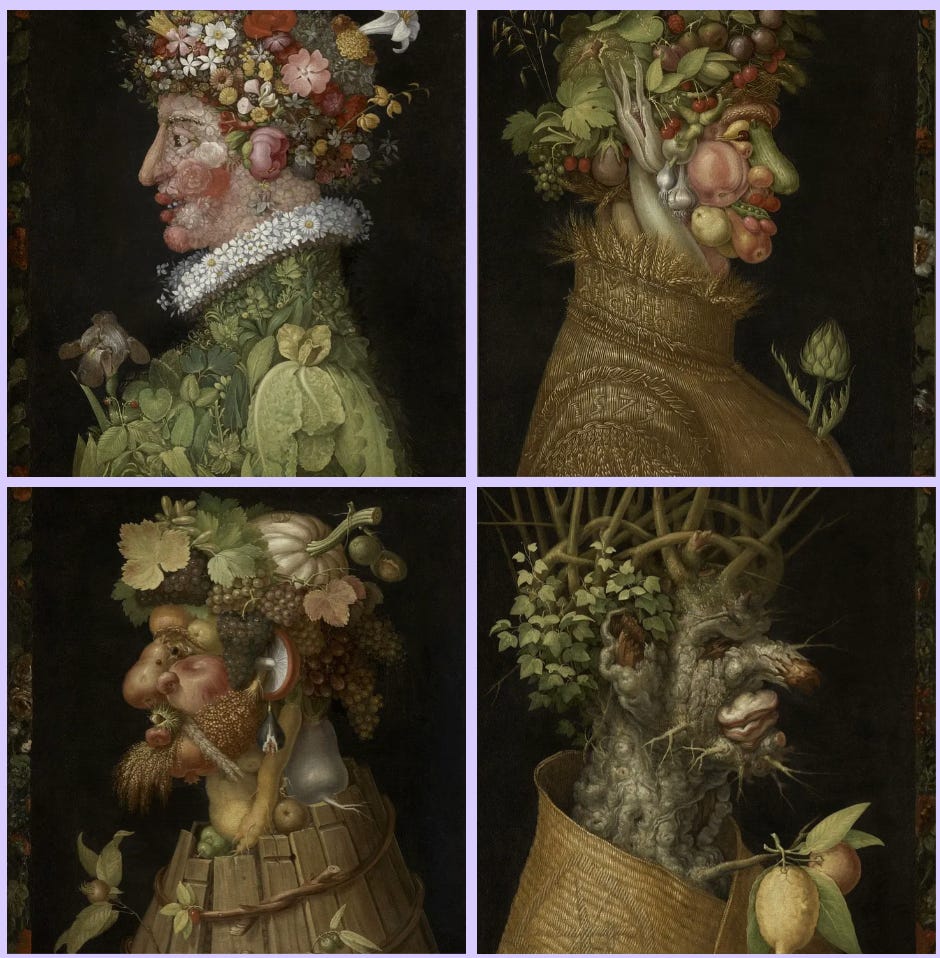
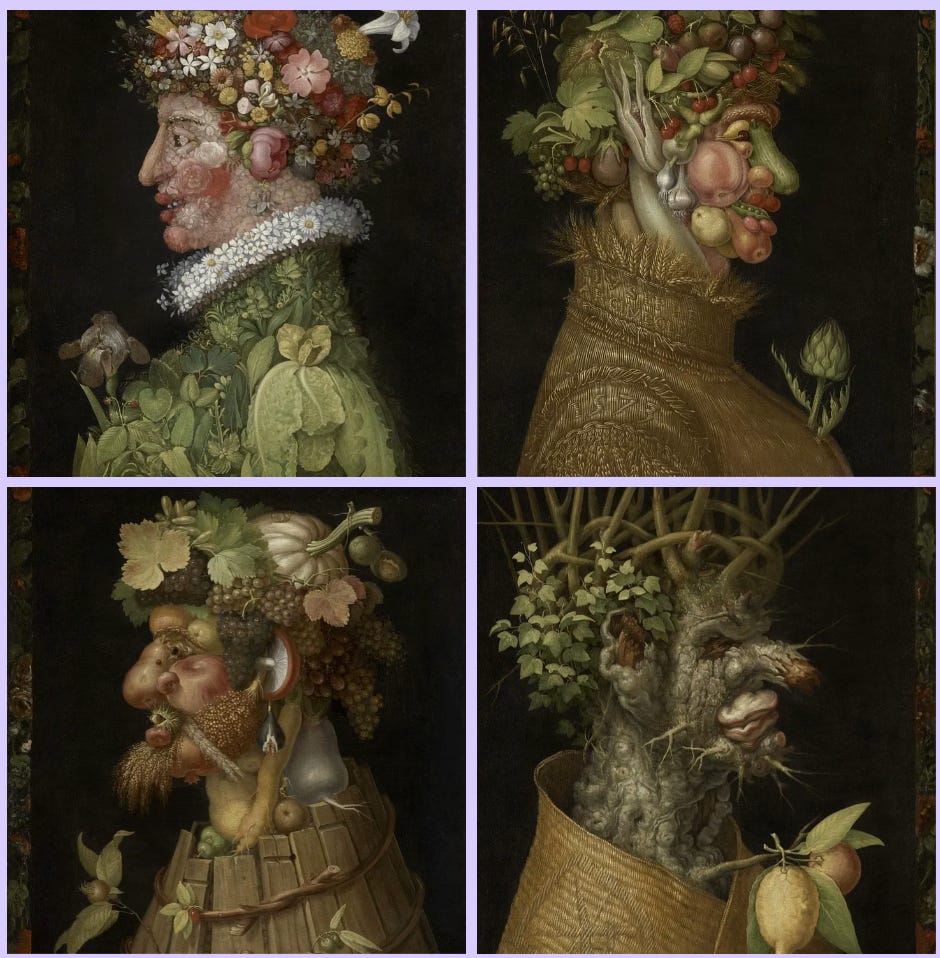
Spring, Summer, Autumn, Winter
Modern Times, Renaissance
Giuseppe Arcimboldo
Milan (Italy), around 1527-1593
1573
Oil on canvas
Paris, Musée du Louvre - r. F. 1964-32
Purchased from art dealer Jean Neger, 1964
I could see the vivid colours of these Four Seasons profile portraits from a distance. But it’s only when you get closer that you realise the images have been created from a collage of flora. The four seasons correspond to the four ages of humanity: youth, adulthood, maturity and old age.Woman Searching for Fleas
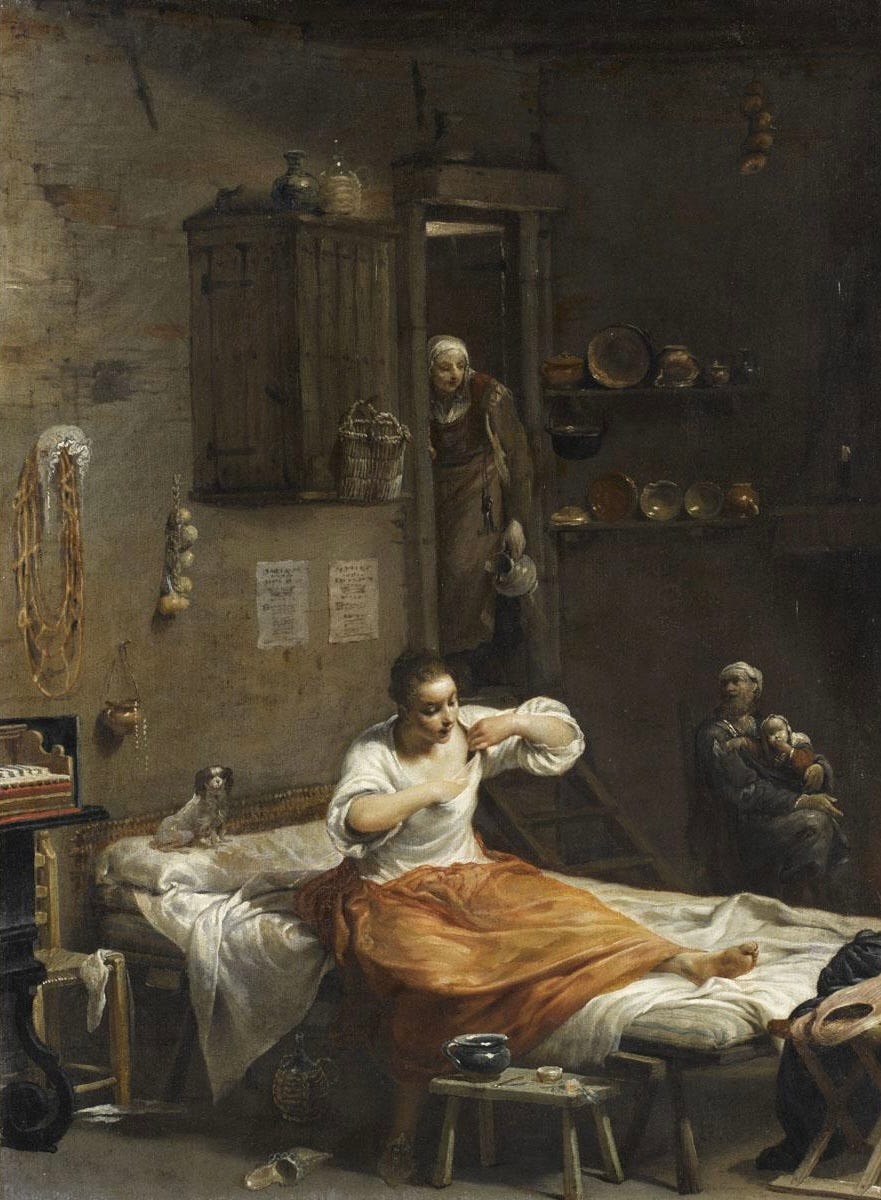
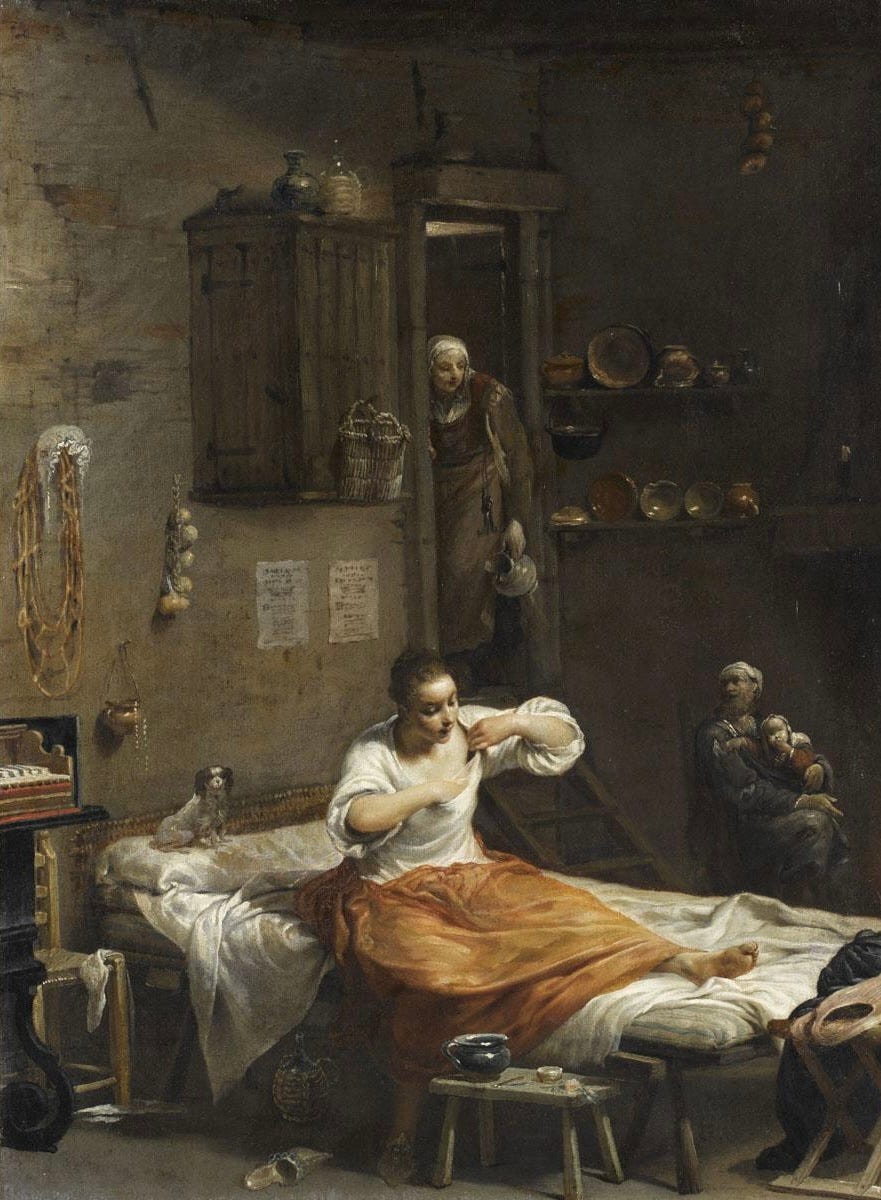
Modern Times, European Enlightenment
Giuseppe Maria Crespi
Bologna (Italy), 1665-1747
Around 1720-1730
Oil on canvas
Paris, Musée du Louvre - R.F. 1970-40
Gift of the Société des Amis du Louvre (Friends of the Louvre), 1970As a former veterinary nurse, I am more used to dealing with fleas on animals. Not humans. So I enjoyed the humour and non-glamorous reality of this painting.
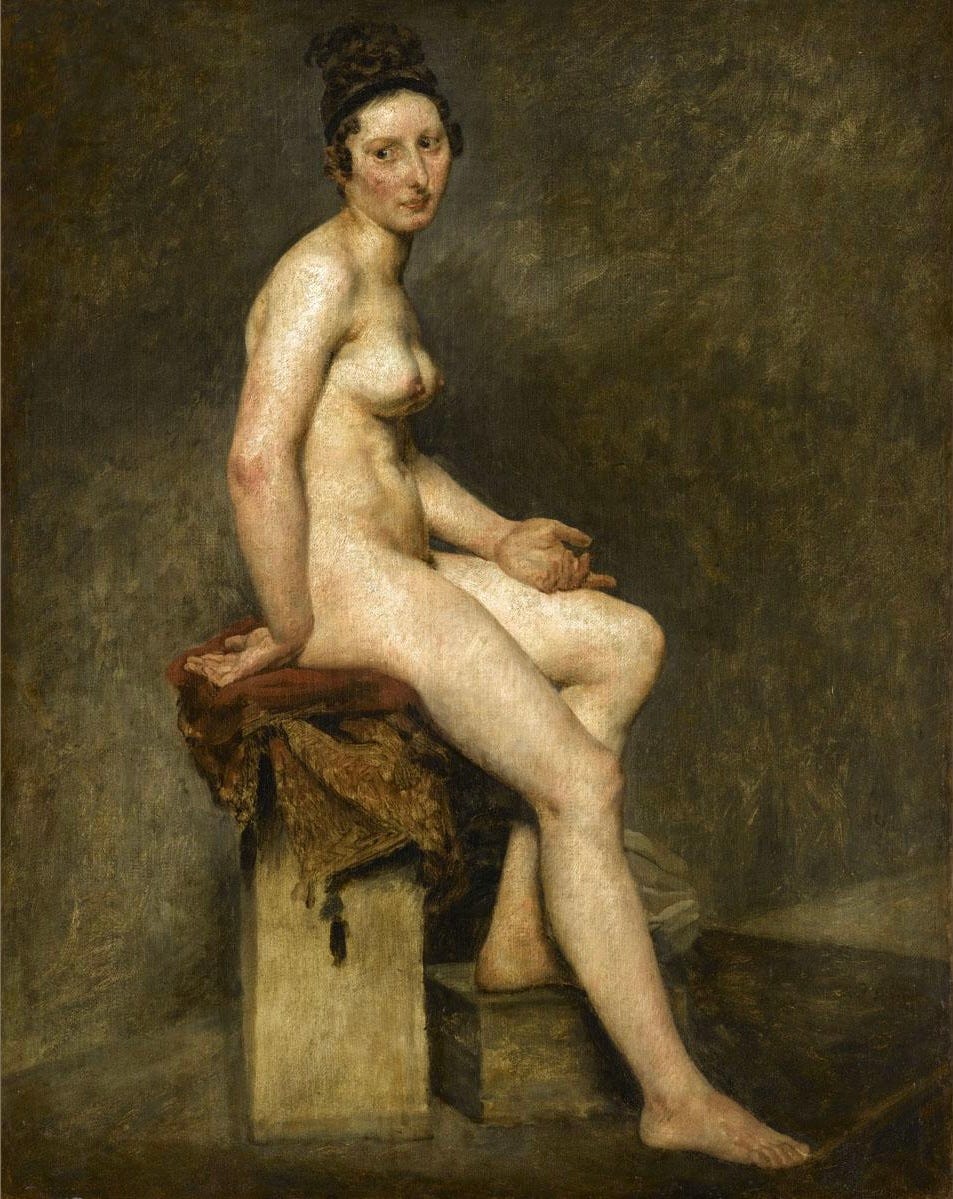
Nude Sitting, known as Mademoiselle Rose
Modern Times, Romanticism
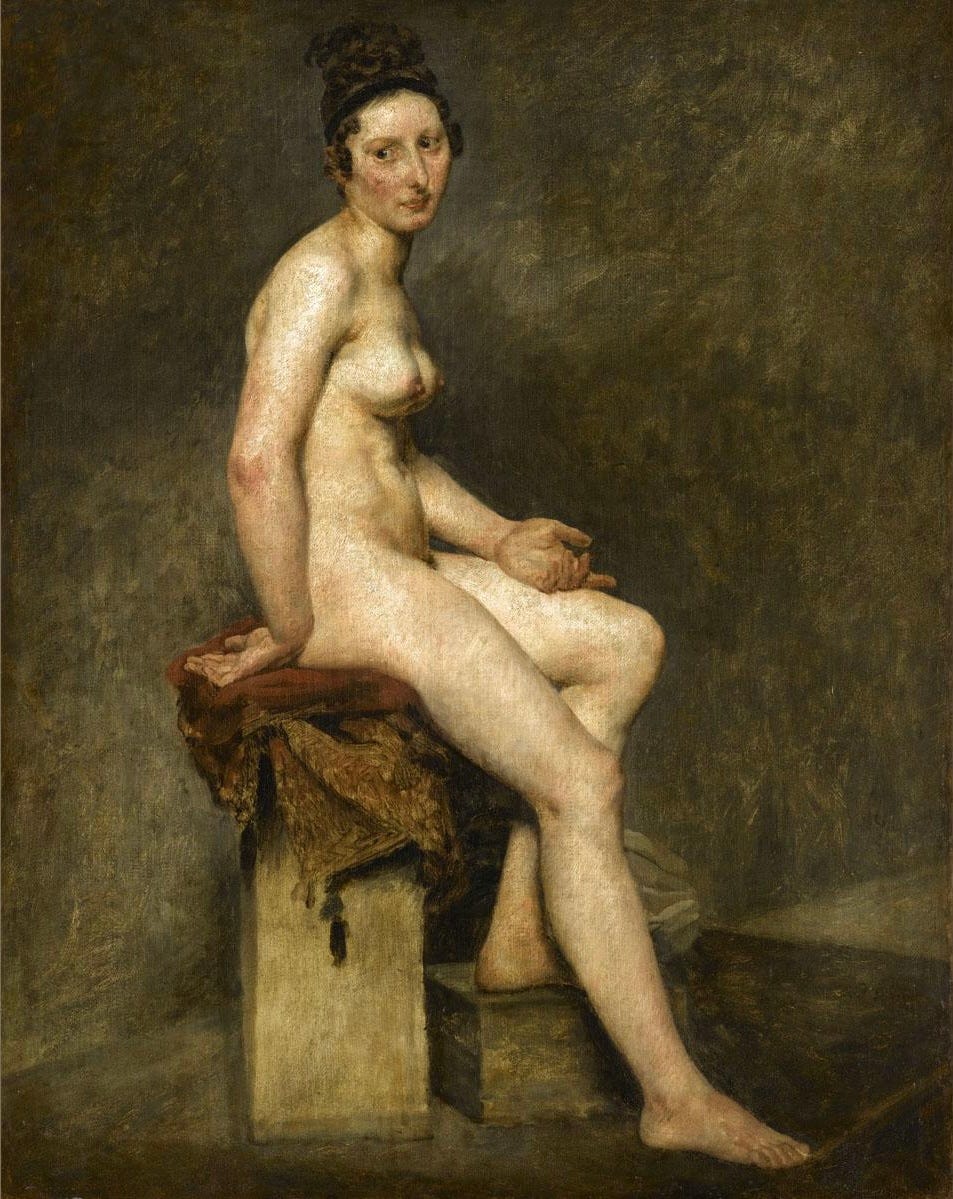
Eugène Delacroix
Charenton- Saint-Maurice (France), 1798 - Paris (France), 1863
Around 1820
Oil on canvas
Paris, Musée du Louvre - R.F. 1942-14
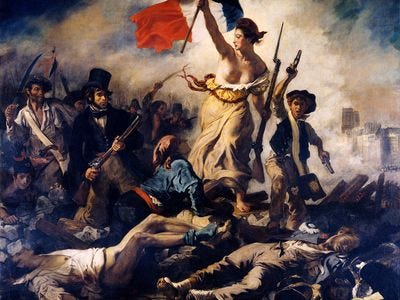
Dr Viau Collection, bought at public auction, 1942Eugène Delacroix started his apprenticeship training in 1815 in painter Pierre-Narcisse Guerin’s studio, where he took part in life model classes, notably with Mademoiselle Rose. These classes were important in enabling Delacroix to develop and apply his skills in the later portraits and the historical subjects for which he is best known, such as Liberty Guiding the People (1830).
Eugène Delacroix, Le 28 juillet 1830. La Liberté guidant le peuple, © 2024 GrandPalaisRmn (musée du Louvre) / Rabeau/Didierjean
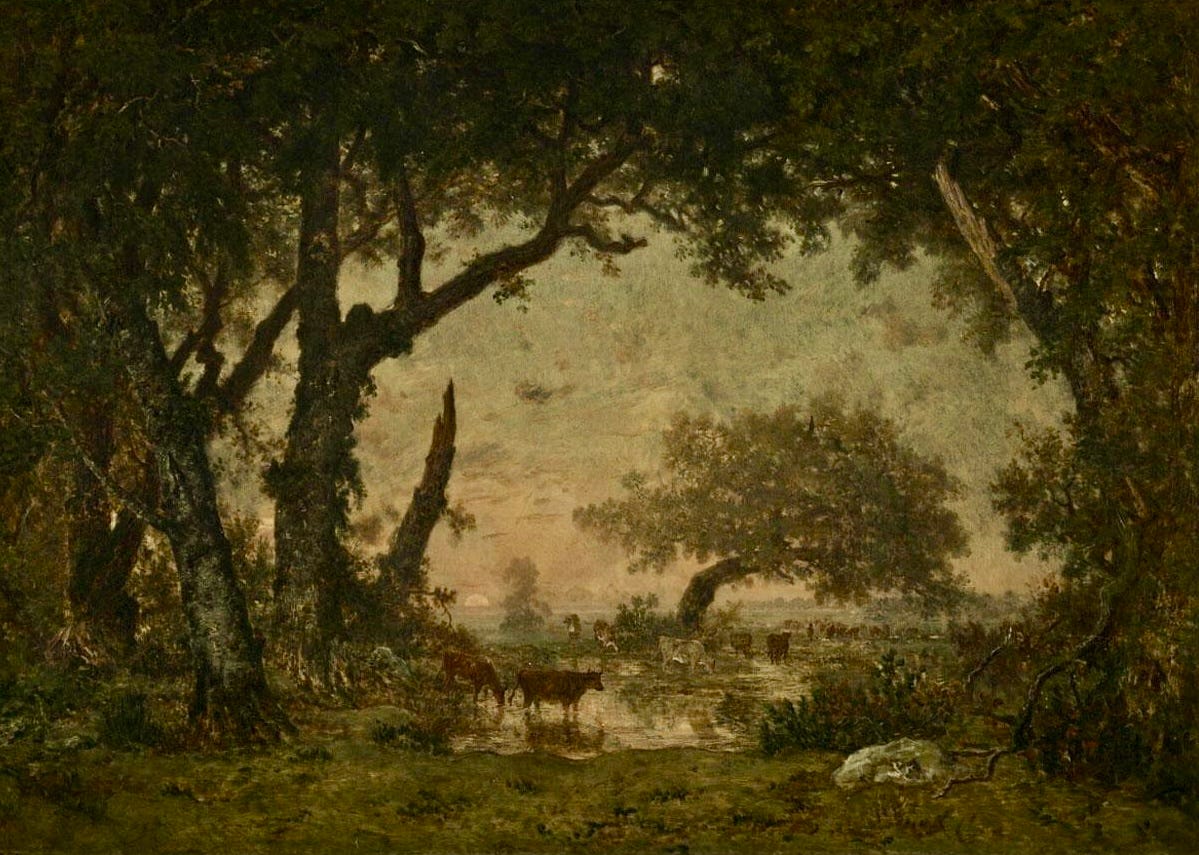
Leaving the Forest at Fontainebleau, Sunset
Modern Times, 19th century landscape
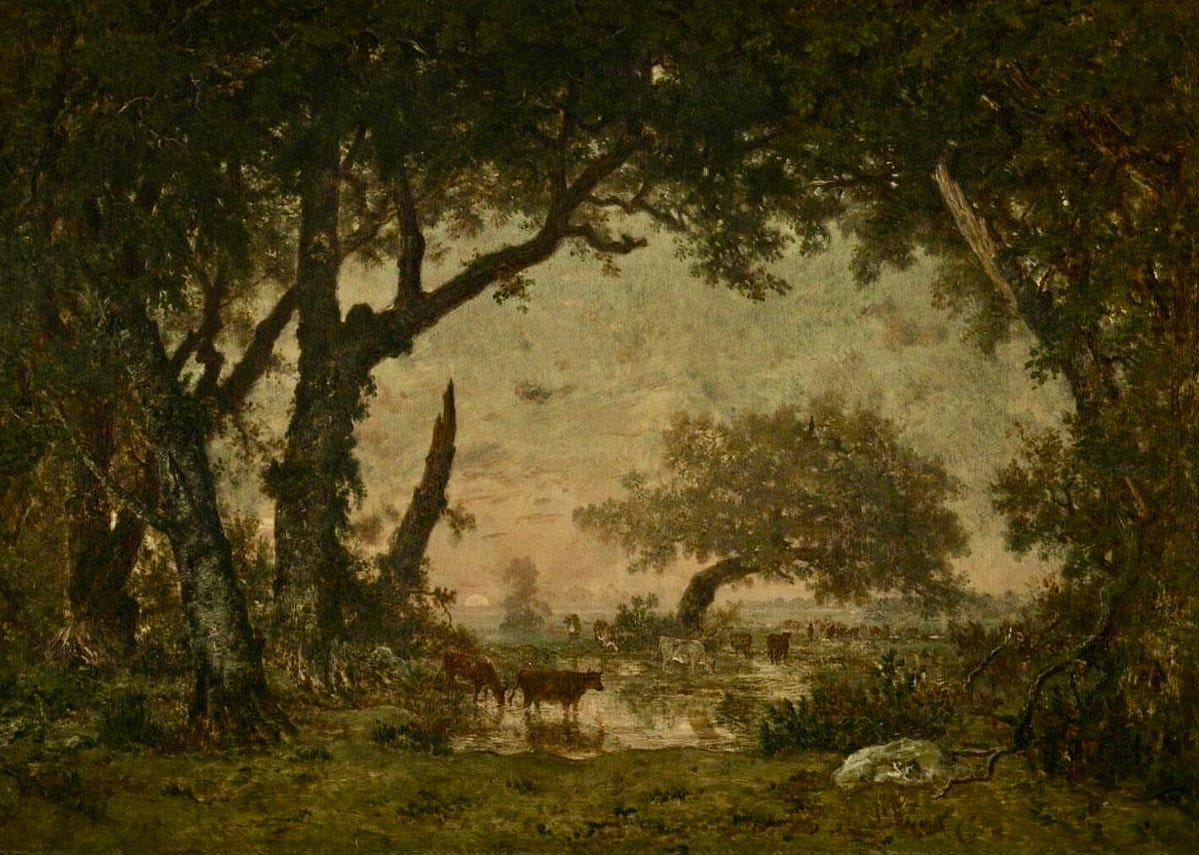
Théodore Rousseau
Paris (France), 1812 - Barbizon (France), 1867
1848-1850
Oil on canvas
Paris, Musée du Louvre - R.F. 112 State commission for the Musée du Luxembourg in 1848, attributed to the Louvre in 1874.There is a sense of quiet and perhaps sadness here, as the evening light penetrates through the shade at the edge of the forest trees and is reflected off the water surface, where the cattle are drinking.
The Coal Sorters (Europe and Cadmus)
Modern Times, Contemporary
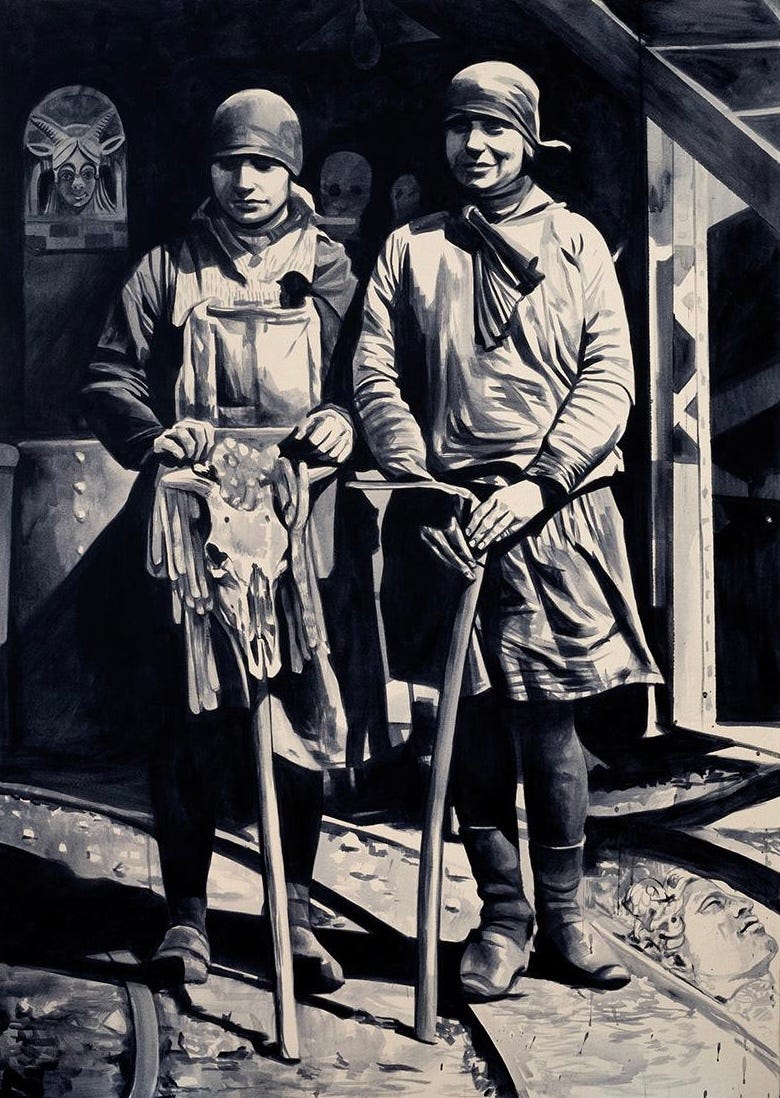
Giulia Andreani
Born 1985 in Venice (Italy)
2024
Acrylic on canvas
Courtesy of Galerie Max Hetzler (Berlin, London, Paris)It is appropriate that my final chosen work of art from the Louvre-Lens museum returns to the overriding theme of this article - Coal (le Charbon). From afar, I think the image is a black and white photograph. But up close, I can see that it has been created with my favourite painting medium - acrylics. Here, the artist has used a single colour: Payne’s grey. Andreani questions history and the way it is received, concentrating in particular on forgotten or hidden stories.
Reflections:
There is a light at the end of the tunnel. I am beginning to see past the 35 plus packed removal boxes in our Victorian double cellar. With the sale of our French home now complete, I am actively visualising our new home on the island of Ireland in August.
I have previously written about Global Warming here - the causes; the consequences for all of us, and what we can do together to reduce and limit any further global temperature rise to below 1.5 degrees Celsius.
I feel passionately about reducing my own personal use of fossil fuels and embracing renewable energy sources, which do not emit carbon dioxide into the atmosphere.
Despite Britain’s reputation for grey weather, it receives approximately 60% of the solar radiation found at the equator – a similar amount of solar energy as parts of France, Spain, and Germany (which.co.uk, 12/08/25).
So with my husband, Mr. C., we have chosen to install photovoltaic solar panels on the roof of our new home.
We will also install an air source heat pump to generate hot water for washing and heating our home.
A heat pump works similarly to a fridge in reverse - absorbing heat from the air outside and moving it into your home.
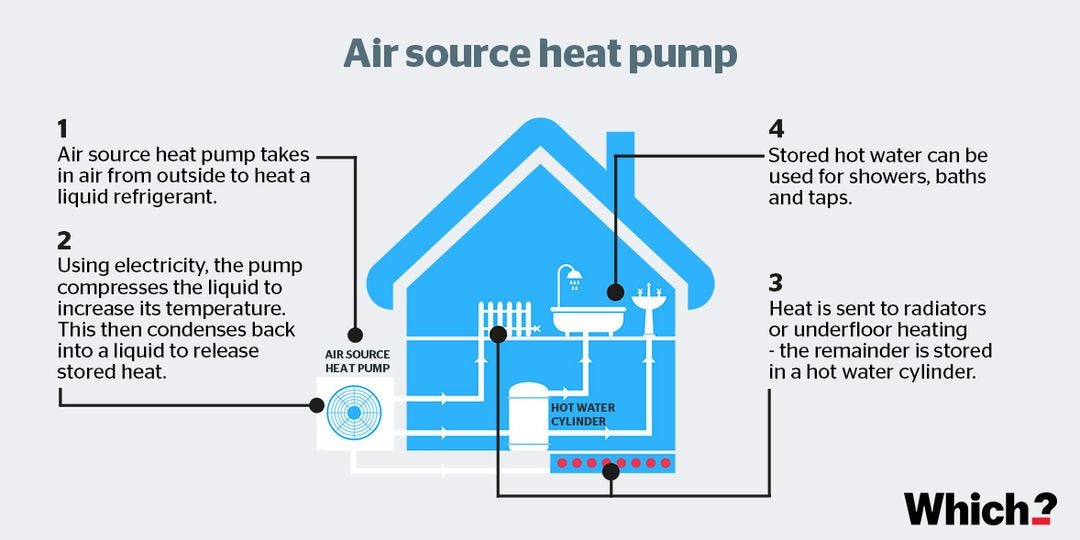
Although heat pumps use electricity, they are highly efficient, turning every one unit of electricity into three or four units of heat. This is significantly more efficient than gas boilers for example, which produce less than one unit of heat for each unit of gas used (which.co.uk, 22/09/2025).
Two thirds of Northern Ireland households are currently reliant on oil fired boilers. This is common in rural areas not connected to a gas supply grid pipeline.
The installation of solar panels and a heat pump will mean we will not be vulnerable to sudden, sharp increases in the cost of oil, as we are all currently experiencing due to the U.S./Israel versus Iran conflict and the continuing blockade of the Strait of Hormuz.
I ponder the word Revolution. It can have two meanings - the first representing a clean break with the past and the second, like the hands on a clock, turning full circle.
Vincent “Bonnemort” Maheu, Toussaint’s father, patriarch of the Maheu family and a veteran miner with 50 years experience in Zola’s Germinal, listening to the miners debate whether to strike, comments:
You can say what you like, and it will be all the same as if you said nothing.
The title of Zola’s novel Germinal derives from the Latin word Germen for a sprout or a bud. Germinal was the seventh month (late March to late April) in the revolutionary calendar that France adopted from 1793 to 1805, nearly one hundred years earlier.
Zola writes offering hope for social progress and revolution in the final scene in Germinal, as Étienne Lantier departs the mining town of Montsou. :
En Français:
Maintenant, en plein ciel, le soleil d’avril rayonnait dans sa gloire, échauffant la terre qui enfantait. Du flanc nourricier jaillissait la vie, les bourgeons crevaient en feuilles vertes, les champs tressaillaient de la poussée des herbes. De toutes parts, des graines se gonflaient, s’allongeaient, gerçaient la plaine, travaillées d’un besoin de chaleur et de lumière.
Un débordement de sève coulait avec des voix chuchotantes, le bruit des germes s’épandait en un grand baiser. Encore, encore, de plus en plus distinctement, comme s’ils se fussent rapprochés du sol, les camarades tapaient. Aux rayons enflammés de l’astre, par cette matinée de jeunesse, c’était de cette rumeur que la campagne était grosse. Des hommes poussaient, une armée noire, vengeresse, qui germait lentement dans les sillons, grandissant pour les récoltes du siècle futur, et dont la germination allait faire bientôt éclater la terre.
In English:
The April sun was now well up in the sky, shedding its glorious warming rays on the teeming earth. Life was springing from her fertile womb, buds were bursting into leaf and the fields were quickening with fresh green grass. Everywhere seeds were swelling and lengthening, cracking open the plain in their upward thrust for warmth and light. The sap was rising in abundance with whispering voices, the germs of life were opening with a kiss.
On and on, ever more insistently, his comrades were tapping, tapping, as though they too were rising through the ground. On this youthful morning, in the fiery rays of the sun, the whole country was alive with this sound. Men were springing up, a black avenging host was slowly germinating in the furrows, thrusting upwards for the harvests of future ages. And very soon their germination would crack the earth asunder.
À bientôt
Caroline
Introducing Contributor, Caroline McCormick-Clarke
Immerse yourself in all of Caroline’s articles on her Contributor page.
MyFrenchLife™ – MaVieFrançaise® is a reader-supported publication. To receive new posts and support my work, consider becoming a free or paid subscriber.