

This is one of the articles I'm letting out into the world for free — part of our ‘French Culture Deep-Dive Collection’, where I go deeper… well beyond the topics of travel, moving to France, et al, and deep into the France that refuses to be simple. Most of that collection is exclusively for paid subscribers.
But occasionally a story feels too good not to share.
This is one of those. It is FREE to you.
Bonne lecture - Happy reading
Judy
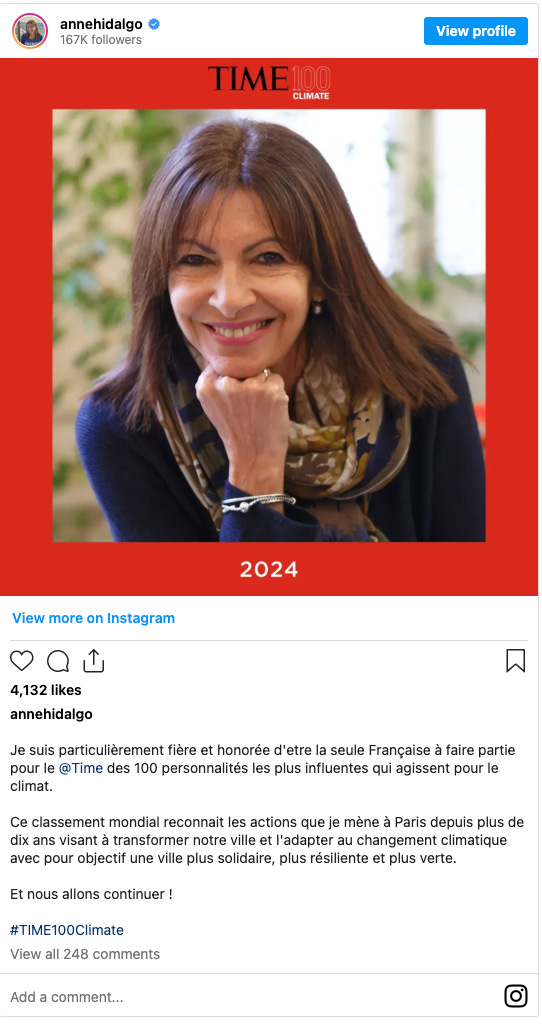
She’s been there so long it’s almost hard to imagine Paris without her. Anne Hidalgo, the first woman to lead the French Capital, a Spanish immigrant turned Parisian institution, mayor since 2014, is leaving. This coming weekend, Parisians vote for her replacement. And it feels, in a very particular Parisian way, like the end of something.
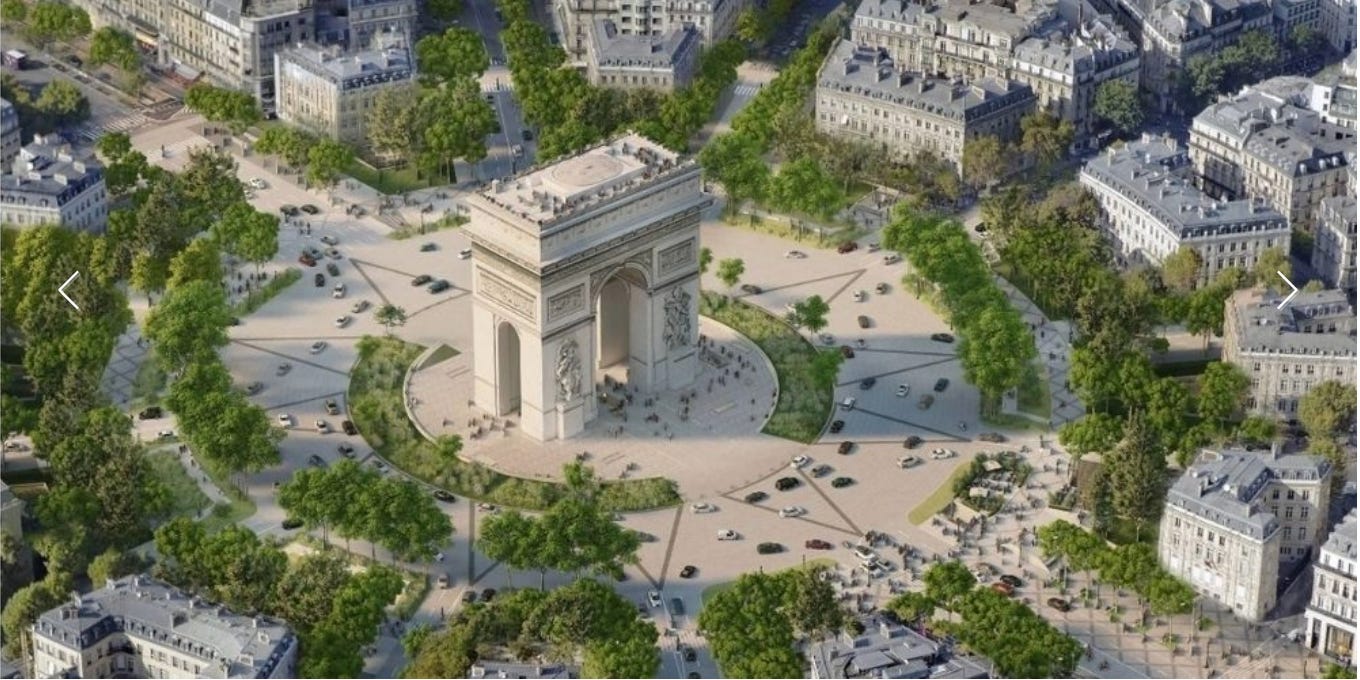
Whether you loved her or found her unbearable, the Paris you walk around in right now is very much her Paris. The bike lanes you either bless or curse. The Seine, you can actually swim in again. The trees along streets that used to be car parks. The school canteens serve organic produce. The Olympic velodrome. The Champs-Élysées that smells, improbably, of lavender in summer.
This is the story of what she actually did, who she was, and what Hidalgo Paris means for the city’s future — and for those of us who love it.
Who Is Anne Hidalgo, Really?
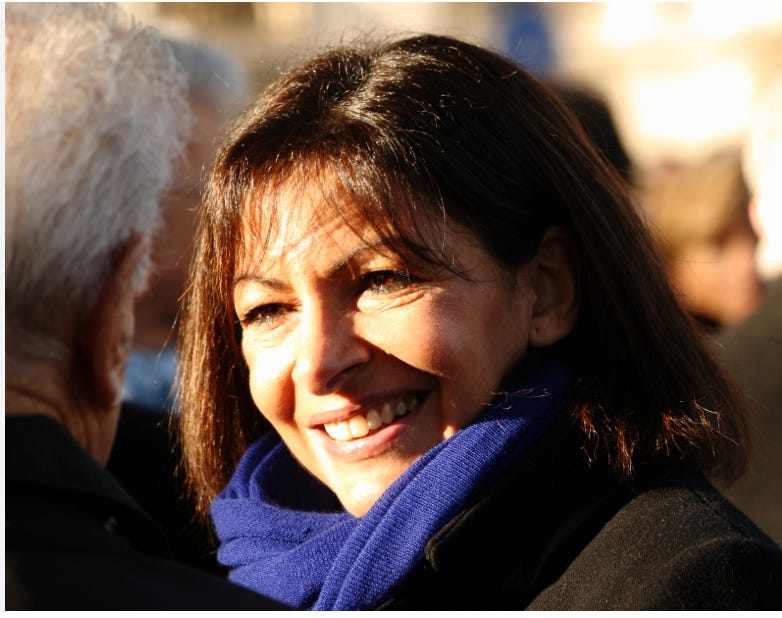

Anne Hidalgo was born in San Fernando, Spain, in 1959, and arrived in France at the age of two. Her father was a welder; her mother a seamstress. She studied labour law, became a labour inspector, joined the Socialist Party, and worked her way up through Paris city politics with the careful patience of someone who knows the odds aren’t quite in her favour.
In 2001, she became Bertrand Delanoë’s deputy mayor — a position she held for thirteen years, learning the machinery of the city intimately. When Delanoë stepped aside in 2014, she ran and won, making history as Paris’s first female mayor. She won again in 2020. Twelve years. More than three thousand days of running a city of two million people, watched by the entire world.
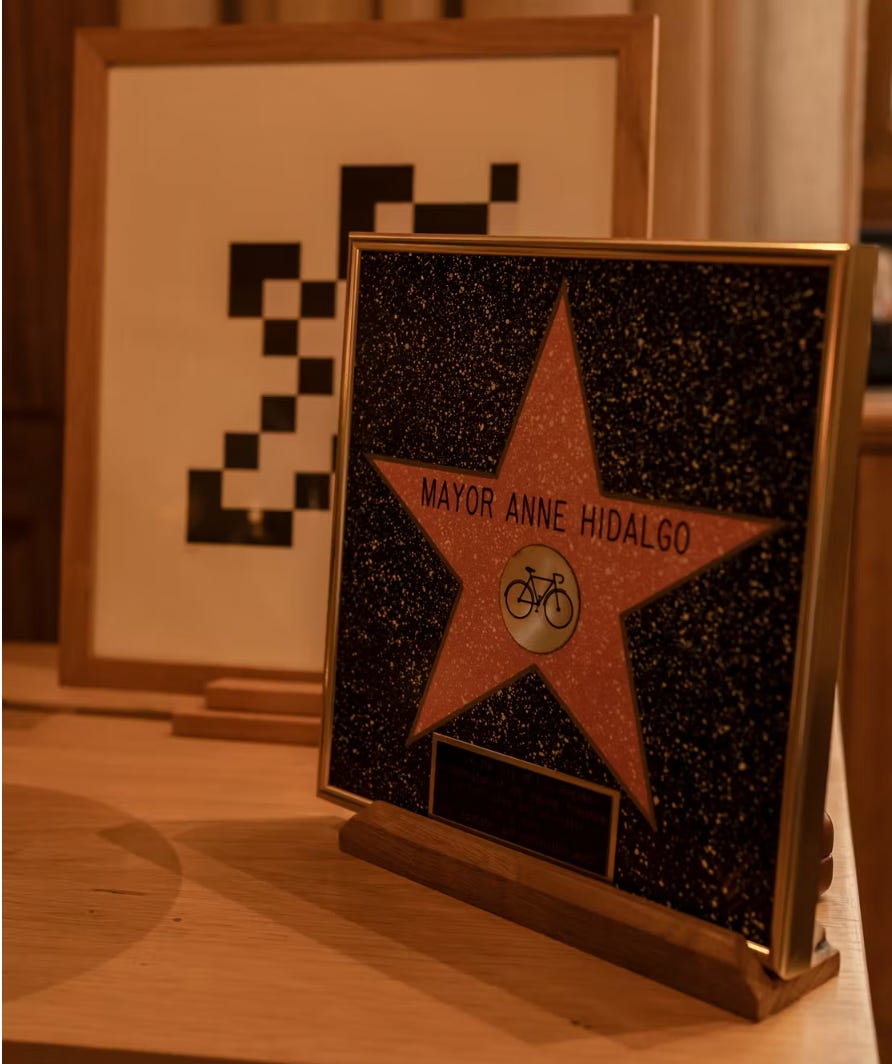
She is, by most accounts, serious, stubborn, ideologically committed, and not especially interested in being liked. That last quality may explain a great deal.
What Hidalgo Actually Built
The numbers, when you line them up, are genuinely staggering. Under Hidalgo’s tenure:
Paris went from around 200km of bike lanes to more than 1,400km. Fine particle pollution fell by around 55%.
The Périphérique, the ring road that’s been a symbol of Paris’s car dependency since the 1970s, had its speed limit cut.
Vast swathes of the Seine’s banks, once roaring with traffic, became pedestrian promenades.
She launched the Paris en Commun programme, a vision of the “15-minute city” — the idea that everything you need for daily life should be reachable on foot or by bike within fifteen minutes. It became an international reference point for urban planning. Cities from Melbourne to Barcelona cite it. Urban theorists write papers about it.
She also planted more than 170,000 trees, created hundreds of urban “cool islands”, shaded, green spaces designed for increasingly brutal summers, and
oversaw a school food revolution, shifting Paris’s 100,000+ daily school meals toward local, organic, and sustainable sourcing.
And then there’s the Seine. Hidalgo swam in it during the Paris Olympics opening week to prove it was clean. She had promised this for years. People laughed. Then she got in the water.
The Weight of the City’s Debt — and the Car Wars
None of this came free, financially or politically.
Paris’s debt rose sharply during her tenure — from around €4 billion to somewhere in the region of €10 billion, depending on how you count. Her critics, and there were many, called it reckless. Defenders pointed to infrastructure investment, COVID spending, and the Olympic legacy. The argument continues.
The car wars were ferocious. Removing parking spaces and traffic lanes in a city where many residents, particularly those in the outer arrondissements, still rely heavily on cars felt to some like ideological warfare dressed up as environmentalism. Petitions circulated. There were protests. Drivers were furious. The local tabloid press was not kind.
Parisians, it turns out, want a greener, quieter, more human city — and they also want to be able to park outside their front door. This tension was Hidalgo’s daily reality for twelve years.
The Presidential Disaster
In 2022, she ran for President of France. It did not go well. She received approximately 1.75% of the vote — a result so strikingly low that it became the defining image of her political overreach in much of the media. Commentators shook their heads. Her opponents gleefully filed it away.
What got less attention was the context: she ran in a field of twelve candidates, the left was catastrophically fragmented, and the race was effectively already over before the first round. Still. 1.75% is hard to reframe.
She returned to the Hôtel de Ville, said relatively little about it publicly, and got back to work. Which is either admirable stoicism or spectacular denial, depending on your perspective.
What Comes Next: The Candidates
The race to replace her is, to put it mildly, lively. The frontrunners represent almost comically divergent visions of Paris:
Emmanuel Grégoire — Hidalgo’s own deputy mayor and anointed successor — is running on continuity. He’s competent, steady, deeply knowledgeable about the city, and about as exciting as a well-organised filing cabinet. His supporters see this as a feature.
Rachida Dati — former Justice Minister under Sarkozy, current Culture Minister, and a politician of genuine charisma and considerable personal ambition — is running for the right. She has been mayor of the 7th arrondissement since 2008. She is TikTok-savvy, she is controversial, and she very much wants this job. A Dati win would end more than twenty years of left-wing control of Paris and represent a genuine political rupture.
There are also candidates from the far left and the Macronist centre, which adds complexity to a first round that nobody is treating as a foregone conclusion.
The election uses a two-round system at the arrondissement level, with seats in the Conseil de Paris ultimately determining who becomes mayor. It is, to put it gently, not simple. But it is genuinely open.
Her Paris, Your Paris
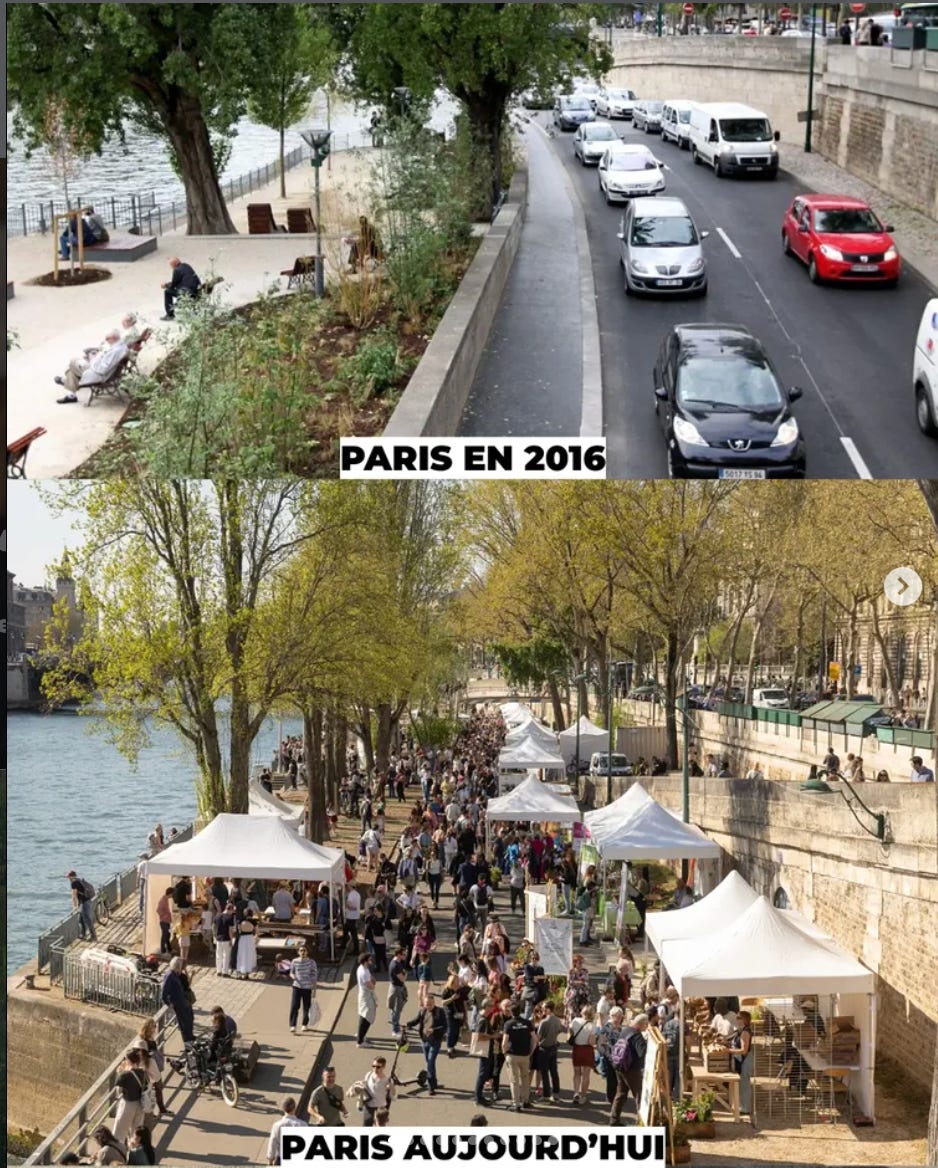
Here is what I find myself thinking about when I walk along the Seine banks where the cars used to be: I didn’t think I wanted this, and then it happened, and now I can’t imagine it being any other way.
That’s the thing about transformation. It requires someone willing to absorb enormous amounts of hostility on behalf of a future that isn’t quite visible yet. It requires a particular kind of stubbornness, the stubbornness of a labour inspector’s daughter who got to Paris at age two and decided, somewhere along the way, that this city could be better than it was.
You might disagree with her methods. You might resent the bike lanes or mourn the parking, or think the debt was unforgivable or find her presidential ambition somewhere between delusional and insulting. These are all legitimate positions.
But the Paris that exists in 2026 — greener, cleaner, more cyclable, more swimmable, more human in scale than at any point in living memory — is her Paris. She built it while people shouted at her. And she leaves it behind.
That’s not nothing. In fact, it might be everything.
À bientôt
Judy
This article forms part of the French Culture Deep-Dive Collection of MyFrenchLife.org
Sources and Further Reading:
Le Monde (French, subscription required) — “Anne Hidalgo : ‘Je ne me présenterai pas à un troisième mandat de maire de Paris’”, 26 November 2024: https://www.lemonde.fr/politique/article/2024/11/26/anne-hidalgo-je-ne-me-presenterai-pas-a-un-troisieme-mandat-de-maire-de-paris_6414736_823448.html
— “Hidalgo Reshaped Paris Public Space, but Critics Say Upkeep Fell Behind” by Hélène Bekmezian, 9 March 2026:
— “Paris Hit Record Debt Under Hidalgo, Fueling Election Fight” by Hélène Bekmezian, 8 March 2026:
— “Paris Mayoral Election: Who’s Running?” by Hélène Bekmezian & Manon Romain, 31 January 2026:
France 24 — “Paris Mayor Hidalgo Says to Bow Out in 2026”: https://www.france24.com/en/live-news/20241126-paris-mayor-hidalgo-says-to-bow-out-in-2026
EurActiv via Eurasia Review — “Paris Mayoral Race Heats Up As Right Eyes End to Socialist Rule”: https://www.eurasiareview.com/03012026-paris-mayoral-race-heats-up-as-right-eyes-end-to-socialist-rule/
Monocle — “Your Guide to the 2026 Paris Municipal Elections”: https://monocle.com/affairs/politics/paris-municipal-mayoral-candidates-2026/
Jacobin — “Paris Mayor Anne Hidalgo’s Olympic Wager” by Phineas Rueckert: https://jacobin.com/2024/08/anne-hidalgo-paris-olympics-macron
Wikipedia — 2026 Paris municipal election overview: https://en.wikipedia.org/wiki/2026_Paris_municipal_election
The New Paris Podcast — Ep. 157: “Anne Hidalgo’s Paris Legacy & the 2026 Vote” with Phineas Rueckert.
Introducing Contributor, Judy MacMahon:
Visit her Contributor Page — Explore more of Judy’s work
Thanks for sharing this Judy. I am currently writing a piece on the same subject - as many of us are. I thought your article was not only informative, but balanced and fair, a real accomplishment when it comes to Hidalgo who is seen as a hero or an arch-enemy. Brava!
I loved this! I get the sense that retrospectively, even those in the pro car camp will come to appreciate how Hidalgo has added more green space and pedestrians zones. When I go walking by the Seine, I'm always surprised that the quays were kept as a road for so long.