
Rue de Vaugirard: Paris’s Longest Street Remembers a Vanished Village
Four kilometres long, it carried the city’s growth from a monastery lane to the spine of the Left Bank.

Welcome to the 20 Streets of Paris Series - Episode #7
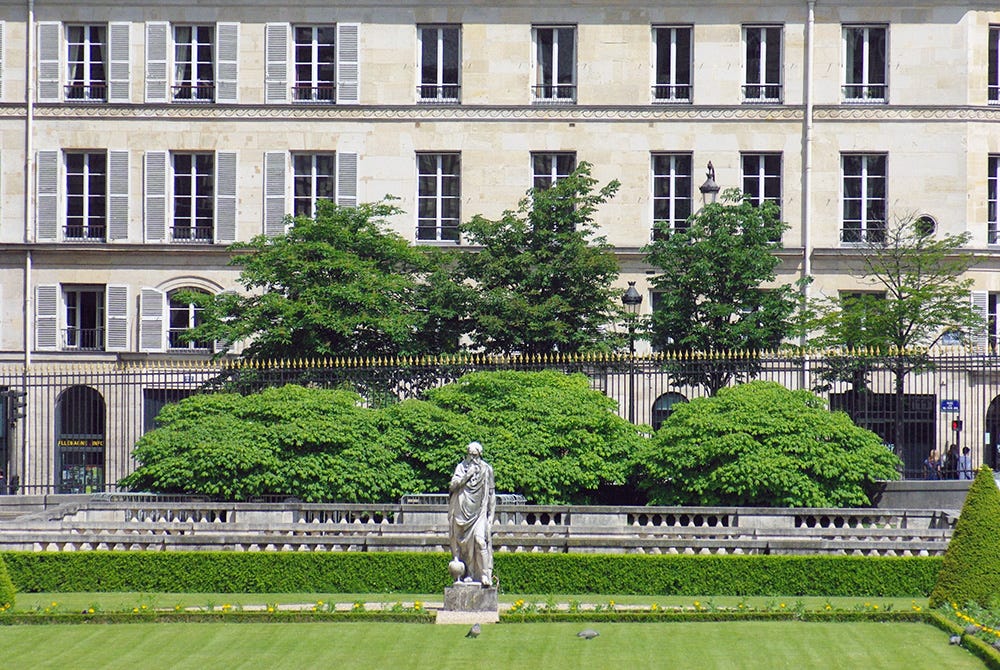
Image credit: Pierre Guernier
Paris’s longest street, stretching over four kilometres, Rue de Vaugirard began life as a simple road leading to the medieval village of Vaugirard. The name itself is a contraction of “Val Girard”, the valley of an abbot named Girard, who founded a monastery nearby.
Over time, the village was absorbed into the expanding capital, and its once-rural road became an urban lifeline.
Today, Rue de Vaugirard crosses the 6th and 15th arrondissements, linking the Place de l’Odéon near the Luxembourg Gardens to the Porte de Versailles, where trade fairs and exhibitions now draw crowds. Along its length, you encounter a patchwork of Paris: university buildings, quiet residential blocks, bustling markets, and the grand dome of the Sénat.
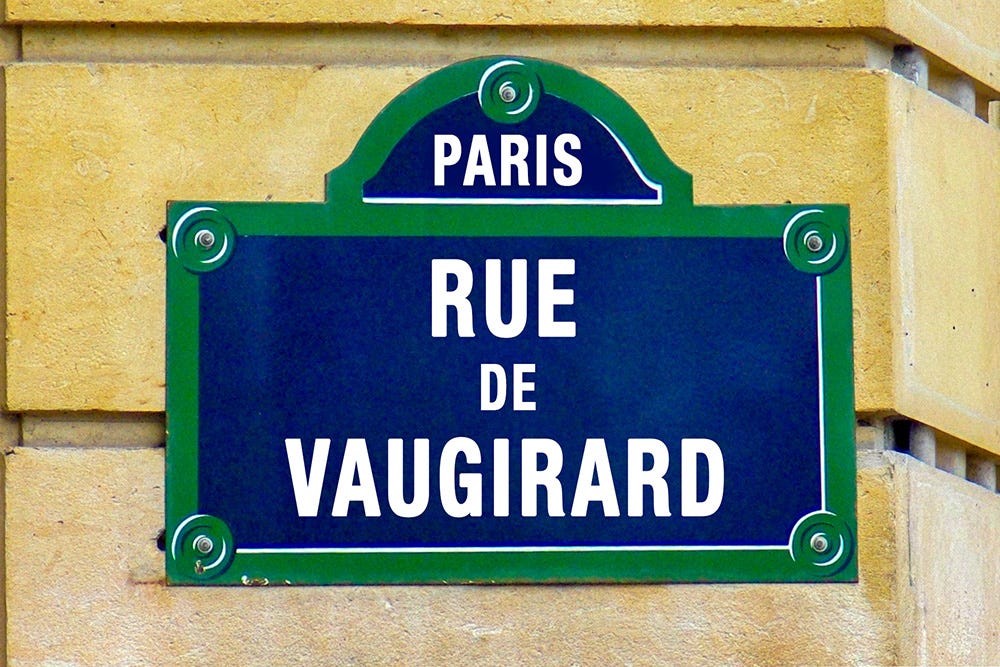
To walk Rue de Vaugirard is to experience the story of Paris’s growth. What began as a path across fields is now a spinal cord of the Left Bank, a reminder of how the city expanded, swallowed villages.
What to Notice on Rue de Vaugirard:
At over four kilometres, it is the longest street in Paris, running from the 6th into the 15th arrondissement
Its name recalls Val Girard, the valley of Abbot Girard, whose monastery once stood on this ground
It begins near the Place de l’Odéon and the Luxembourg Gardens and ends at the Porte de Versailles
The dome of the Sénat rises along its route, a fixed point above the changing streetscape
University buildings, local markets, and residential blocks sit side by side along its length, a patchwork of a village that became a city artery
Have you walked the full length of Rue de Vaugirard, from the Luxembourg Gardens to the Porte de Versailles? What did you notice along the way?
Introducing Contributor, Pierre Guernier:
Visit his Contributor Page — Explore more of Pierre’s work