
Seasons in the Southwest: Early Spring
Notes from the in-between, when printemps has not quite arrived

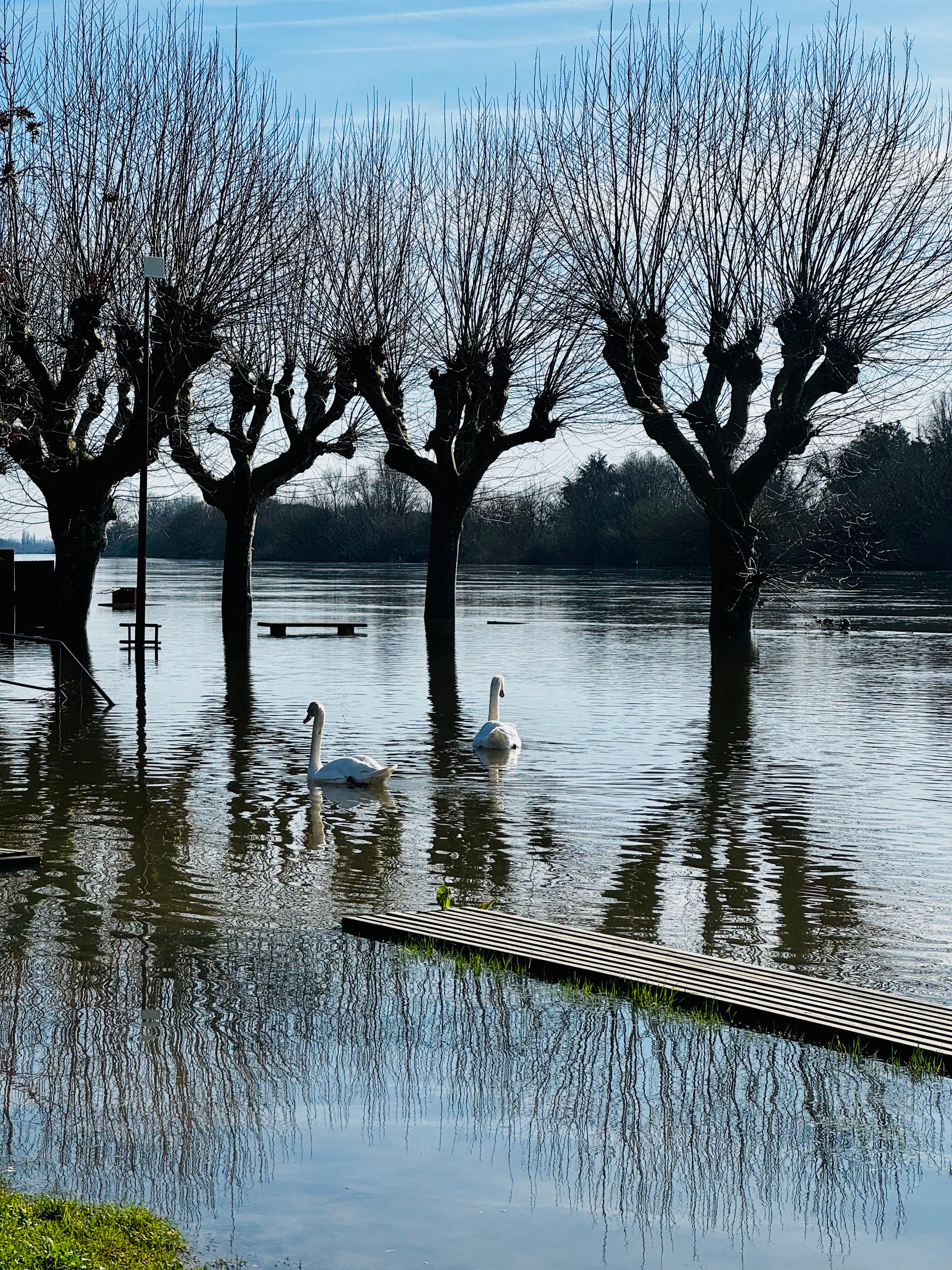
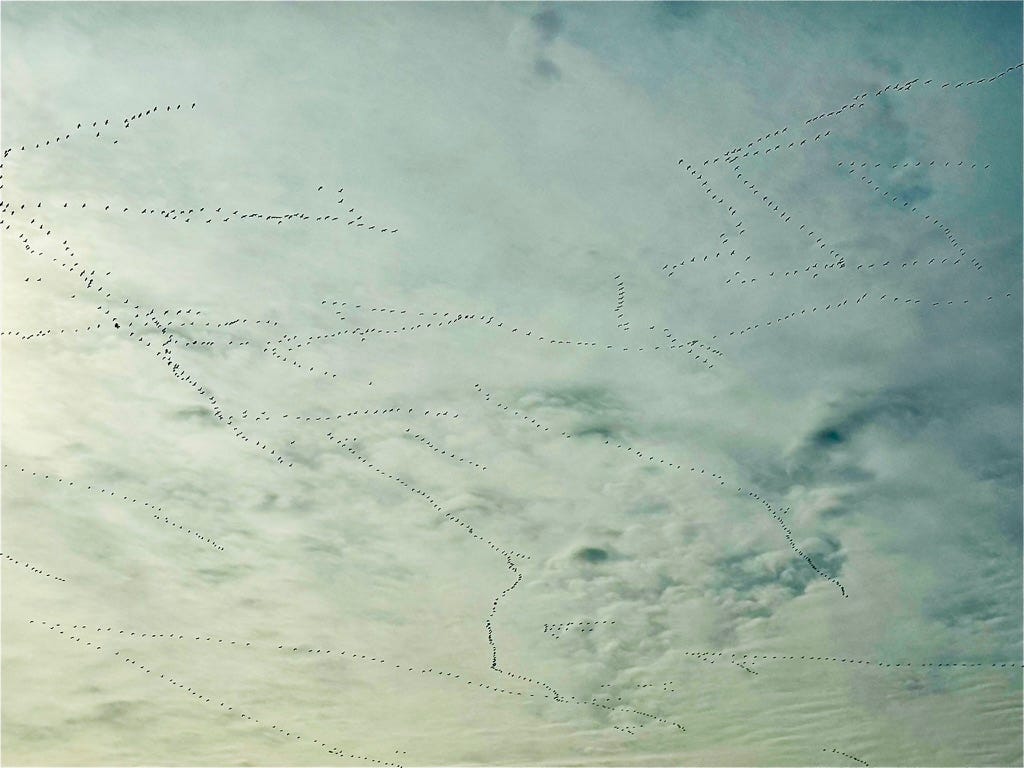
The rain — which had been falling for a record 36 days in a row — stops just as quickly as it started. Sun peeks through the clouds. The river waters recede, and their flooded banks begin to dry out. This is a typical series of events as spring struggles to break forth from the gray winter days, though an inundation like this hasn’t been seen in 25 years. And while it’s still early, the migration of the cranes around the third week of February — squawking and filling the sky with a mesmerizing formation — makes you realize you’re almost there. Spring is coming. You can feel it before you can see it.
As the sky dims, I glance at my watch. 19h 06 — just after 7 pm. The days are getting longer, I think to myself, as memories of my first magical spring and summer here wash over me. As a community, we are plotting and planning for longer, warmer days. On Monday, I took off with my friends Michael and Anna to explore two vineyards as possible stops for a women’s retreat we’re cohosting in April. From the chai at Château Hostens-Picant, we hear the melodic klink of glass as wine is bottled. It was blessedly sunny, and when I try to take photos to capture the beauty of our second château, the sun is so bright I can barely photograph it. Oh well. After having lived in Germany for three years before moving to southwest France, I miss the abundance of tulips and daffodils. But here, fragrant yellow primroses dot the country roads, and flowering almond trees break up the landscape. The vines have already been trimmed, ready to welcome the next season of growth. That same anticipation is already building — and it’s showing up at the table, too.
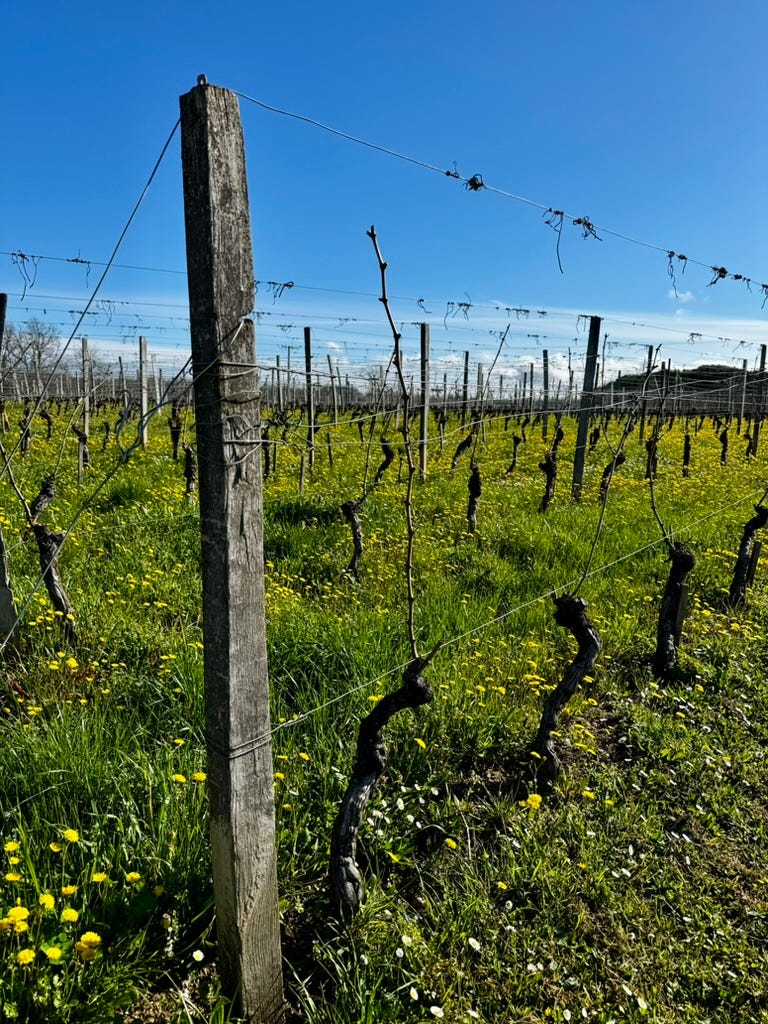
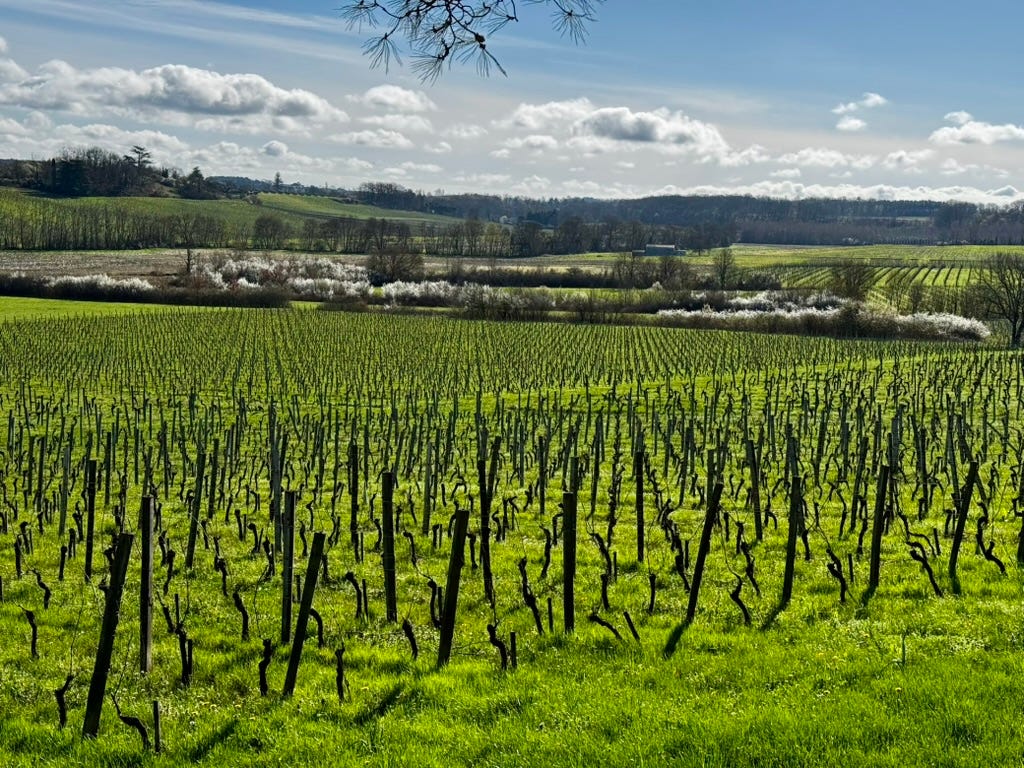
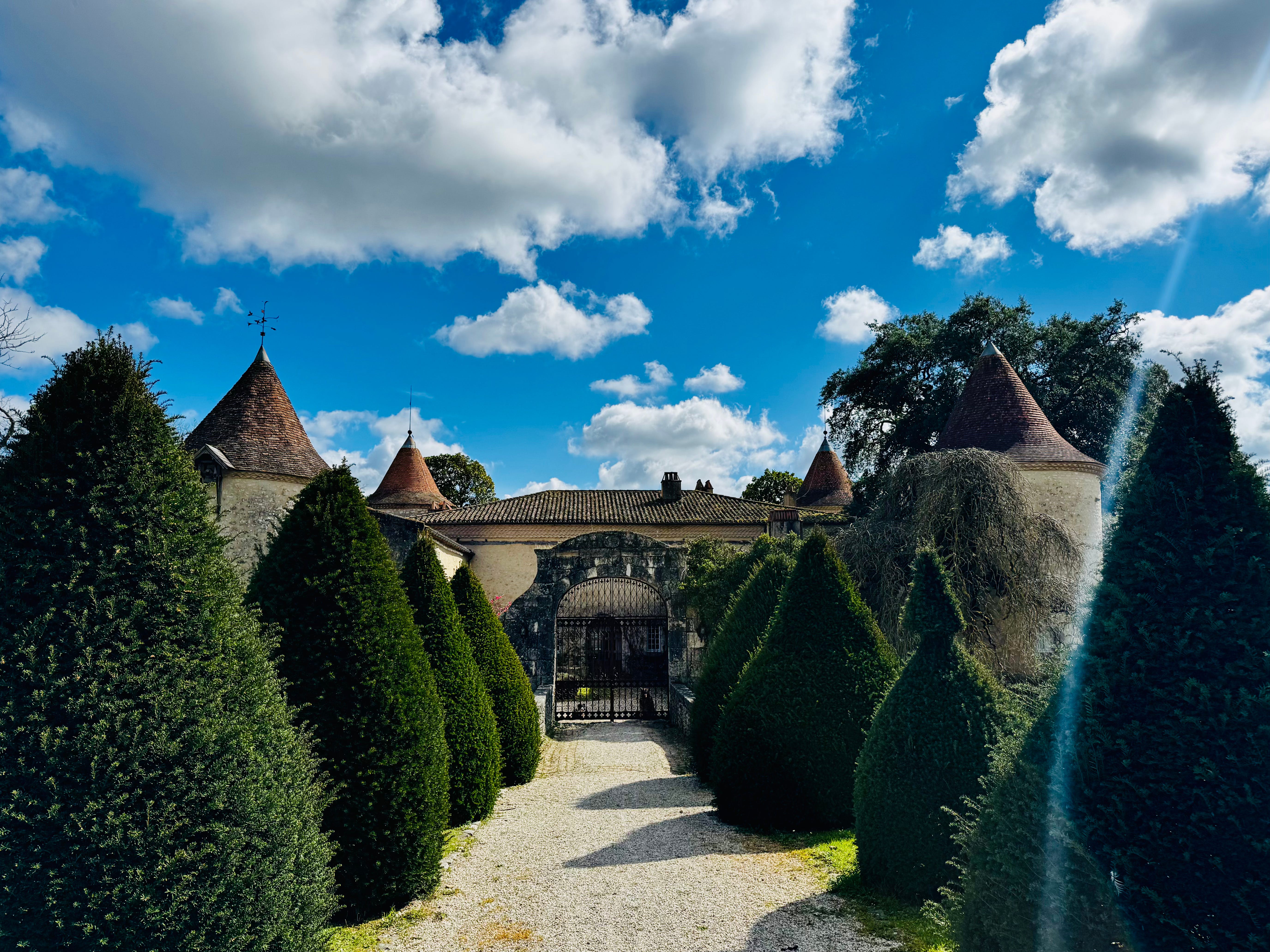
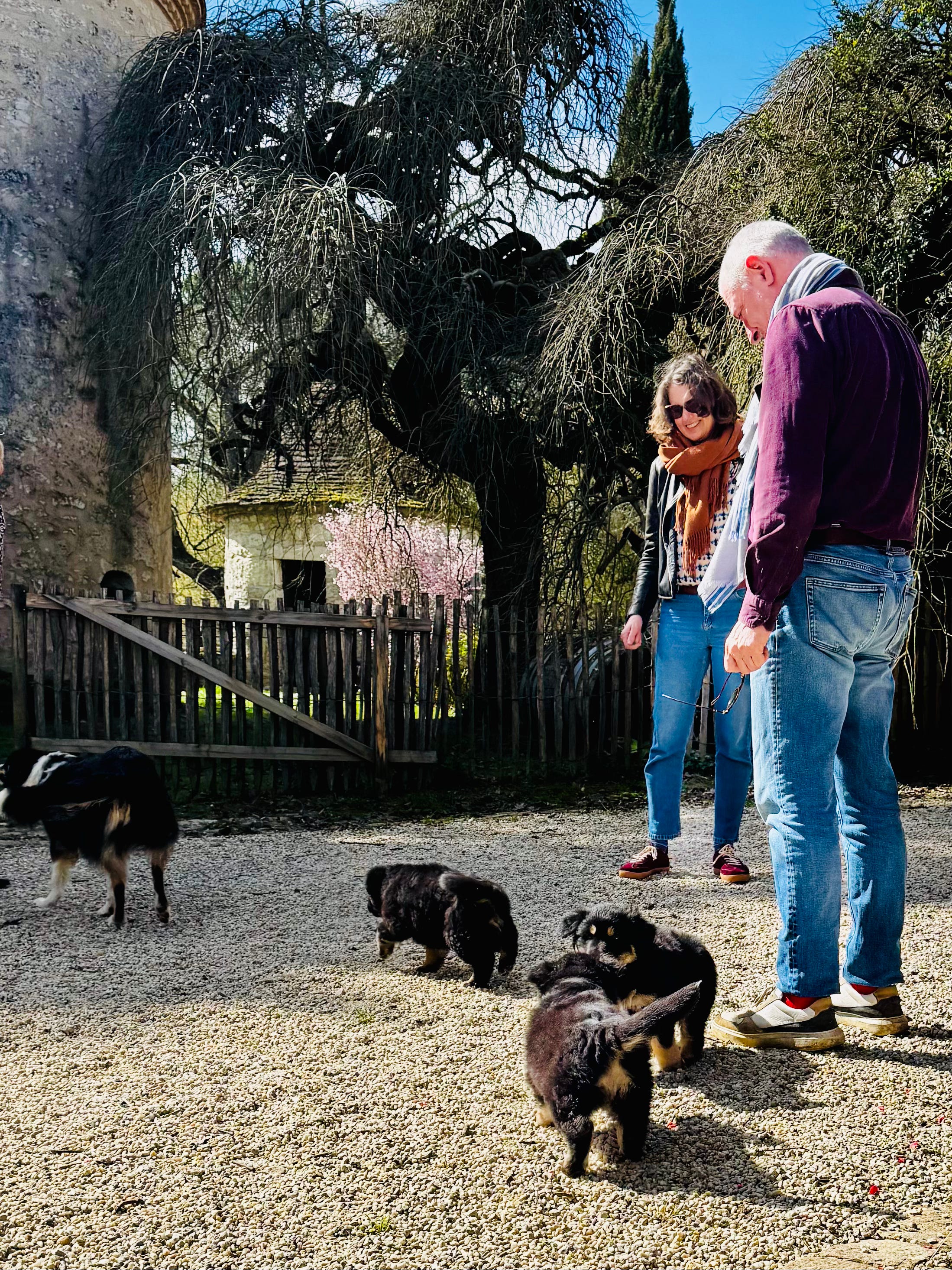
The fields of Château Hostens-Picant, and the grounds of Château Couronneau (plus 3 fluffy puppies!)
In early spring, root vegetable season has not yet seen fit to release us. Carrots, potatoes, and turnips grace almost every plate in various forms. Puréed. Mashed. Roasted. By now, it’s easy to tire of them, craving the first spring crops that will transform our plates with a freshness and crispness that has been sorely missed. But this doesn’t stop my friend Sophie — even in mid-March, she forages in her garden for herbs to make a green salad to accompany a creamy Brillat-Savarin, a delightful cheese that’s been around since 1890. Curious, I texted a few days later to ask which herbs she’d used, beyond the dandelion and mint leaves I’d spotted. Her reply: «Aaaaah, c’était bon, hein!? C’est mon savoir-faire. Je vais organiser des weekends de stages… nouveau projet ; )» She had absolutely no intention of telling me. I wrote back that I’d be her first stagiaire. And that, it turns out, is a very seasonal thing to be.
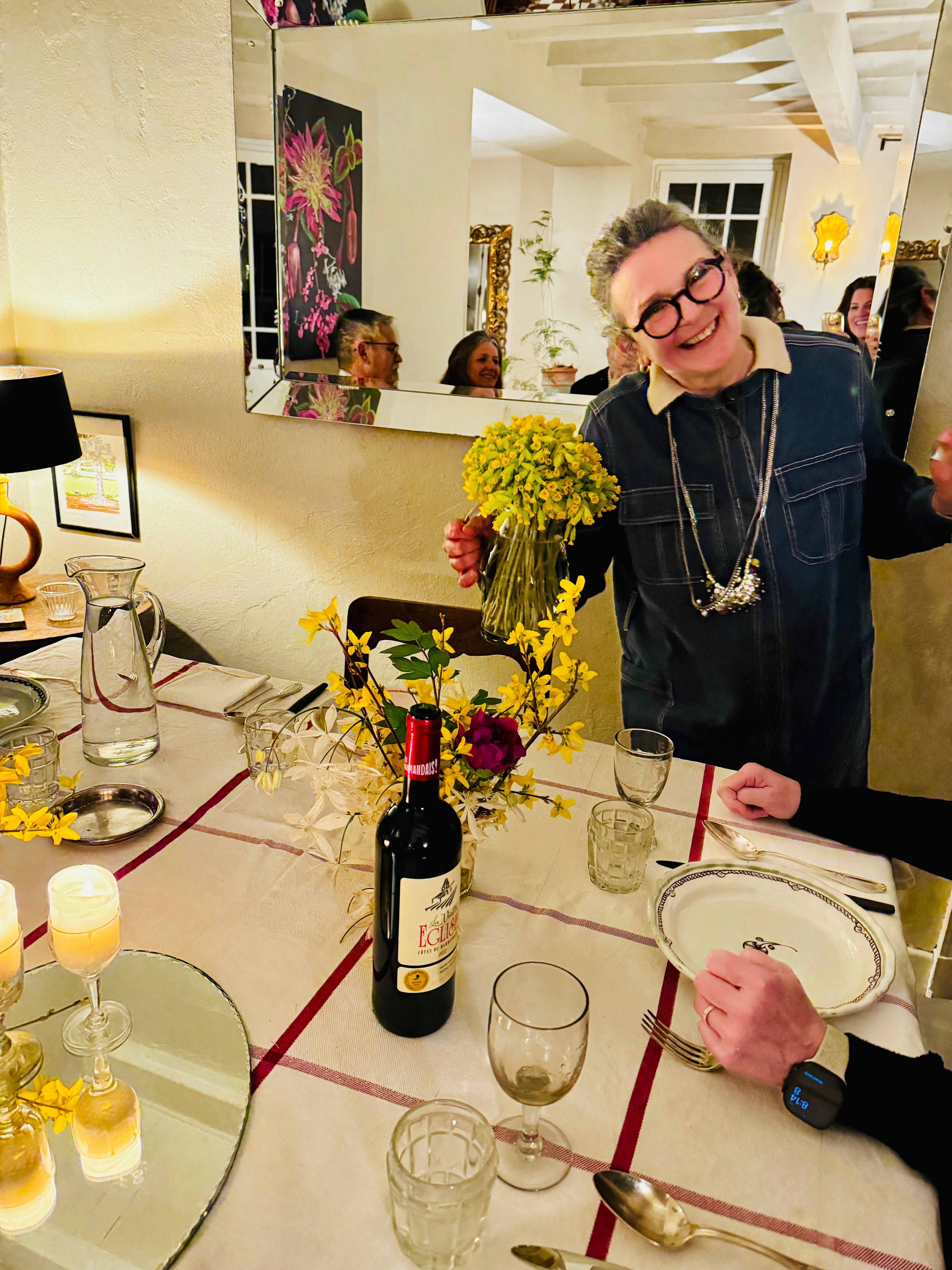
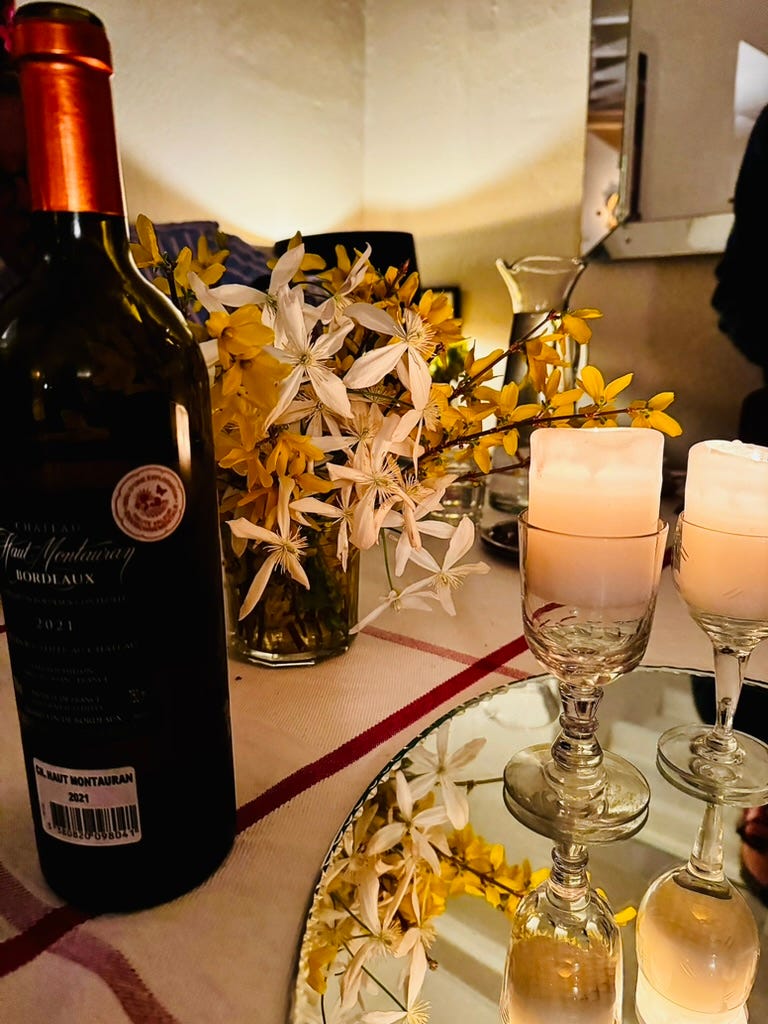
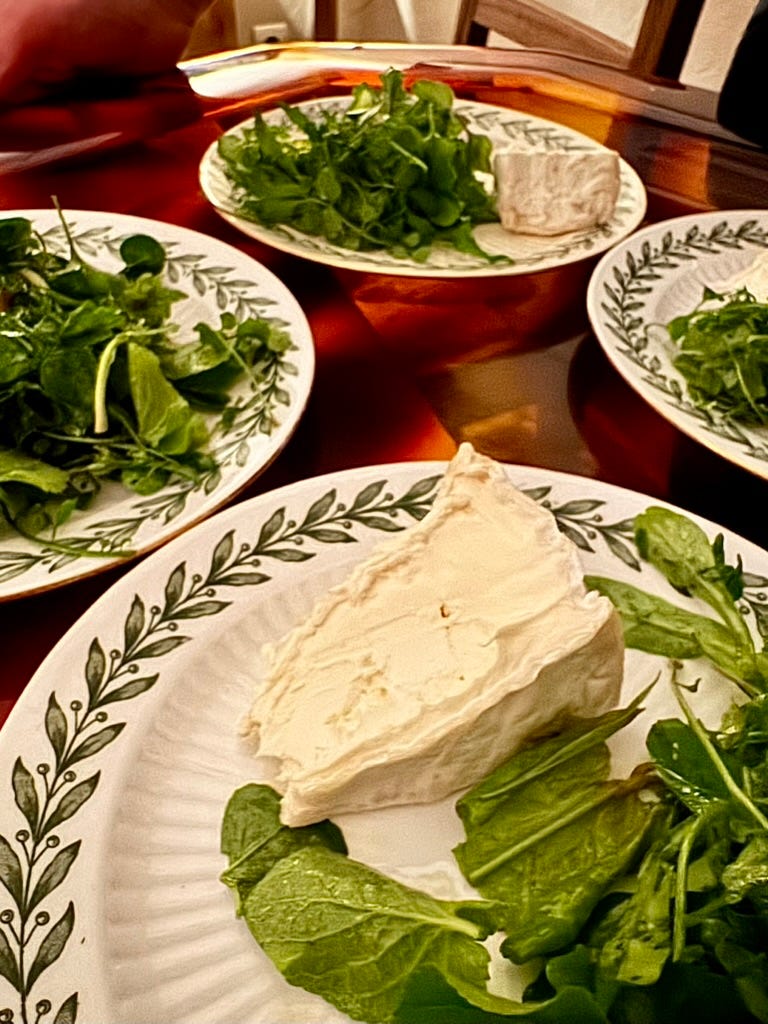
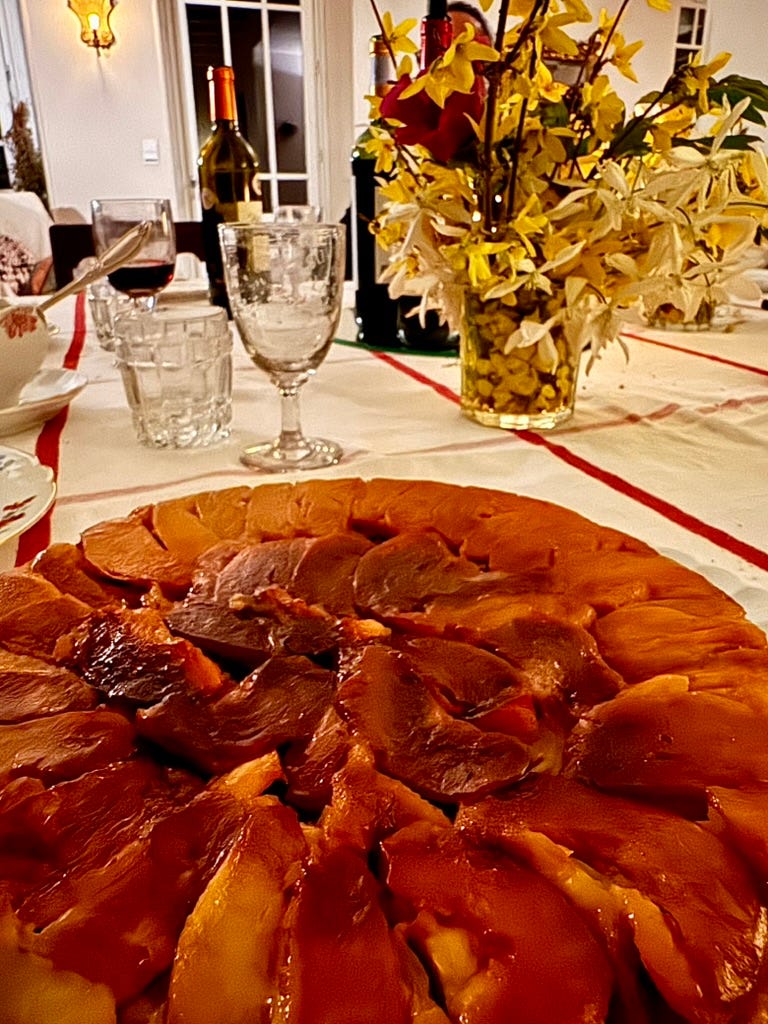
Dinner at Sophie’s is always an adventure! This time, she invited several French “débutants” and encouraged us to speak French. Malheureusement, the “poule au pot” evaded my photos.
Spring is stagiaire season. Across southwest France, high-school-aged kids fan out into restaurants, florists, and shops for their required job placements — earnest, a little awkward, learning their way around adult responsibilities. The small restaurants like Michael and Anna’s are thrilled to have the help, and there’s something genuinely lovely about watching people smile patiently as these kids find their footing. The town, in a way, becomes a gentle classroom.
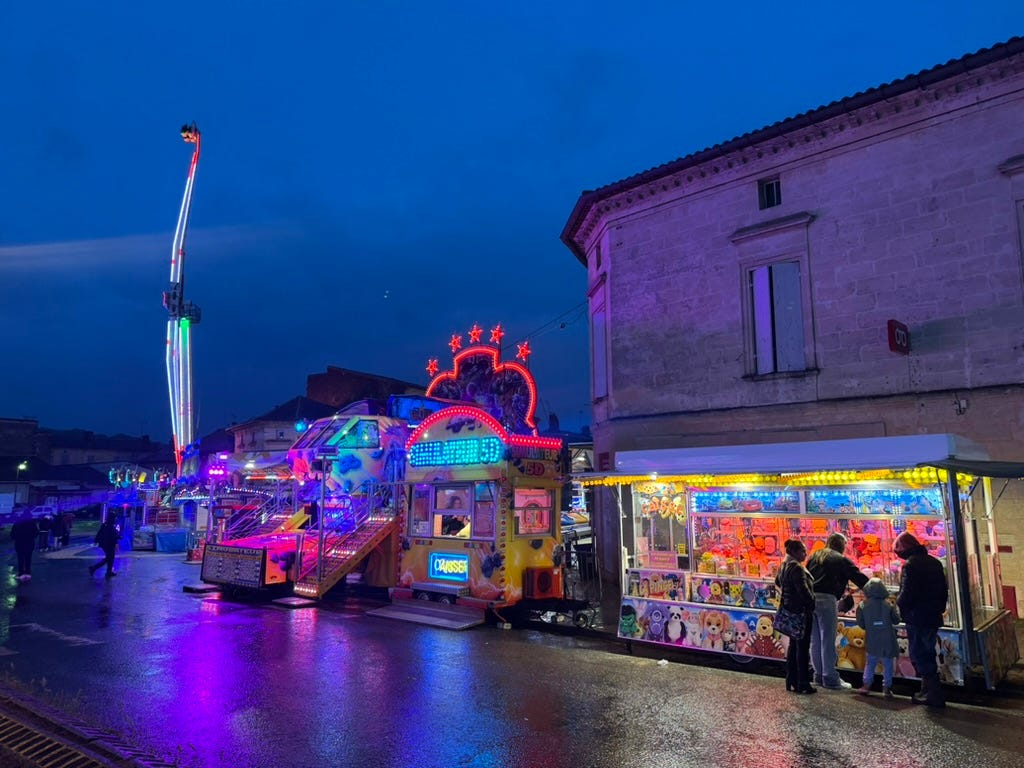
And then there’s the other seasonal arrival that transforms little Castillon-la-Bataille. The first spring in our new home, we’d spotted the signs announcing the dates of the annual Easter carnival. We just didn’t anticipate the scale of it, especially since the town’s Marché de Noël was small and rather contained. But for this, big rigs rumbled in, the carnies made camp down by the river, and their rides and stalls stretched 650 meters up the main road. This, I’ve since learned, is a beloved French Easter tradition — traveling fairs that pop up in villages and cities alike. Last year, I rode one of the spinning rides, full of bravado. The first half was genuinely thrilling. The second half — well, let’s just say I was grateful when it ended, and only a bowl of ramen noodles could fix the nauseated feeling in my stomach. Unfortunately, the rain kept most people away, but the carnies were a warm presence in our local restaurants, patient and good-humored, waiting like everyone else for a little sun. Not unlike the roses.
Now it’s time to trim them in all their forms. The climbing roses that seem to know no limit, the rose trees in large pots that flank the heavy doors of these magnificent Girondine homes, and, of course, the bushes. The gardener cuts off the dead canes and shapes them for the next year. They haven’t had much time to rest — the last flowers were still blooming in November, even December. But the leaves are already starting to emerge, subtly signaling the season ahead. It’s probably too early, but I plant a couple of perennials from the garden shop to fill a couple of empty spots in the garden. When I need to stretch my legs, I use a stick to twirl and fling the string algae that forms in the pond while the goldfish dart about. I keep a special eye out for our baby goldfish, a shocking surprise the first time I laid eyes on him. Or her. That little fish may be 1/50 the size of the others, but it’s got “main character energy” now, doing everything that the big fish do. I even spotted it eating fish food for the first time the other day. Everything here seems to be doing two things at once: finishing winter and beginning spring. I think I am too.
There’s a particular pleasure in living somewhere that makes you look forward to the next season while you’re still standing in this one. That’s early spring in southwest France. Everything is almost.
À la prochain,
Valérie
Introducing Contributor, Valerie Rivera:
Visit her Contributor Page — Explore more of Valerie’s work
MyFrenchLife™ – MaVieFrançaise® is a reader-supported publication. To receive new posts and support my work, consider becoming a free or paid subscriber.
What a lovely piece, Valerie. I really like how you go beyond usual themes, for example mentioning "stagiaire season" and the Easter fair. I've never heard much about the latter, but I suppose everything depends on the town, and perhaps the region.
What gorgeous writing, and I loved hearing about the expat life in your town. I moved to Paris from Berkeley nearly three years ago (I founded and led a large international literary festival there), and I've been been thinking about eventually moving elsewhere in France. But I'm not sure where. I've been longing to visit Montaigne's tower, which I see is quite near you, so perhaps I'll make it to your lovely town to check it out! Merci!