

Some call it the original French Riviera town.
Although gritty Hyères now represents anything but the cliché of the Côte d’Azur, the city was one of the area’s first winter tourism destinations, going back to the late 18th century when aristocratic English families started to escape hibernal gloom there.
From the town center, you can’t see the sea, and the nearest beach is an hour’s walk away. But no matter — this was an era when tans were considered unseemly and the point of a Mediterranean holiday was simply to soak in the clement climate.
As time went on, Nice, Cannes, and other seaside locales gained favor, leaving Hyères centre with an intriguing architectural heritage: its former palaces, or luxury hotels.
I set out to see what had become of them.
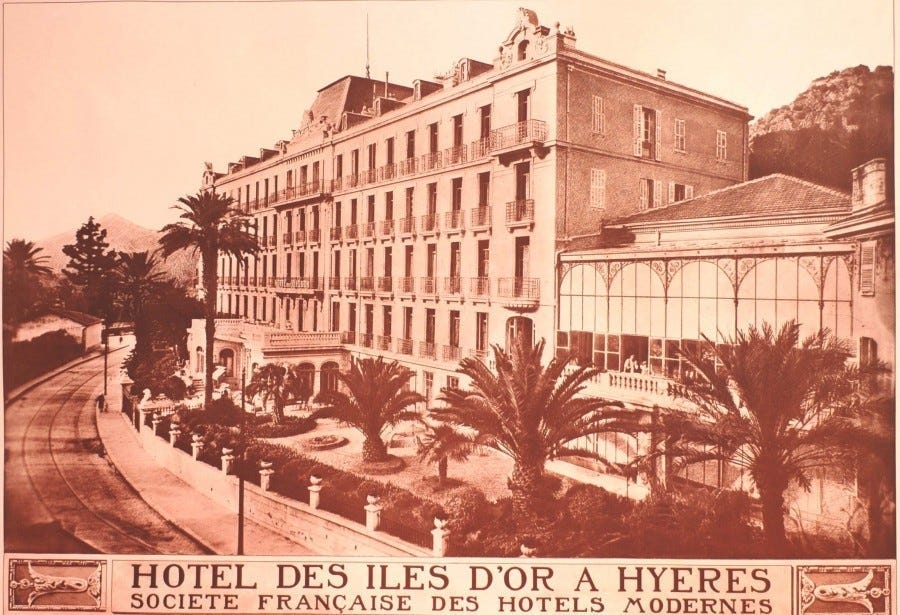
By the early 19th century, Hyères had developed a reputation as the uniquely beneficial Riviera spot for those suffering from a full range of maladies. P.N. Fellon, in his 1834 tourist guide to the city, goes so far as to blame a French nobleman’s death on “distancing himself from Hyères”.
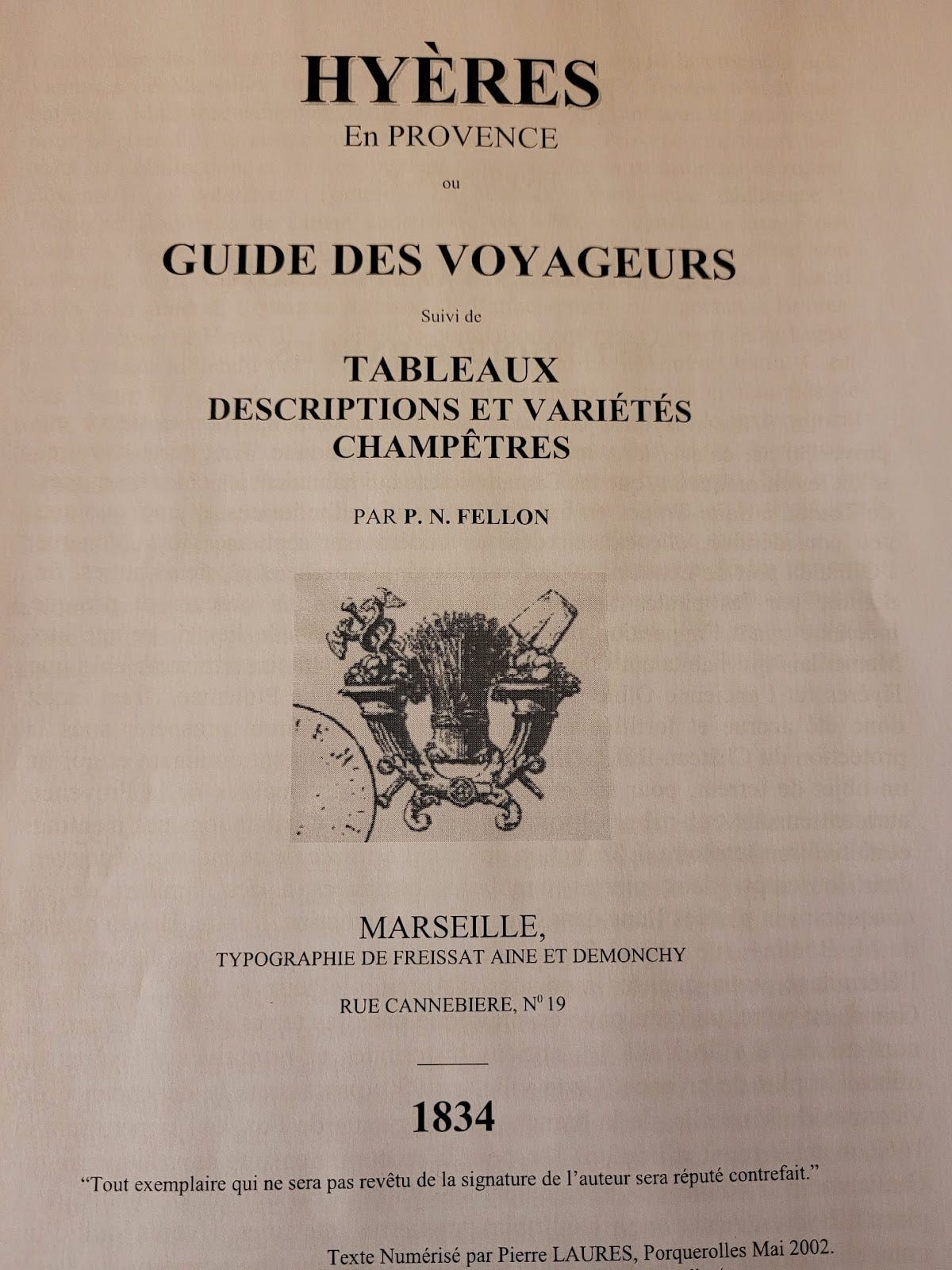
Fellon offers a detailed glimpse into the early days of Côte d’Azur tourism. At the time, guests stayed primarily in private homes — a type of precursor to Airbnb. He lists 20 of them, lacking addresses of any sort. Check out a taste of pre-guidebook, pre-Googlemaps directions:
Entrance five minutes from the place des Récollets, on the little street at the end of the eastern side. Mme Garagnon, owner.
At the time, Hyères had only two hotels, but that would soon change with…
Le Grand Hôtel des Iles d’Or
The most famous of the city’s palaces, Le Grand Hôtel des Iles d’Or, represented a major innovation in the world of hôtellerie. Built in 1850, it was conceived as “a town within a town”: the 100-room complex included three gardens, a chapel, a library, and a 200-seat dining room. By the mid-1880s, nearly half of the city’s hotel guests were staying there, leaving its two competitors as has-beens.
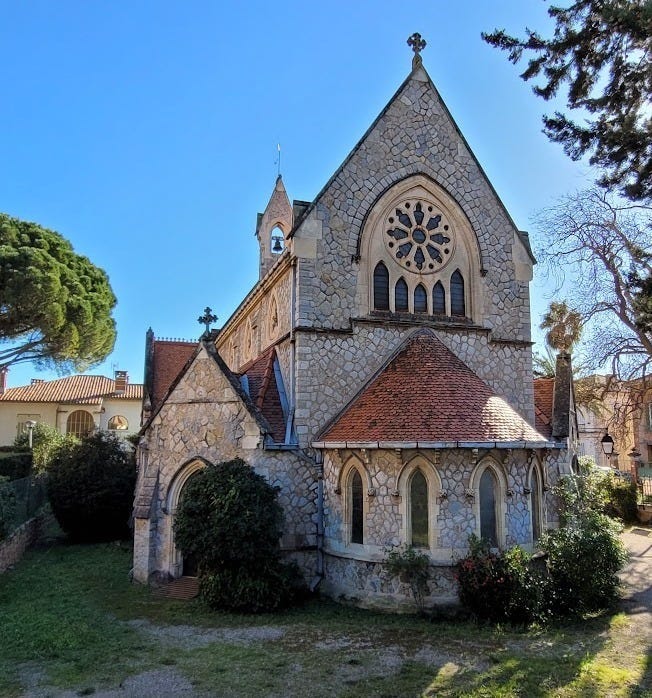
The surrounding neighborhood, known as “the English quarter,” catered to these guests with tea rooms and French language classes, as well as the construction of an Anglican church in 1885, now a municipal cultural center.
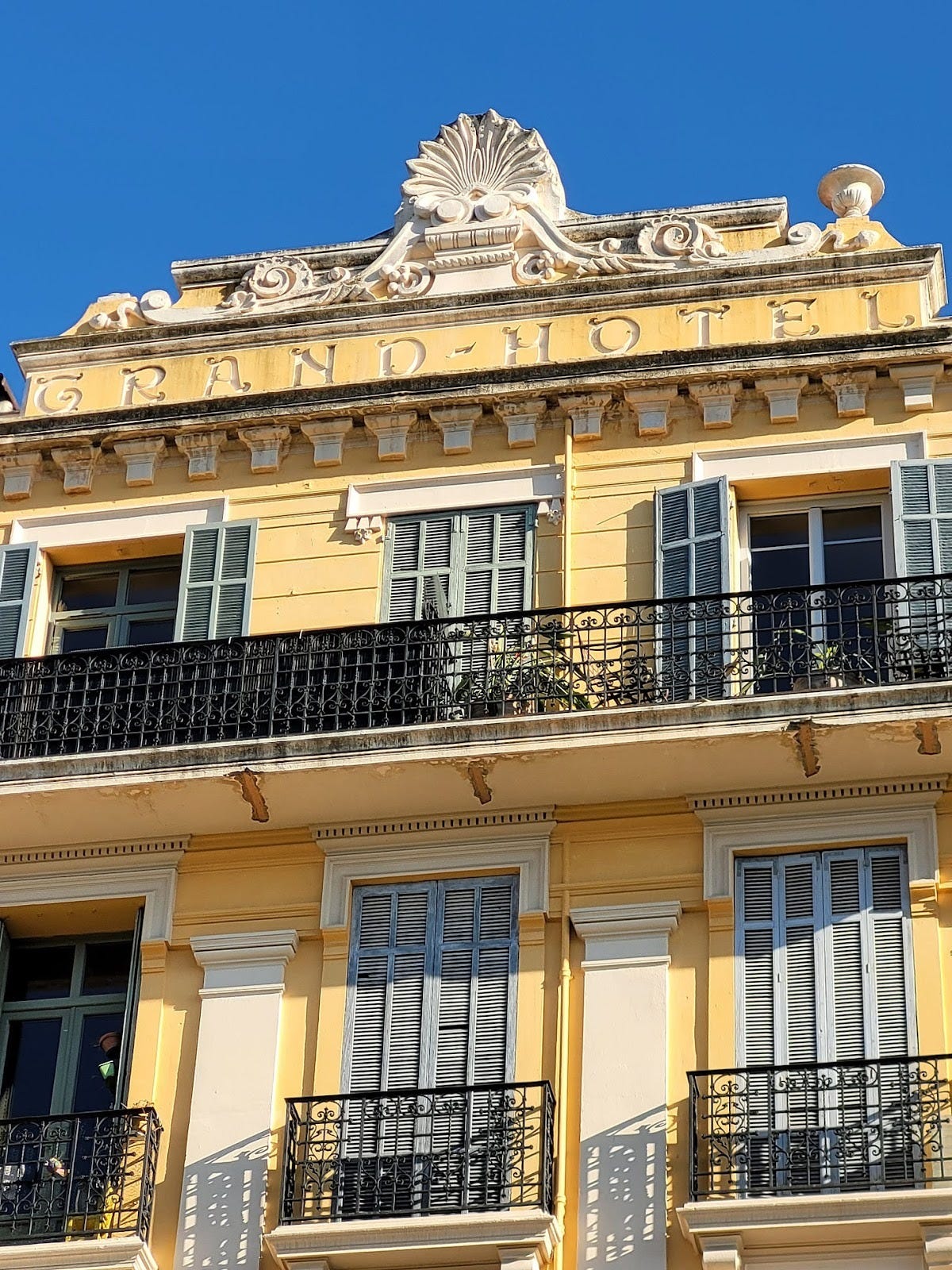
In the 20th century, world wars and a general decline in winter tourism nibbled away at the economic viability of the truly grand Grand Hôtel des Iles d’Or, which was transformed into an apartment complex in 1950. Sadly — well, I think it’s sad — all of the hotel’s original elements disappeared in the shuffle.
An impressive edifice remains, divided into buildings A, B, and C. It may be a nice place to live, but the past luxury has definitely faded.
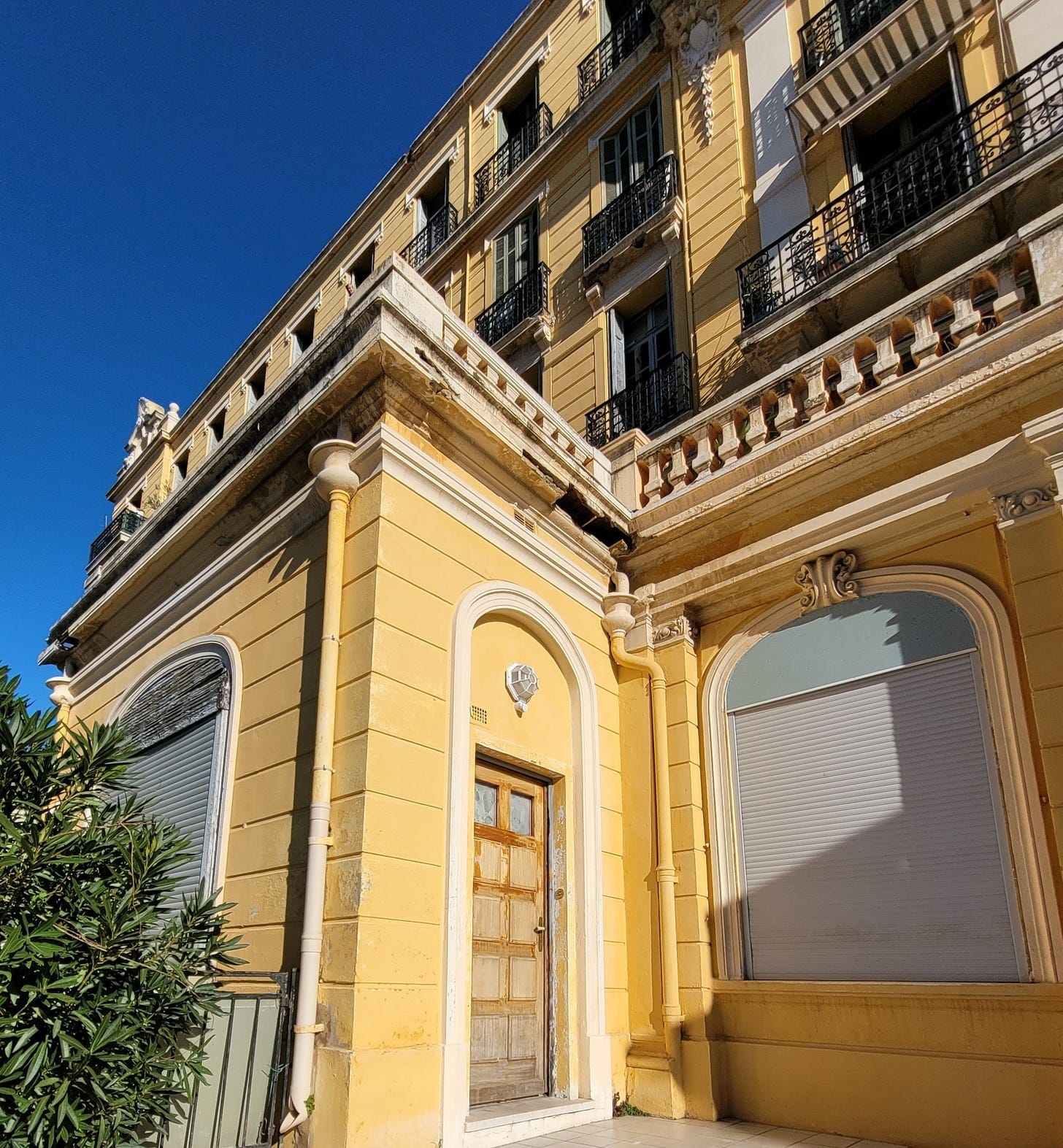
And only close observation will clearly reveal the identity of this former “palace to be.”
Le Grand Hôtel des Palmiers
French high schools tend to resemble prisons, but not Le Lycée Jean-Aicard , built in another palace, Le Grand Hôtel des Palmiers.
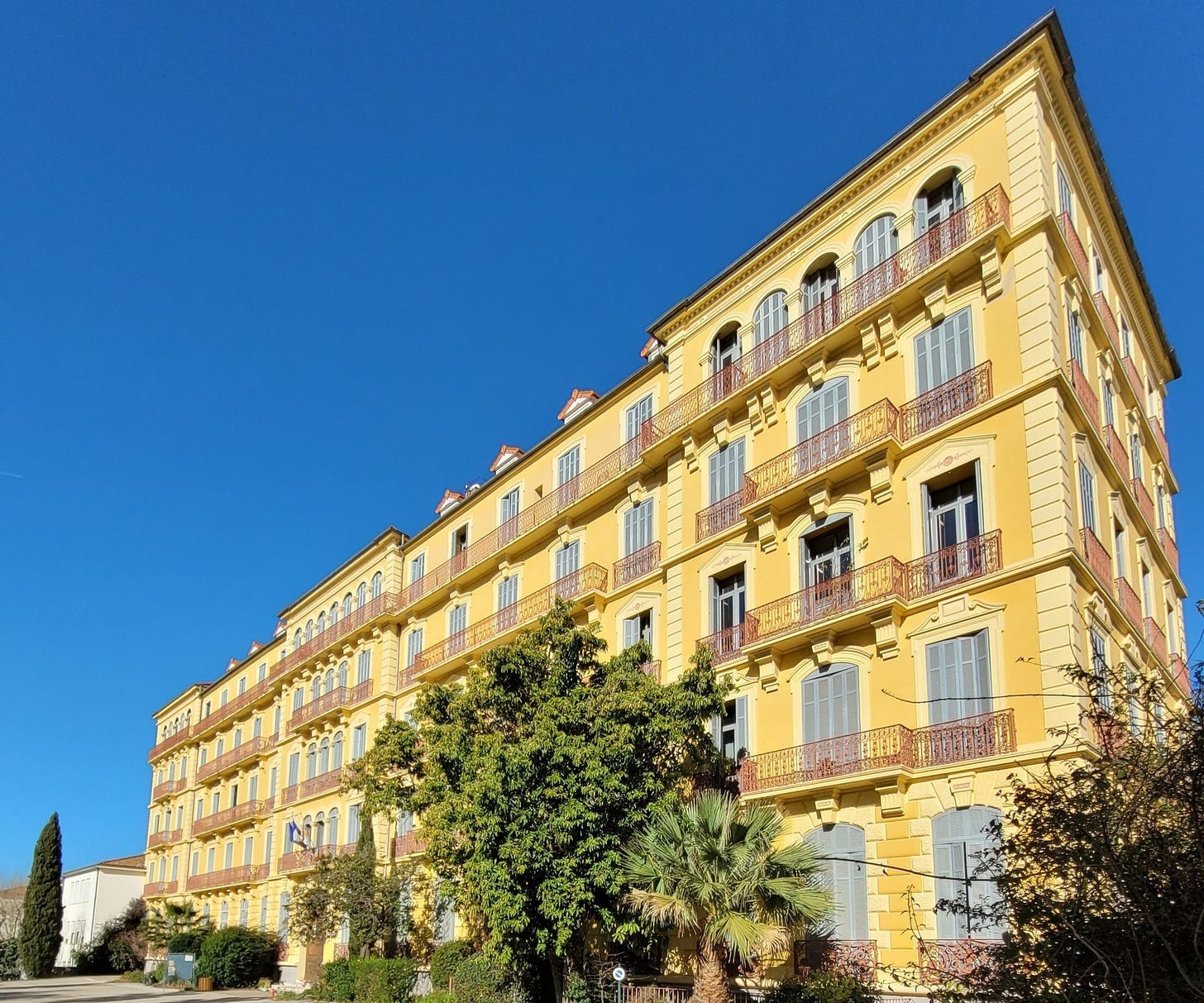
Les Palmiers enjoyed a shorter period of glory. Built in 1884 as the Hyères winter tourism boom was in full swing, it featured a huge ballroom that hosted grandiose events open to the general public. But by 1930 it was already suffering from the luxury travel crisis. Purchased by the city in 1939, it was repurposed as a secondary school fourteen years later.
It must be a great place to take those daunting French philosophy classes.
A personal hotel note
Following modern tastes, the city’s luxury hotels, and for that matter, nearly all of its hotels, are now found near the beaches because…well, it’s the Riviera, baby.
I was determined to stay in the heart of the city, far from any sand. Pickings were slim. Fortunately, I found — and loved — Lilou, a freshly renovated hotel that seems determined to bring back a bit of class to the downtown hotel scene.
I hope they succeed.
DISCLAIMER: I have no affiliation with nor receive any benefits from hotels or restaurants mentioned in my publications.
For more information
You can find two other articles about Hyères on my Substack publication France in Between:
SOURCES
Archives départementales du Var
Inventaire général du Patrimoine Culturel “Ma Région Sud”
Image credits: all images copyright Betty Carlson / author
Introducing Contributor Betty Carlson
Visit her Contributor Page — Explore more of Betty’s work
Thanks for reading MyFrenchLife™ – MaVieFrançaise®! This post is public, so feel free to share it.
At least the old hotels were not left to decline like some of the hotels in Ireland.
Sounds like some old seaside resorts in the UK.