
The Pulse of the Twelfth: Finding the Real Paris at Marché d’Aligre
Beyond the manicured gardens and limestone facades lies an untamed sanctuary, populated by raucous street vendors, dusty treasures, and the timeless ritual of the French morning.


I was born and raised in Reims, a city of chalky soil and the shadow of its cathedral, where time flows with a quiet, unchanging dignity. My teenage summers, on the other hand, were spent beneath the vast, arid horizons of New Mexico, visiting family. This double life — half rooted in the traditions of Champagne, half exposed to the boundless freedom of the desert — nurtured an insatiable curiosity within me. Today, though Reims remains my home, I feel an irresistible pull toward Paris several times a month. I approach these day trips and occasional weekends as a hunt for fleeting moments, searching for the city’s “seams” — those places where the polished façade of the “museum-city” ends and authentic, unvarnished life begins. I found these seams in the 12th arrondissement, at the Aligre market.
Paris is often frozen in lace and stone, but Aligre is frozen in breath, shouts, and the scent of damp earth. Getting off the train from Reims and walking here on a Tuesday morning is to enter a centuries-old ritual that refuses to be gentrified.
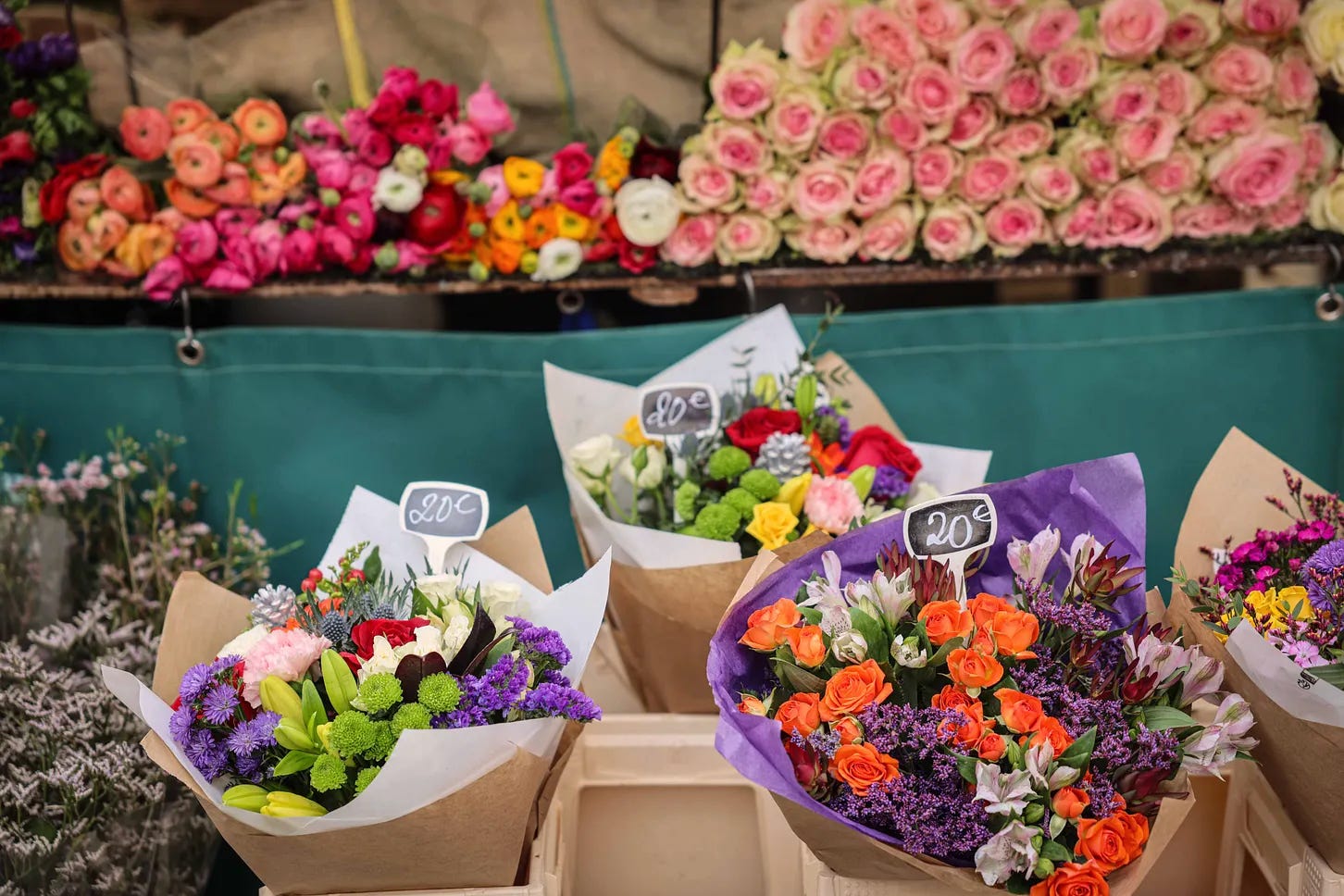
The market has a triple identity, a chaotic symphony of three distinct spaces. On Rue d’Aligre, the open-air fruit and vegetable stalls form the “beating heart.” Here, the air is thick with shouts — the melodious, rhythmic intonations of the vendors, which sound more like an ancestral chant than a sales pitch. “One euro a kilo! Take advantage, ladies!” It’s a mosaic of changing seasons: the pale, ghostly white asparagus of the Landes region in April, followed by mountains of Reinette apples when the October light turns golden.
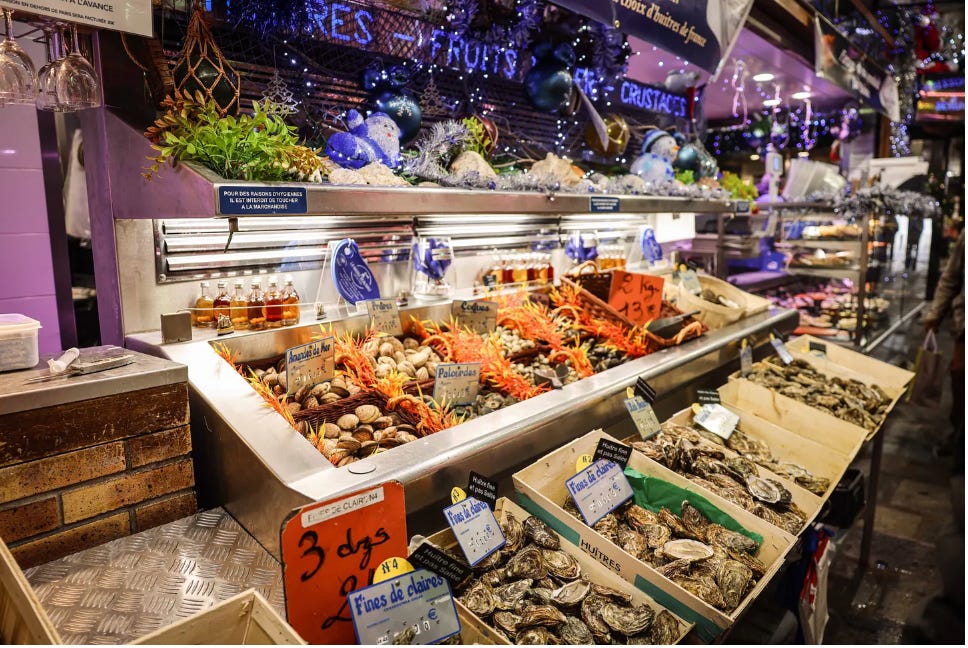
In stark contrast to the outside hubbub, entering the Halle Beauvau feels like stepping into a cathedral. Built in 1843, its magnificent wooden frame evokes the hull of an upturned ship, sheltering a very different kind of devotion. Inside, the atmosphere is upscale — refined, yet with the discreet seriousness characteristic of true gastronomy. It is here that cheesemakers treat a mature Comté with the reverence of a sacred relic, and the air is fragrant with truffle oil and the scent of damp stone.


Then, in the centre of the square, the ambiance shifts again, leading to the flea market. Here, there’s no antique hunting like in the chic neighbourhoods. It’s a veritable flea market, an open-air cellar. On an ordinary morning, under a clear blue sky, you might unearth a stack of old issues of French Vogue from the 1960s or a tarnished silver teapot that has survived three republics. The vendors are old-school Parisians, often with a cigarette dangling from their lips, observing the world with a calculated indifference that only true locals know how to master.


To experience Aligre like a true Parisian, you have to understand that the market is just the starting point for a convivial morning. It all begins at Café Aouba, a legendary coffee roaster where there are no luxurious sofas. You sip your espresso standing at the counter, surrounded by burlap sacks filled with coffee beans, soothed by the morning buzz.
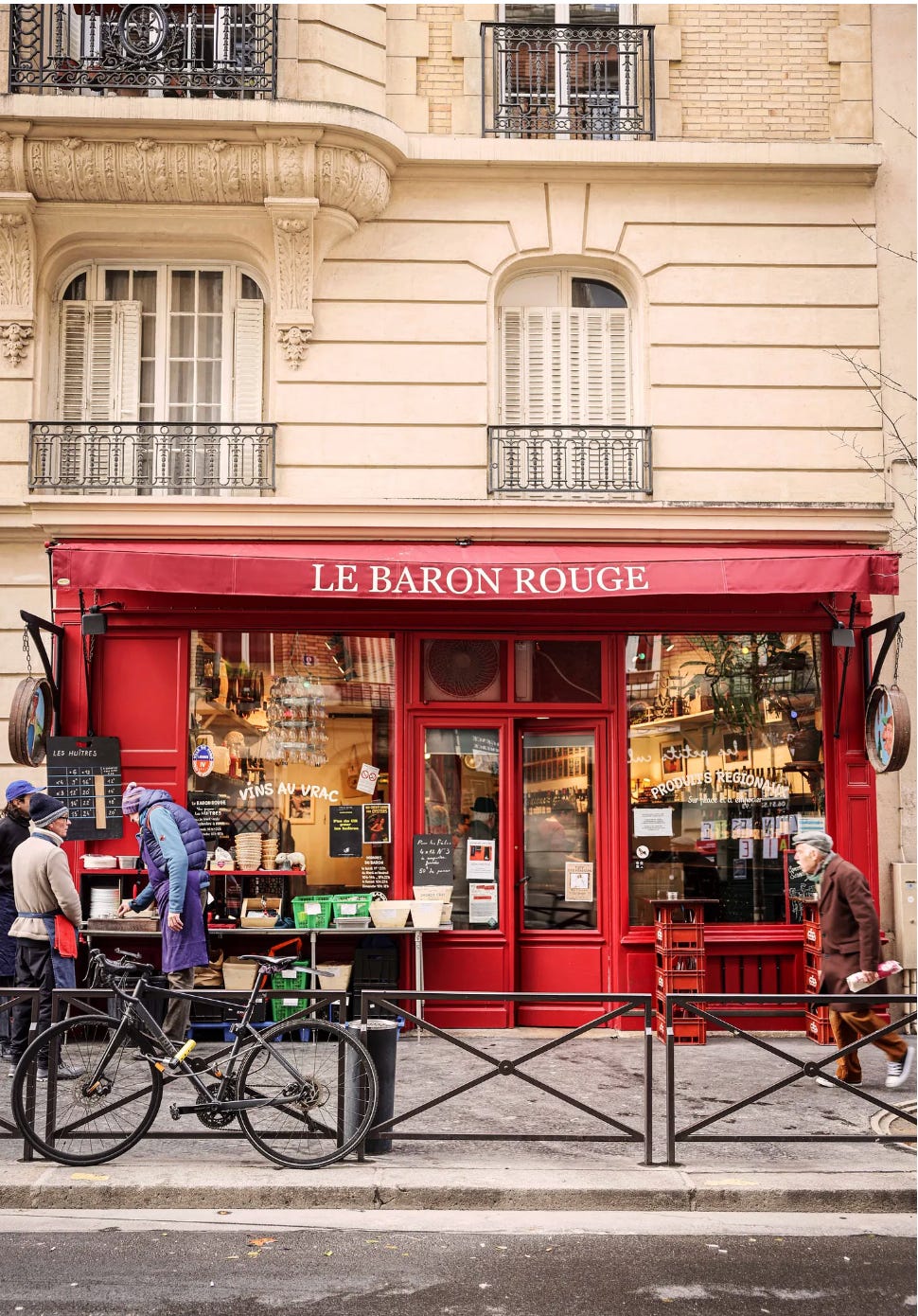
Mid-morning, head to Le Baron Rouge. This wine bar is an institution, synonymous with simplicity. During the cooler months, crates of fresh oysters are displayed on the sidewalk. You buy a plate of six, a glass of chilled Muscadet, and eat standing up, perched on a barrel that serves as a table. Inside, the walls are lined with barrels from floor to ceiling. I often see locals bringing their own empty glass bottles to be filled directly from the tap — a practice that is both revolutionary and age-old. It’s crowded, noisy, and profoundly human.
What strikes me most about Aligre is that this neighbourhood embodies a French habit that many observers note without truly understanding it: the necessity of a neighbourhood’s soul. In a city increasingly shaping itself for the international stage, Aligre remains stubbornly multicultural and fiercely rooted in its local traditions. You can enjoy mint tea and a honey pastry in a North African bakery just steps from a Michelin-starred bistro that uses the freshest market produce.
The rules of etiquette are strict, but unspoken. You quickly learn that “Bonjour” isn’t just a simple greeting; it’s a prerequisite. You learn to touch with your eyes, not your hands, letting the vendor choose the peach as if it were a shared secret.
The true strength of this place lies neither in its history nor its architecture, but in its resistance to change. It’s a living, breathing fabric, imbued with aromatic herbs and old paper for a century. When the morning breeze rises, and the vendors begin to pack up their wares, you sense the city’s true strength.
It resides in the grandmother, her coat damp with rain and lavender, discussing with lively, witty passion the price and quality of her leeks. Right next to her, a young computer programmer, headphones on, waits his turn to buy a bottle of organic cider. In that moment, the divide between generations and social classes vanishes. They resonate in unison, two Parisians united by the simple, almost sacred act of choosing their dinner from the bounty of the earth. This image — this glance exchanged over a crate of vegetables — is the real Paris. No museum could ever capture it.
Do you have a favourite market in Paris — or anywhere in France — that feels like the real city to you? Tell me in the comments.
Marché d’Aligre
When to go:
The market runs every morning except Monday, from 7:30 AM to 1:30 PM. For the best atmosphere, aim for 11:00 AM on a weekday.
The stops:
Café Aouba: 30 Rue d’Aligre. Stand at the bar for the authentic experience.
Le Baron Rouge: 1 Rue Théophile Roussel. Essential for oysters and wine by the barrel.
Halle Beauvau: The covered market for high-end cheese, charcuterie, and poultry.
The Brocante: Held daily on the Place d’Aligre.
Etiquette tip:
Always bring your own tote bag (cabas). In Aligre, a rolling basket is a badge of honour, not a sign of age.
Introducing Contributor, Elisabeth Perotin
Immerse yourself in her work on her Contributor Page here→
Thanks for reading MyFrenchLife™ – MaVieFrançaise®! This post is public so feel free to share it.
MyFrenchLife™ – MaVieFrançaise® is a reader-supported publication. To receive new posts and support my work, consider becoming a free or paid subscriber.