The Rebel Who Became a Muse: How a Runaway from France’s Most Notorious Project Shaped Paris Fashion
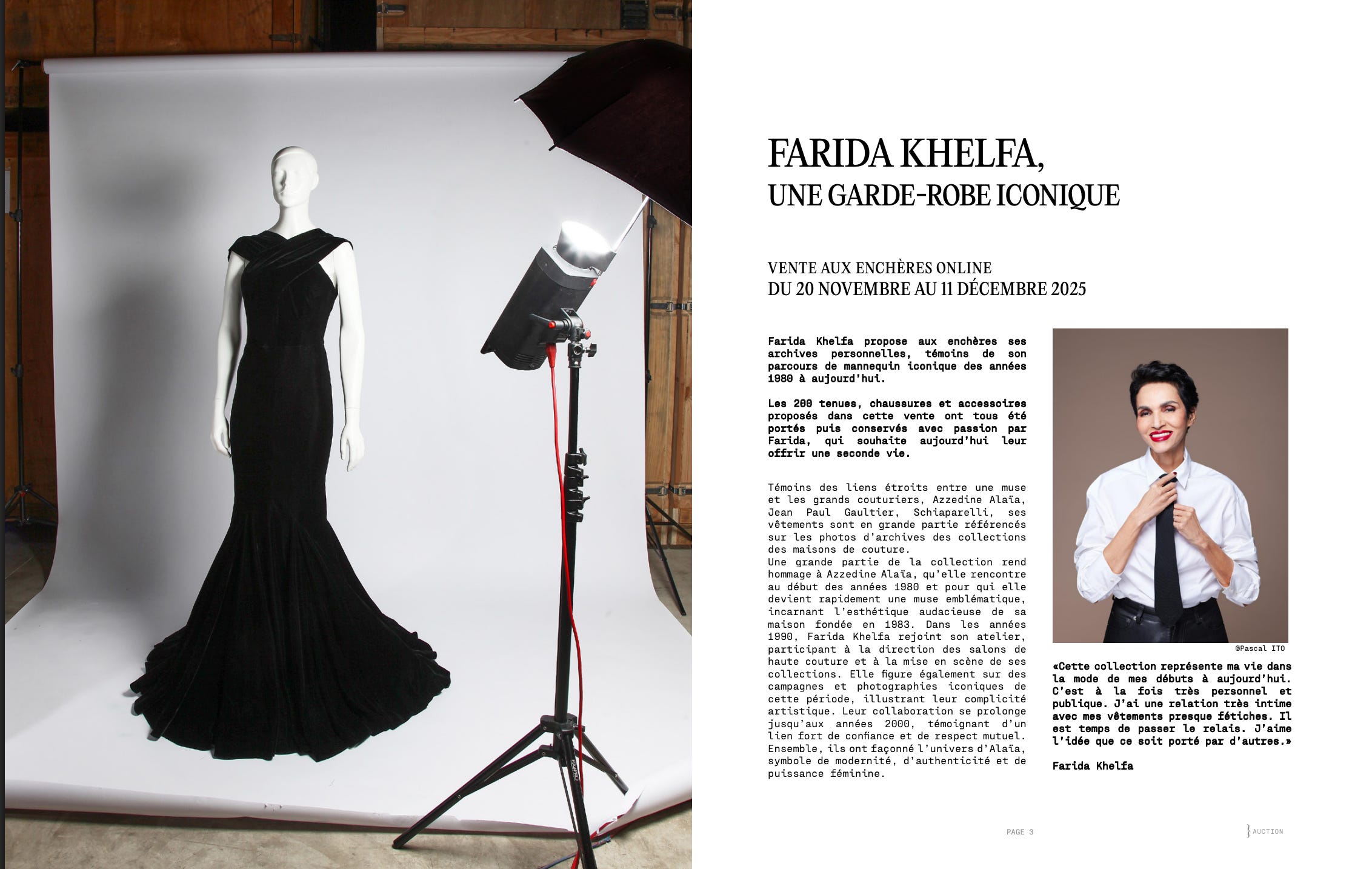
She fled Les Minguettes with nothing at sixteen. Late in 2025, Farida Khelfa closed an auction of 200 pieces of fashion history—and gave half the proceeds to refugees.

I need to tell you about something extraordinary that I found out about late last year. You know how sometimes a story grabs you and won’t let go? This is one of those.
On 11 December, a fashion auction closed in Paris.
Model and muse Farida Khelfa sold off her entire archive—200 pieces spanning 40 years, including 92 Alaïa pieces. Museums had been circling. Collectors were salivating. But here’s what made me sit up straight: she donated half the proceeds to the RIACE Fund, which helps refugees and unaccompanied minors.
Why does that matter? Because in 1976, at sixteen, Farida ran away from her traditional Muslim home in suburban Lyon and hitchhiked to Paris with absolutely nothing.
The place she fled? Les Minguettes in Vénissieux, which would become ground zero for France’s first large-scale suburban riots. It was the first place where cars were burned in protest in France. That neighbourhood launched the 1983 March for Equality and Against Racism, where over 100,000 people marched through Paris demanding dignity.
But by then, Farida was already on the runways.

Lightning Strikes
When Farida arrived in Paris, a fifteen-year-old named Christian Louboutin invited her to live with him and his mother. Yes, that Christian Louboutin. She fell in with the crowd at Le Palace—Paris’s answer to Studio 54—where she ran the door, deciding who was cool enough to enter.
One night, Jean Paul Gaultier met her. He later recalled: “It was as if a lightning bolt had struck us. Instant love.”
Here’s what kills me: Farida didn’t just model his clothes—she literally was the inspiration. Her style—ski pants with high heels, American Marines jackets, massive earrings—became Gaultier’s aesthetic. When he put her in his first show, he told her to walk like she was on the street. So she did. Chewing gum. Looking like the badass she was.
Gaultier described her as having “long, black curly hair, puffed up on top, like a banana, her relaxed gait and her Algerian heritage”—she reflected the new diversity in French fashion. One journalist wrote that she walked casually down the runway chewing gum, and it was audacious, shocking, utterly modern.
Years later, travelling with Gaultier to Japan for a show, she laughed, discovering every model had been made up to look like her.