

Throughout last summer, the French tourism industry was taking stock of how la saison was shaping up…or down, in the case of the French restaurant business.
The previous year, industry news had been dominated by recruitment difficulties and trouble housing summer hospitality workers.
In 2025, the problem wasn’t so much finding restaurant staff as keeping them busy. And restaurant owners’ tempers started to rise to a slow boil.
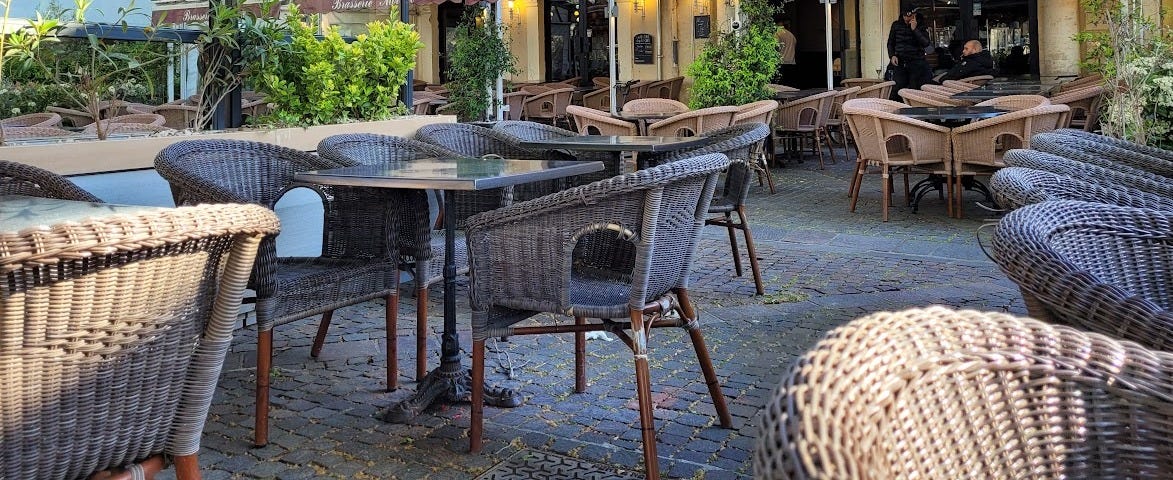
A problem years in the making
As everywhere, French restaurants suffered during the COVID period. Then, inflation started to nibble away at clients’ budgets, as well as drive up operators’ expenses. Meanwhile, non-traditional eateries are on the increase, giving diners myriad cheaper options, including:
Major fast food chains: McDonald’s is pursuing an aggressive plan of moving into towns with populations under 5,000,1 with a stated longer-term goal of being within a 20-minute reach of every French citizen. 2 And Burger King, which left the French market in 1997, came charging back in 2016, and now operates over 600 franchises. 3
Local fast food joints: independent restaurants selling kebabs, French tacos, and Asian take-out have increased since a slight post-Covid dip.4
Bakeries: the majority of boulangeries, especially outside of big city centers, have vastly expanded their meal choices, proffering fancy sandwiches, salads, and even traditional hot dishes. Some, such as the attractive Feuillette, are playing hardball in the café/restaurant field.
Food trucks, food courts, and at-home delivery are also on the rise
Finally, Airbnb and similar self-catering lodgings give tourists a place to cook or comfortably chow down on take-out, rather than actually going out.
Summer 2025: un été très compliqué
In a seemingly endless news cycle, the national and local press confirmed a bleak picture for restaurateurs: tourists were touring, but they weren’t dining out. And when they were, they often eschewed the main margin-makers: starters, drinks, and desserts.
It’s to the point that tourists are sharing ice creams and main dishes” complained one restaurant owner5— a practice that was grimly frowned upon, if not firmly refused, in the recent past.
Simmering anger
According to the president of the national hotel and restaurant association (UMIH), Michelin-starred chef Thierry Marx, customers “feel betrayed” by rising prices. But he explains that soaring raw material, personnel, and overhead costs have left restaurants with little choice but to hike up l’addition. At the same time, he gives a stark warning of a possible dégastronimisation of the country.6
Besides costs, other pesky factors were getting under restaurant owners’ summer skin:
Marchés nocturnes
France’s calendar of warm weather goings-on has filled up over the years with a plethora of open-to-the-public outdoor meals. One of the most popular formats is the trademarked Marché des Producteurs de Pays, sponsored by Chambers of Agriculture and featuring farm-to-table food. This one in Ayen, Corrèze was drawing 1000 diners every Thursday in the summer of 2015.
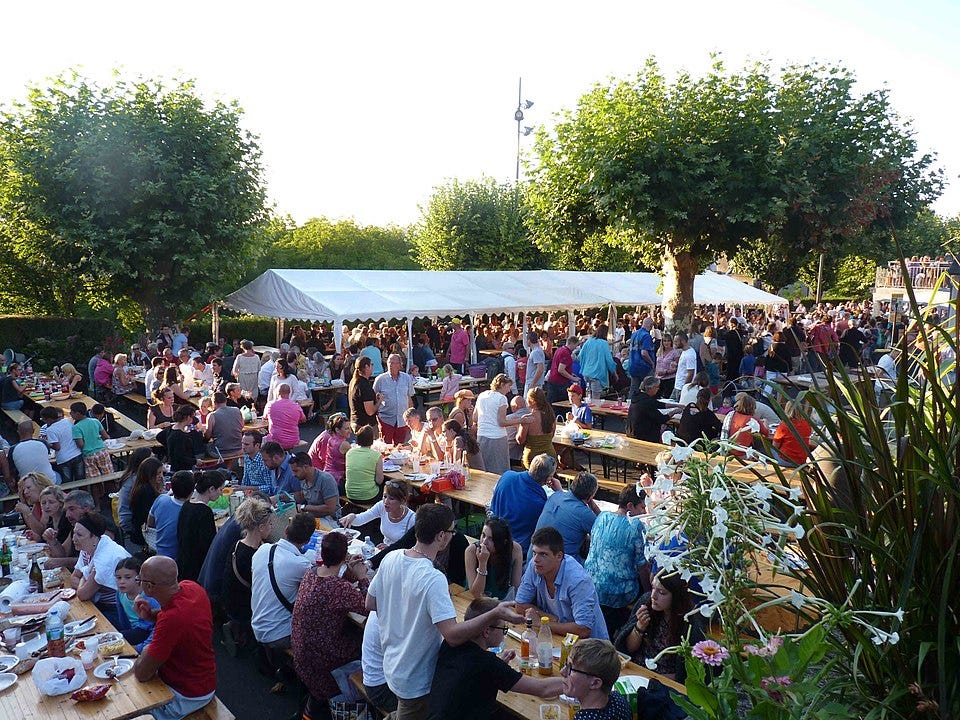
Here, tourists and locals pick up their own picnic fixings, or tuck into ready-made dishes concocted by local farmers.
Inspired by the success of this strictly chartered format, less stringently regulated marchés gourmands have sprung up, catered by standard food trucks and by local associations allowed to fill their coffers this way, possibly to make up for reduced government subsidies.7
These markets are festive, friendly, and fun — but restaurants have cried foul.
The president of the UMIH in Lot-et-Garonne, Occitanie, supported by his national hierarchy, has called the markets’ proliferation “unfair competition,” and urges local politicians to exert more control over them. 8
He has a point: 396 marchés gourmands took place in the Lot-et-Garonne department alone (population +/- 330,000) in July and August 2025 — an average of 6.5 every night.
Les titres-restaurant
Formerly known as tickets restaurant, these vouchers are a perk that many French employees buy into. Workers in companies that don’t provide a cafeteria can choose to contribute a certain monthly amount to the scheme, and the employer matches it.
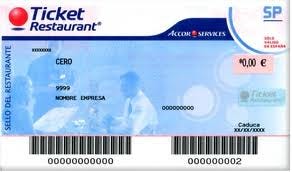
While using the vouchers outside of workweek lunch breaks has long been widely tolerated, the vouchers do clearly say restaurant. But during the COVID period, their use was extended to supermarkets, under what was supposed to be a temporary exception.
Much to the dismay of the restaurant industry, the government decided last June to continue this “exception”…indefinitely.9
Are the times a-changin’ ?
While inflation and competition are certainly factors in the French restaurant crisis, an eternal truth may also be at work: times change.
Before la nouvelle cuisine hit the scene in the 1970s, a typical festive meal out might have included a soup and several starters, a fish course and a meat course, cheese, an entremets (often a lighter dessert), then one or more other desserts.
But by the late 20th century, the starter/main dish/cheese/dessert format had largely taken over, with cheese often left off of restaurant meals. 10
These days, I’ve definitely observed that diners don’t hesitate to share a planche de charcuterie and call it dinner, or content themselves with a starter as a main course —and not always for budgetary reasons.
Especially in big cities, trendy, decidedly non-traditional eateries offer up small plates, light meals, and variations of tapas, leading to quicker table turnover for the restaurant and offering customers a relaxed, budget-friendly experience. And employees are now less prone to spending their long lunch break à table. 11
It could just be a gut feeling, but I’m afraid many traditional French dining establishments will need to do some adapting, or they could be serving their last courses.
Betty
Have you noticed this trend? Share your thoughts in the comments below.
Sources and Further Reading below and on France in Between
1 “Leur but, devenir le café du village” : on vous explique la stratégie de McDonald’s pour séduire la France rurale France 3 Nouvelle Aquitaine, December 22, 2025
3 Déjà 600 restaurants en France pour l’enseigne Burger King Franchise Magazine, November 19, 2025
4 French Tacos, Kebab et Asie, les gagnants de la restauration rapide indépendante Snacking, June 18, 2024
5 “Les touristes en sont à se partager les plats et les glaces”… le pouvoir d’achat en berne, les professionnels font grise mine - Midi Libre, August 7, 2025
6 Restauration : Thierry Marx alerte sur «un risque de dégastronomisation de la France» - Le Figaro, August 12, 2025
7 L’Hôtellerie Restauration n° 3847, July 10, 2025
9 Les titres-restaurant resteront utilisables pour faire ses courses alimentaires au supermarché, annonce le gouvernement Le Monde, June 18, 2025
10 Excluding Michelin-star style gastronomical restaurants, where one is still served a larger number of courses
11 From bon appetit to Uber Eats: why France’s beloved restaurants are in crisis, Paul Taylor, The Guardian, January 2, 2026
Introducing Contributor Betty Carlson
Visit her Contributor Page — Explore more of Betty’s work
We love eating out and searching for restaurants that attract people like us who, with friends or family, like to raise their glasses to the enjoyment of life.
Betty, I just read your article again, and I kept thinking of quiet evenings in small French bistros, the clatter of cutlery, the slow unfolding of meals—the rituals that make dining here feel almost sacred. In France, these changes (that may be happening elsewhere in some way) feel especially powerful because of how deeply tradition and ritual are woven into eating. I really feel for the restaurateurs navigating this, and I keep wondering where we’ll go from here.
Jx