

Before I left England for my first visit to France, no one explained the bise, and even if they had, I might have brushed it off with typical Yorkshire terseness. We were always dismissive of public displays of affection. So, when this enthusiastic Boy Scout set off, I carried the suspicious, paternal warning that the French “do that kissing thing.” Without guidance, it was as if I had been handed a French language primer and told, “you’ll soon pick it up.” I have not fully picked it up (yet). I can still get slightly terse when someone launches a face toward me with an unpredictable bise expectation.
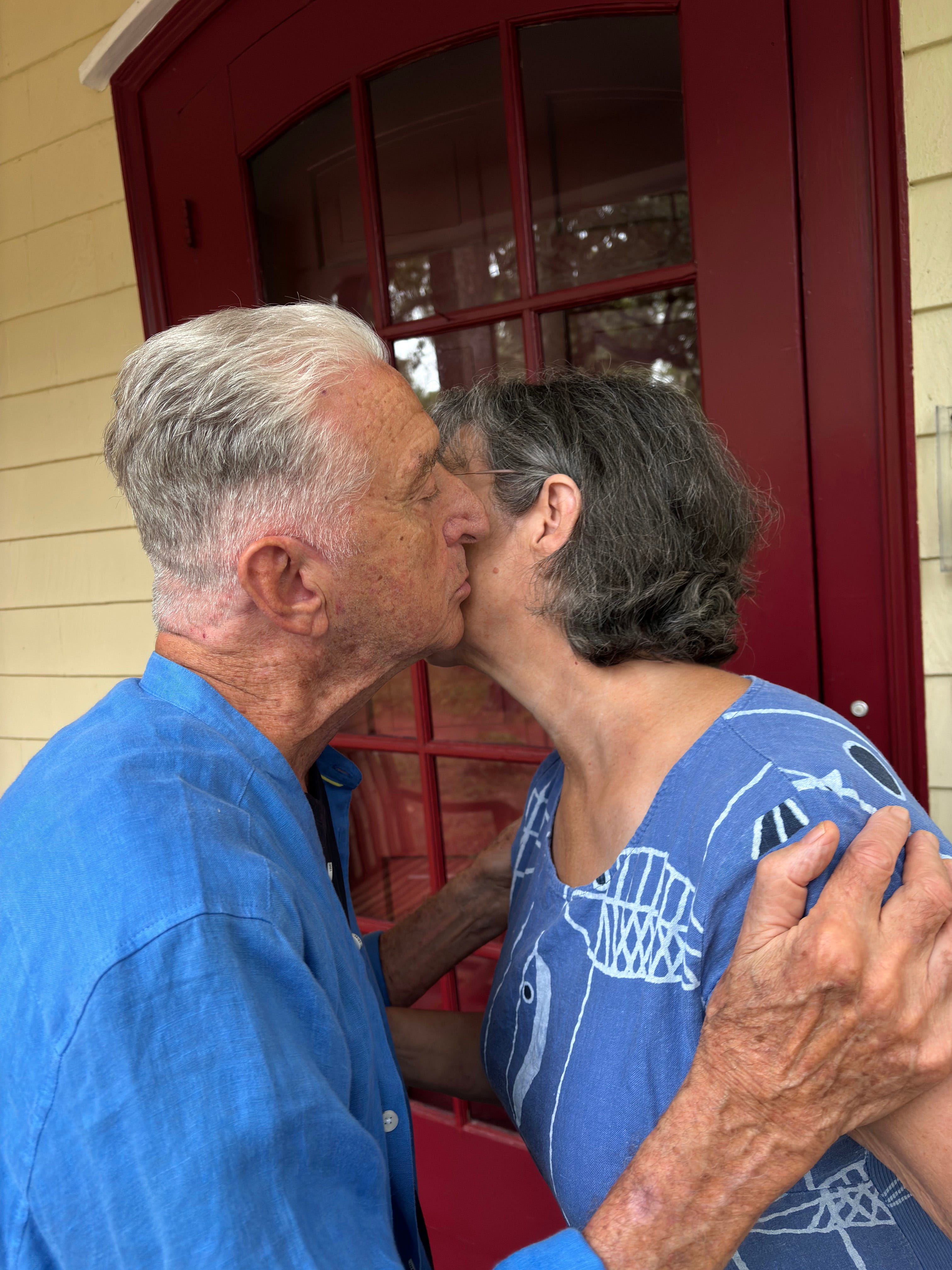
Before I left England for my first visit to France, no one explained the bise, and even if they had, I might have brushed it off with typical Yorkshire terseness. We were always dismissive of public displays of affection. So, when this enthusiastic Boy Scout set off, I carried the suspicious, paternal warning that the French “do that kissing thing.” Without guidance, it was as if I had been handed a French language primer and told, “you’ll soon pick it up.” I have not fully picked it up (yet). I can still get slightly terse when someone launches a face toward me with an unpredictable bise expectation.
I forgive myself because that swift bise carries a lot of terse potential! The sheer number of variables can seem formidable beneath its air of effortless charm. For example, how many kisses are in a bise? There is no universal answer. France is not a one-bise-fits-all nation. I am not entirely clear about who does what and where, as no one clarification fits all. But according to my randomly selected source, there are distinct regional trends with predictable traits. Roughly, south of a line running from Bordeaux to Nancy, two kisses will do. Head into Brittany, though, and the count drops to a single, almost curt peck. Venture toward Montpellier or into the compact cluster of departments around the Massif Central (Ardèche, Aveyron, Cantal, Lozère) and a third kiss is customary. Push north, into the swath of departments running from Normandy up to the Belgian border, and you are obliged to deliver four in a regime so committed to its own protocols that visitors from the lesser-kiss regions admit to chaos at a simple wedding. And should you find yourself in Corsica, I have heard that a meaningful minority of that assertive population regards even four as insufficient and are reputed to go to five, which to me would be a formidable endurance test.
In the absence of an Académie de la Bise, confusion runs deep. Unregulated, the French are unable to settle it through tradition, pride or shame. In 2007, a crowdsourced website invited citizens to vote on their own local customs. Easy elegance was reduced to self-reported spreadsheet data, which resulted in an interactive map, combiendebises.com, where there is no consensus. Stumbling on the local bise custom is much like finding a step is missing on a staircase: midway there.
And there remains the unfathomable matter of which cheek first, where variation is normal. But that detail does not deter the confidence of everyone else in the room. They do not pause. They do not calculate. They glide from cheek to cheek with the unthinking fluency of people sharing their phone numbers, while I stand there, running a small, desperate computer program in my head: left cheek or right? Two or three kisses? Dare I choose? I am going to lean in with my right cheek forward! Do I make a kissy sound? But by the time the inner algorithm spills out a decision, the greeting face has closed in, touched and is gone, unnoticed by anyone but me.
Furthermore, there is always a de plus in France. The bise does not happen in isolation. It belongs to a wider etiquette of handshakes, hugs and eye contact. But that, as they say, is another story.
I haven’t mastered the bise and attendant conventions as much as I have surrendered to them, the way I surrender to using my computer: not by understanding it, but by simply doing the next thing. I remind myself that Faire la Bise is a simple act of welcome. But what will happen at my friend’s family reunion, for example, when people from different regions lean in expectantly? Which cheek? Do I cheek-brush, lip-peck, or pucker my mouth? Will there be hugs? How do they figure it all out? But I have stopped wondering. I let strangers steer toward my face and assume they will telepath the rest. I even accept that I will occasionally collide with someone’s nose. And will never ask if this is also part of French normality.
Richard
Introducing Richard Holdsworth:
Visit his Contributor Page — Explore more of Richard’s work