

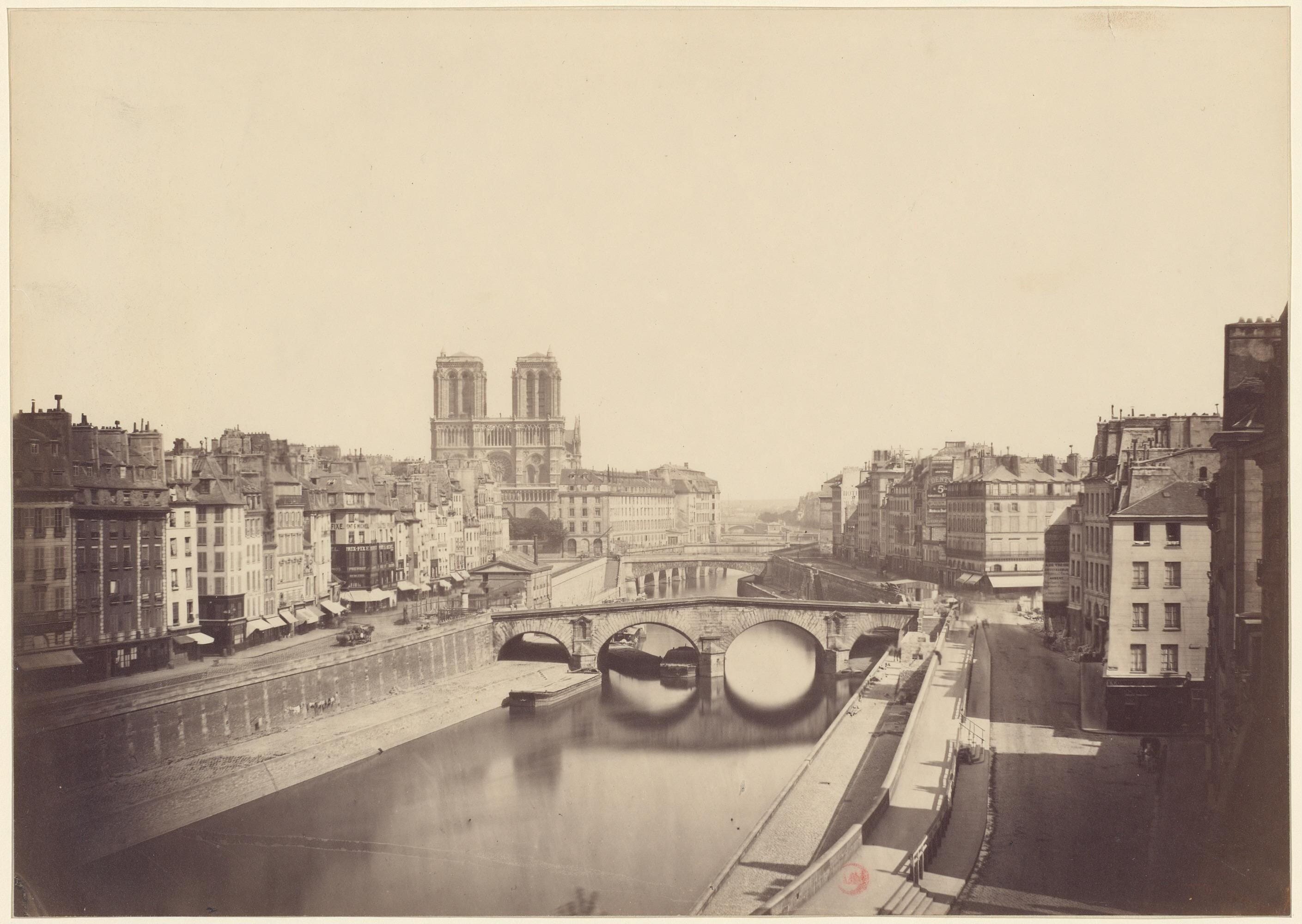
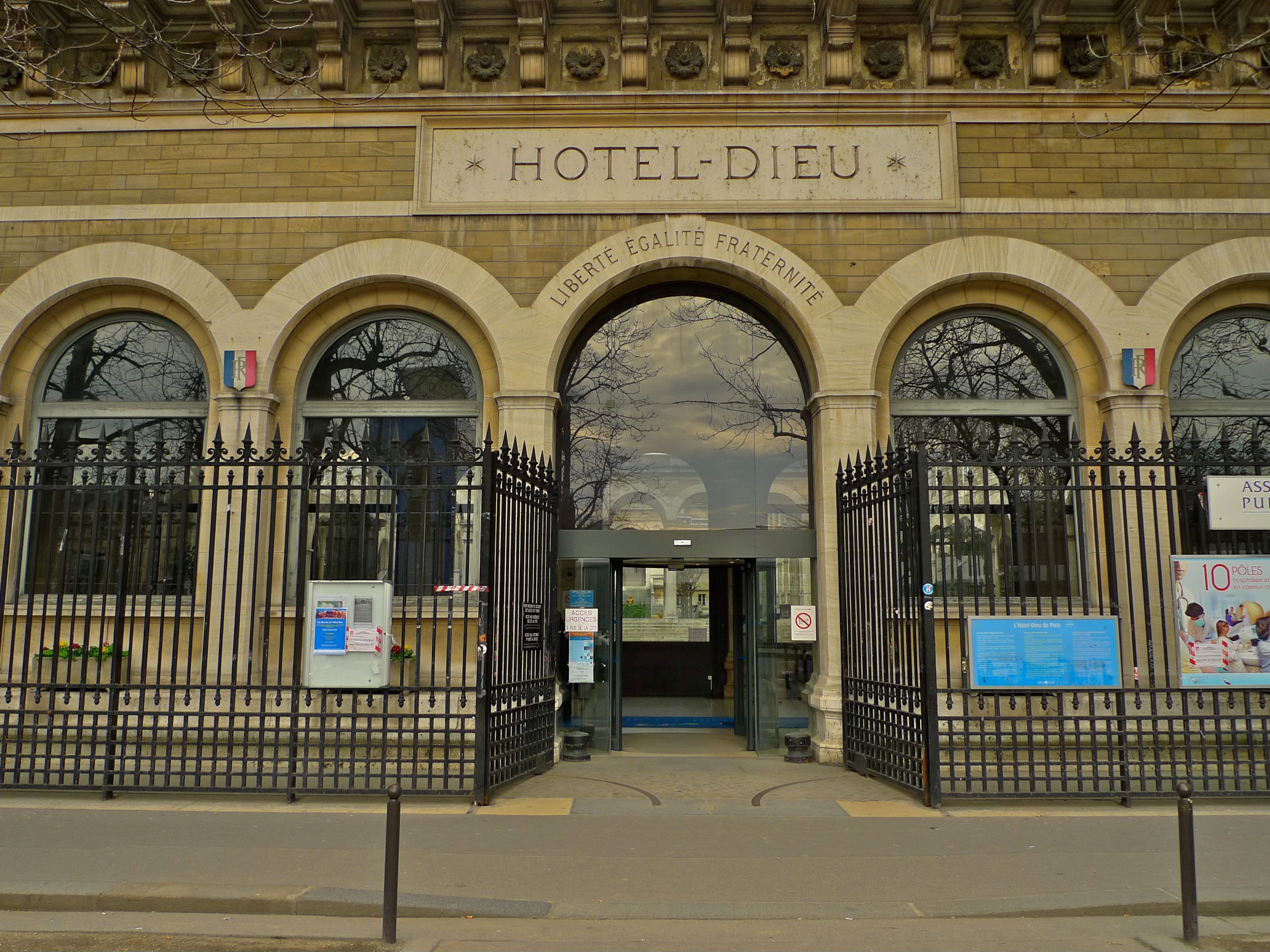
If you visit the Notre Dame Cathedral in Paris, you will no doubt see the Hôtel-Dieu nearby, on the north side of Île de la Cité. The word ‘hôtel’ in this case refers to a shelter, because that’s the purpose it served, as God’s Shelter.
But first, some history
Hôtel-Dieu was constructed in the 7th century by the Bishop of Paris at the time. Its location is significant because the early version of Paris, once called Lutèce, was centered on Île de la Cité. It was considered a major religious and political center that saw everything from public executions to coronations.
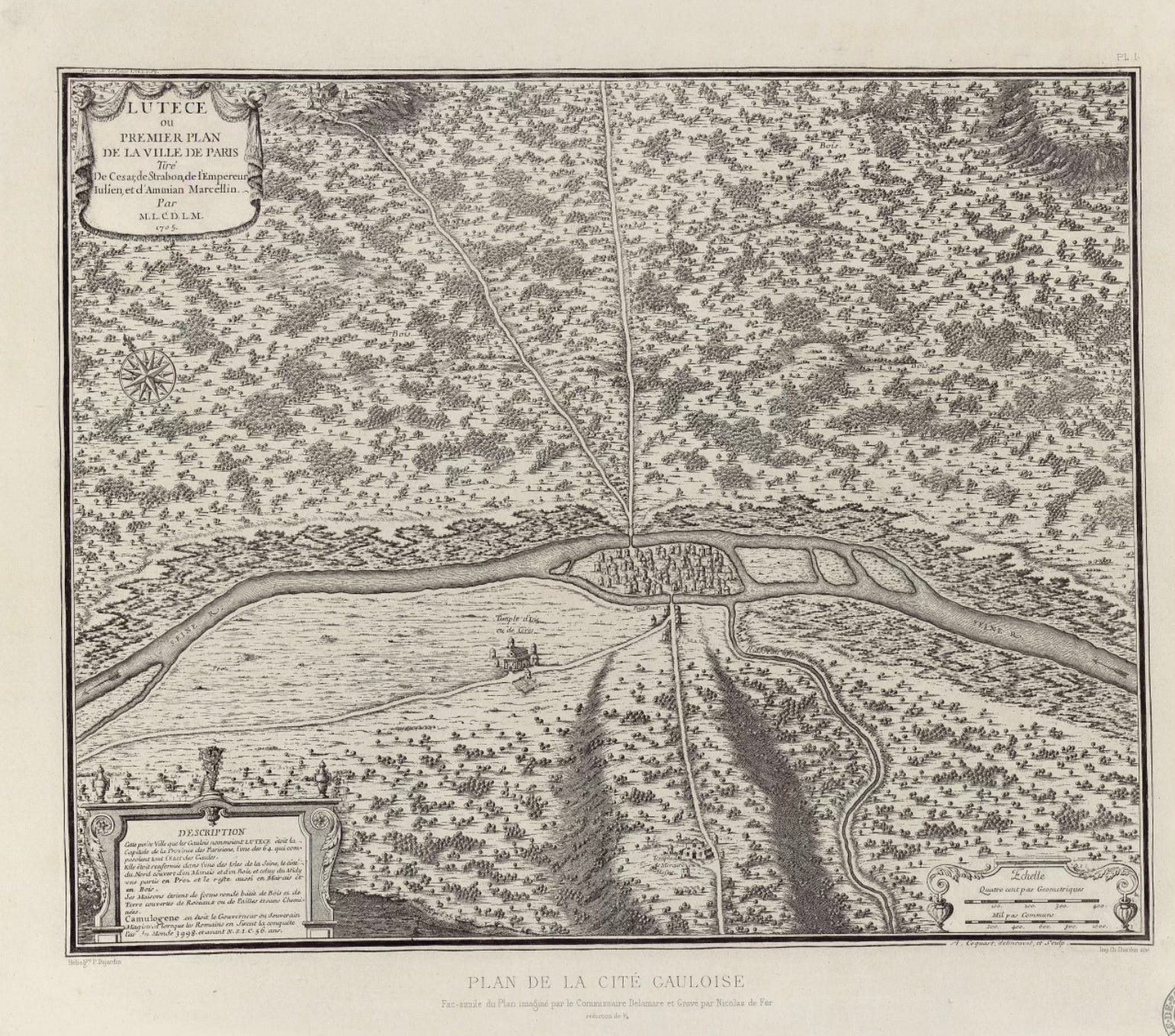
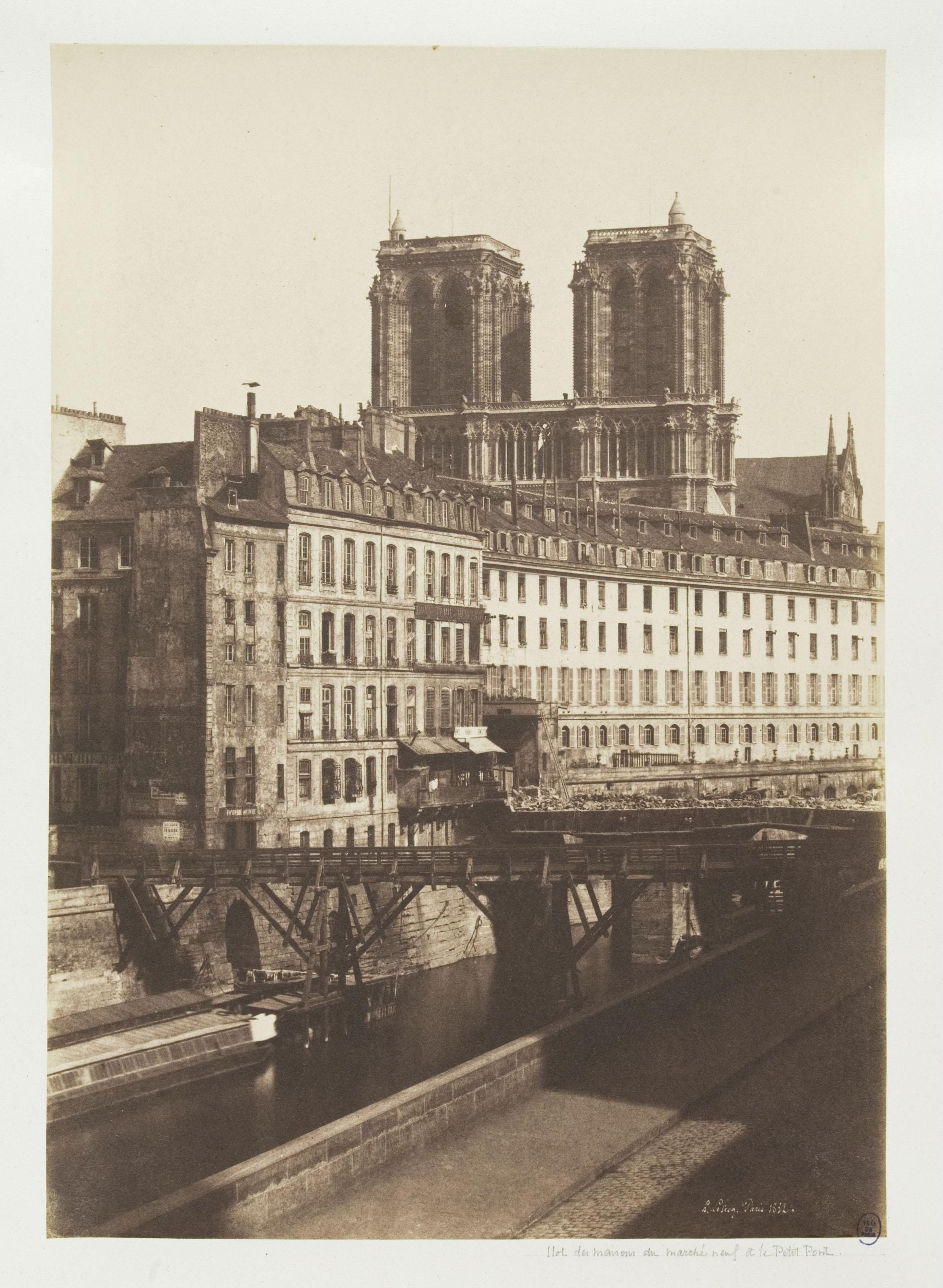
During the Middle Ages (5th-15th centuries), the island would see a lot of construction and development. It became very densely populated, and two bridges were built to allow people to access it. (See the wooden bridge in the photo below from 1853.)
Île de la Cité has a significant history. Several chapels and a cathedral (before Notre Dame) once occupied it, as religious figures gained power and influence alongside kings and emperors. It saw everything from executions to coronations.
Helping the poor
When the Hôtel-Dieu was built, there were a lot of poor people around Paris, many sick and dying without any access to medical care or shelter. Seeing this, the Catholic Church saw an opportunity to offer them charity — and a chance to spread their religious message.
So, at first, Hôtel-Dieu was a place to house the poor, orphans, and sometimes sick pilgrims. French royalty and wealthier members of society donated heavily to it, funding everything from beds to meals to curtains. Its location on the south side of the island along the Seine meant it had good light and access to water.
Eventually, the focus of Hôtel-Dieu shifted from being a shelter to caring for the sick, though for many centuries it was run by the church.
The hospital had a fair share of problems
However, as time went on and as the 18th century approached, the Hôtel-Dieu became overcrowded and extremely unhygienic. Multiple people would sleep in one bed and there was no separation between those who suffered from diseases, like scurvy or the plague, and those who didn’t. They were all housed together. As you can imagine, mortality rates were sky high — including among the hospital workers and carers because they, too, lived in the facility.
During the 18th century, a series of fires ravaged parts of Paris. One of them was on Île de la Cité in 1772. It caused serious damage to Hôtel-Dieu, which was a medieval structure made of wood and stone. At the same time, strong criticism started to emerge about the conditions of the hospital, including a scathing memoir by a prominent surgeon detailing its filthy, unsanitary conditions.
By then, a few more hospitals had been built around Paris in an effort to reduce overcrowding at Hôtel-Dieu. By the end of the 18th century, the city wanted to overhaul and reform the hospital system in Paris, and that’s what happened. Between 1867 and 1878, the Hôtel-Dieu was rebuilt on the north side of Île de la Cité, where it stands today.
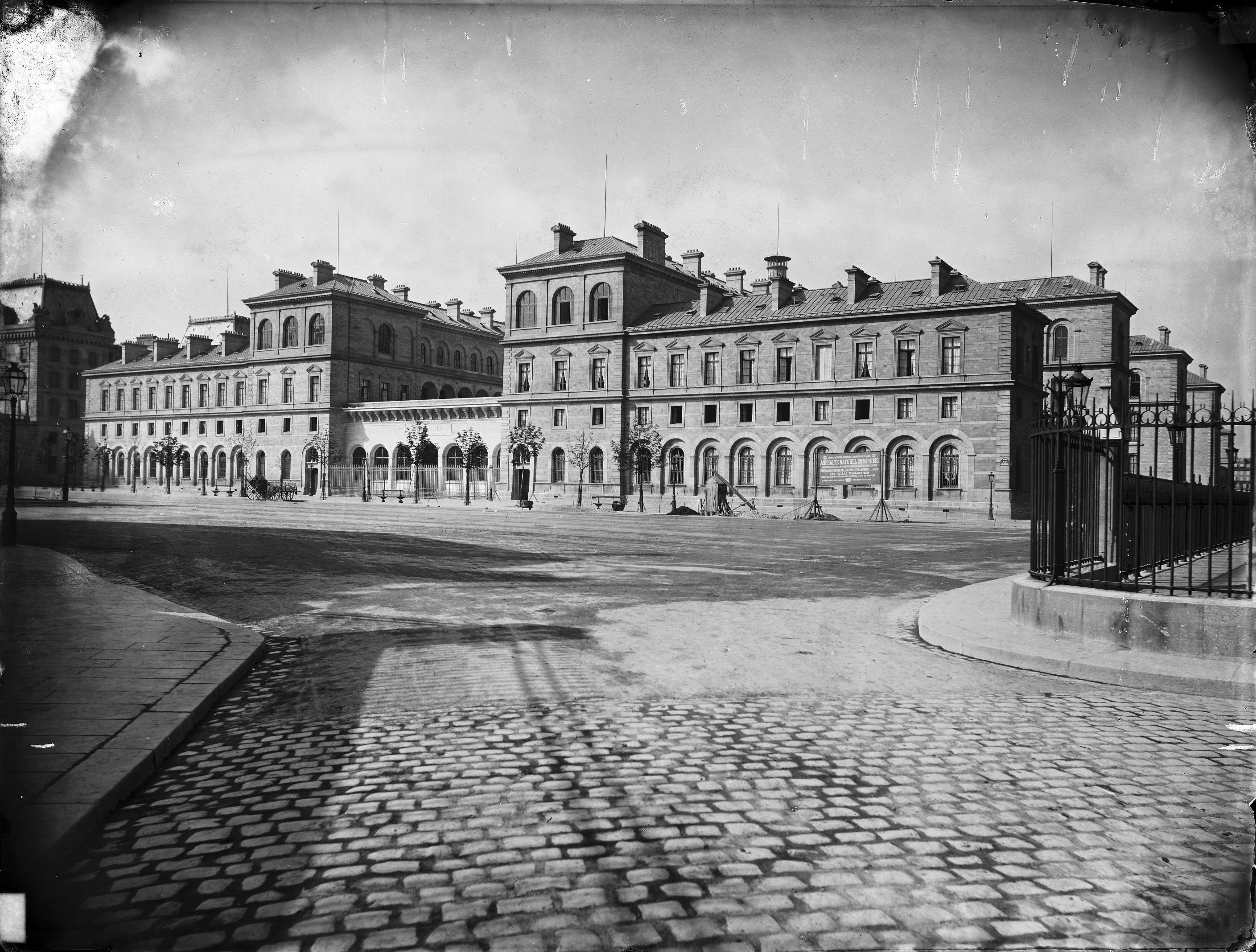
The Hotel-Dieu is now a training hospital for doctors and surgeons and is no longer affiliated with the church but with the University of Paris hospital system. It’s known to specialize in ophthalmology and thoracic surgery.
I suppose it’s safe to say, you won’t catch the plague or scurvy if you end up getting treated there.
Sources:
Notre Dame website - Hôtel-Dieu
Wikipedia - Hôtel-Dieu
History of Hotel-Dieu, 650-2015
Introducing Contributor, Jenn Bragg
Immerse yourself in all of Jenn’s articles on her Contributor page.
Thanks for reading MyFrenchLife™ – MaVieFrançaise®! This post is public, so feel free to share it.
I love the way your research consistently provide interesting articles @Jenn Bragg Mercer.
Judy