

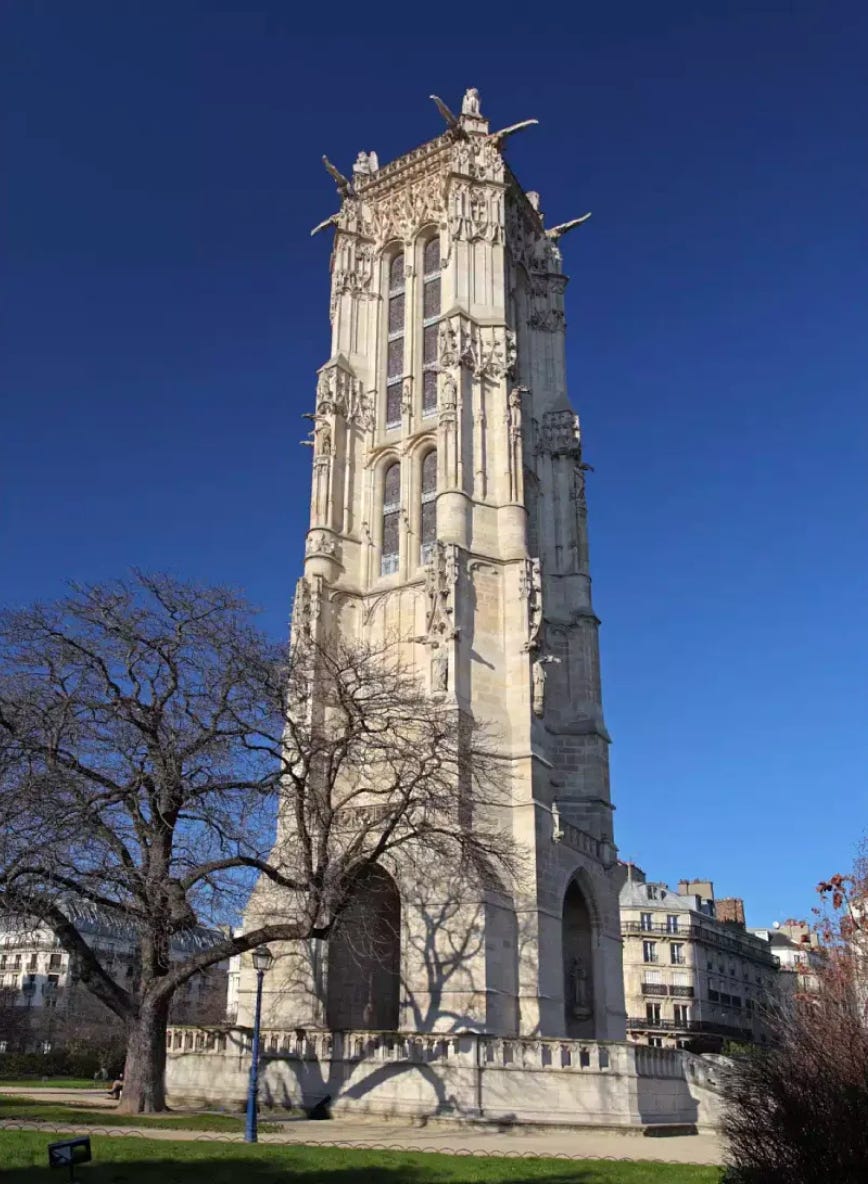
If you go to Paris and find yourself in the 4th arrondissement, not too far from Chatelet, you’re likely to see Tour Saint-Jacques. At 54 meters, or 177 feet in height, it’s a lone tower that has all the hallmarks of church design. But it’s not a church; it’s just a tower that was once part of a church that is now its own monument.
Let me take you back to the year 1190. (That is not a typo.)
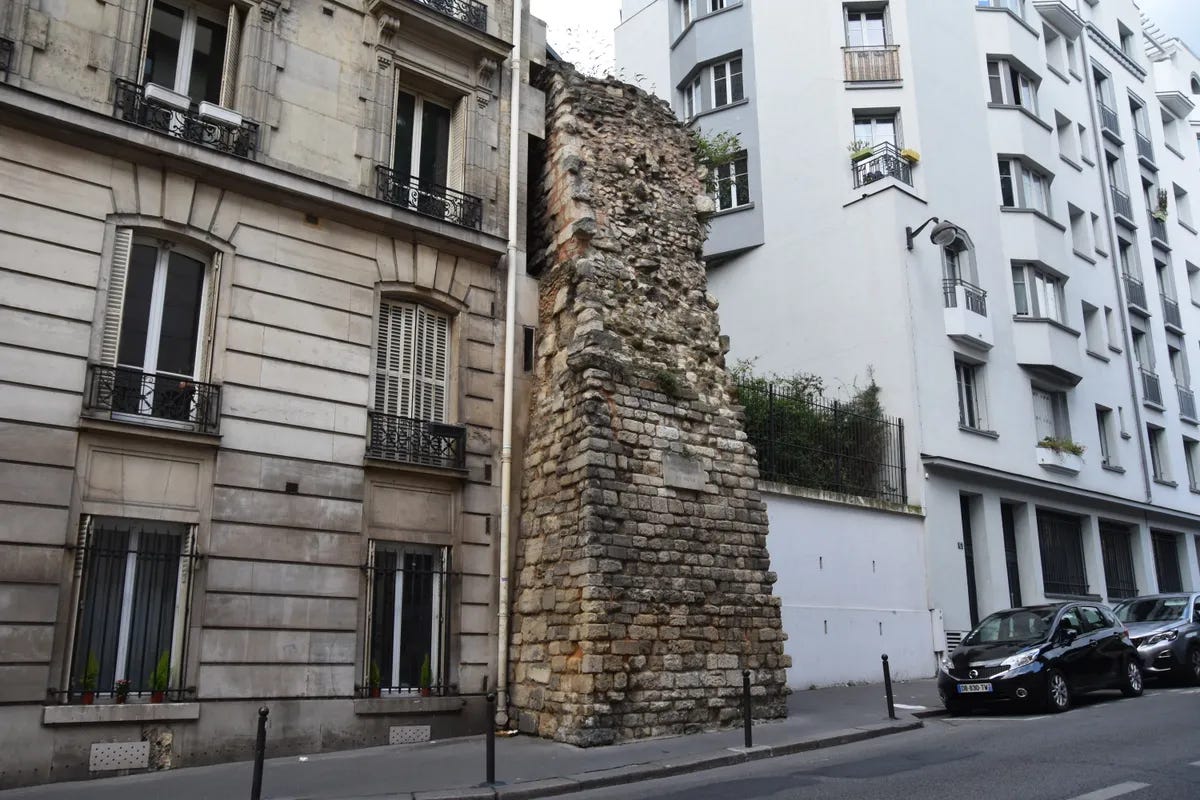
That’s the year King Philippe Auguste built a wall in Paris to fortify the city against the potential of invading ships coming up the Seine.
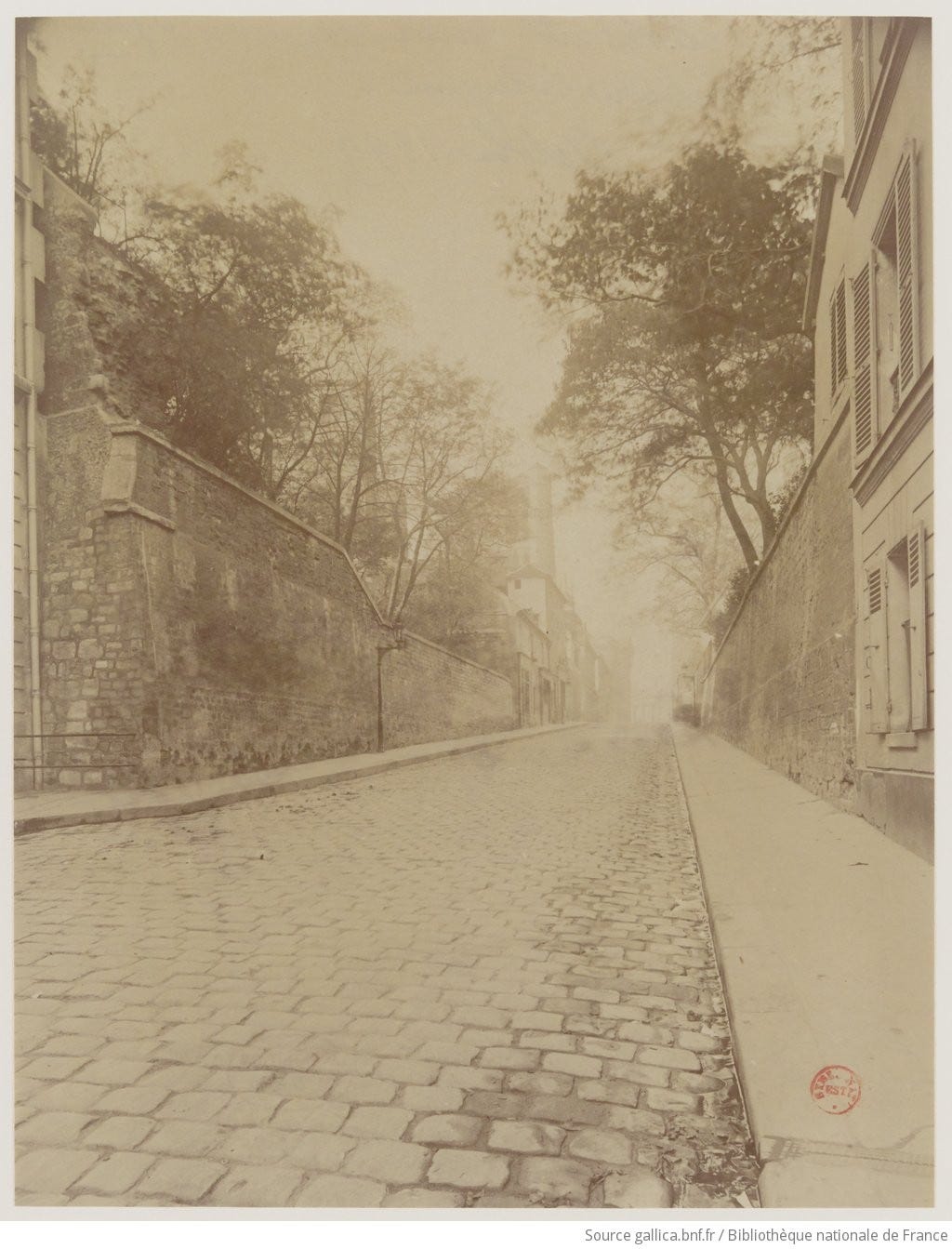
Some of the wall still exists today:
Just after the wall was built, an area known as La Grande Boucherie was established in central Paris, just west of today’s Hôtel de Ville.
La Grande Boucherie
La Grande Boucherie was where butchers, tanners and just about any trade you can think of that involves animals and their carcasses — was centralized. There was a building where butchers would display fresh meat, and around that building were tradespeople who made use of the other parts of the animals. The proximity to the Seine was key because they could throw the unused detritus from carcasses, etc. into the river. (However, the place still stunk because you can’t erase the stench of butcheries working in the same neighborhood).
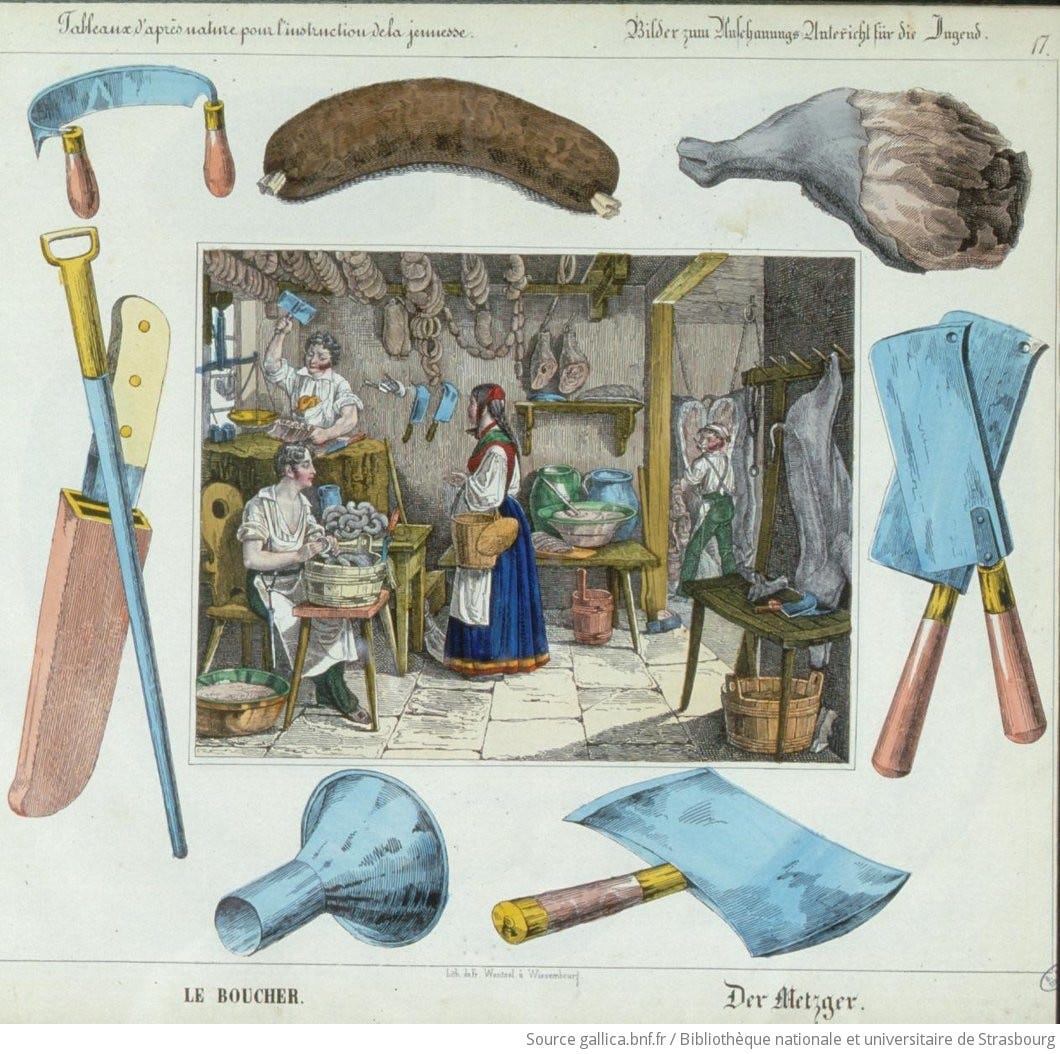
At the time and for a few centuries, butchers enjoyed quite a powerful reputation in society. First of all, people ate a lot of meat during medieval times, so they were an important trade. But also, armed with knives and other weaponry for their work, they often revolted and enjoyed a degree of power that was denied to the rest of the population.
Around the time the Grande Boucherie came to life, a church was built at the center of that area. It was called Saint-Jacques-de-la-Boucherie. This specific name, alluding to its location, differentiated it from another Saint-Jacques church on the Left Bank.
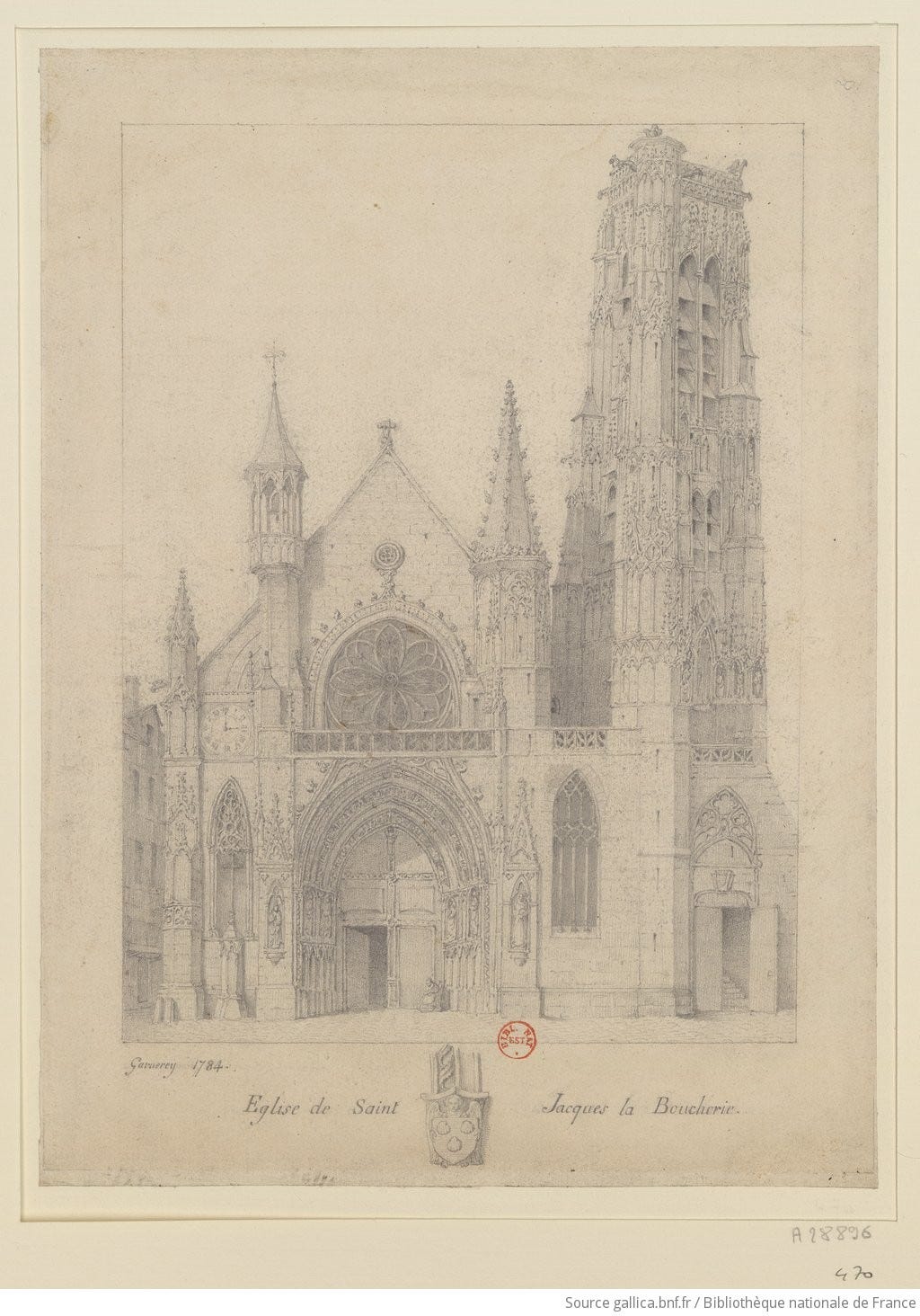
Church destroyed, but Tour Saint-Jacques stays
In 1509, a new bell tower was built onto the church, paid for by an association of butchers. It’s the tower we know today as Tour Saint-Jacques. Nearly three centuries later, after the French Revolution, the church came under the ownership of the state. The state then sold it under one condition: that the bell tower be preserved no matter what.
By 1836, the City of Paris acquired the tower and made sure it became part of the major urban development drive that is synonymous with Georges-Eugène Haussmann. The tower and square surrounding it witnessed the widening of boulevards and dramatic changes to the Paris landscape, while the tower stood tall.
Tour Saint-Jacques today
The modern-day preservation and protection of the Tour Saint-Jacques continues, and it’s been registered as a major landmark:
It is one of four points of the Way of Saint James - also known as the Camino de Santiago - in France
Since 1998, it has been designated a UNESCO World Heritage Site
It’s been designated a Monument Historique in France, which recognizes its patrimonial importance for France

So, next time you’re in Paris, and you’ve already seen the Eiffel Tower, Louvre, etc and are looking for something else to do, you can buy tickets to see the Tour Saint-Jacques up close. You can even have a tour at night!
sources:
Official website/Tour Saint-Jacques (in English)
Sept choses à savoir sur la tour Saint-Jacques - Ville de Paris
https://www.histoires-de-paris.fr/grande-boucherie/ (in French)
Introducing Contributor, Jenn Bragg
Immerse yourself in all of Jenn’s articles on her Contributor page.
Thanks for reading MyFrenchLife™ – MaVieFrançaise®! This post is public, so feel free to share it.
 | A guest post by
|