

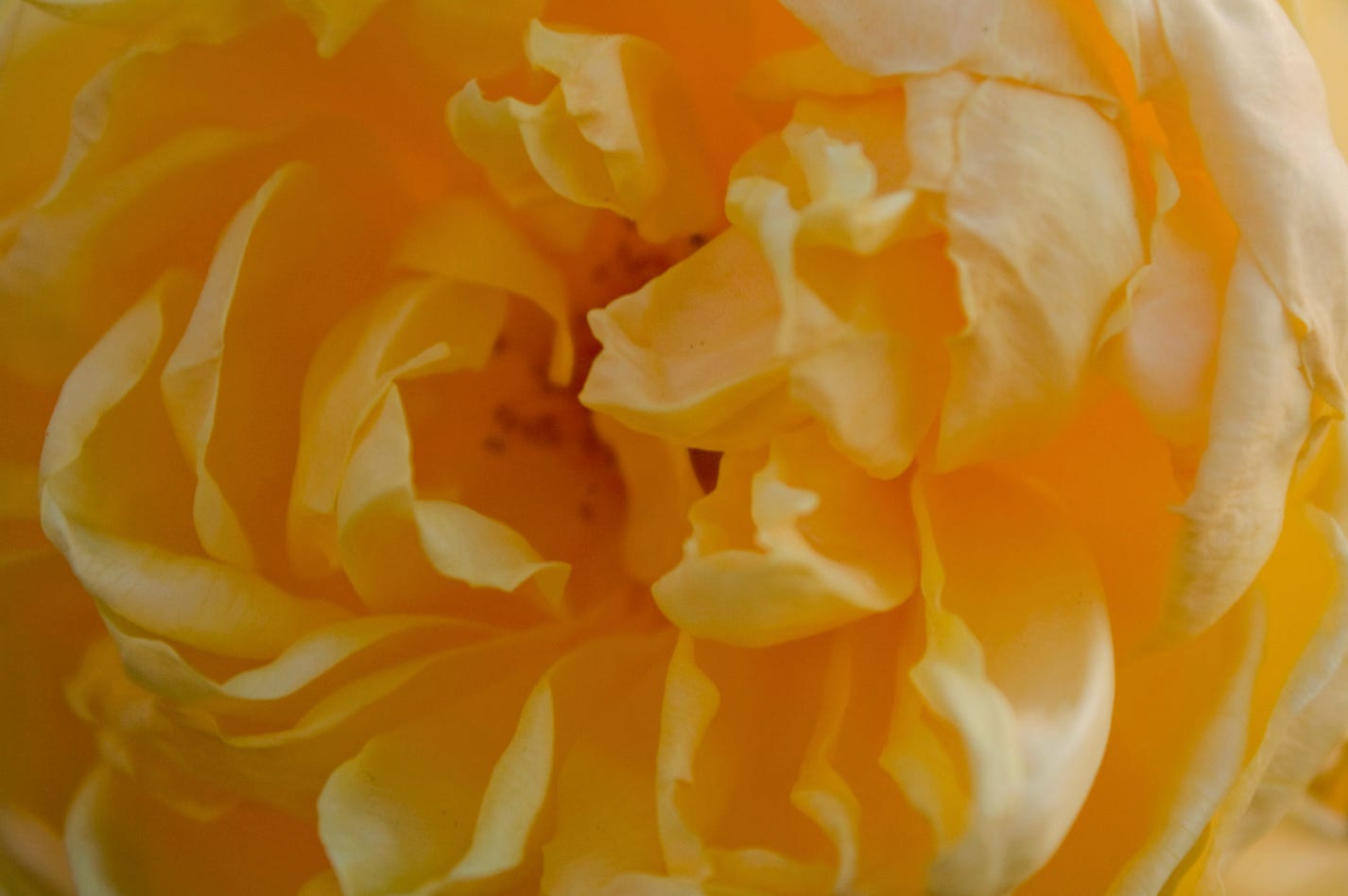
Let me tell you something I think is very odd, but at the same time kind of wonderful. Actually, hang on a minute, let me back up, because on its own this is going to sound a bit weird, perhaps even made-up.
Did you know that French rose farmers play piano to their flowers? Not figuratively. Actual speakers, wired up in the fields, playing at dawn, because they reckon the vibrations help the buds open evenly before picking starts. I found this out almost by accident, went down a rabbit hole about something else entirely, and got stuck on this one detail for days. Too strange to invent, too oddly specific to be anything but true. And once it was in my head, I couldn’t stop turning it over, what it says about the way France holds onto this flower, compared to how England does.
Because here’s the thing, and I didn’t expect to land on this. Both countries will tell you, hand on heart, that the rose belongs to them. And they’re both right. They just mean two completely different things by it, and I only worked out how different once I’d actually sat with both stories side by side.
Start with England, because it’s the simpler one, no rot underneath it, nothing to untangle. There’s a family in Shropshire, the Austins, breeding roses since the 1940s, when the father, David, started it as a hobby on the family farm. That was the whole ambition, honestly, just a more beautiful rose. Took him until 1961 to release his first one, Constance Spry. Took until 1983, at Chelsea, before anyone outside the trade properly noticed a rose he’d named Graham Thomas after his mentor, and it stopped people walking past. After that, gold medals most years. Twenty-nine of them now.
What actually gets me isn’t the roses or even the music. It’s the patience underneath them. Every year they hand-pollinate tens of thousands of crosses. Grow hundreds of thousands of seedlings out of that. And maybe one, maybe two, a year, ever get a name and go on sale. Ten years, roughly, for a variety that makes it. Think about that ratio for a second. It’s a business built almost entirely on saying no to itself, over and over, decade after decade. His son joined in 1990. His grandson a generation after. Still, today, an ordinary family farm, three generations deep, hand-budding every single one of them, naming roses after each other, Olivia Rose, Claire Austin, a small strange kind of immortality that has nothing to do with money at all. The English rose exists to be looked at, in a border, for years, by someone who planted it and is still around to watch it come back every June.
Now here’s Grasse. And I want to slow right down for this one, because it’s got a far better story than “pretty flowers on a hillside,” and I didn’t know any of it until I went digging… You know what I’m like, insatiably curious!
Annual Subscribers and Mighty Supporters, settle in; this is the bit I’ve been wanting to tell you. Upgrade to access→https://MyFrenchLife.org/subscribe