
Why I’m Learning French Through Tea
or, what happens when you start living with a language instead of studying it...

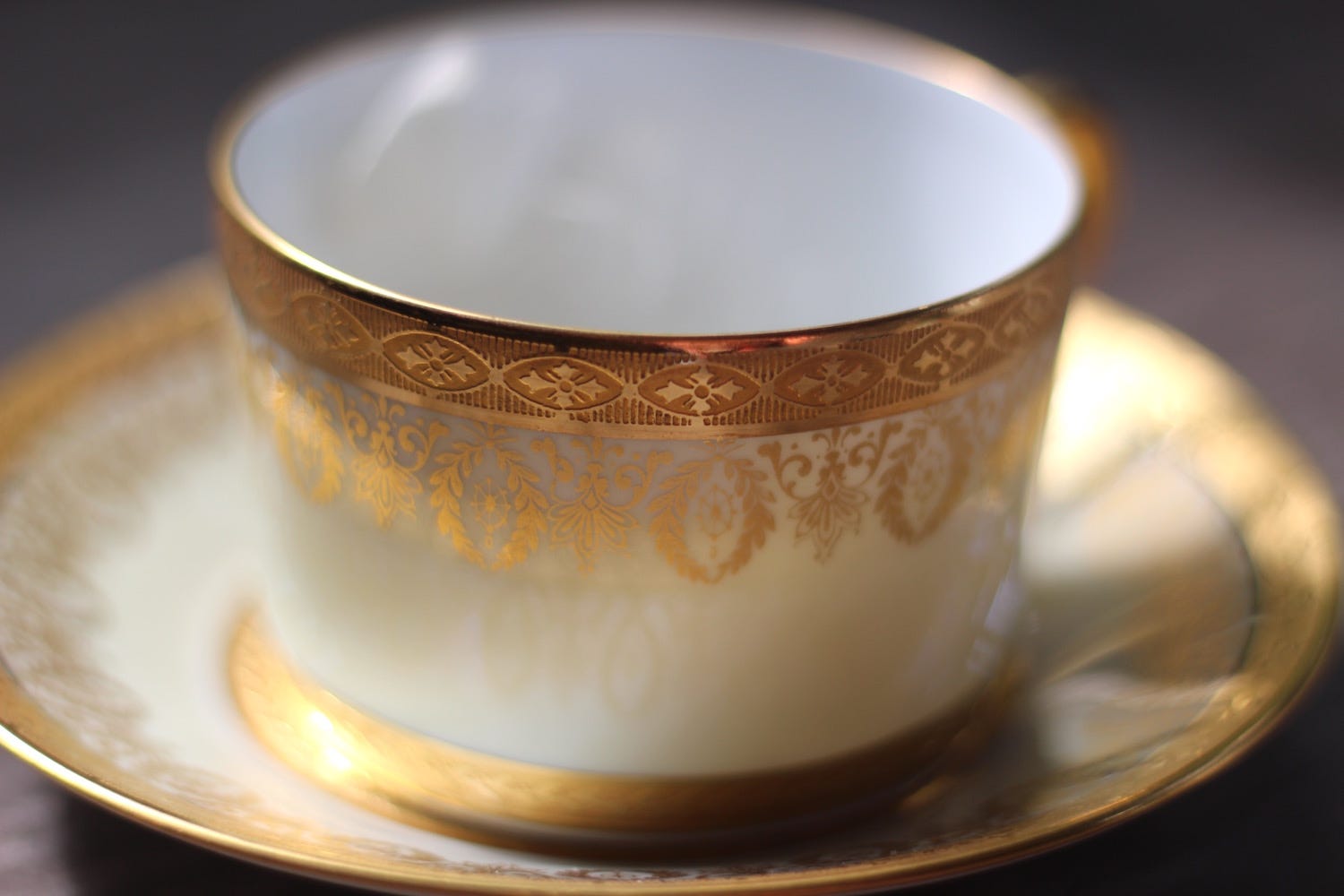
Living with Language
There’s a special kind of beauty that slips into the day when you start to make your morning tea.
You open the tea tin, and the lightest fragrance enters your senses. The little leaves are nestled silently in each other’s arms. (Even inside a teabag, there they are, romancing each other.)
The light plays across the water as you pour it into the kettle.
You choose your teacup (I have regulars for each day of the week, and Wednesday is a wild card day.)
A few minutes for the steeping, while the aroma stirs your soul.
Then the pour. The glorious, precious pour.
Mmm.
It is in such beauty that French lured me again.
Not the French of textbooks or vocabulary apps. Not the French I tried to learn—and stopped trying to learn—many times before with other methods.
But a different kind of French. One that mesmerizes, invites your gaze, speaks of surprising play, like steam rising from a cup.
The Problem With How We’re Taught to Learn
For years, I approached language-learning in fits and starts—often by the book, never hinged to any theme. Some of it stuck. A lot of it didn’t. (The way when you’re in school, you study for the French test. And a week later, well. Where’d the French go?)
I learned the word for “airport” (l’aéroport) before I learned the word for “dream” (le rêve). I could say “Good morning,” but I couldn’t tell you how the light plays upon my tea. The language stayed largely external, a skill I was acquiring rather than a world I was entering.
So I kept stalling.
Until tea showed me another way.
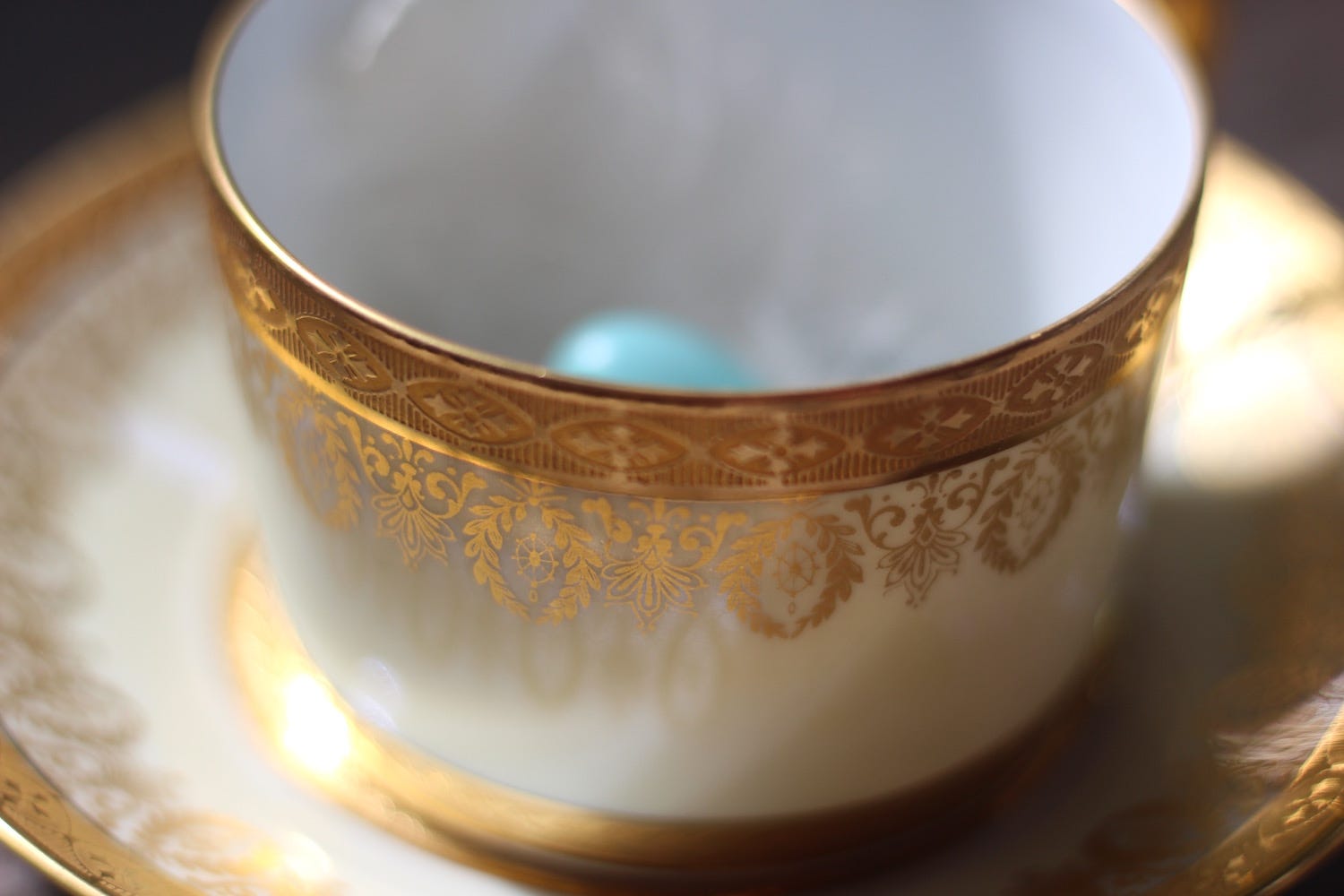
What Changed: Finding My Entry Point
Last year, I started to make tea more intentionally—slowly, dreamily, letting the experience linger. It became something to look forward to. A moment of beauty. Meditative. Free. Stirring a sense of joy in me.
One day, I thought: “What if I learned French the way I make tea?” Slowly. With a heart full of dreams. Through beauty.
The idea sounds almost too simple.
But it has changed everything.
(Yes, now I know the word for dream (le rêve), the word for cup (la tasse), and the word for tea (le thé)!
Learning Through Ritual and Beauty
When I make tea, I sometimes think in French. Not perfectly. Not always grammatically correct. But I muse: Je fais du thé (I’m making tea).
Occasionally, I photograph the experience—steam rising, light catching on porcelain, the dark amber of black tea (le thé noir) in a white cup. Then I write about it, with French words scattered like rose petals along the way. Sometimes I even try making a tiny poem.
The French words I learn this way aren’t random. They’re mine. They belong to moments I’ve lived, feelings I’ve felt, images I’ve seen. They embrace my themes: tea, the creative life, and photography.
When I encounter la nuit (night), I don’t think of a dictionary definition. I think of my dreamy collection of night photographs: a Japanese tea set lit by my mother’s lamp, shadows pooling like dear memories of how she always created beauty.
That word lives in me. I will always remember it.
The Treasure Hunt Method
I’m working through the top 1000 most common French words—not in order, not with flashcards, not with a chart I check off with a pen.
Instead, I’m embedding the words in my life. Each word appears somewhere at J’ai Fait du Thé in a post about tea, photography, or the creative life. Whenever I include a French word, I italicize it, so you can easily spot it. Over time, you can follow along, discovering these words as you engage in an ongoing treasure hunt.
It’s a low-key, inspiring, beautiful invitation to experience French.
When you meet words this way—through beauty and ritual and personal meaning—they stay. They become part of your inner landscape. They start appearing in your thoughts when you least expect them.
You don’t have to drill.
You only need to live with them.
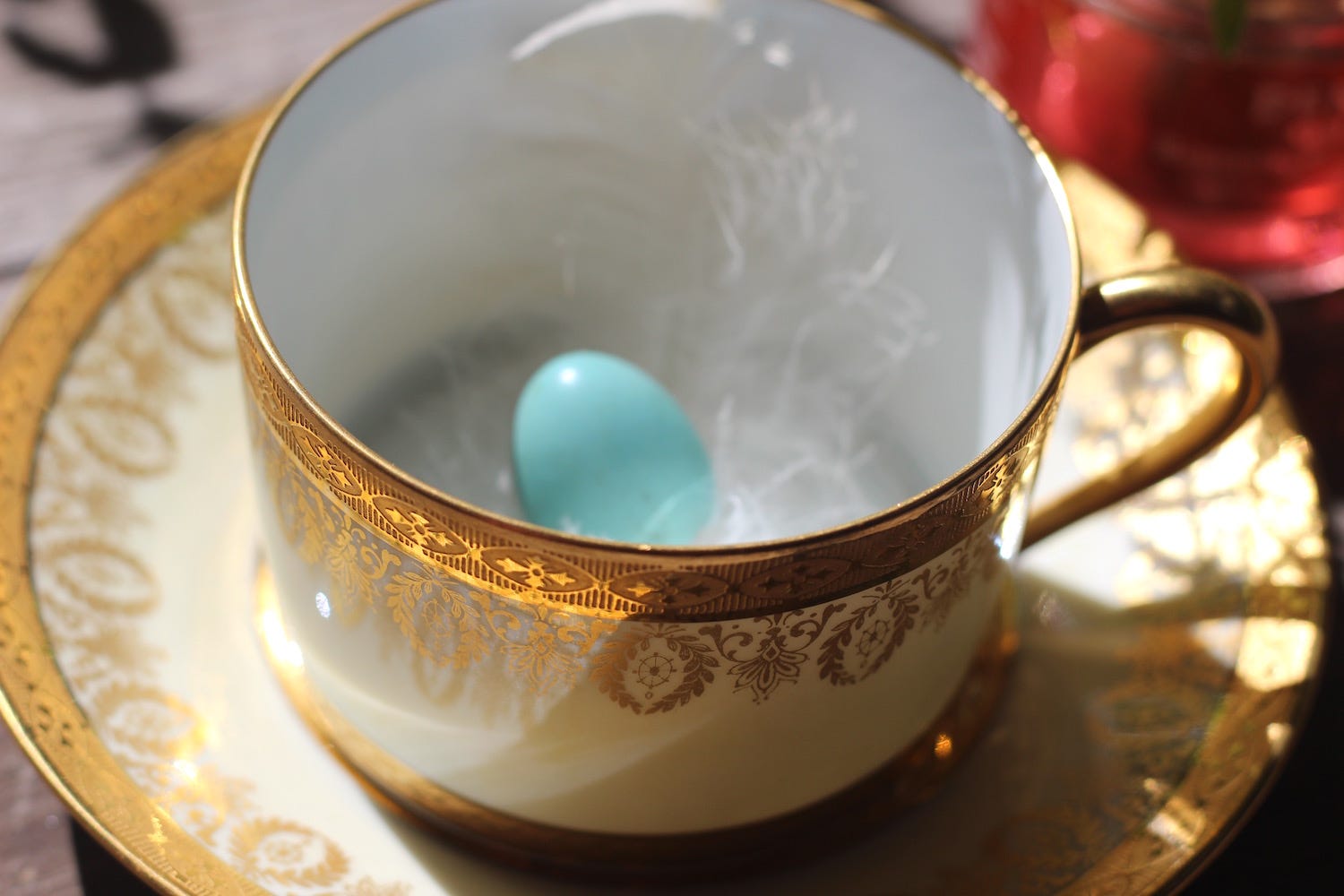
Consider What You Love
What if we stopped learning randomly by rote?
What if we found our personal entry point—the thing we already love—and let it woo us into learning?
Do you love cooking? Maybe you could learn Italian by cooking your way through The Silver Spoon, musing in Italian as you slice and stir. (Then taking your after-dinner coffee and dessert and watching Lidia Poët.)
Do you love dancing? Maybe you could learn Korean by listening to Korean music while you dance, letting the language wash over you one song lyric at a time. And don’t miss the beautiful drama of Korean television and film. Here’s a favorite.
Do you love drawing? Maybe you could learn Spanish by drawing and labeling your sketches, building vocabulary through visual memory. Or read up on Picasso, then write tiny thoughts in Spanish about the genius of the artist’s drawing and painting.
What entry point would make language learning a joy for you?
An Invitation
I have an inkling that this way of learning French might actually make me fluent. Not because I’m aiming for that, but because I’m deeply involved.
French is becoming part of my life in a way it never did when I was simply “studying” it. It’s there in my morning tea ritual, my photography, my reflections. It’s making my life more beautiful, even exciting.
If you’re tired of rote study and you wish language learning were more than an item on your to-do list—if you’re curious about what it might feel like to learn through beauty—come to the tea table.
I’ll be here, setting a place for you. Photographing light. Offering musings on the creative life. Slowly building a vocabulary of wonder.
(translation: as always, L.L. :)

🌹 Ready to start your own treasure hunt to discover the French language, word by beautiful word?
Check out the Top 1000 French Words—to see which words I’ve already (déjà) added to the treasure chest. And subscribe so you don’t miss a drop of treasure…
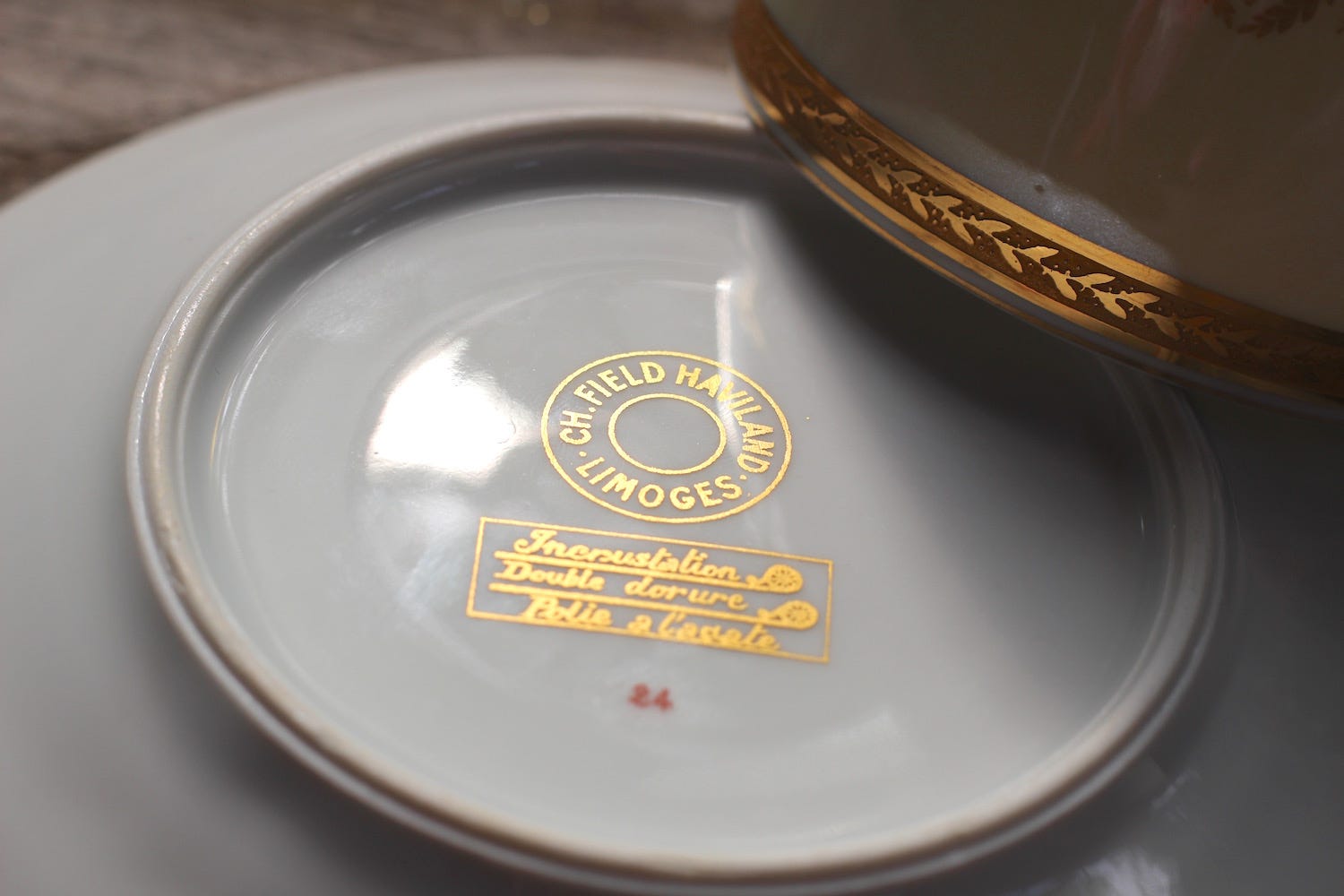
below ↓ ooo! The bottom of the saucer is also beautiful. especially when it’s chatting with the rim of the teacup.
exploration, in any language, often means looking at things from different angles. being curious about what might be hidden from ordinary view—like when I looked at the word mettre differently and realized I could learn French in families
Stirring your creativity—with tea, French & photography. Come sip with me…
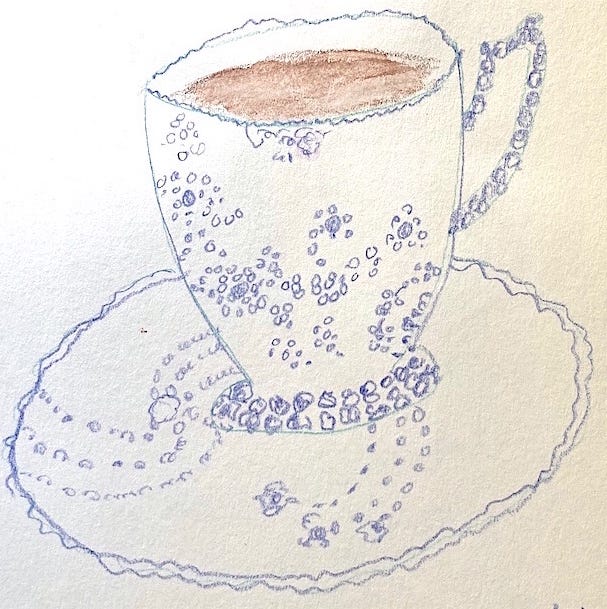
All images: copyright LL Barkat
Introducing Contributor, L.L.Barkat:
Visit her Contributor Page — Explore more of Laura’s work
Really interesting article Keith on anti-gaspillage. Thank you for explaining the concept of Les Restos du Cœur and the annual televised concert by Les Enfoirés, funding millions of meals each year. I had wondered.
Coming from a country that experienced a Potato famine in the mid 19th century, not wasting food is engrained.