

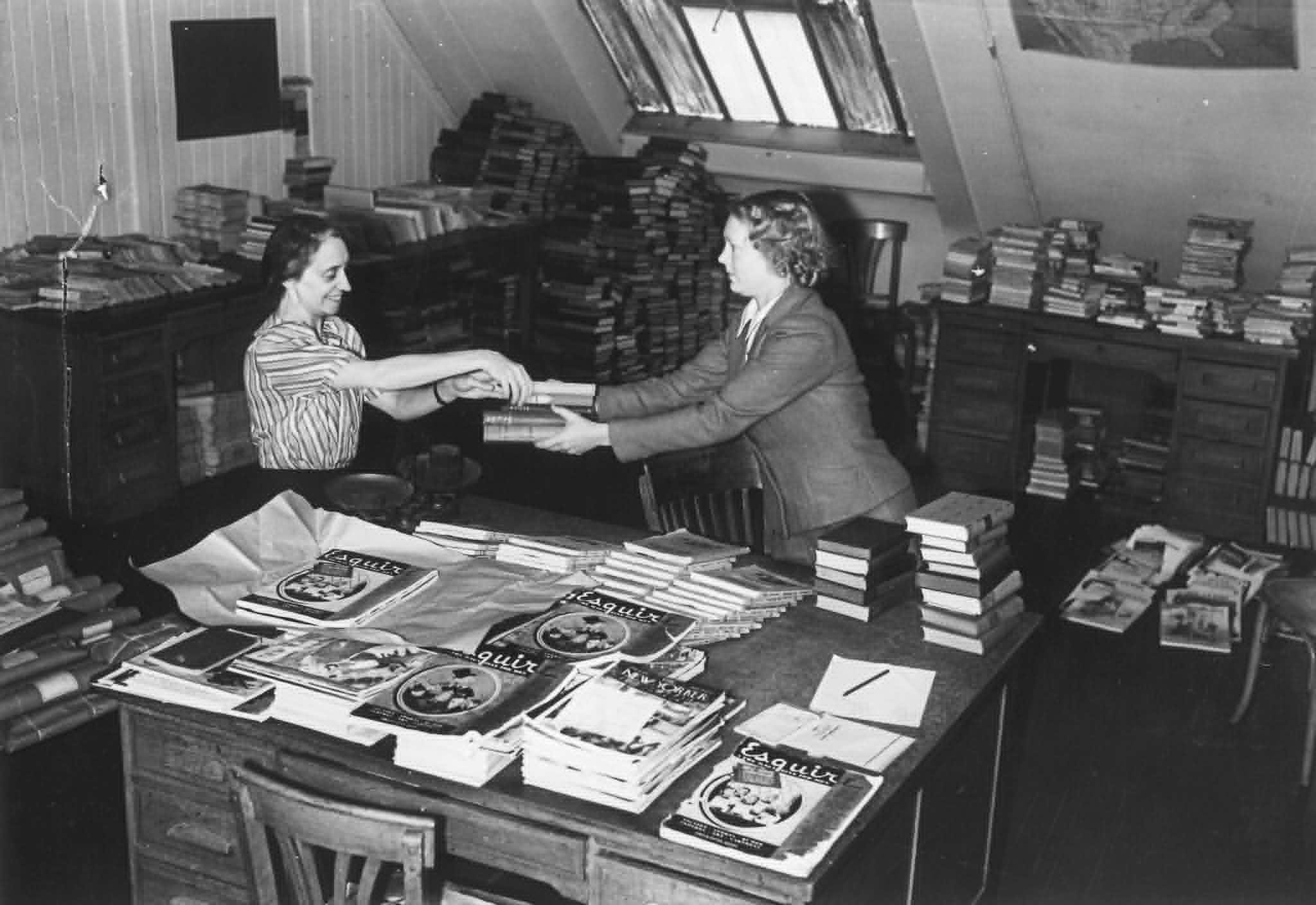
Even though I was born and raised in France and lived there until I was 23 years old, and returned to my native country many times after I had moved to the USA permanently in 1975, I was never aware of the existence of the American Library in Paris until four years ago or so.
A great friend of mine, Claudette Boudreaux, told me about a novel that she had just read and loved. This book, The Paris Library by Janet Skeslien Charles, was “based on the true story of the heroic librarians at the American Library in Paris during World War II.” This story, which was featured recently in MyFrenchLife™ – MaVieFrançaise® in an article titled “The Woman Who Stayed” – that woman being Dorothy Reeder, the American Library in Paris Director during WWII, who “kept it open, ran an underground book network to Jewish readers banned from entering,” and returned to America “without making a fuss” when the war was over.
My friend Claudette attended a Zoom discussion with Janet Skeslien during the COVID Pandemic, and even visited the ALP with her in late 2022. By then, Claudette had become a member and patron of the Library, and one of its biggest fans. Earlier this year, Claudette came up with the idea of organizing a picnic benefit for the American Library in Paris at a park near her hometown of Frederick, Maryland, under the aegis of the newly formed “Mid-Atlantic Friends of the American Library in Paris.” This event took place on June 20 and was a big success. We have raised at least $7,000 so far to boost the 2026 fundraising campaign of the ALP.
I was a co-organizer of this benefit picnic, very unsure of what I could bring to the table. However, I thought it would be a great time to interview Kristina Vér Foley, the new Executive Director of The American Library in Paris, for MyFrenchLife.org. In an amazing and timely turn of events, Judy MacMahon was just about ready to publish her piece on Dorothy Reeder! She was enthusiastic about the interview. Kristina was very kind to agree to it and to provide wonderful answers to the questions that Claudette and I sent her.
An Introduction to Kristina Vér Foley:
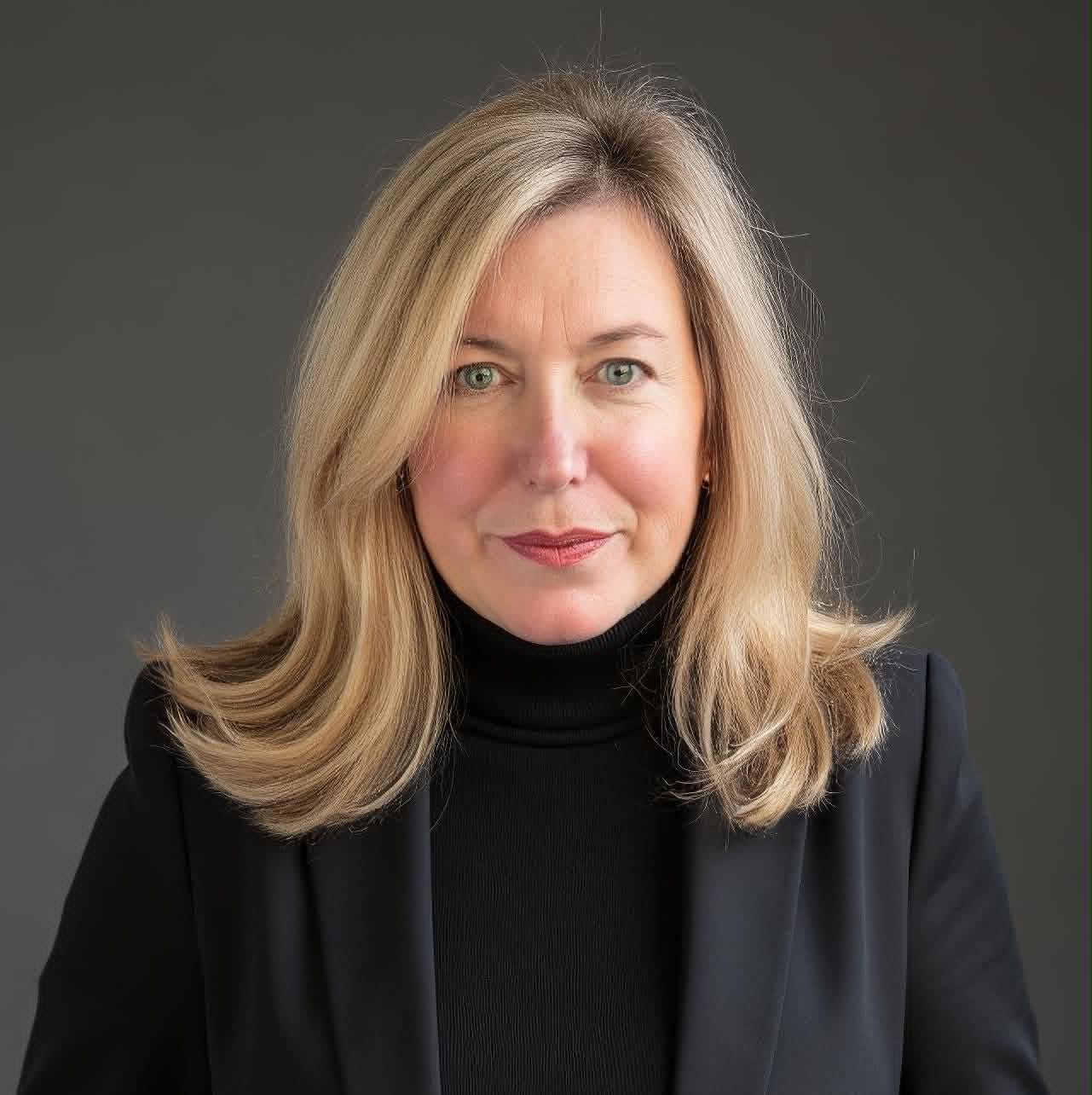
After she graduated from Harvard University with a Bachelor’s in History and Literature (Modern France and Germany), she earned a Master’s in Documentary Film and Television News at the Hochschule für Fernsehen und Film München (HFF München) in Munich, Germany.
She was based in Europe for a great deal of her professional career: in Austria for at least 4 years with SOS Villages International and at the American University in Paris for 4 years.
She was also in Budapest, Hungary, with Central European University, for one year.
She was Coordinating Producer for film companies, including CNN (8 years in that field, from 1998 to 2006).
Before joining the American Library in Paris on April 1, 2026, she was Managing Director (USA) of Salzburg Global, where “she led strategic growth and strengthened engagement with donors, scholars, and cultural leaders.”
Now let’s dive into this interview and hear from Kristina Vér Foley:
1. Please tell us four things that MyFrenchLife™ subscribers might like to know about you.
I’m half German and half Hungarian, but was born and raised in the United States. I’ve always felt at home on both sides of the Atlantic, so working in bicultural and international institutions feels like a natural fit.
I’ve spent much of my career working for American and European institutions that were founded in response to periods of conflict and division, including Salzburg Global, The American University of Paris, and the Central European University. What drew me to each of them, and now to the American Library in Paris, was the belief that books and education, dialogue and cultural exchange can help bridge differences and strengthen communities.
As an only child, books were something like siblings for me: lifelong companions that were always within reach. My parents made sure our home was full of books, and our local public library quickly became one of my favorite places. Growing up with immigrant parents, reading also helped me make sense of the American culture around me. We lived in Lexington, Massachusetts, where the American Revolution quite literally began, so I became fascinated by early American history and the stories that shape a nation’s identity.
My family has lived in four countries and four American states, so I know firsthand how important places of belonging can be when you’re far from home. That’s one of the reasons I care so deeply about what the Library offers its community.
2. How much did you know about the American Library in Paris before you applied for the Executive Director position? What brought you here?
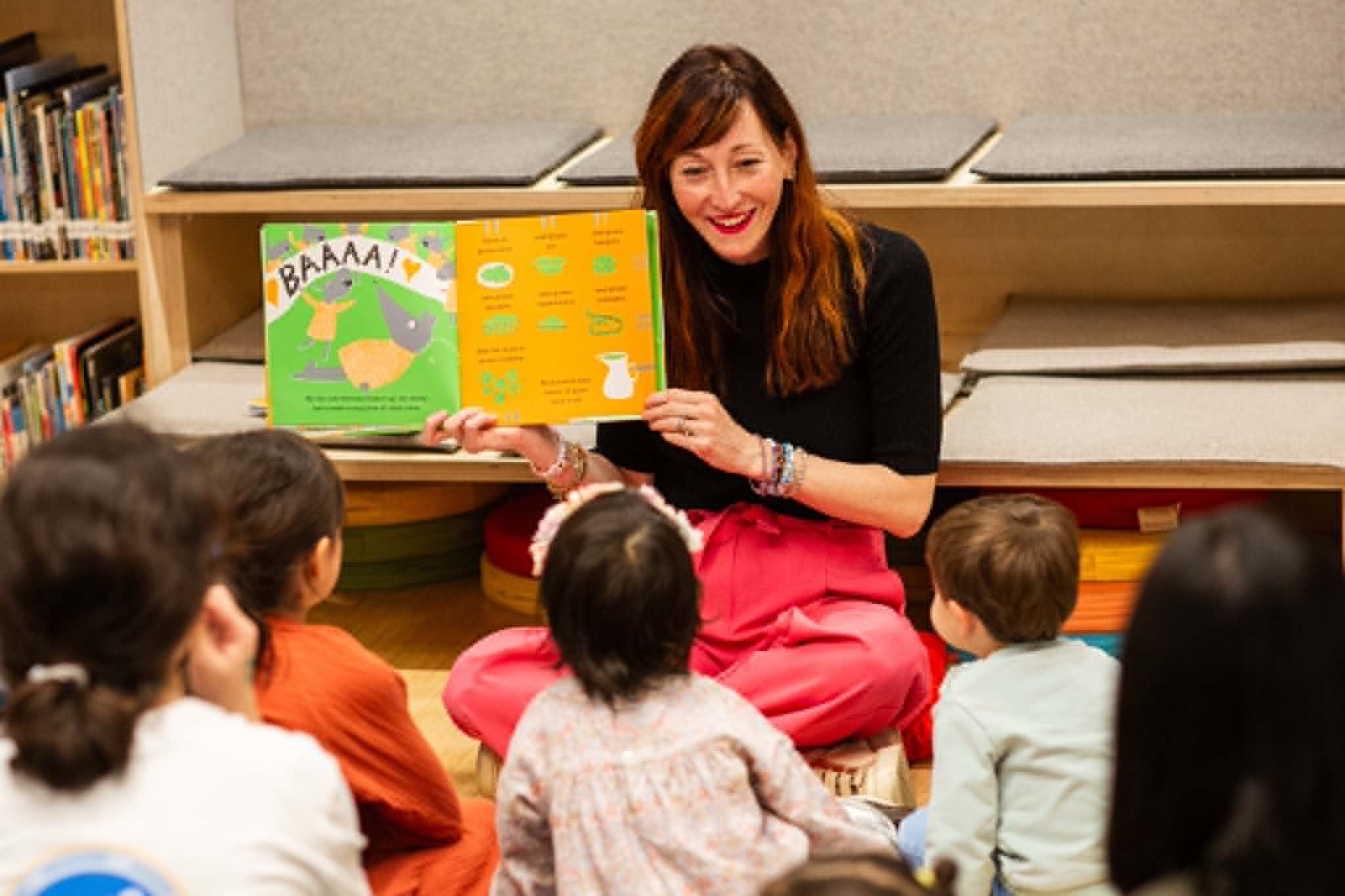
My family and I were members from 2011 to 2015 when we last lived in Paris. Our son practically grew up at the Library. He attended Story Hours, discovered the joy of reading, and even absorbed a few American traditions, Halloween among them. For us, the Library wasn’t simply a place to borrow books. It was where we found community.
When I learned that the Executive Director position was opening, it felt like a rare opportunity to return to an institution that had already played an important role in our lives. The American Library in Paris occupies a unique space. It is at once a library, a cultural institution, a community gathering place, and a bridge between France and the English-speaking world.
The timing was also remarkably fortunate. Our son had just headed off to college in California, giving my husband and me the flexibility to make a transatlantic move. Paris has always held a special place in my heart. Long before I lived here, I grew up hearing stories about my mother’s years as an au pair in Paris in the 1950s. In many ways, returning to Paris feels like completing a circle.
3. What do you find the most inspiring moments in the 106-year history of the American Library in Paris?
What inspires me most is the Library’s remarkable resilience. Throughout its 106-year history, it has weathered wars, occupations, economic crises, and pandemics, yet it has remained steadfast in its mission to provide access to books, ideas, and community.
During the Second World War, Library staff and supporters found ways to continue serving readers despite extraordinary circumstances. There are countless stories of courage and ingenuity from that period, including efforts to continue delivering books to members who could no longer easily reach the Library.
Another favorite story comes from the 1950s, when the Library found itself unexpectedly caught up in the tensions of the McCarthy era. Whether every detail has grown somewhat legendary over time, the underlying principle remains important: the Library has long stood for intellectual freedom and the freedom to read.
More recently, during the pandemic, the Library once again demonstrated its ability to adapt. It was among the first libraries in Paris to launch a click-and-collect service, ensuring that members could continue accessing books even when the building itself was closed.
4. What have you identified as the key components of your mission as its new director?
I see my role as stewarding a remarkable institution while helping it evolve for the next generation.
That means preserving what makes the Library special: its collections, its intellectual independence, its sense of community, and its unique place in Paris. At the same time, it means ensuring that the Library remains relevant and accessible in a rapidly changing world.
Practically speaking, that involves strengthening membership, expanding engagement with younger generations, supporting writers and researchers, investing in staff and technology, and continuing to position the Library as one of the leading English-language cultural institutions in Europe, including through partnerships and collaboration with other cultural institutions.
Most importantly, it means making sure that the Library remains what it has been for more than a century: a home for the thoughtful and curious.
5. What do you view as the greatest strengths of and opportunities for the American Library in Paris?
Without question, the Library’s greatest strength is its community.
That community includes longtime members, volunteers, trustees, donors, authors, Fellows, and staff. It spans generations and nationalities. One of my favorite examples is our Memoirs Book Group, which has been running continuously for eighteen years and still attracts participants who travel from as far away as Switzerland each month.
Another extraordinary strength is the breadth of what happens under one roof. On any given day, you might encounter toddlers at Story Hour, teenagers practicing public speaking, researchers working in the Reading Room, authors speaking to packed audiences, and retirees exchanging ideas over coffee and the newspaper.
As for opportunities, I see tremendous potential in embracing our full identity as both a library and a cultural center. Paris continues to attract growing numbers of international residents, students, entrepreneurs, creatives, and young professionals. Many are looking for exactly what the Library provides: intellectual community, meaningful connections, and a place to belong.
6. What are the greatest challenges the Library will face in the next few years?
One of the questions I think about most is how institutions like ours can remain places of meaningful encounter in an increasingly fragmented world.
The American Library in Paris has always brought together people who might not otherwise cross paths. At a time when so much of life is mediated through screens and algorithms, creating opportunities for genuine connection may be one of the most important things we do.
Libraries are also helping people navigate a rapidly changing information landscape. We live in a moment when information is abundant, but trust can be scarce. In an era shaped by misinformation and artificial intelligence, the ability to discover, evaluate, and engage thoughtfully with ideas is becoming ever more important.
Interestingly, one of our biggest challenges stems from our success:
The Library is thriving.
Membership is growing, attendance at events is strong,
our children’s and teens’ programs continue to flourish, and
demand for fellowships and cultural programming remains high.
The question is how we create enough space—both literally and figuratively—for all the people who want to be part of what happens here.
7. The American Library in Paris has some 5,000 members. Who are they? Are they mostly English-speaking, or are there French members?
If Paris is a city of encounters, the American Library in Paris is one of the places where those encounters happen.
Our members come from 105 countries:
Some are lifelong Parisians.
Others have just arrived from abroad.
Some are Americans looking for a connection to home,
while others are French readers passionate about English-language literature and culture.
We serve diplomats, students, retirees, academics, entrepreneurs, artists, families with young children, and people who simply love books.
In many ways, our membership reflects Paris itself: international, curious, and wonderfully diverse.
8. How do you negotiate the fact that you are an American institution located in France?
I don’t think of it as a tension to negotiate so much as a privilege.
For more than a century, the American Library in Paris has served as a bridge between cultures. While our roots and identity are American, we are also deeply Parisian. We were founded in Paris, have operated continuously here since 1920, and are very much part of the city’s cultural and intellectual life.
One of the things I find most distinctive about the Library is that it doesn’t simply bring America to France; it also helps interpret France to the English-speaking world. Our American Library in Paris Book Award is a wonderful example. Established in 2013, the award celebrates books originally written in English, both fiction and nonfiction, that draw on France as a source of inspiration. In doing so, it continues the Library’s long tradition of fostering dialogue and understanding across cultures and helping readers see France through fresh perspectives.
Operationally, we navigate both American and French frameworks. We are an American nonprofit and a French association, with responsibilities and reporting requirements in both countries. But philosophically, our identity feels remarkably coherent. We embrace the best of both traditions: American openness and civic engagement alongside France’s deep respect for intellectual and cultural life.
9. What would you like people to know about the ALP if they are unfamiliar with this wonderful place?
That it is far more than a library.
Of course, we have books, more than 100,000 of them, and one of Europe’s finest English-language collections. But we are also a gathering place, a literary hub, a research resource, and a cultural institution.
Visitors are always welcome, whether for a history tour, a day pass, or an author event.
Many people are surprised to learn that we hold one of Europe’s most significant archival collections of American fashion magazines and periodicals, a treasure trove for researchers, writers, designers, and students. Emily in Paris definitely missed an opportunity here!
Writers and scholars may be interested in our de Groot Visiting Fellowship program, which brings authors and researchers to Paris and connects with the Library’s collections and community.
Families often discover us through our children’s and teens’ programming, which remains among the most vibrant in the city. In fact, the Library played a pioneering role in introducing children’s library services to France in the early twentieth century, and nurturing young readers remains at the heart of what we do.
Most of all, I’d like people to know that they don’t have to be American to belong here. If you love books, ideas, and good conversation, you’re already part of the family.
10. Now that you are Paris-based again, what is your favorite thing to do in this great city?
Walk.
Paris may be the world’s greatest walking city. Some of my favorite mornings begin with no destination at all, simply wandering through a neighborhood as the city wakes up.
What I love most is that Paris constantly rewards curiosity. You turn a corner and discover a hidden passage, a garden tucked behind a gate, an architectural detail you’ve somehow never noticed before, or a small café that feels entirely your own.
It’s a city that invites you to slow down and pay attention.
11. Inspired by Ezra Klein’s famous closing question on his New York Times podcast: What three books would you recommend?
Choosing only three books is nearly impossible for someone who now spends her days surrounded by them, but these are three that have stayed with me.
Crossing to Safety by Wallace Stegner:
A beautiful novel about friendship, loyalty, and the communities that sustain us over a lifetime. As someone who has lived in several countries and moved many times, I’ve come to appreciate how profoundly relationships shape our lives. It’s a book that reminds me that institutions matter largely because of the people they bring together.
Homegoing by Yaa Gyasi:
This is one of the most ambitious and moving novels I’ve read in recent years – while traveling in Ghana, in fact. Following multiple generations of a family across continents and centuries, it explores memory, migration, identity, and how history continues to echo in the present. It left me thinking differently about how individual stories connect to larger historical forces.
And finally, Unreasonable Hospitality by Will Guidara:
While not a novel, it offers a powerful philosophy of welcome and human connection. At its core is the idea that institutions can create experiences that make people feel seen, valued, and at home. That’s a principle that resonates deeply with me and one that I hope continues to define the American Library in Paris.
Elisabeth Sauvage Callaghan
It was a great honor and privilege to interview Kristina Vér Foley, who is truly a very smart, kind, and wonderful lady. My friend Claudette Boudreaux and I would like to thank her, as well as Judy MacMahon, who agreed to publish this interview on MyFrenchLife.org
The American Library in Paris—A Year of Celebration—150 years:
1876—The year the American Library Association was born, and the world quietly became a little more curious. One hundred and fifty years later, the ALA is celebrating its sesquicentennial with a $60 million campaign: "For Our Libraries, For 150 Years More." That feels like exactly the right thing to be fighting for. It's also, I realise, rather close to home -- I've spent months deep inside the story of Dorothy Reeder, the American librarian in Paris who kept the lights on through Nazi occupation. The ALA's 150th feels personal in a way I didn't expect.
The recently formed Mid-Atlantic Friends of the American Library in Paris* have recently held their first-ever benefit picnic for the Library.
Because MyFrenchLife-MaVieFrançaise subscribers are great Francophiles, and many of them are anglophones, we wanted to remind them or make them aware of the American Library in Paris, and to include them in our fundraising effort.
MEMBERSHIP INVITATION:
We invite those who are not already members of the Library to get a one-year membership at the special price of $110 (95 € - a yearly individual membership is normally 150 €.)
The advantages of a Library membership are, among others:
- Library Access when in Paris
- Full digital access to The New York Times
- Libby/OverDrive (e-books, e-audiobooks, and e-magazines)
- Comics Plus (digital comics, graphic novels, and manga)
- Mango Languages, a language-learning app
- Access to digital databases
- Two months of complimentary access to Le Monde in English
To purchase a membership at the special rate for the Mid-Atlantic Friends of the American Library in Paris, go here:
https://host.nxt.blackbaud.com/donor-form/?svcid=renxt&formId=2b169e7f-bf46-438b-9f13-160c1a83ecc1&envid=p-Dm_SN_kaVE6HLULDUnPr0g&zone=eur
If you prefer, you can make a tax-deductible donation to the American Library in Paris here: https://Americanlibraryinparis.org/donate
We thank you in advance for becoming a Library member or for your donation.
by: Elisabeth Sauvage-Callaghan
—————
Why the Mid-Atlantic Friends of the American Library in Paris?
Several important institutions in the Mid-Atlantic region of the United States were instrumental in sending books to U.S. troops deployed in Europe in 1917 – among them the Library of Congress, the Enoch Pratt Free Library in Baltimore, and the Free Library of Philadelphia. We found it appropriate to create a group of Library supporters in the Mid-Atlantic region of the United States.
MidAtlantic Friends Committee members:
- Claudette Boudreaux
- Meg McKenna
- Elisabeth Sauvage-Callaghan - Contributor, MyFrenchLife.org
- Gary Hull
Introducing Contributor, Elisabeth Sauvage-Callaghan
Visit her Page — Explore more of Elisabeth’s work→
This is a great interview and it's wonderful to see Elisabeth back on MyFrenchLife! I have never lived in Paris but have visited a lot, but did not know about this library.
Elisabeth, you have out done yourself. What a wonderful article. Thank you and the other committee members for your diligence and hard work.
Judy, thank you for your interest in this wonderful place and willingness to spread the word.