
I Thought I Understood the French Menu
It turns out I was just… participating in it — by Jenny Becker

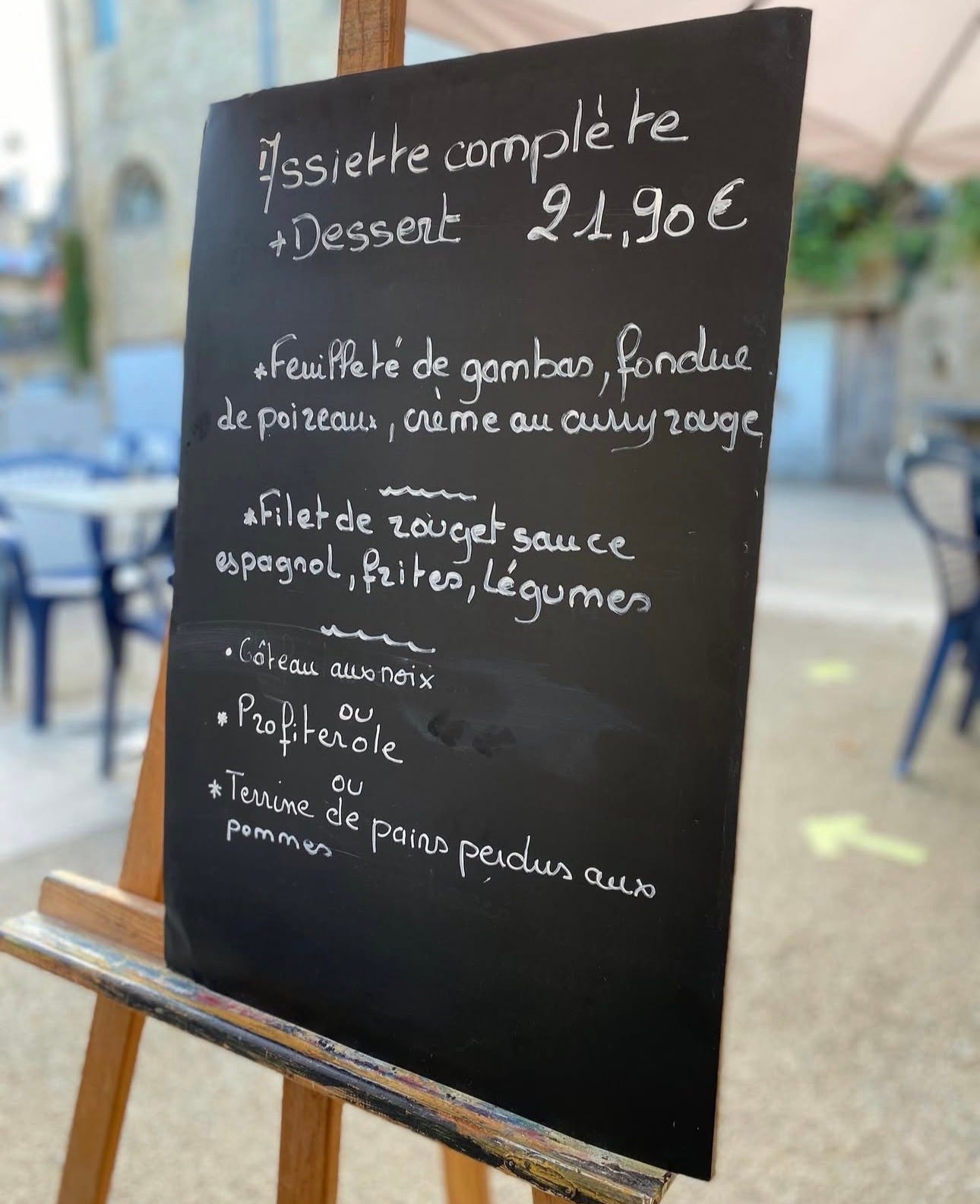
I thought I understood the French menu.
I speak enough French to get myself into situations I can’t gracefully exit, which I’ve always considered a working level of fluency. I know what a plat is. I’ve eaten enough cheese to qualify for residency. I arrive with confidence.
This is my first mistake.
A drink appears before anything has been discussed, agreed upon, or even suggested. It just arrives, as if I’ve been pre-approved. A kir. A pastis. Something with a color that implies commitment. There are olives, or a small dish of something that looks like it could either be delicious or a legal form of initiation.
I sit. I sip. I accept that I am no longer in charge.
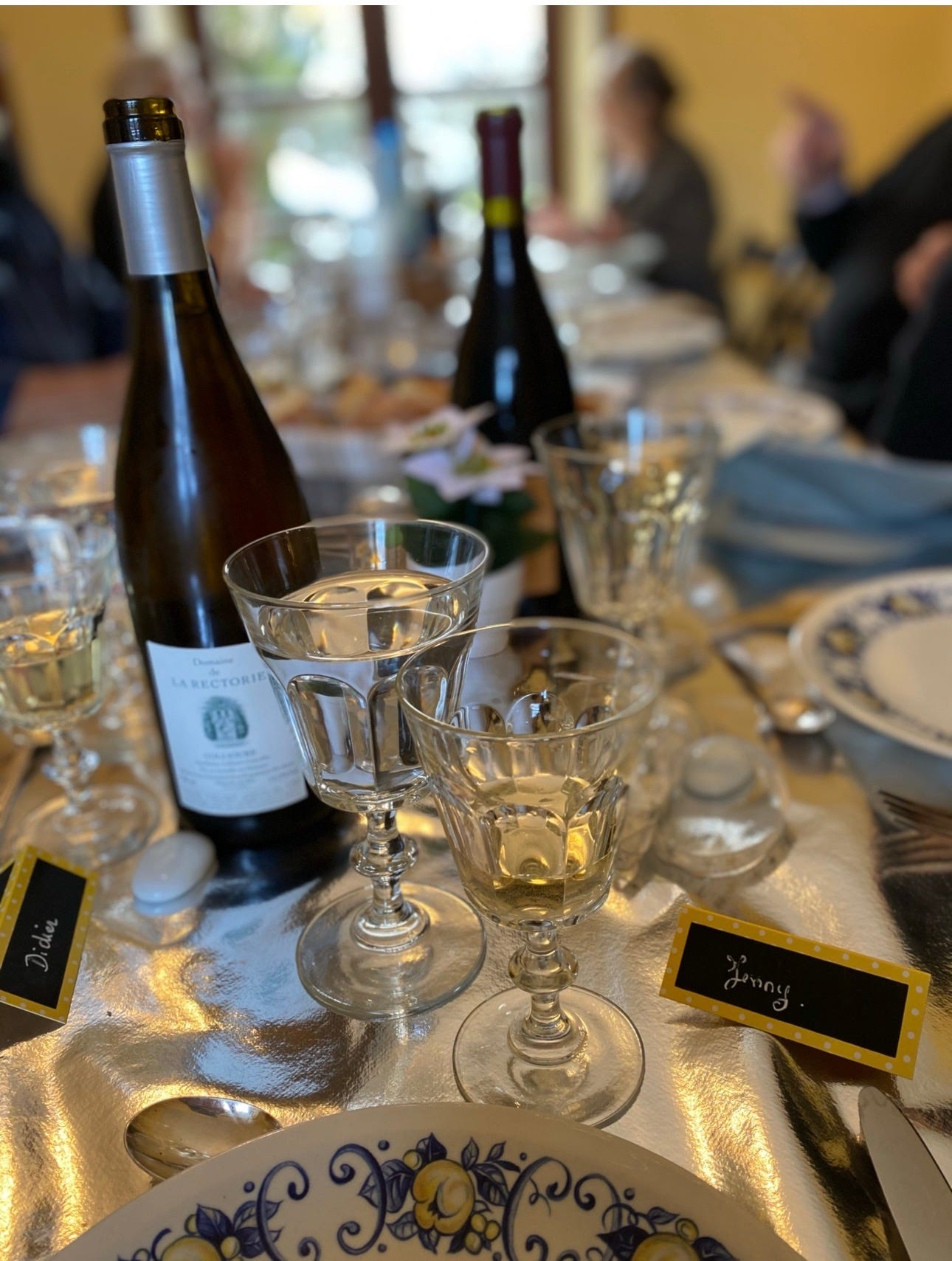
By the time the menu appears, I’m already behind. I scan it with the calm, measured confidence of someone who has absolutely no idea what’s happening but refuses to be the first to admit it. I choose something I can pronounce, which feels like the correct metric at the time, and then immediately begin to suspect that I have just agreed to eat something with a backstory.
This is not paranoia. This is pattern recognition.
Somewhere between the drink I didn’t order and the dish I don’t fully understand, I remember that French dining did not start like this.
There was a time when everything arrived at once in what can only be described as a decorative meat parade. No pacing. No mystery. Just food, aggressively presented, like a medieval buffet with ambition but no boundaries.
And honestly? There’s something reassuring about that level of honesty. No interpretation required. Just… commitment.
Now everything arrives in stages. Thoughtfully. Strategically. Somewhere along the line, someone decided that butter was more important than chaos, and the entire country reorganized itself around that decision.
I sit there, trying to identify what’s on my plate, and feel like I’m participating in the long-term outcome of several centuries of culinary decisions I was not consulted on.
The first plate arrives as a salade de gésiers, which sounds manageable right up until you remember what a gésier actually is. It’s warm, rich, slightly resistant in a way that requires attention. Not unpleasant. Just… very certain of itself.
I nod as if this is familiar, like I’ve always been the kind of person who orders warm gizzards on purpose, even though a small part of me is still mentally back at a Caesar salad.
At this point, nodding feels like an important part of the process. By the time the next course arrives, I’ve stopped trying to anticipate anything.
Duck appears and then reappears in another form, as if it has been reconsidered.
A steak arrives that is less “cooked” than “considered,” and I adjust my expectations accordingly, mostly by lowering them.
Then there is steak tartare. Raw beef. Raw egg. No explanation, no apology. It sits there with quiet authority, as if the issue is not whether I understand it, but whether I am prepared to move forward.
I take a bite. It is, annoyingly, excellent, which complicates things.
Just as I begin to feel like I might be understanding what’s happening, the
Andouillette arrives.
It arrives with a presence that makes itself known immediately. There is a moment - purely through scent - where I understand that I am about to learn something about myself, and possibly not something I was looking to learn.
I pause.
This feels important.
I take a bite, carefully, with the composure of someone who has done this before. I have not. I do not react, which feels like both an accomplishment and a small betrayal of my instincts.
Around me, nothing changes. The meal continues, which feels like a lack of support. I take another bite, which feels like both an accomplishment and the kind you only recognize later, when you’re alone and replaying it.
At some point, I stop trying to understand what I’m eating and start focusing on how I’m eating it.
There are rules. No one explains them. Everyone follows them or performs following them convincingly.
No one corrects me.
Which is worse.
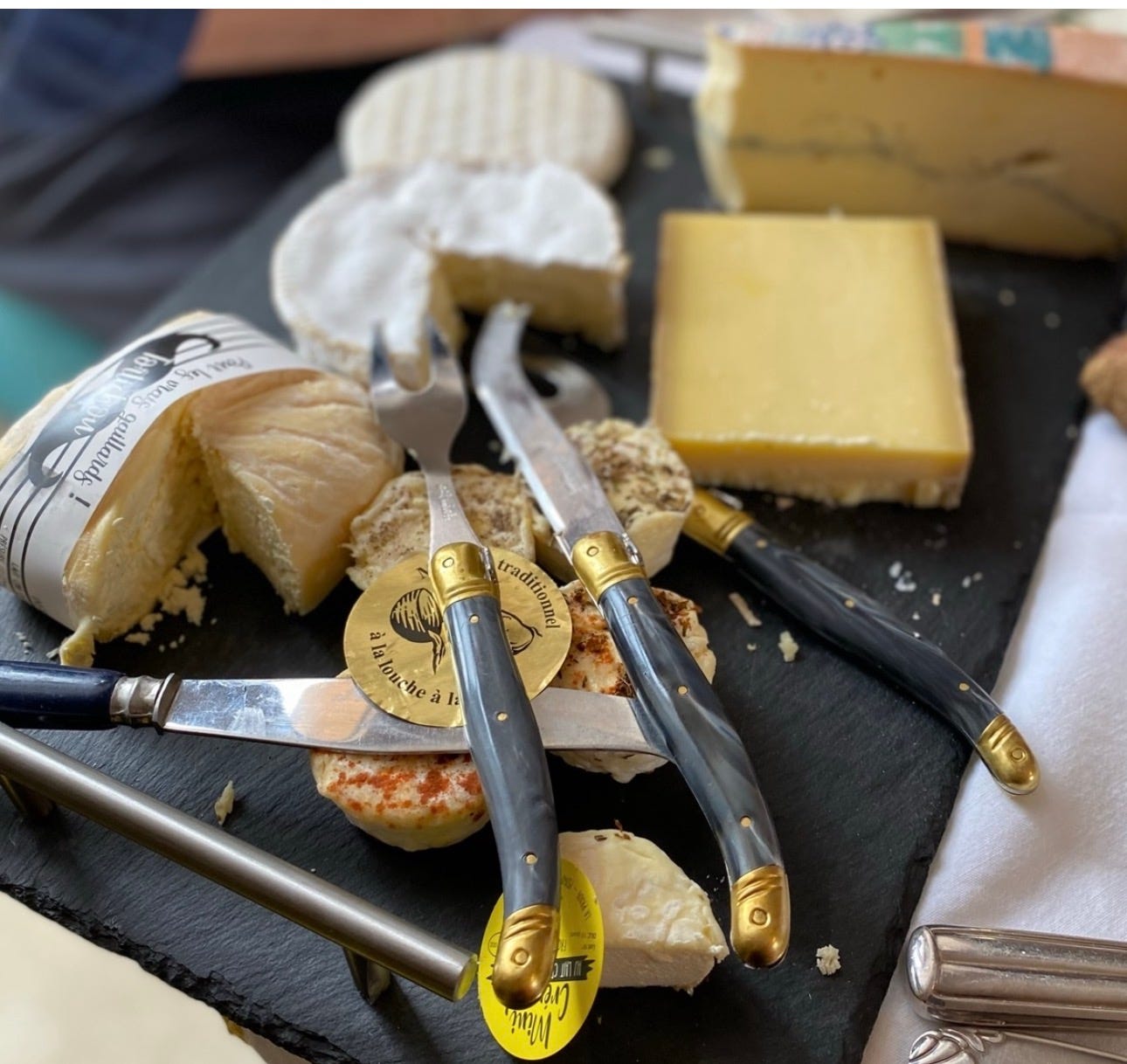
When the cheese arrives, it does so with quiet gravity. A board appears with options that feel less like food and more like decisions I will later revisit. I cut carefully, aware that I am participating in something I don’t fully understand, but also slightly afraid of getting it wrong in a way that would follow me home.
By the time dessert appears, the idea of ‘needing’ anything has left the conversation entirely. Dessert comes whether I need it or not, which by now feels irrelevant.
A café gourmand appears. Espresso surrounded by a small, intimidating collection of desserts, like speed dating with higher stakes and no polite exit.
I commit, which at this point feels less like a choice and more like a policy.
By now, I am no longer trying to manage the meal. I am inside it. Because at some point, it clicks.
The menu isn’t trying to confuse you. It’s trying to slow you down. To make you sit. To order in stages. To pay attention to what’s in front of you instead of what’s next. To remind you that a meal isn’t something you get through. It’s something you move through.
And somewhere along the way, without quite noticing when it happened, you stop trying to win.
You just start eating.
Jenny.
Has a French meal ever done this to you — pulled you in before you quite knew what was happening? Tell me in the comments.
Introducing Contributor Jenny Becker
Visit her Contributor Page — Explore more of Jenny’s work→
Thanks for reading MyFrenchLife™ – MaVieFrançaise®! This fabulous article by Jenny Becker is public, and we encourage you to share it.
MyFrenchLife™ – MaVieFrançaise® is a reader-supported publication. To receive new posts and support my work, consider becoming a free or paid subscriber.