

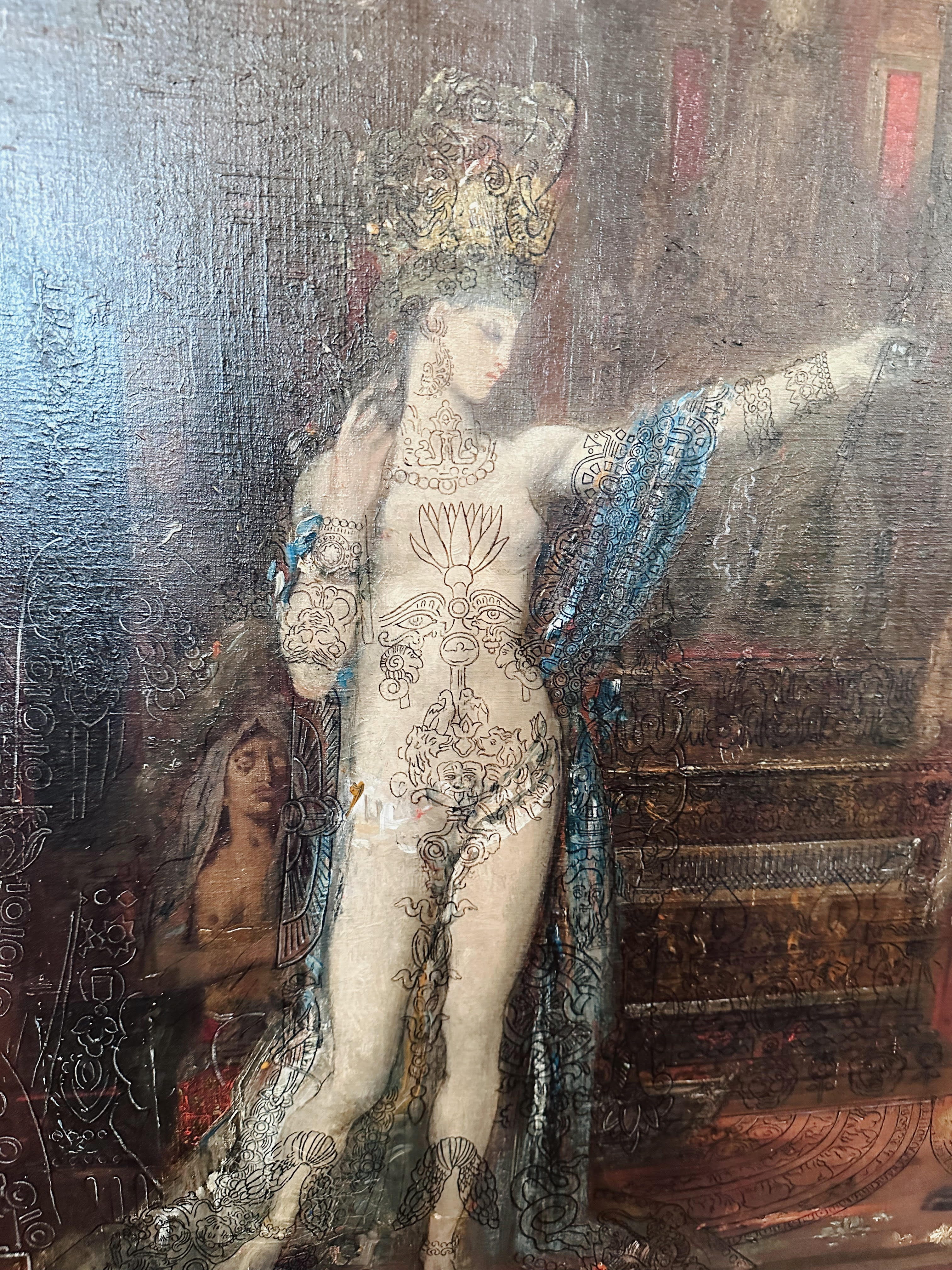
There are places in Paris where time doesn’t exist, where a staircase becomes a spiral of the soul, where the walls don’t just hold paintings, they hold visions. Today’s post is about one of my very favorite places in Paris. The Musée Gustave Moreau is not just a museum; it’s a reliquary of dreams.
The Hidden Chapel of Symbolism
Tucked away in the 9th arrondissement, on a quiet street of understated façades, is the former home and studio of Gustave Moreau (1826–1898), the French Symbolist painter who believed: “I believe only in what I cannot see, and solely in what I feel.” - Gustave Moreau (This quote alone could be the single reason why I love him so much.)
This museum is not curated in the modern sense, it is curated as a sanctum, exactly as Moreau left it. You don’t walk through this space as a tourist, you enter as if stepping into a private temple. Velvet drapes. Worn floorboards. Sacred hush.
Then the paintings begin to appear: Salome, Orpheus, the Magi, Oedipus, angels and muses, not depicted, but revealed, like glowing fragments of a fever dream. And they are magnificent!
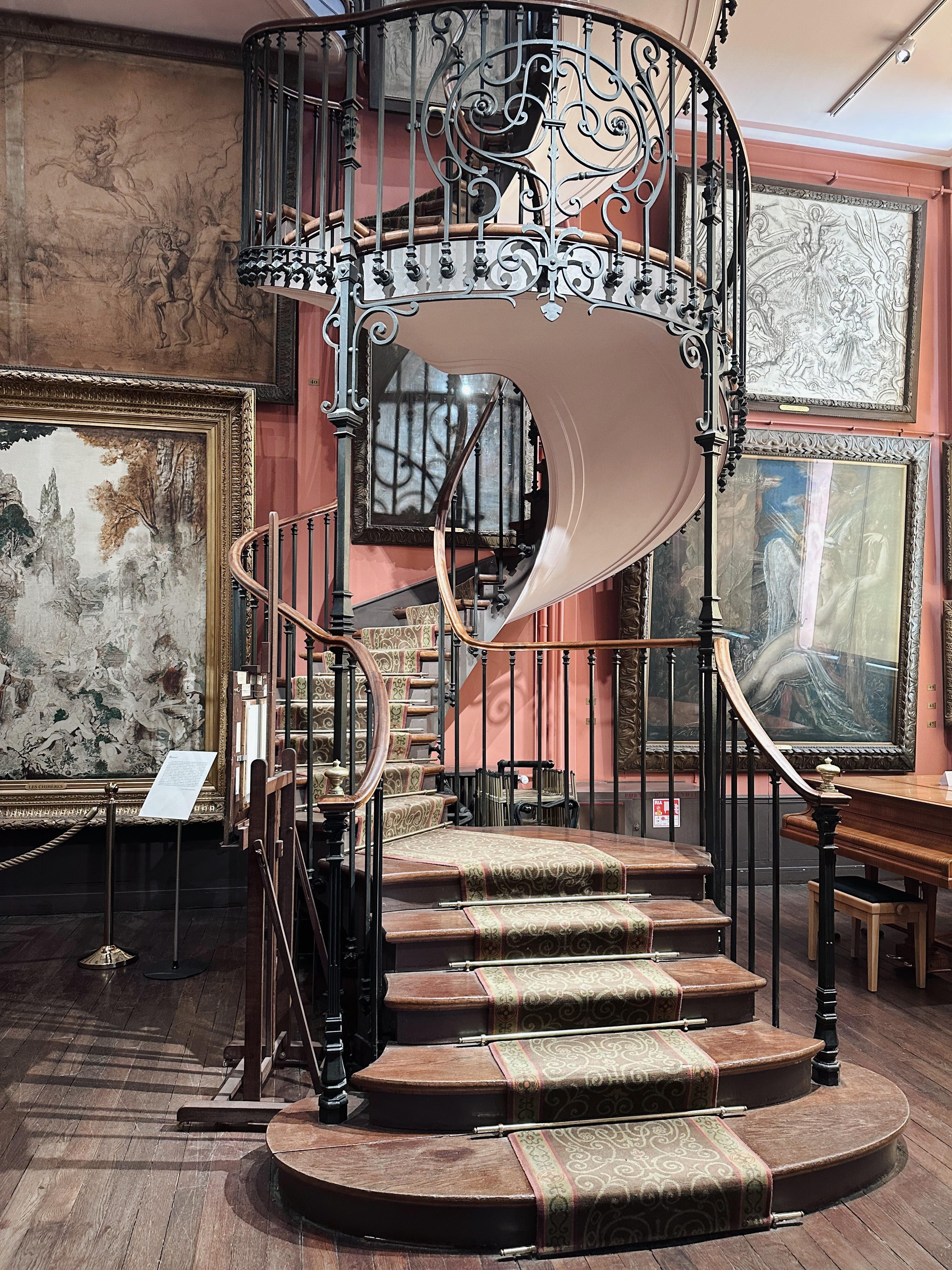
The Spiral of the Soul
There is a spiral staircase in the heart of the house that seems to rise not just through floors, but through states of being. Moreau designed this himself, three levels: ground floor memories, middle floor living, top floor vision.
At the summit, you step into his double-height atelier, flooded with light. Here, he worked on vast mythic canvases, many of them intentionally unfinished. It is as if he wanted us to see the threshold between worlds, the veil in motion.
Salome: The Mystical Dancer
Among the most haunting of his works is his series on Salome, the biblical figure long associated with seduction and death. But Moreau’s Salome is different. She is not a temptress; she is a priestess, dancing on the threshold between the visible and invisible.
In The Apparition, John the Baptist’s head floats like a holy vision above her, not grotesque, but luminous. She is still. She is veiled. She is touched by the divine.
It was these paintings that inspired Oscar Wilde to write Salome, and in turn, Wilde’s text became the libretto for Richard Strauss’s infamous opera. Moreau didn’t just paint myth; he reframed it through the Symbolist lens as something sacred, psychological, and alive.
“The mystery of love is greater than the mystery of death.” - Oscar Wilde, Salome
“There is a sacred madness in beauty that dares to dance with death.”
On Technique, Vision, and the Feminine Divine
Moreau did not paint to describe, but to evoke. His technique involved layering gouache, oil, ink, and even gold leaf to create canvases that shimmer like visions. Many are unfinished by design, allowing us to see the sketch, the sacred intention, the edge of emergence. He believed that art should not be fully explained, only felt. (Swoon.)
His color palette is incandescent: lapis, ruby, opal, gold. His brushwork flickers between intricate and dissolving. His paintings feel lit from within.
While Salome is his best-known feminine muse, Moreau also painted Mary Magdalene, not as a repentant sinner, but as a mystic, a visionary, a woman pierced by divine love.
In Mary Magdalene in Ecstasy and Magdalene at the Foot of the Cross, she becomes the soul in sacred longing. These are not depictions of religious narrative. They are portraits of inner states: sorrow, transcendence, illumination.
“She is like a mystic flower, blossoming in the desert of the soul.”
Notable Works to Seek
These works may not always be on display at the same time, but the museum’s intimate format allows you to get astonishingly close to many of Moreau’s major pieces and personal drawings.
The Apparition – Salome’s dance as a moment of mystical confrontation.
Jupiter and Semele – A transcendent vision of union and dissolution.
Orpheus – Beauty resting in the lap of death, or death resting in the arms of beauty.
Oedipus and the Sphinx – A psychological rendering of fate and riddles.
Mary Magdalene in the Desert – A quiet, radiant image of isolation as holy ground.
And don’t forget the wooden drawers that line the upstairs galleries, filled with hundreds of private sketches and sacred studies, from angels and altars to mythic beasts and forgotten gods. (I love opening one drawer randomly and using the sketch I find for inspiration to journal or meditate in the open space.)
A Museum Made for Pilgrims
The Musée Gustave Moreau is not crowded; it does not shout; it waits. It reveals itself to those who arrive slowly, reverently, with open senses. It is one of Paris’s most powerful places of hidden devotion, not to any religion, but to the imagination as sacred ground.
If you go, bring a small notebook. Leave a stone. Ask a question.
You might find that beauty itself answers you.
“The painter must be a poet, not a mere copyist of reality.” - Gustave Moreau
“Art is the contemplation of the world in a state of grace.” - Hermann Hesse
Reflection Ritual (for fellow pilgrims)
If you find yourself before Salome, Orpheus, or the stairwell that spirals like a soul:
What mystery am I ready to face?
What part of me is unfinished, and beautiful because of it?
What vision has been visiting me in dreams that I have not yet dared to paint?
Let Moreau remind you that art is not a mirror; it is a portal.
Musée Gustave Moreau
A Hidden Temple of the Imagination
Address: 14 Rue de la Rochefoucauld, 75009 Paris
Metro: Trinité – d’Estienne d’Orves (Line 12)
Or a short walk from Saint-Lazare
Opening Hours
Wednesday to Monday: 10:00 AM – 6:00 PM
Closed Tuesdays
(last entry 5:15 PM)
Tickets: €7 / €5 reduced
Free on the first Sunday of the month
Allow 60–90 minutes minimum (more if you wish to sketch, pause, or journal)
Sacred Paris Note to the Modern Mystic
When you reach the spiral staircase, pause. Place your hand lightly on the railing and set an intention before you ascend. You are not just climbing to an artist’s atelier, you are rising into his inner sanctum. Let the stairs become a prayer.
If a painting calls to you, stand before it and softly ask: “What part of myself are you trying to show me?”
Open a drawer. Choose one sketch. Let it be your oracle.
This is not a museum visit; it is an initiation into the unseen.
Welcome to the threshold between myth and memory, and welcome to one of my very favorite places in all of Paris.
With all that is sacred seen and felt,
Patricia
Introducing Contributor, Patricia Russo
Immerse yourself in all of Patricia’s articles on her Contributor page.
MyFrenchLife™ – MaVieFrançaise® is a reader-supported publication. To receive new posts and support my work, consider becoming a free or paid subscriber.
Thank you so much, Patricia, for this gorgeous piece of writing. It took me back to the time a couple of years ago when I visited this sacred space while staying for a month in Montmartre. The museum touched me deeply and I spent a long time just sitting in the atelier soaking in the peace and soulfulness of the place. Did not realize that the drawers held such treasures! Now I definitely must go back and explore them.