

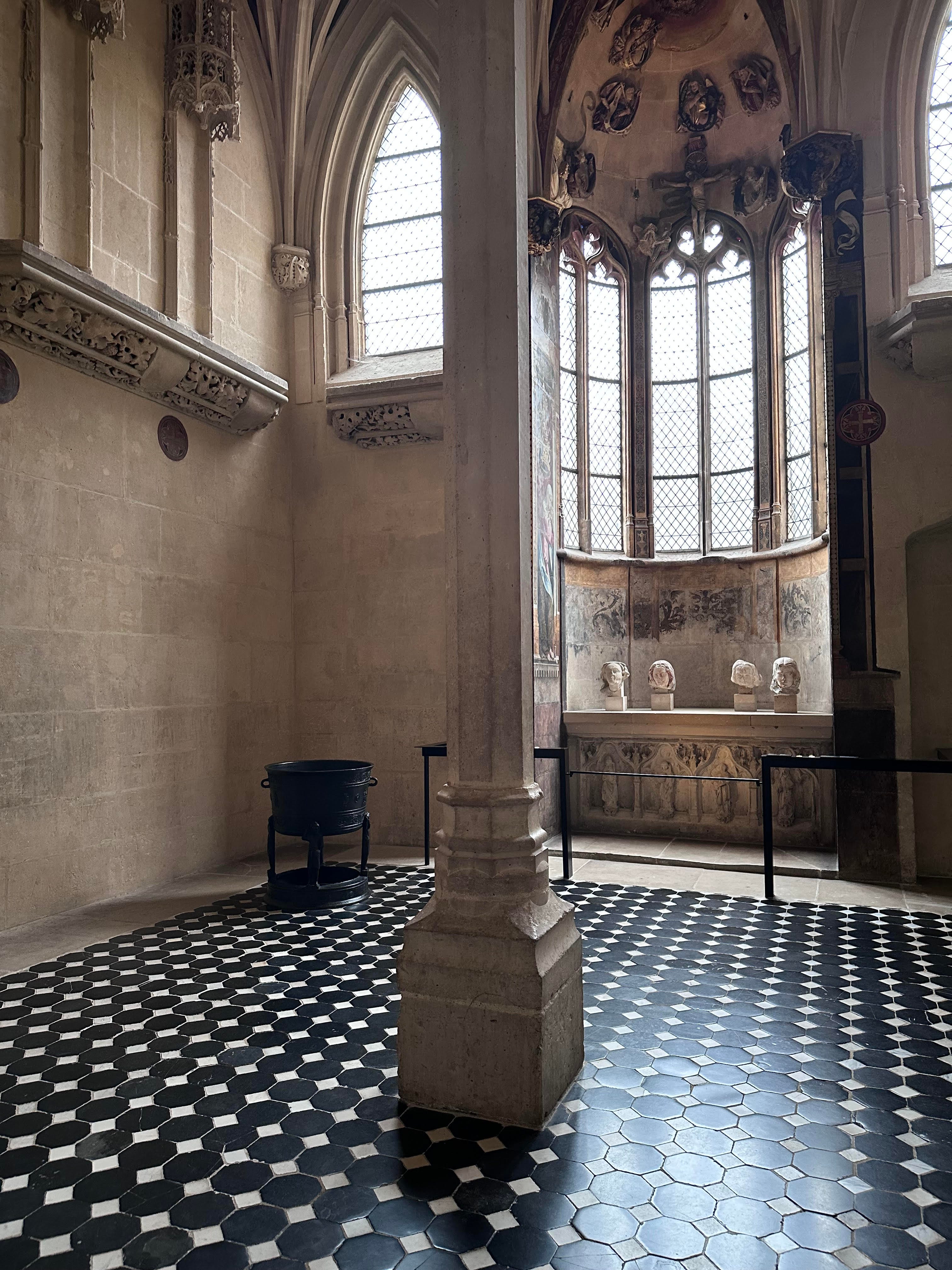
Most people walk right past it - or don’t even know it exists.
Even inside the Musée de Cluny, with its soaring Lady and the Unicorn tapestries and the ancient Roman baths, this little chamber sits tucked away like a secret - a quiet pause, a pocket of stillness and breath.
I found it several years ago as Paris continued to reveal herself to me - or it found me. The air changed when I stepped inside. The room was small, quiet, almost shy. And yet the space felt full, as if the stones themselves remembered every prayer ever whispered into them. Oh my goodness, do I love discovering spaces that feel like this.
This is the hidden chapel of Cluny.
A medieval fragment, intimate and unassuming, is offered to anyone who happens to fall into its orbit.
Below is the story I gathered: the history, the symbolism, and the subtle thread of legend that still lingers there. It is my hope that you will bookmark this post or add this sacred place to your list when you visit Paris. And should you want a direct path, I’d love to guide you there. (You can request a three-hour tour of Paris here.)
A Chapel Built for Silence
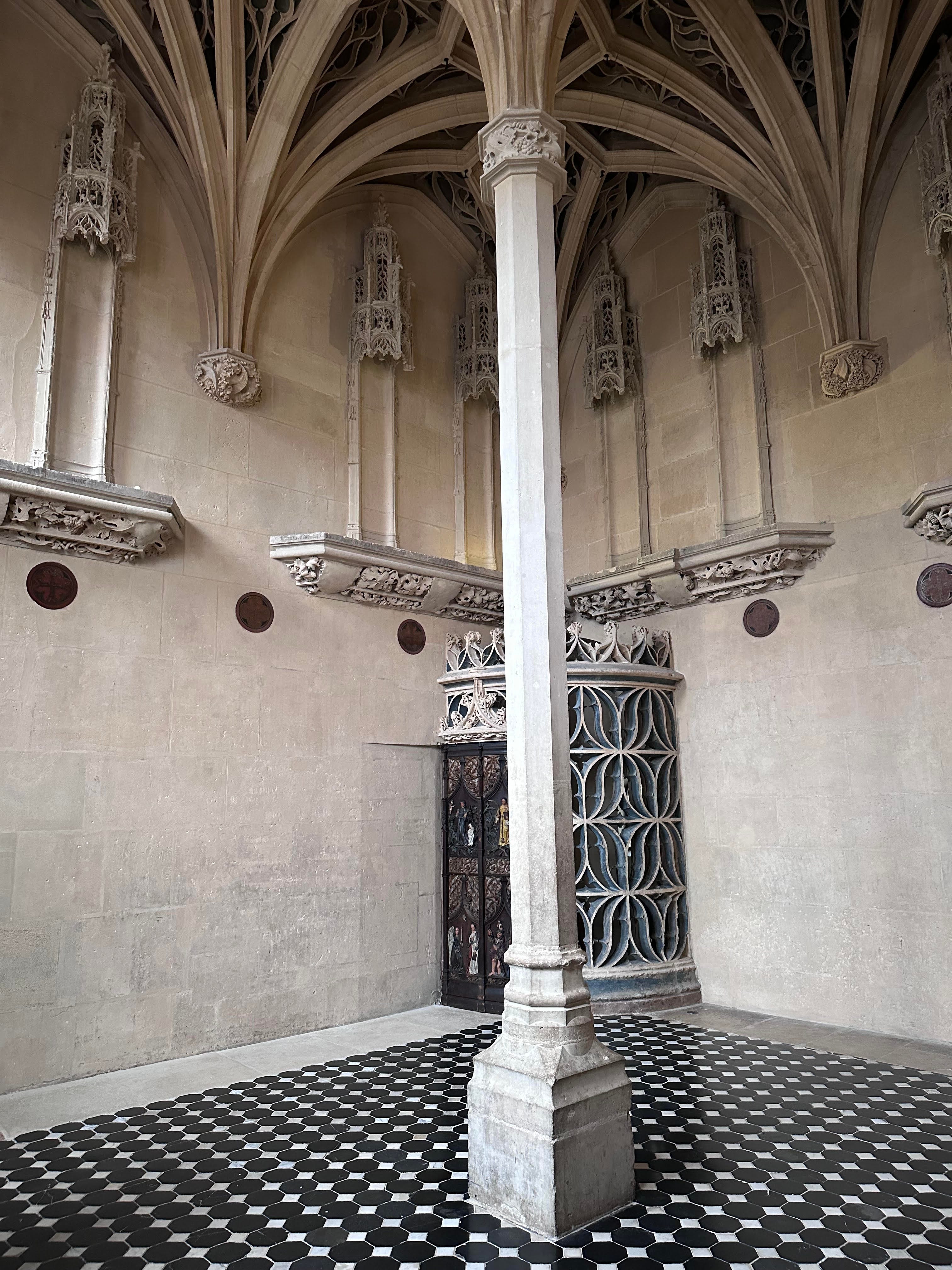
The chapel was created in the late fifteenth century, during the transformation of the Cluny town house into a residence for the abbots of Cluny. Though small in scale, it was designed as a private oratory, a place where the abbot could pray alone, away from the life of the court and the sounds of the city.
It is sometimes called the Chapel of the Holy Spirit, and once held a small altar and devotional objects that accompanied the abbot’s daily rhythm of prayer.
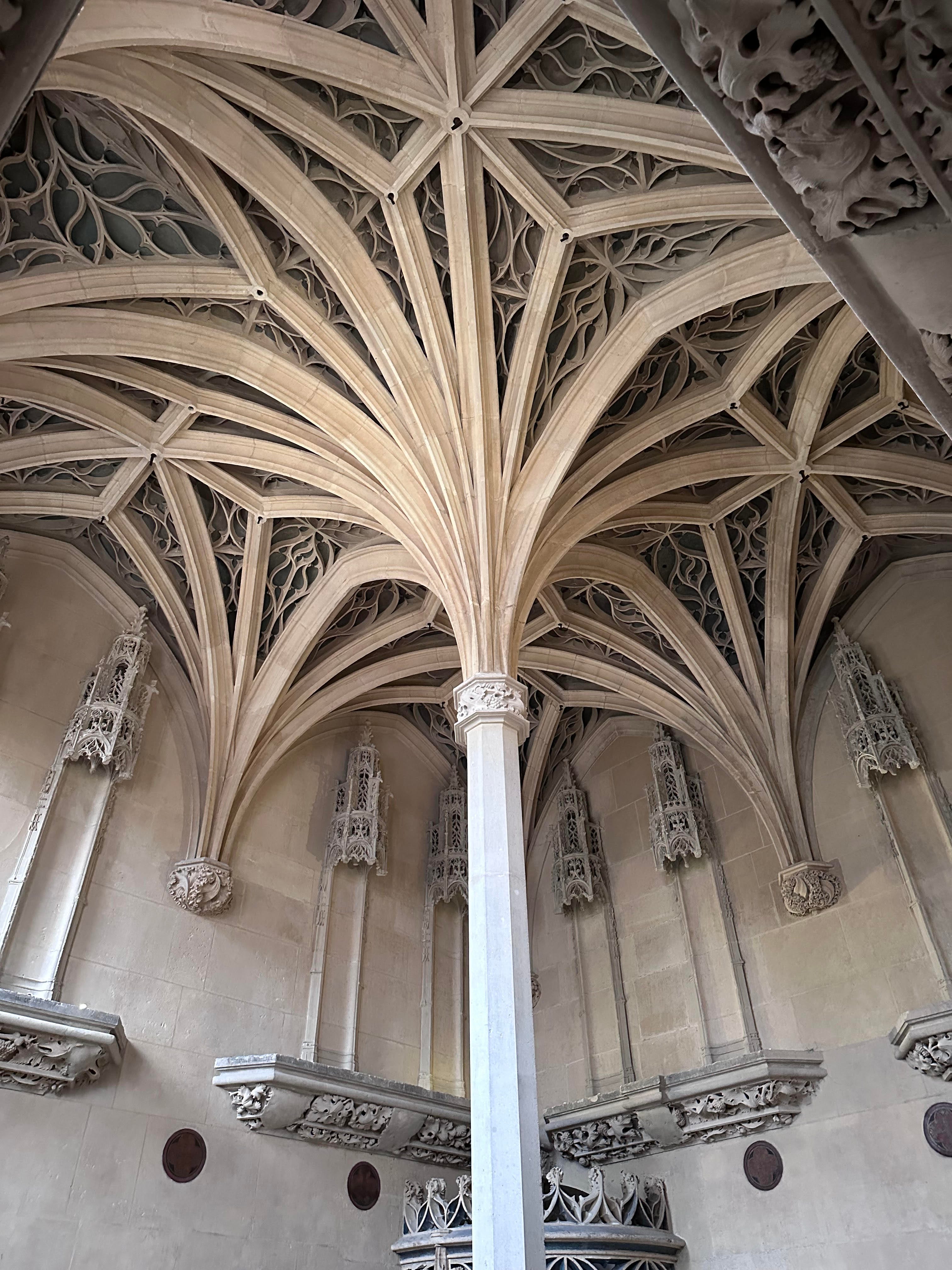
Its stone vaulting is carved with angels, flowers, and vegetal motifs, all whispering of the medieval belief that the divine could be found in every corner of life, in leaves, in archways, in the sacred geometry of the ceiling just above one’s gaze.
If you stand there long enough, the whole room begins to feel like a cup: a vessel carved for quiet.
A Sanctuary Imagined from Ruins
Much of the Cluny Museum is layered with time, Roman, medieval, Renaissance, and the chapel is part of this tenderness.
After the French Revolution, the building lost its religious function. The chapel suffered neglect, the altar disappeared, and the little room became just another architectural curiosity.
But when the museum was restored in the nineteenth century, the chapel was brought back to life with care and devotion. The starry vaulting was carefully reconstructed. The carved capitals were cleaned. And suddenly this forgotten room became a sanctuary again, even without a priest or liturgy.
The only thing added was light.
The Legend of Cluny’s “Breathing Walls”
There is a small legend associated with the chapel, not an official one, but one cherished by Cluny guides and medievalists.
It is said that the monks believed the walls of this place “breathed.”
The idea was not literal but symbolic: that when a person entered with sincerity, with a burden, or a question, or a feeling too heavy to name, the stones would absorb it. That the room itself was a kind of gentle keeper, a vessel that held the weight for you so you could walk out lighter.
This was common in medieval spirituality: the belief that sacred architecture worked in partnership with the soul.
A chapel was never just a room.
It was a participant.
A Small Blessing Hidden in the Middle of Paris
What moves me most is how simple it is.
No grand altar. No gilded icons. No choir.
Just a room that feels like a held breath.
A little sanctuary waiting in the middle of the city.
And perhaps that is the gift of Cluny’s hidden chapel: that holiness doesn’t always announce itself.
Sometimes it waits quietly, tucked between a staircase and a stone arch, hoping someone will wander in and recognize themselves.
Every time I step inside, I feel as if I’m touching the memory of devotion.
A Gentle Invitation
If you visit the Cluny Museum, pause when you find it.
Stand in the center.
Let your eyes soften.
Let your breath slow.
And imagine the centuries of seekers who came before you, abbots and travelers, pilgrims and poets, each leaving a small trace of their longing in the air.
The room still holds them.
And it will hold you, too.
Patricia
Introducing Contributor, Patricia Russo
Immerse yourself in all of Patricia’s articles on her Contributor page.
MyFrenchLife™ – MaVieFrançaise® is a reader-supported publication. To receive new posts and support my work, consider becoming a free or paid subscriber.
I haven't visited this museum in a long time, and don't remember the chapel. Maybe I missed it?
What a place!