

When we moved to France, I didn’t expect to find chickweed (mouron des oiseaux) waiting for me. But there it was—sprawled along garden paths in Brittany, just like it had been in Brooklyn, popping up in community gardens and through schoolyard fences. This piece is about that small plant and the larger things it opened up: food, medicine, folklore, and the way we learn to see nature. There’s a salad recipe, a soup I still don’t fully trust, and a few thoughts on what it means to know the plants where you live.
Chickweed starts to show up in April here, mostly on sunny stones with southern exposure, but it’ll be coming in the next few weeks.
I’ve also included some App suggestions below.
Getting to Know Chickweed
Or how to eat your lawn.
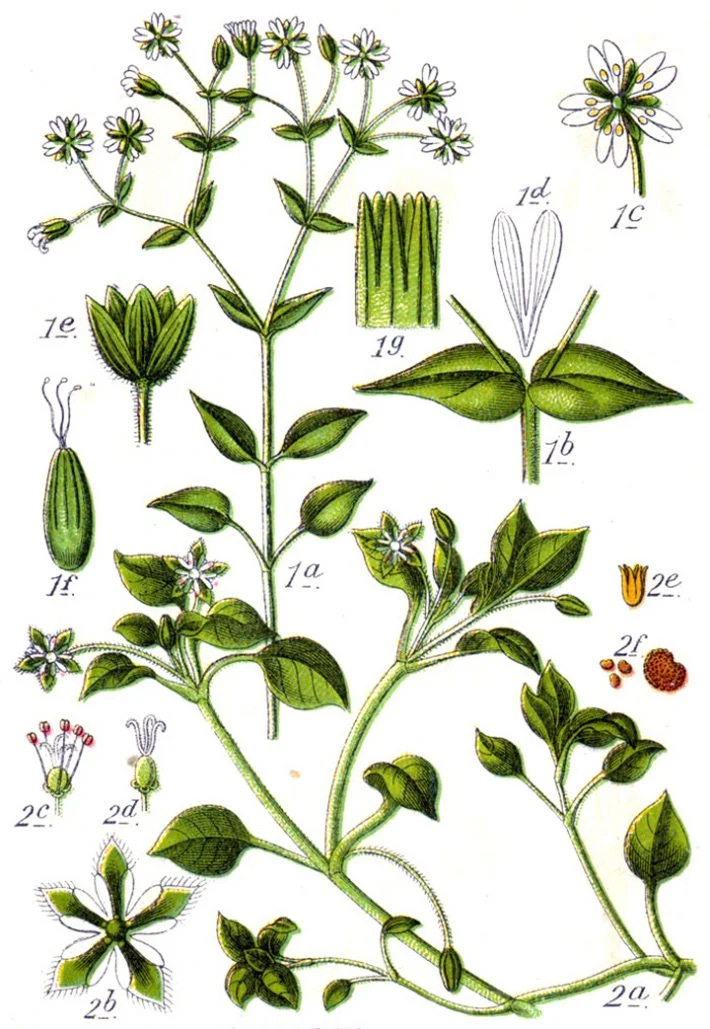
Once it shows up, it’s everywhere. That’s the first thing to know about chickweed—Stellaria media if you’re feeling formal, mouron des oiseaux in France, or bird’s feed, more or less.
Chickens really like it, it seems.
It grows in the cracks of city sidewalks and garden beds that need weeding in New York. It prefers sandy soil or well-tilled soils in France. Chances are, you’ve pulled it out of a garden bed or two. It comes up easily, spread low and soft, like loose star-filled moss.
Familiarity in a new place
When we arrived in France, chickweed was one of the first plants I used, growing in this kind of odd second spring this part of France has in October, including a second flush of strawberries.
We were house-sitting in Brittany, and it was everywhere along the garden paths. I added it to a salad that night, and saved a bunch to wilt for salve. It turns into a perfect springlike green - like a bottled meadow. And it stays fresh for a year
Chickweed has been eaten across the US, France, the UK, and most of Europe for centuries - never the star, but a part of rural cooking wherever it grows. Especially in the “hunger gap” of early spring, when stored food runs low, and few other plants have arrived yet.
Local food dialects
This is cuisine du pauvre or cuisine paysanne, the near-universal shared and opportunistic vernacular of food shared by people all over the world: eat what is available, make it delicious.
The French do this well.
Chickweed is a quiet powerhouse—richer in nutrients than many superfoods.
You won’t find mouron des oiseaux in cookbooks, but in foraging-rich regions like Brittany and Auvergne, it slips into omelettes, tarts, or soups. The flavor is delicate—mix it with strong greens, and you’ll lose it.
Buses, Weeds, and Learning to See
I first started using chickweed in Brooklyn.
I was teaching students how to notice nature, focusing on discovery, description, and curiosity. Chickweed was a favorite: easy to ID, no lookalikes, and packed with nutrients.
After tasting it, some students said iceberg lettuce tasted like chemicals by comparison.

Helping city kids realize they’re surrounded by the natural world is a kind of magic. Urban ecosystems have their own wild, overlooked richness, and every city has its own cast of resilient, quietly thriving plants.
For students just starting to notice plants in the wild, I used to compare it to learning public transportation.
When you move to a new neighborhood, you don’t really see the bus stops at first. You check your phone, study the map, and maybe ask someone. You look for landmarks.
It feels unfamiliar. But after a few weeks, you stop checking. You just know. You recognize the people, the buildings, the corner delis.
You realize those strangers on the bus are people who live near you.
At first, looking at nature is the same: just a green blur, just “plants.” But then you recognize one. Then another.
Soon, you can tell which side of the street gets more sun just by what’s growing there, the way people have done everywhere for centuries.
Chickweed as Food
Mild, slightly grassy flavor, like a mild cress. Chickweed fills salads beautifully, or it is folded into eggs, or mixed with soft fresh cheeses for a spring “green” flavor. Use it the same day if possible. It wilts fast.
Food as Medicine
Chickweed is also mineral-rich, used as a spring cleanser, a skin soother, and a remedy for hot, itchy conditions, including eczema and even arthritis. Chickweed salve was the first foraged thing I made when we arrived in France.
It works.
But more. It feels like you’re doing something with the land around you, not just on it. For me, connecting to a new place means connecting to – and eating – its plants.
Predicting the weather?
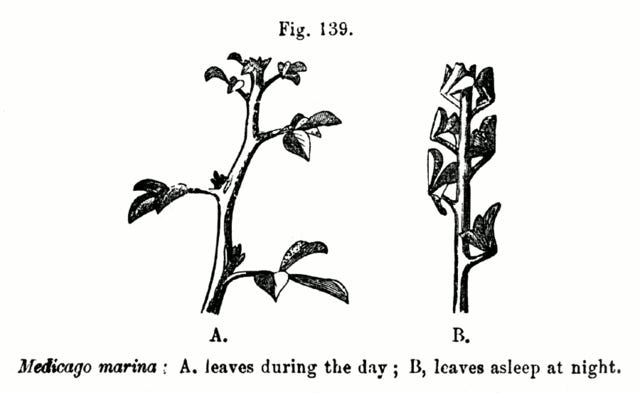
Folklore says that if chickweed closes its flowers, you should expect rain.
That’s not just superstition; it’s a common behavior with a lot of plants. Chickweed is responsive to light, temperature, and humidity—its flowers open wide on sunny, stable days, and curl inward when rain or clouds roll in.
It’s called nyctinasty (which sounds oddly rude in French)—plant movement triggered by light and weather shifts.
What We Used to Know
I read once that in the early 1900s, the average American could identify over 100 wild plants and their uses. Just regular people—not botanists. That changed when our relationship to food changed, mostly in the 20th century, with industrialised foods.
For most of human history, people ate what grew nearby. They knew what could feed them, heal them, nourish them.
Now, we’re told it’s safer to eat greens sealed in plastic, flown in from hundreds of miles away, than to touch what’s growing five feet from our back door. The U.S. is worse about this than France, but it exists here also.
I’m not trying to play survivalist. But there’s something powerful about remembering the basics.
When people migrate, they bring language, rituals, and plants. Chickweed might not be in anyone’s luggage today, but in centuries past, seeds would’ve been among the first things brought along. North America is full of once-popular edible plants that have simply fallen out of fashion.
Tastes change—even in what we call food.
So yes—chickweed’s a salad green, a medicine, and sure, you can make tea (like every foraged plant, apparently). I don’t drink enough to get excited, but some are nice.
Tell me about it!
If you’ve made something with chickweed—or if you’re one of those people who enjoys spring soups (recipe below), I’m open to being convinced.
Got other recipes or uses?
Let me know in the comments!
Recipes
Soupe au mouron des oiseaux et mâche sauvage
This simple, seasonal soup combines chickweed with mâché, but can be anything green and delicately flavored for a fresh, slightly sweet flavor. Baby spinach works; fully grown spinach may overpower it. Find a good recipe here or here for a creamier version written by survivalist types!
But at least they seem to be survivalists who realize that the apocalypse will be better endured with some nice soup.
Both recipes are simple and, once blended, pair beautifully with dairy, finished with a drizzle of cream, or a nut-encrusted wheel of chevre, and drop it on top. Vegan options can toast walnuts for a delicious earthiness. Simple.
Wild-Inspired Spring Salad
This tastes like Spring itself. Serve with a glass of white wine and crusty bread, ideally Muscadet and a baguette
Ingredients (serves 2–4):
A big handful of fresh chickweed (stems and leaves, rinsed;
or baby spinach, watercress, or mâche/lamb’s lettuce, if you must )A few sprigs of bedstraw (caille-lait), tender tops only (use sparingly;
or flat-leaf parsley, chopped, for an herbal edge)A pinch of minced yarrow leaves (millefeuille) – sharp, bitter, and medicinal;
Or sub in a small bit of arugula or chicory4–6 radishes, thinly sliced
1–2 hard-boiled eggs, halved or quartered
A handful of edible flowers (foraged: violets, primroses, wild brassica blooms)
A small chunk of aged goat cheese or fresh chèvre, crumbled (or feta for a saltier bite)
toasted walnuts or pumpkin seeds (crunch, protein, and a bit of nuttiness)
vinaigrette:
1 tablespoon Dijon mustard
2 tablespoons red wine or apple cider vinegar
5 tablespoons olive oil
pinch of sea salt and cracked pepper
Optional: 1 teaspoon honey
Instructions:
wash greens - chickweed is delicate.
Layer in a wide bowl, scattering other greens about.
Arrange radishes, eggs, and cheese in clusters.
Sprinkle edible flowers, if you have
Whisk vinaigrette and drizzle just before serving.
Finish with toasted seeds or nuts for crunch.
Notes:
· Chickweed is soft, juicy, and mildly sweet. Go easy on dressing.
· Bedstraw is dry and minty. Use just the tender tops; stems are unpleasant.
· Yarrow is bold and herbal—like tarragon & pine. A little goes a long way.
🌿 Some Plant ID Apps
It’s good to cross-check - all are basically face ID for plants, with different databases.
Seek – Easy, no login, great for wild plants. My go-to on this list.
PlantNet – Detailed, Europe-friendly, community-verified.
PictureThis – Fast, sleek, better for garden plants.
Totally irrelevant musical divergence
Fais comme l’oiseau by Michel Fugain et le Big Bazar (1972)
Described as “a joyful, nature-inspired anthem that encourages listeners to live freely and lightly, like a bird, reflecting a 1970s idealism about harmony with the natural world.”
I dunno, but a lot of people said “yes” to this.
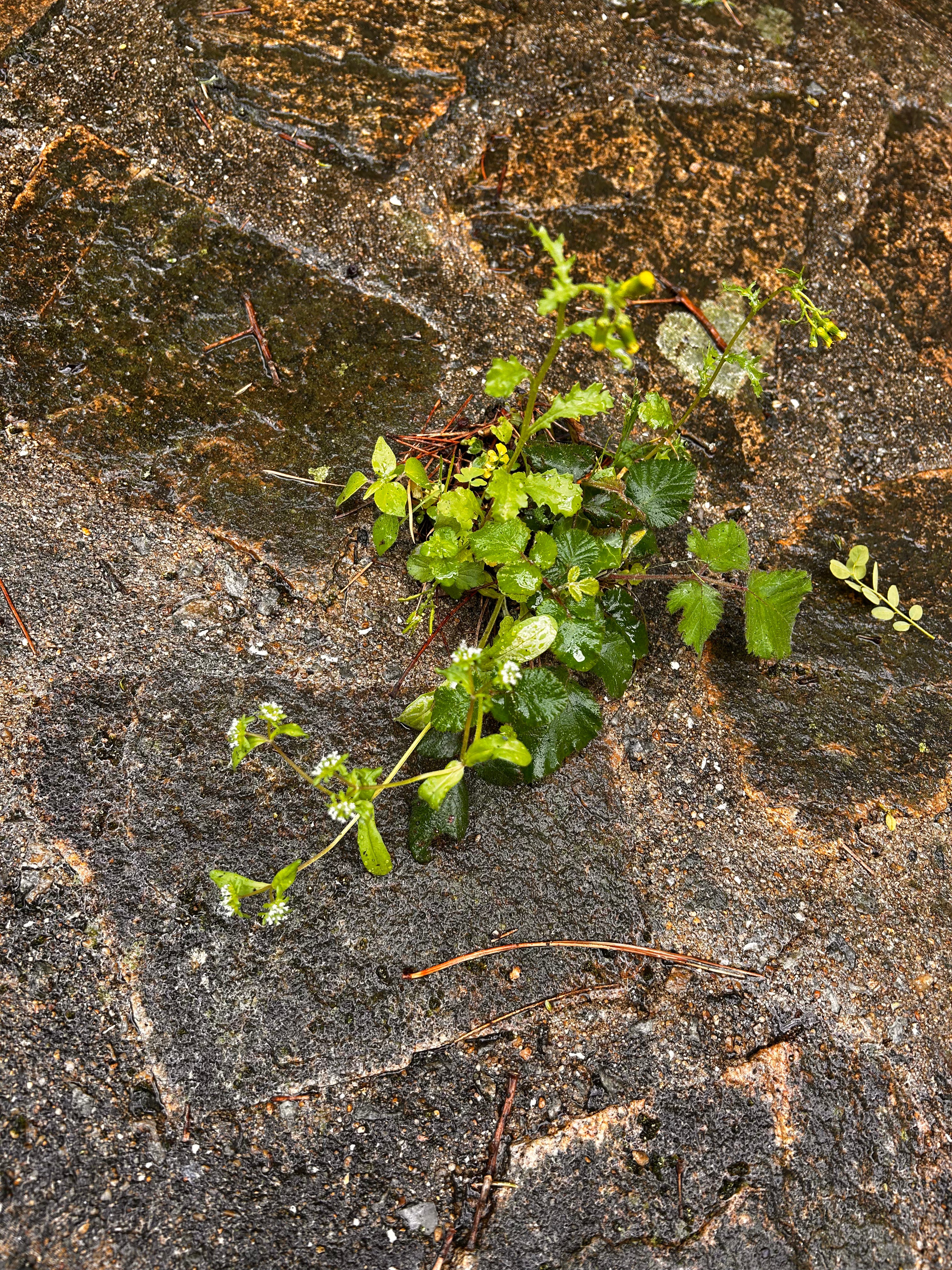
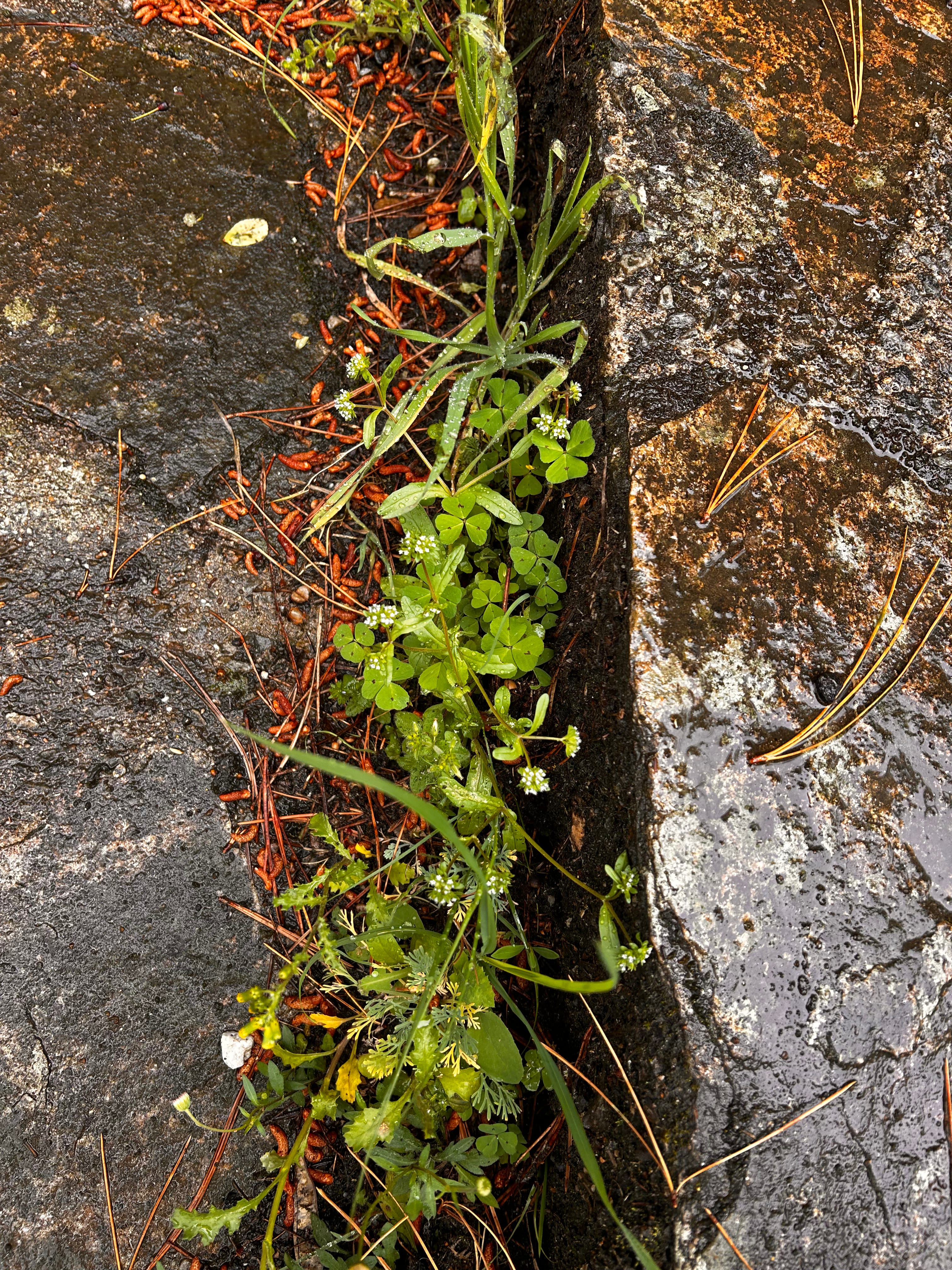
Some pictures of young sprouts
Edit - I added some images of some young plants I saw when I was out walking today. They’re just starting out - they’ll go feet in every direction, but come up very easily.
Can you spot the chickweed in these pictures?
Introducing Contributor, Keith Christiansen
Immerse yourself in all of Keith’s articles→
We have that Fugain CD -- our daughters used to love it, and it was a long-standing family listen. It's actually pretty good pop, although kind of quirky. You just inspired me to put it on -- I had been meaning to listen to some CDs this weekend anyway. They represent music I often forget about.
A fellow advocate of eating wild! I loved this Keith. I use chickweed as often as I can, especially in salads and skin tonics, I also wilt it for a day for feeding my hens!